




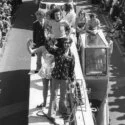

















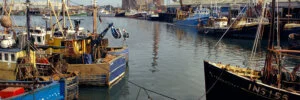
For much of the twentieth century, Fleetwood was one of Britain’s leading deep-sea fishing ports. Hundreds of trawlers sailed regularly to the rich fishing grounds around Iceland, bringing home vast quantities of cod, haddock and other white fish that supported thousands of local jobs. By the 1950s, the town’s economy was heavily dependent upon these distant waters, with fishing providing employment not only for fishermen but also for dock workers, fish merchants, processors, net makers, engineers, transport companies and countless local businesses. This dependence placed Fleetwood at the centre of a series of international disputes that became known as the…
Author: Ed
Samuel Lomas Keeps Time for Poulton
Among the most skilled craftsmen to work in eighteenth-century Poulton-le-Fylde was Samuel Lomas, the town’s first recorded clockmaker. Working from a small smithy behind his home on Sheaf Street—now Hardhorn Road—Lomas produced longcase clocks that earned a reputation far beyond the Fylde. More than 250 years after his death, surviving clocks bearing his signature remain highly sought after by collectors and stand as lasting examples of Lancashire craftsmanship. Samuel Lomas began his career as an apprentice to the Bolton clockmaker John Royle, with his apprenticeship formally recorded in 1736. After completing his training, he moved to Poulton in 1744, establishing…
The History of Blackpool Postcards
Few souvenirs have become as closely associated with Blackpool as the humble postcard. For well over a century, millions of visitors have posted colourful views of the Tower, the Golden Mile, the Illuminations and the Pleasure Beach to friends and family across Britain and around the world. Today these postcards have become far more than holiday keepsakes—they provide an invaluable visual record of Blackpool’s remarkable transformation from a small coastal village into Britain’s best-known seaside resort. Although postcards had existed in various forms during the nineteenth century, the modern picture postcard arrived in Britain relatively late. While illustrated postcards were…
Disney Store Closes at Houndshill
The Disney Store at Houndshill Shopping Centre became a familiar part of Blackpool’s town-centre retail scene, occupying a prominent unit at 57–58 Victoria Street. The precise date on which the Blackpool branch first opened has not been firmly established, although it was trading at Houndshill by 2002 and remained there for almost another two decades. The shop offered considerably more than conventional Disney merchandise. By its later years the Blackpool branch operated as one of Disney’s Imagination Stores, designed to make a visit part of the entertainment rather than simply a shopping trip. Children could encounter character-themed displays and activities,…
Frankie & Benny’s Closes on Rigby Road
Frankie & Benny’s became a familiar part of Blackpool’s Festival Leisure Park on Rigby Road during the 2000s, occupying a purpose-built restaurant close to the Odeon cinema. The American-Italian themed chain had first appeared in Britain in 1995 and grew particularly rapidly at multiplex cinemas and leisure parks, where restaurants could benefit from families combining a meal with a trip to the cinema. The precise opening date of the Blackpool restaurant has proved difficult to establish, but contemporary evidence confirms that it was trading by September 2006. Blackpool Council’s licensing records subsequently document the restaurant at Festival Leisure Park from…
St John’s Churchyard Graves Moved to Layton Cemetery
For generations, the open space surrounding St John’s Church in the centre of Blackpool looked very different from the paved St John’s Square of today. The church originally stood within its own burial ground, containing the graves of some of the people who had lived and died during Blackpool’s transformation from a small coastal settlement into a rapidly growing Victorian resort. Before Blackpool had its own church, local baptisms, marriages and burials generally took place at All Hallows in Bispham. The first St John’s Church was built on the present site in 1821 and consecrated on 6 July that year….
Cocker Street Baths Open in Blackpool
Cocker Street Baths formed part of a long tradition of sea bathing that helped establish Blackpool as a health resort before it developed into the entertainment capital of the Lancashire coast. The baths were built in 1870 and stood close to the Promenade at the western end of Cocker Street, their development taking place when bathing in seawater was still widely promoted for its supposed therapeutic qualities. They were refitted and opened by Jonathan Read in July 1873, becoming one of the resort’s important early bathing establishments. Their history has also been associated with Dr William Henry Cocker, Blackpool’s first…
Heaven & Hell Opens on Blackpool Promenade
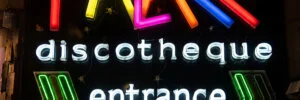
Heaven & Hell became one of the best-known names in Blackpool nightlife at the end of the 1990s, opening on the Promenade in 1998. The club occupied the former Madison Avenue and Macy’s complex, a building which had also briefly housed the Rollerama skating rink. The Blackpool venue was the first Heaven & Hell nightclub in what subsequently developed into a wider national chain. Its arrival coincided with a particularly active period for Blackpool’s late-night entertainment industry. Although considerably smaller than the vast Palace nightclub nearby, Heaven & Hell established a distinctive identity through a format reflected directly in its…
The Palace Nightclub Transformed Blackpool’s Nightlife
When The Palace Nightclub opened in October 1986, it quickly established itself as one of the largest and most influential nightclubs in the North West. Housed within the Palatine Building on Blackpool’s Central Promenade, opposite the former Central Station site, the venue represented a new era in the resort’s nightlife, combining state-of-the-art sound and lighting with a scale rarely seen outside Britain’s major cities. The nightclub was created following a £2.2 million investment that transformed part of the Palatine Building into a venue capable of accommodating around 3,000 people. Equipped with cutting-edge lighting rigs, powerful sound systems and multiple bars,…
Hodgson School Opens Its Doors to a New Generation
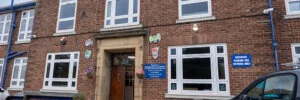
Named after one of Poulton-le-Fylde’s most respected public servants, Hodgson School has educated generations of young people since opening in 1932. Built on Moorland Road during a period of significant expansion in the town, the school was established to provide secondary education for children from Poulton and the surrounding Fylde villages at a time when educational opportunities were becoming increasingly accessible. The driving force behind the school’s creation was Alderman William Hodgson JP, later Sir William Hodgson, who was Chairman of the Lancashire Education Committee. Recognising the need for a modern secondary school to serve the growing rural community, he…