



















Author: Ed

Blackpool Trains the RAF’s Women Photographers

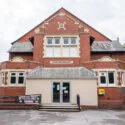
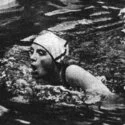
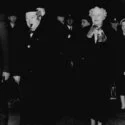
During the Second World War, Blackpool Technical College became home to one of Britain’s most important military training establishments when the Royal Air Force No. 2 School of Photography was established there in August 1940. Based at the Technical College and the neighbouring Palatine Secondary School on Palatine Road, the school was created to meet the growing demand for highly trained photographers and photographic technicians whose work would prove vital to Allied intelligence. Initially training male RAF personnel, the school began accepting members of the Women’s Auxiliary Air Force (WAAF) in 1941. The first intake of 26 women arrived on…

Poulton Auction Mart Becomes the Heart of the Fylde Farming Community

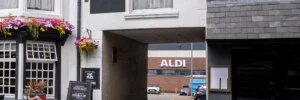
For almost seventy years, the Poulton Auction Mart was one of the busiest and most important livestock markets on the Fylde Coast. Established in 1897 on land behind the Golden Ball public house, the market became the focal point for generations of farmers, livestock dealers and auctioneers, transforming a former pub garden into a thriving centre of agricultural commerce. Before the auction mart was built, livestock trading took place in Poulton Market Place, where market days brought cattle, sheep and other farm animals into the centre of the town. As Poulton continued to grow during the nineteenth century, the increasing…

Poulton Library Opens a New Chapter for the Town

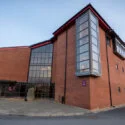
Standing on Blackpool Old Road at the junction with Queensway, Poulton Library has served the community since 1965, when it became the town’s first purpose-built modern public library. Its construction reflected Poulton-le-Fylde’s rapid post-war growth and the increasing demand for improved public services as the town expanded beyond its historic market centre. The library occupies the site of Dudley Hall, an old thatched cottage that had stood on Blackpool Old Road for many years. As Poulton entered a period of significant redevelopment during the 1960s, the cottage made way for a modern civic building designed to provide improved library facilities…

Farriers Cottage Preserves Poulton’s Equestrian Heritage

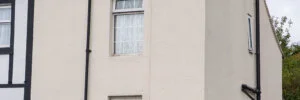
Standing at 26 Tithebarn Street, Farriers Cottage is one of Poulton-le-Fylde’s most distinctive historic buildings and a rare reminder of a trade that was once essential to everyday life. Built in 1844, the cottage was both the home and workplace of the town’s farrier, whose skills in shoeing horses and caring for working animals were vital to the local farming community and the bustling market town. During the nineteenth century, horses were central to transport, agriculture and commerce. Farmers relied upon them to plough fields and pull carts, while carriers, tradespeople and coach operators depended upon strong, healthy horses to…

Skippool From Historic Shipbuilding to a Modern Boating Community

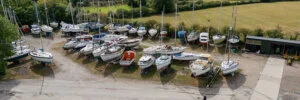
Today, one of the most recognisable landmarks at Skippool Creek is the rusting hull of the MV Good Hope, a derelict vessel resting in the mud beside the River Wyre. To many passing motorists it is simply an abandoned ship, but its presence serves as a striking reminder of a time when Skippool was one of Lancashire’s busiest centres of shipbuilding and maritime trade. Although the modern vessel has no proven connection with the earlier sailing ship Hope, the shared name has become symbolic of the creek’s remarkable maritime heritage. Long before Fleetwood was created, Skippool was the principal port…

Ball Street’s Historic Houses Make Way for a New Poulton

For centuries, the south side of Ball Street beside the Golden Ball was lined with a remarkable collection of timber-framed houses, cottages and commercial buildings that represented some of the oldest surviving architecture in Poulton-le-Fylde. Standing between the market square and St Chad’s Church, the closely packed buildings reflected the character of the medieval town, where homes, businesses and workshops developed gradually over generations to form a bustling centre of everyday life. The historic row consisted of a mixture of dwellings and commercial premises that had evolved to meet the changing needs of the community. Contemporary records describe three shops,…

The Sycamores Home of Sir William Hodgson

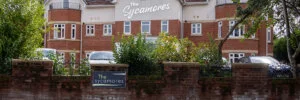
Portrait of Sir William Hodgson by John Archibald Alexander Berrie; Lancashire County Council. The Sycamores once stood on Blackpool Old Road in Poulton-le-Fylde, approximately opposite the site of today’s Poulton Library. Although the house has disappeared, its name survives in the modern residential development occupying the site. Its historical importance is closely connected with the Hodgson family and, above all, Sir William Hodgson, whose career in local government eventually took him to the chairmanship of Lancashire County Council. The Hodgsons were established in Poulton by the early nineteenth century and accumulated a considerable portfolio of property in and around the…

Poulton Savings Bank Encourages a New Culture of Saving

Standing at the corner of Vicarage Road and Chapel Street, the former Poulton Savings Bank is one of the town’s most distinctive historic buildings and a reminder of a time when encouraging ordinary working people to save was seen as both a financial and social responsibility. Founded on 23 February 1822, the bank was established to provide a secure place where local people could deposit even the smallest amounts of money, helping families prepare for times of hardship while promoting thrift and financial independence. It was one of the earliest trustee savings banks to be established in Lancashire following the…

Crave Pie Shop operates where Longs Booksellers and The Plough stood

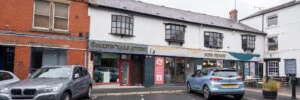
For centuries, the Plough Inn stood on Church Street in the heart of Poulton-le-Fylde, serving local residents, farmers, merchants and travellers visiting the town’s busy weekly markets. Occupying the site now home to Crave (renamed from The Pork Shop) at 11 Church Street, it was one of Poulton’s earliest recorded public houses and formed part of the historic streetscape linking Market Place with St Chad’s Church. Although the exact date of its establishment has not survived, the Plough is known to have existed by the eighteenth century, when Poulton had developed into the principal market town of the Fylde. Inns…

James Baines Leaves an Educational Legacy Across the Fylde

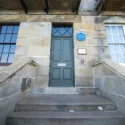
Visitors walking along Breck Road in Poulton-le-Fylde will find one of the town’s Heritage Plaques commemorating James Baines, a man whose generosity transformed education across the Fylde. Installed by the Poulton-le-Fylde Historical & Civic Society, the plaque marks the site associated with one of the area’s greatest benefactors, whose charitable vision has continued to benefit local children for more than three centuries. James Baines was a prosperous draper, landowner and philanthropist with strong connections to Poulton. When he died in 1717, his will established a charitable endowment designed to provide lasting educational opportunities for the children of the ancient parish….