










































Among the many attractions of Stanley Park, few are as instantly recognisable or as fondly remembered as the Flower Clock. Situated close to the boating lake and Italian Gardens, this colourful horticultural feature has delighted generations of residents and visitors, combining practical timekeeping with the artistry of floral design. Nearly a century after Stanley Park first opened, the Flower Clock remains one of Blackpool’s most distinctive landmarks and a symbol of the town’s proud gardening heritage.
Stanley Park officially opened on 2 October 1926, and was designed by renowned landscape architect Thomas Mawson as a grand municipal park for one of Britain’s fastest-growing seaside resorts. The park featured ornamental gardens, woodland walks, sports facilities and carefully planned landscapes intended to provide beauty and recreation for both locals and holidaymakers. Today, Stanley Park is recognised as one of the finest historic parks in the country and holds Grade II* listed status.
Although the exact date of the Flower Clock’s installation has yet to be established, surviving evidence confirms that it was already a well-known feature by 1939. A postcard produced that year depicts the Floral Clock within Stanley Park, proving that it had become part of the park’s landscape before the outbreak of the Second World War. Given Stanley Park’s emphasis on ornamental gardening during its early years, it is likely that the clock was created sometime between the park’s opening in 1926 and the late 1930s, when floral displays were an important attraction in Britain’s parks and resorts.
Flower clocks became popular across Britain during the early twentieth century, inspired by the famous floral clock installed in Edinburgh’s Princes Street Gardens in 1903. Unlike traditional clocks, floral clocks conceal their working mechanisms beneath carefully planted bedding displays, allowing the clock hands to move across a living dial created from thousands of flowers and plants. At Stanley Park, the Flower Clock quickly became a favourite attraction, appearing on postcards and photographs as visitors paused to admire both its craftsmanship and colourful seasonal displays.
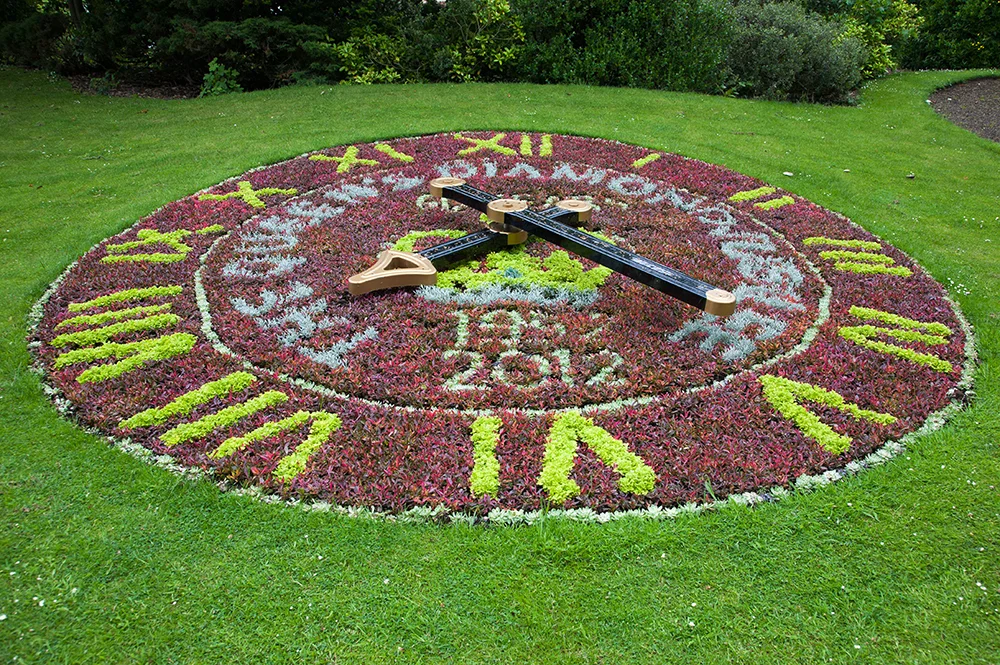
The Floral clock in Stanley Park, Blackpool, celebrating the Queen’s Diamond Jubilee in 2012. © Alamy
Over the decades, the Flower Clock has undergone numerous redesigns as gardening styles evolved and planting schemes changed. Its appearance has never remained static, with each generation of gardeners bringing fresh ideas while preserving the character of the original feature. In recent years, the Friends of Stanley Park have worked alongside Blackpool Council to maintain and enhance the clock, ensuring that it continues to thrive as one of the park’s most cherished attractions. In 2022, the Floral Clock received a significant makeover, introducing a refreshed design that reflected the continuing importance of horticulture within Stanley Park.
The Flower Clock entered a new chapter in 2026 as Stanley Park celebrated its centenary. To mark one hundred years since the park’s opening, a special commemorative Floral Clock was unveiled as part of a wider programme of anniversary events and restoration projects. Funded by Blackpool Council and the Friends of Stanley Park, the redesigned display paid tribute to a century of history while looking forward to the park’s future. The relaunch demonstrated that even in an age dominated by digital technology, the simple pleasure of telling the time from a display of flowers still captures the imagination.
Today, the Flower Clock remains one of Stanley Park’s most photographed and admired features. While visitors are often drawn to the Italian Gardens, the boating lake and the park’s iconic Art Deco architecture, the Floral Clock continues to provide a colourful focal point that changes with the seasons. More than simply a timepiece, it is a living piece of Blackpool’s heritage, reflecting the vision, creativity and civic pride that shaped Stanley Park from its earliest days. As the park enters its second century, the Flower Clock stands as a reminder of the enduring appeal of beauty, craftsmanship and public spaces created for everyone to enjoy.
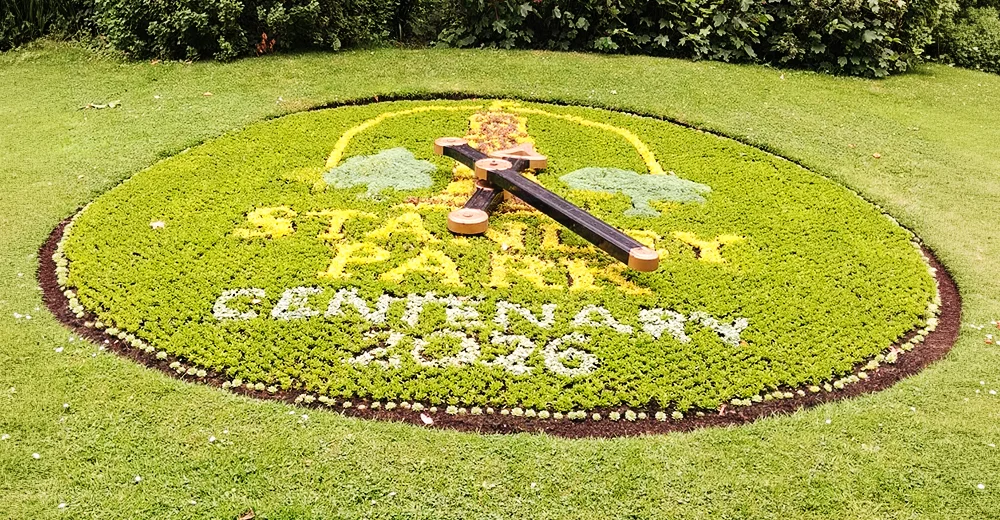
The Floral clock in Stanley Park, Blackpool, June 2026, celebrating Stanley Park’s Centenary: 1926 – 2026.


