



















Long before the era of luxury coaches and family cars, the charabanc transformed the way people explored the Fylde Coast. These open-sided motor vehicles became one of the defining sights of the early twentieth century, carrying thousands of day-trippers from Lancashire’s mill towns to Blackpool, Fleetwood, Lytham St Annes and the surrounding villages. For many working-class families, a charabanc excursion provided their first opportunity to enjoy a day beside the sea.
The word charabanc originated from the French char à bancs, meaning “wagon with benches”. Early charabancs were little more than motorised wagons fitted with rows of wooden seats and protected only by a folding canvas roof that could be erected if rain arrived. They were noisy, uncomfortable and exposed to the elements, yet they offered an affordable means of transport at a time when private motor cars remained beyond the reach of most families. Before the First World War, charabancs were used almost exclusively for day excursions, eventually giving way to more comfortable coaches during the 1920s and 1930s.
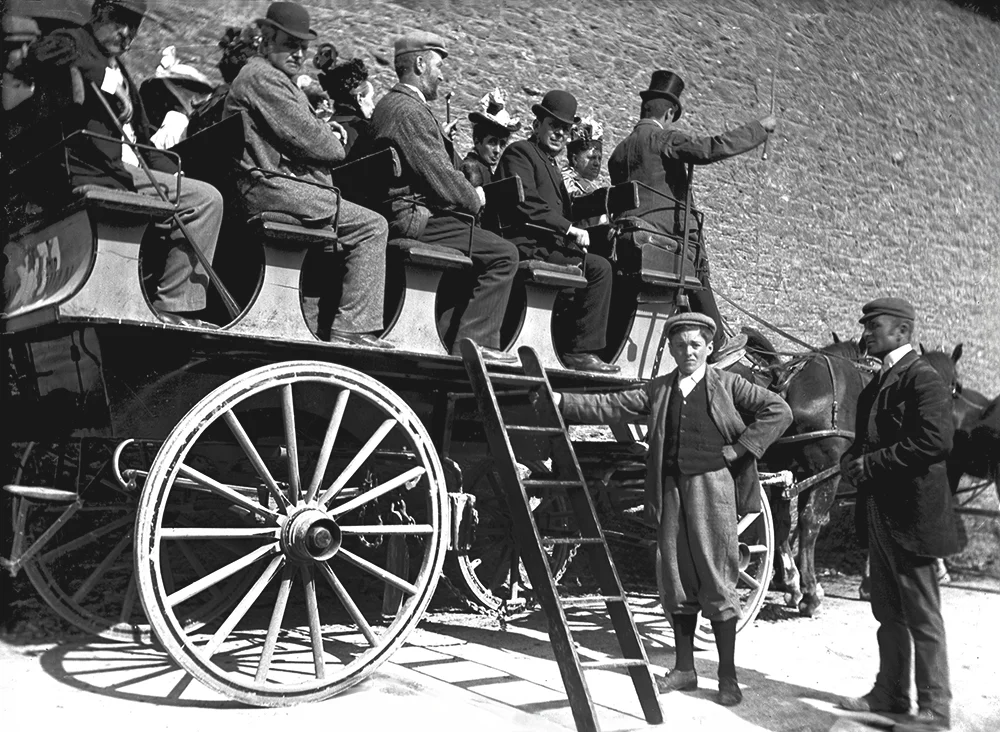
Likely in Torbay, Devon. Probably pre-1891 based on the death date of one of the occupants. Scan of a glass plate (the work of an unnamed amateur photographer), from a family image collection held by the uploader. Date before 1891. Historic photograph (public domain). Digital restoration and enhancement © Deeper Blue Marketing & Design Ltd 2026.

The growth of charabanc travel coincided with Blackpool’s emergence as Britain’s leading seaside resort. Although the railway had already brought millions of visitors to the town, many smaller communities across Lancashire remained poorly served by rail. Charabanc operators filled this gap, collecting passengers directly from villages, factories, working men’s clubs and churches before setting off for the Fylde Coast. Annual works outings became an eagerly anticipated event, with employers, social clubs and Sunday schools organising excursions to Blackpool throughout the summer months.
Blackpool quickly became the principal destination, but the popularity of charabanc travel also benefited neighbouring towns. Visitors combined trips to Fleetwood, Lytham, St Annes, Cleveleys and Poulton-le-Fylde, helping to spread tourism across the Fylde Coast. Beauty spots such as Skippool, Shard Bridge and the banks of the River Wyre also became regular stopping places, with tea rooms, cafés and inns welcoming organised parties. One well-known example was Mrs Mac’s Tea House at Skippool, which became a favourite refreshment stop for Blackpool charabanc operators during the inter-war years.
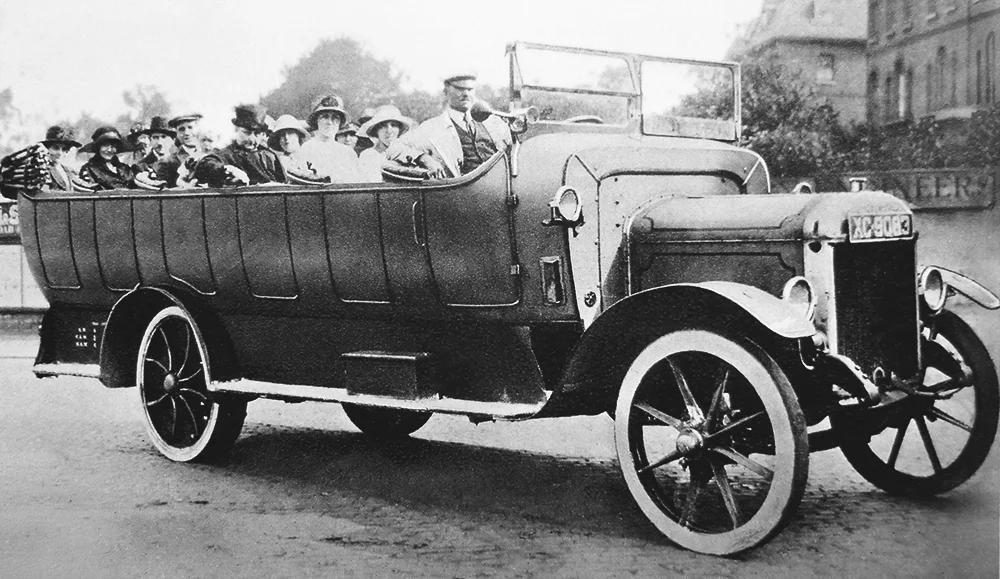
English: Motorised Charabanc of 1920s. Photo in the Book of Knowledge, by Harold F.B. Wheeler, 1924. Historic photograph (public domain). Digital restoration and enhancement © Deeper Blue Marketing & Design Ltd 2026.

The popularity of charabancs encouraged local transport entrepreneurs to establish new businesses. In 1917, William Marshall & Son (Blackpool) Ltd received a licence to operate a motor car and char-a-banc business from South Shore Garage on Blackpool Promenade. Their success inspired other operators to enter the market, helping to expand public road transport throughout the Fylde. These early services eventually paved the way for the development of regular motor bus routes and the growth of municipal transport companies during the 1920s.
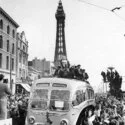
A charabanc outing was about much more than the journey itself. Passengers often decorated the vehicles with banners, sang songs along the route and enjoyed a full day’s entertainment once they reached the coast. For many children, it was the highlight of the year, offering their first glimpse of the sea, Blackpool Tower, the three piers and the bustling promenade. These excursions helped establish Blackpool as the destination for factory outings, club trips and family celebrations, reinforcing its reputation as Britain’s holiday capital.
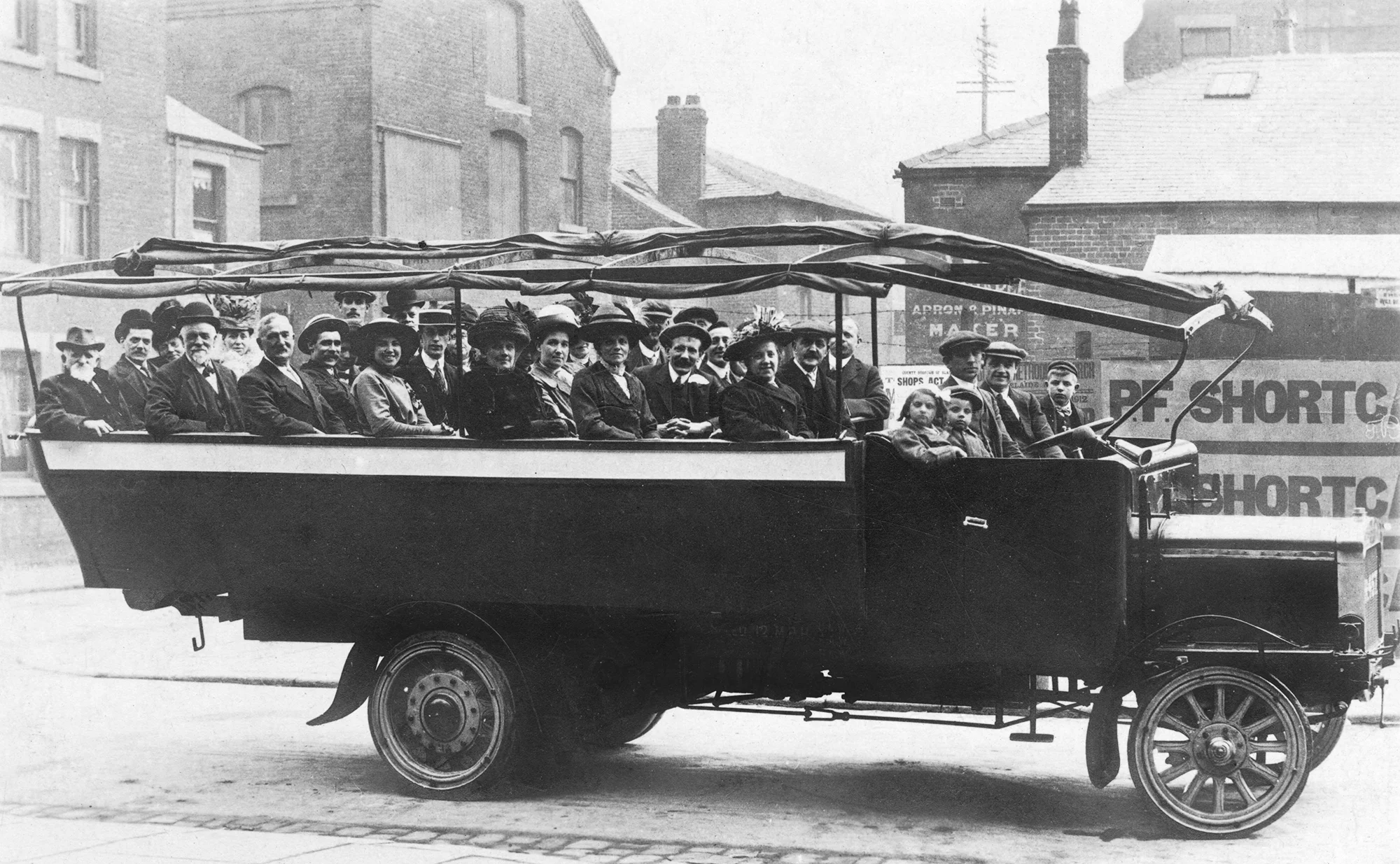
Historic photograph taken in Blackpool, from Alamy. c1900. Digital restoration and enhancement © Deeper Blue Marketing & Design Ltd 2026
By the 1930s, improved roads and the introduction of more comfortable enclosed coaches gradually brought the charabanc era to an end. Nevertheless, its influence on the Fylde Coast was profound. The charabanc made seaside holidays affordable for ordinary working people, encouraged tourism beyond the railway network and helped support countless hotels, cafés, attractions and businesses throughout the region.
Today, the charabanc remains one of the enduring symbols of Britain’s early motor tourism. Although replaced by modern coaches, its legacy lives on in countless photographs showing open vehicles filled with smiling holidaymakers arriving on the Fylde Coast, marking the beginning of a tradition of day trips and excursions that helped shape the identity and prosperity of Blackpool and its neighbouring towns.
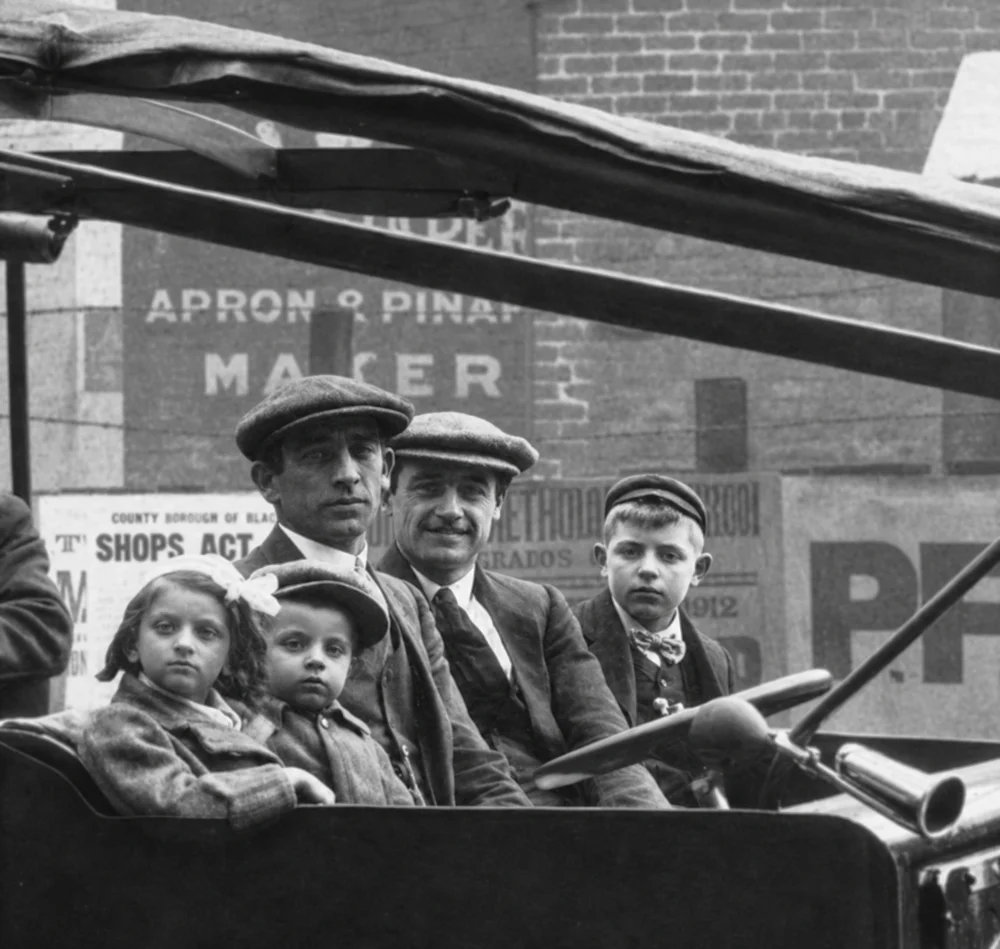
Featured Image © Historic photograph from Alamy. c1900. Digital restoration and enhancement © Deeper Blue Marketing & Design Ltd 2026
Background Image © Historic photograph from Alamy. c1900. Digital restoration and enhancement © Deeper Blue Marketing & Design Ltd 2026


