


















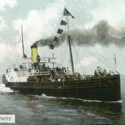
















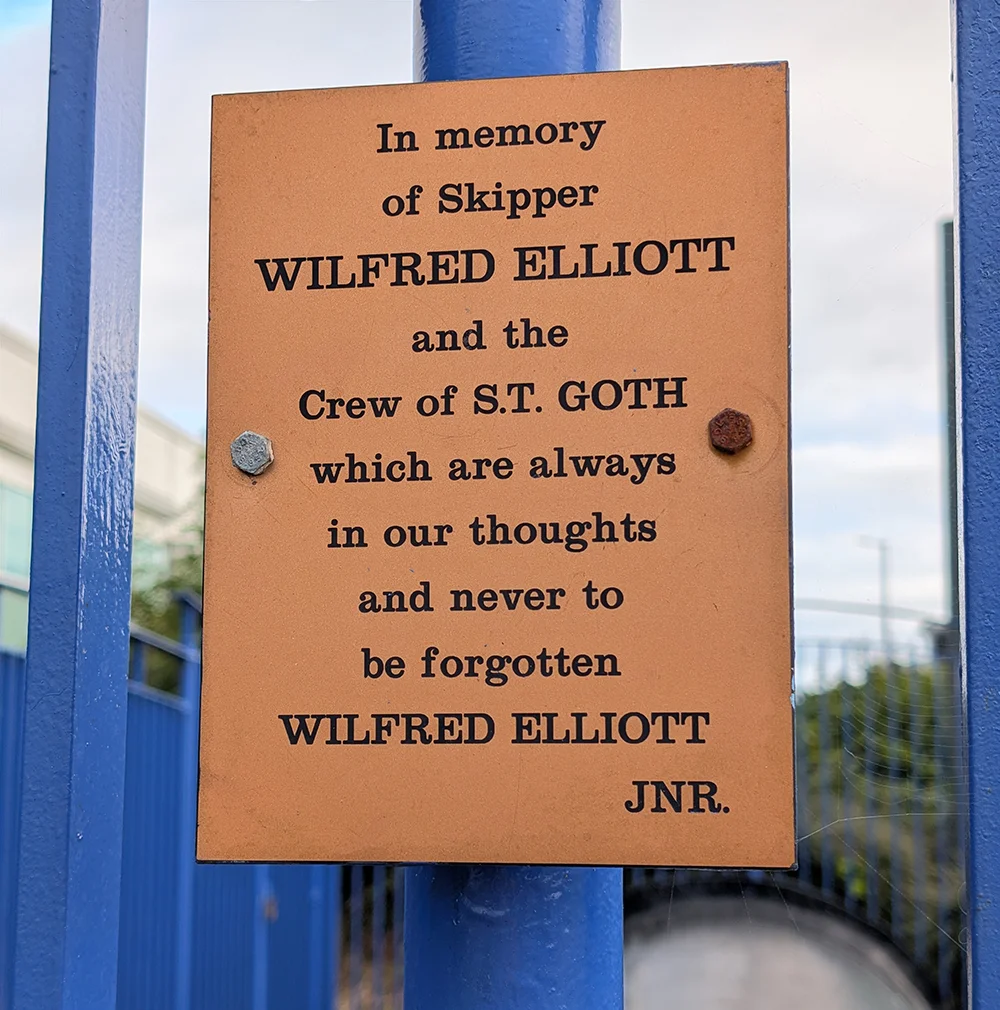
 The loss of the steam trawler Goth (FD52) in December 1948 remains one of the greatest tragedies in Fleetwood’s maritime history. Lost in a violent North Atlantic storm off the north-west coast of Iceland, the vessel disappeared with all 21 men on board, leaving families across Fleetwood, Blackpool and Lancashire devastated. The disaster became a defining moment in the history of Fleetwood’s fishing industry and a poignant reminder of the dangers faced by the town’s deep-sea trawlermen.
The Goth was built in 1925 by Cook, Welton & Gemmell Ltd. at Beverley for Hellyer Bros Ltd. of Hull, where she was registered as H211. During the Second World War she was requisitioned by the Royal Navy and converted into a minesweeper, serving throughout the conflict before returning to commercial fishing. In 1946, she was purchased by the Wyre Steam Trawling Company Ltd. and re-registered at Fleetwood as FD52, joining one of Britain’s largest distant-water fishing fleets.
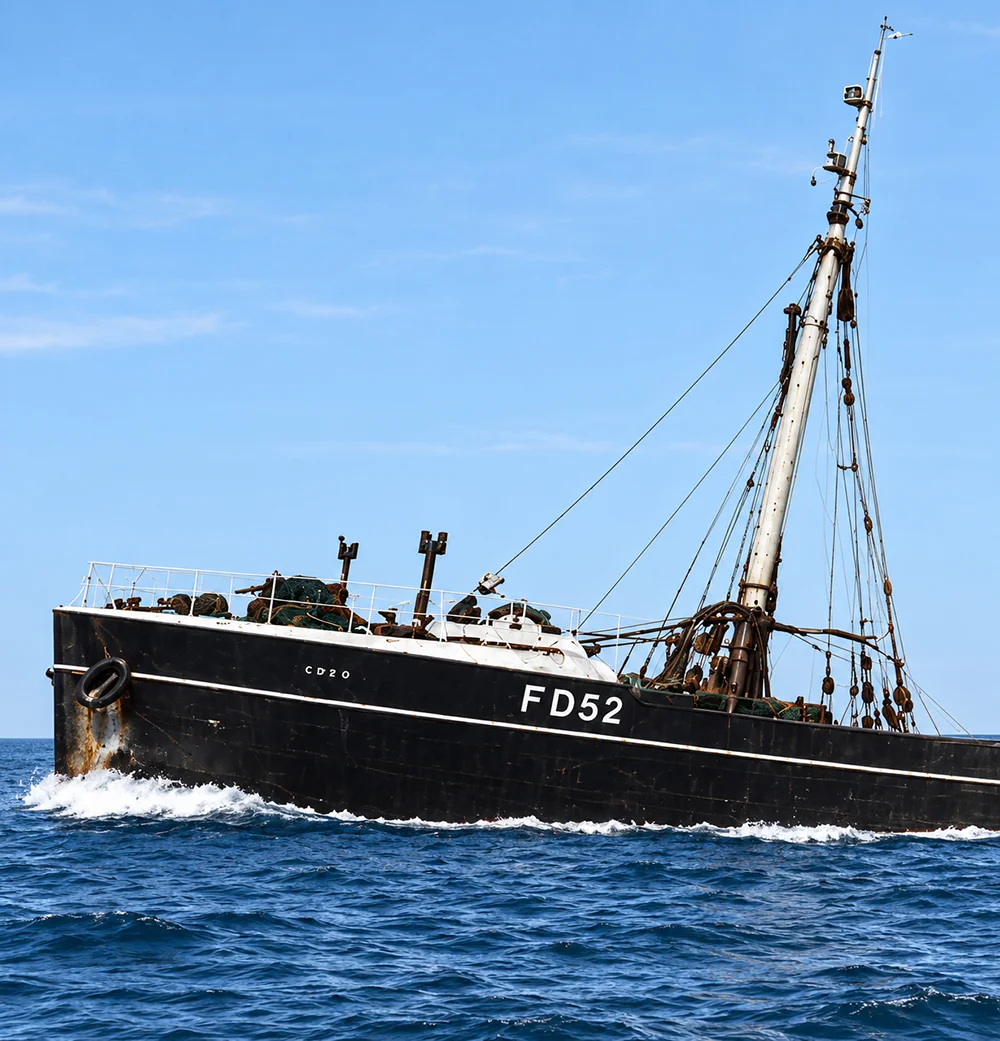
Digital restoration and enhancement of archival image © Deeper Blue Marketing & Design Ltd 2026.
On 4 December 1948, Goth departed Fleetwood for the rich fishing grounds around Iceland, carrying provisions for a voyage of approximately one month. Commanding the vessel was Skipper Wilfred “Wink” Elliott, a highly respected 36-year-old trawlerman who lived on Warbreck Hill Road, Blackpool. Although Elliott was a Blackpool resident, the majority of his crew came from Fleetwood, reflecting the close ties between the two neighbouring communities and the fishing industry that supported them.
Fishing around Iceland during winter was among the most hazardous occupations in Britain. Crews routinely faced hurricane-force winds, mountainous seas, freezing temperatures and heavy icing, any of which could quickly place a vessel in grave danger. During December 1948, an exceptionally severe storm swept across the Icelandic fishing grounds, forcing many trawlers to abandon fishing and seek shelter.
On 16 December, Skipper Elliott sent what would become Goth‘s final wireless message, reporting that he intended to make for the shelter of Aðalvík Bay on Iceland’s remote north-west coast. No further transmissions were ever received. When the vessel failed to arrive, an extensive air and sea search was launched by British and Icelandic authorities, but despite days of searching, no survivors or wreckage were found. Inquiries later concluded that Goth had almost certainly been overwhelmed by the extreme weather, although the precise circumstances of her loss were never established.
 The tragedy sent shockwaves through Fleetwood. All 21 crew members perished, including 13 men from Fleetwood, while others came from Blackpool, Preston, Bolton, Liverpool and neighbouring Lancashire communities. In a town where generations of families depended upon the fishing industry, almost every resident knew someone affected by the disaster. The loss was widely mourned, and the names of the crew became permanently woven into Fleetwood’s maritime history.
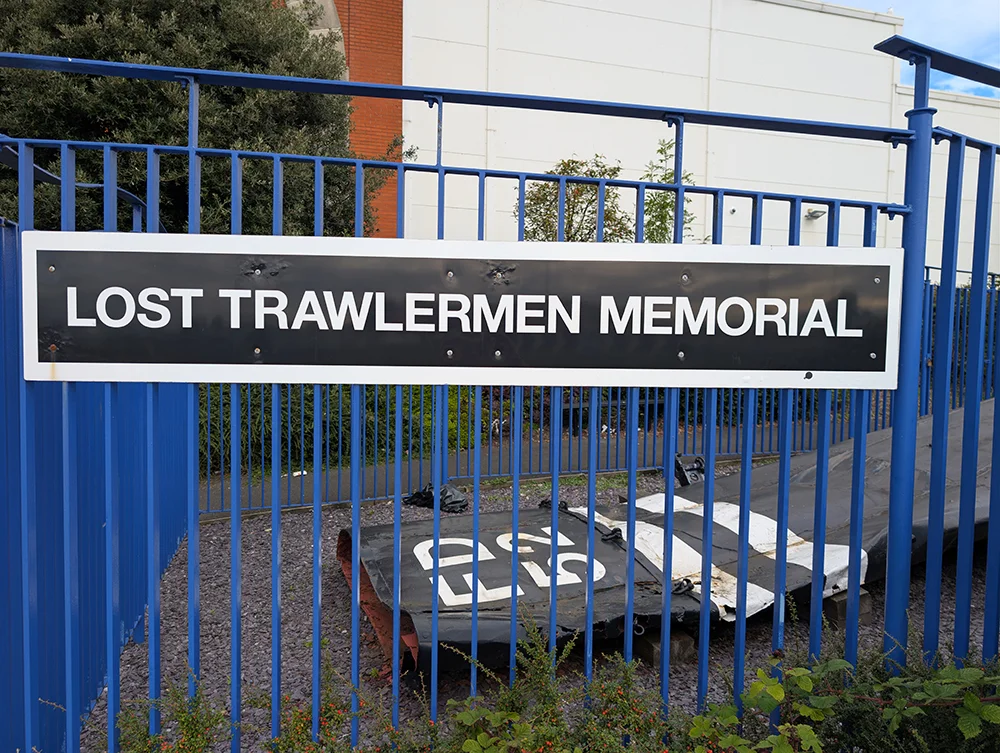
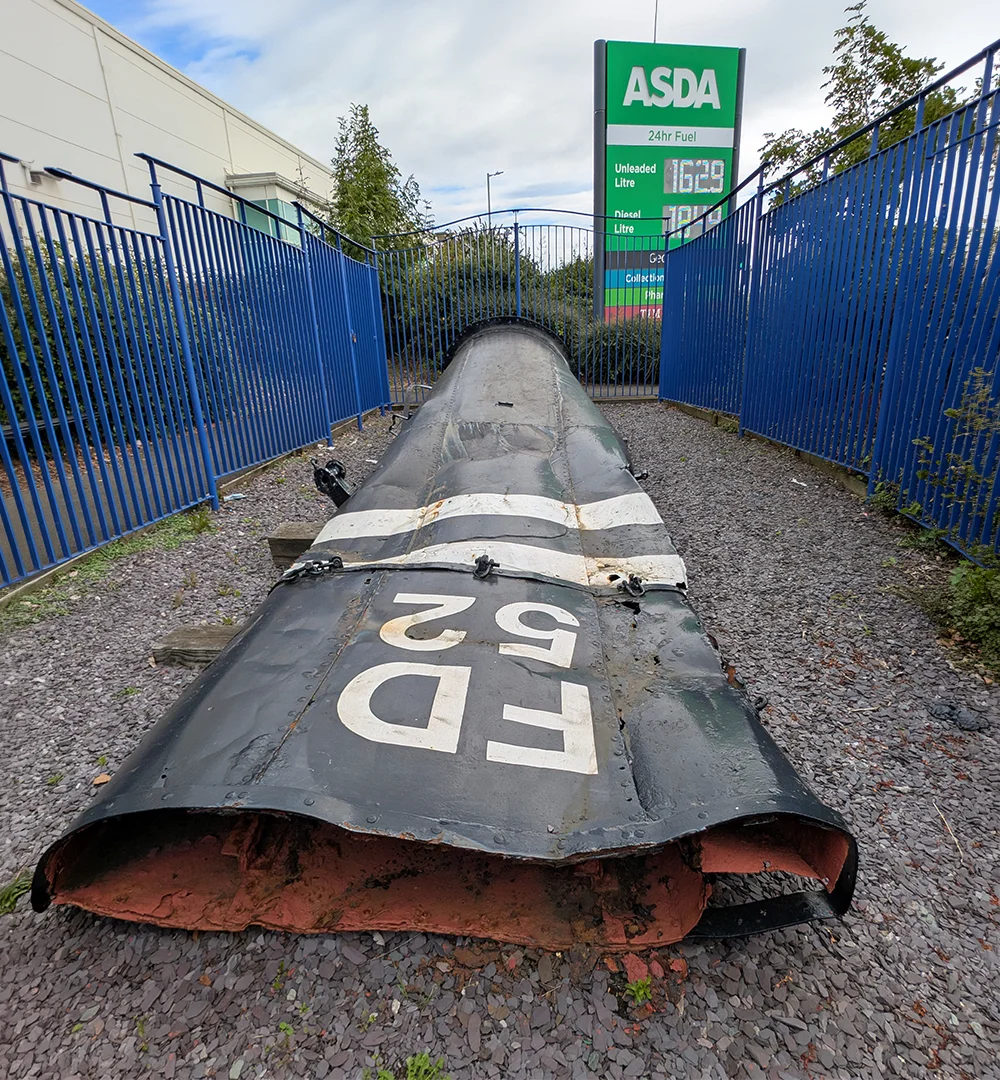 For almost fifty years the sea gave up no clues to the vessel’s fate. Then, on 15 November 1997, the Icelandic trawler Helga (RE49) accidentally snagged a large steel funnel in its fishing gear while working close to the area where Goth had disappeared. Examination in Reykjavík confirmed it to be the missing Fleetwood trawler’s funnel. It was subsequently returned to Fleetwood, where it became the centrepiece of the Lost Trawlermen Memorial at the junction of Dock Street and Station Road.
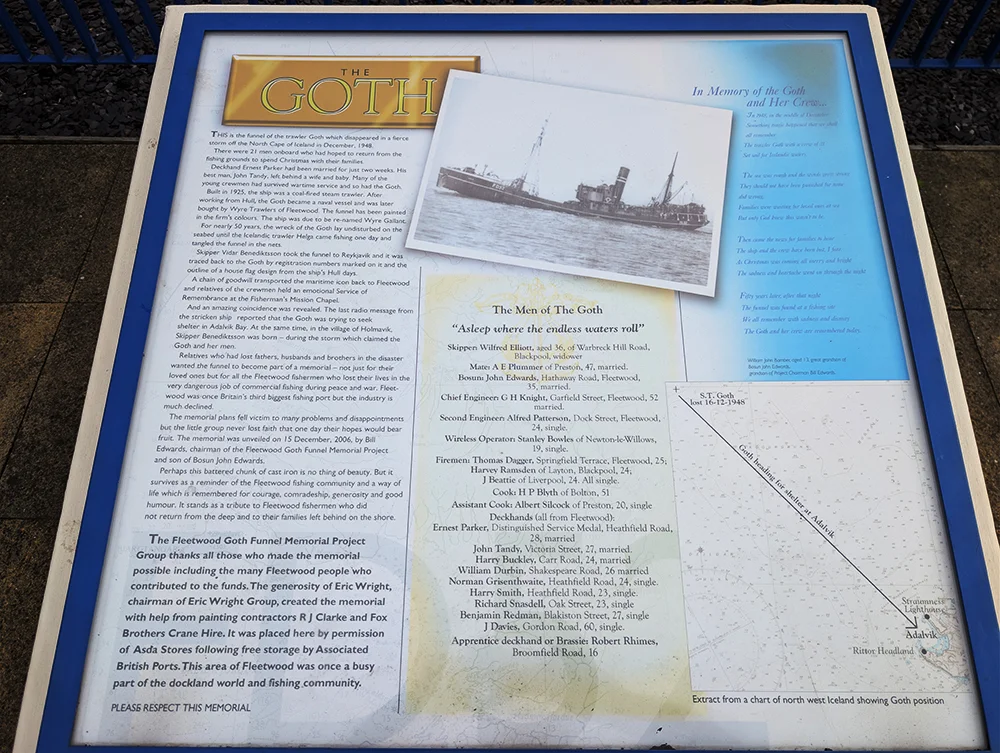 Today, the recovered funnel stands as one of Fleetwood’s most powerful memorials. While it commemorates the crew of Goth, it also honours the hundreds of Fleetwood fishermen who never returned from the sea. Among those remembered is Skipper Wilfred “Wink” Elliott, whose final decision to seek shelter rather than risk the worsening storm reflected the experience and judgement of a seasoned fisherman. More than seventy-five years after the tragedy, the story of Goth continues to symbolise both the dangers of distant-water fishing and the courage of the men who made their living on some of the world’s most unforgiving seas.
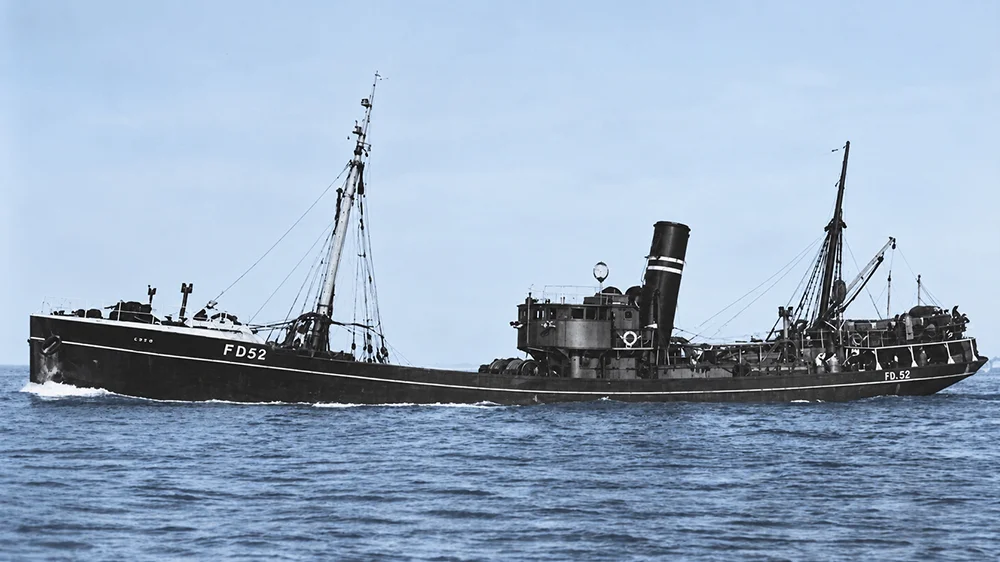
Goth FD52 Steam Trawler at Sea. Digital restoration and enhancement of archival image © Deeper Blue Marketing & Design Ltd 2026.
Images by © Mitchell Morton


