



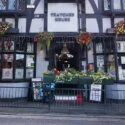

































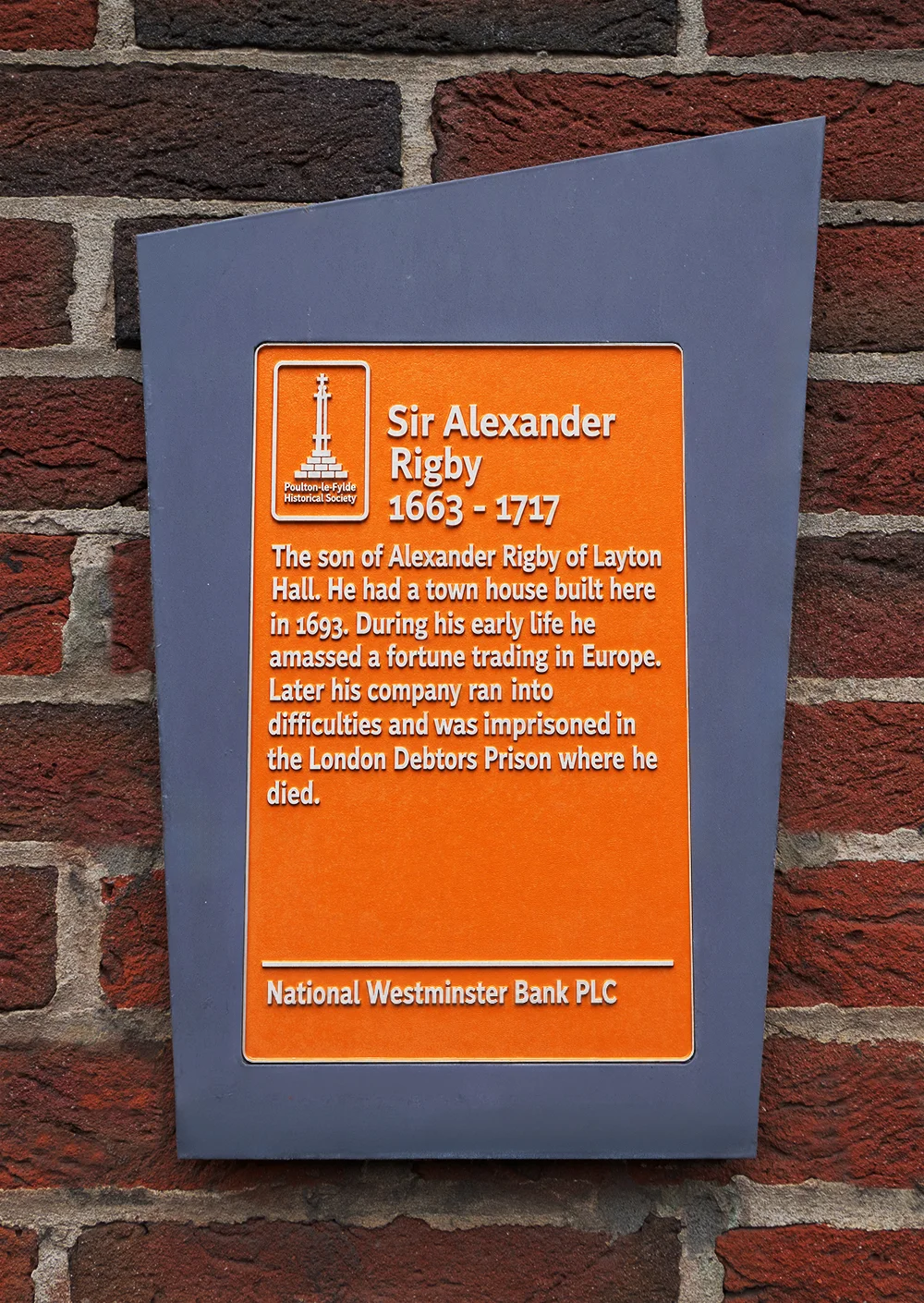
Although best known as the owner of Layton Hall, Sir Alexander Rigby also left a lasting mark on Poulton-le-Fylde. In 1693, he built an impressive town house on the south side of Market Place, creating one of the finest residences in the town. More than three centuries later, the building survives, and the Rigby family coat of arms together with the date 1693 can still be seen on its exterior, providing a tangible link with one of the Fylde’s most influential families.
The Rigbys were among Lancashire’s leading landowning families. Their estates included Layton, Great and Little Layton, Warbreck, Blackpool, Marton and extensive lands elsewhere in the county. Sir Alexander inherited the family’s Fylde estates and served as High Sheriff of Lancashire in 1691–92, placing him among the county’s most prominent public figures.
 The Poulton house was probably intended as a convenient winter residence. At the end of the seventeenth century, Poulton was the principal market town of the Fylde and home to many of the area’s leading merchants, clergy and landowners. Travelling between country estates during the winter months could be difficult, and a substantial house in the town allowed Sir Alexander and his family to remain close to business, markets and society while avoiding the isolation of Layton Hall.
Despite his wealth and status, Sir Alexander’s fortunes declined dramatically. Contemporary accounts describe him as an enthusiastic gambler, while the financial consequences of his family’s longstanding support for the Royalist cause during the English Civil War had already weakened the estate. Burdened by debt, he was eventually forced to sell much of the family’s property in Layton and Poulton for the benefit of his creditors. Historical sources also record that he was imprisoned for debt before being released following an Act of Parliament passed during the first year of the reign of George I.
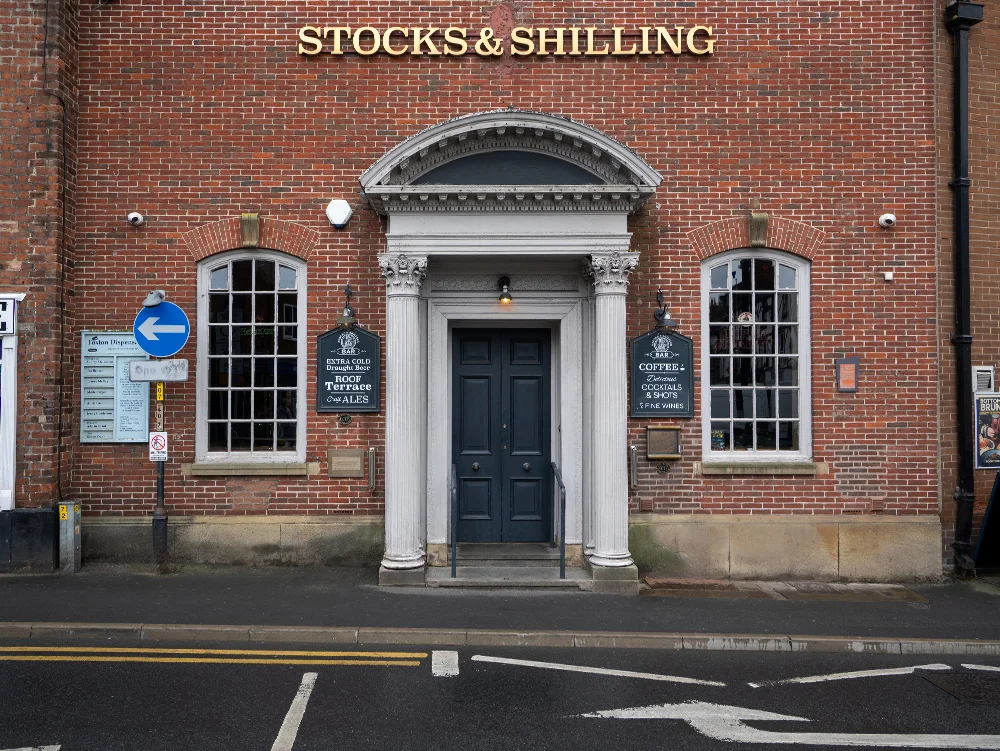
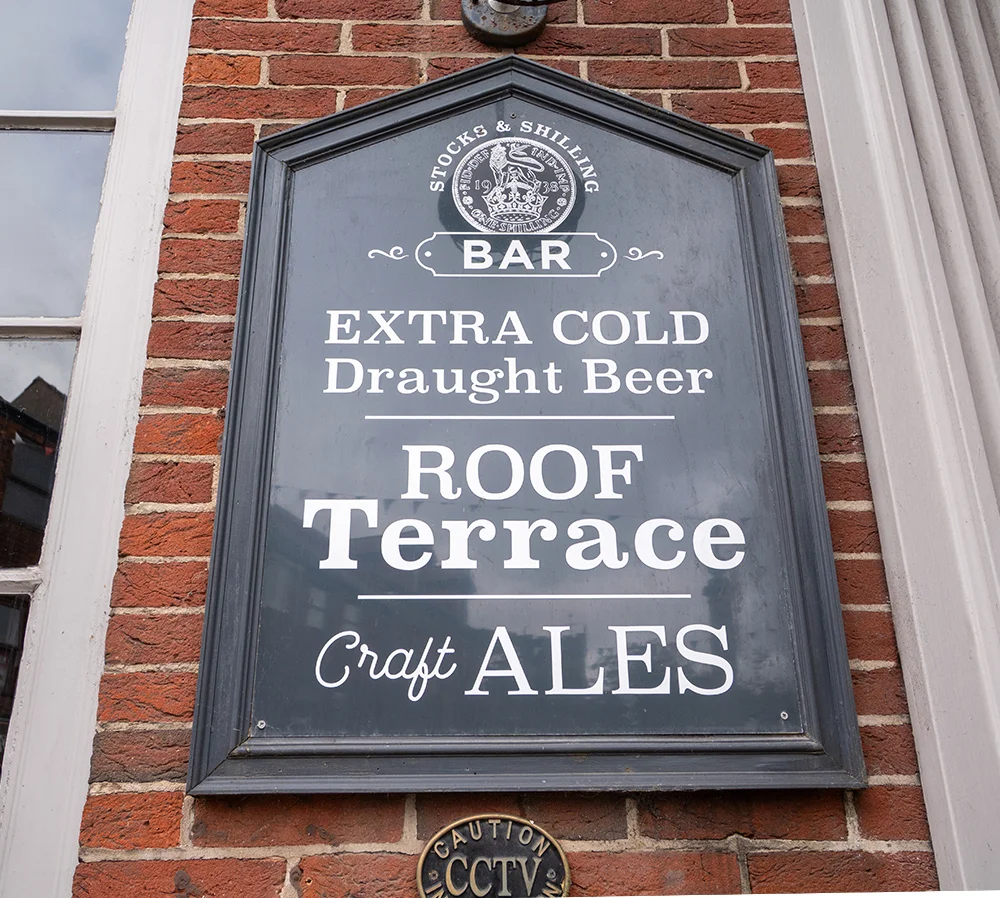 After his release, Sir Alexander made the Poulton house his permanent home. Having lost Layton Hall, he spent the remainder of his life living in the town, where his residence overlooked the busy Market Place. The building became a reminder of both the prestige the Rigby family once enjoyed and the dramatic reversal of fortune that brought one of Lancashire’s leading landowners to live out his final years away from his ancestral estate.
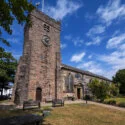
Although the interior has been altered over the centuries, the house remains one of Poulton’s most significant historic buildings. The carved Rigby arms and the date 1693 continue to overlook the Market Place, preserving the memory of a family that played an important role in the development of the Fylde. Nearby, St Chad’s Church still contains the Rigby family pew, dating from 1636, another surviving reminder of their long association with Poulton.
Today, Sir Alexander Rigby’s house stands as one of the oldest surviving domestic buildings in Poulton-le-Fylde. Its story reflects both the influence of the Rigby family and the changing fortunes of the Fylde’s landed gentry, while its prominent position in Market Place ensures that this chapter of the town’s history remains visible more than 300 years after it was first built.
Images by © Deeper Blue Marketing & Design Ltd


