




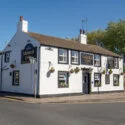


















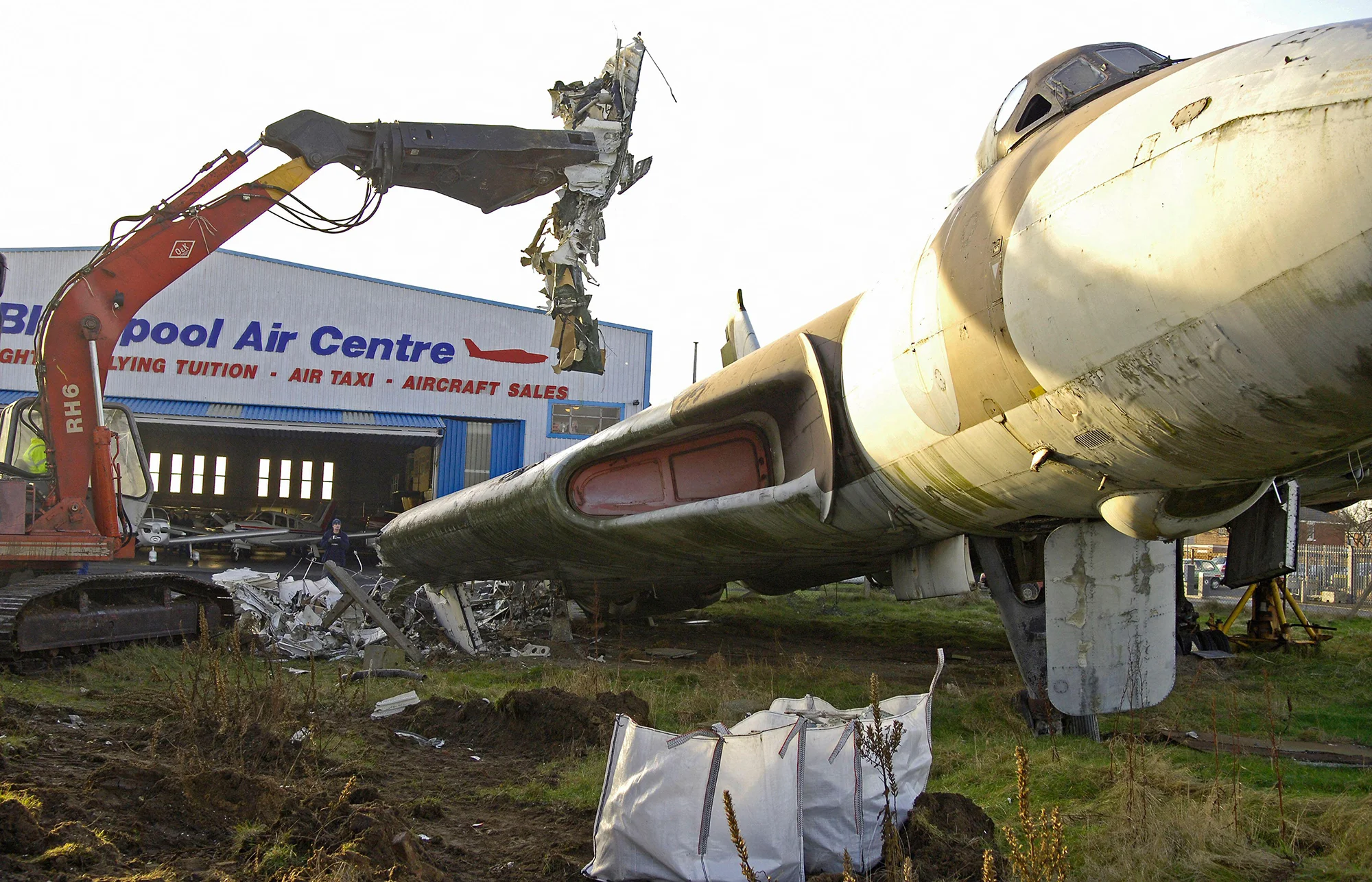
After standing at the entrance to Blackpool Airport for 23 years the Vulcan bomber was dismantled and sent for recycling in January of 2006, © Alamy
For more than two decades, one of the most recognisable landmarks at Blackpool Airport was the imposing silhouette of an Avro Vulcan bomber standing beside the entrance on Squires Gate Lane. Visible to generations of residents, holidaymakers and aviation enthusiasts, the aircraft became synonymous with the airport itself, serving as a lasting reminder of Britain’s Cold War aviation heritage and the Fylde Coast’s important contribution to aerospace.
The aircraft, Avro Vulcan B.2 XL391, made its final flight on 16 February 1983 when it arrived at Blackpool Airport following its retirement from Royal Air Force service. During its operational career, XL391 had served with No. 44 Squadron and had been prepared as a reserve aircraft during Operation Black Buck, the long-range bombing campaign mounted during the Falklands War. Although it was never called into action, the Vulcan represented one of the most advanced strategic bombers of its generation and played an important role in Britain’s nuclear deterrent throughout the Cold War.
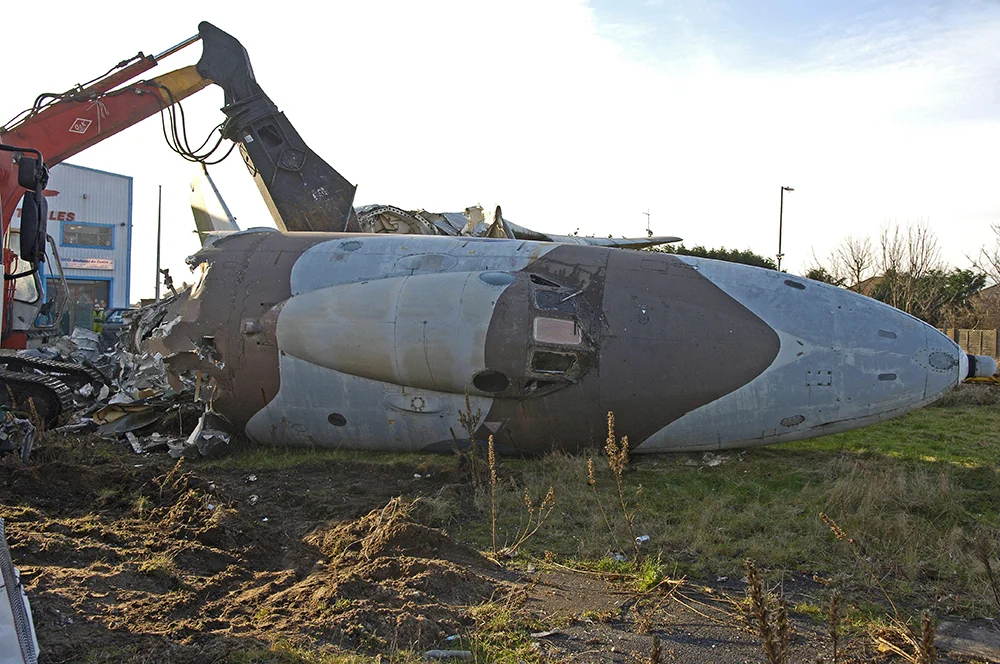
January of 2006, © Alamy
Rather than being placed in a museum, XL391 was positioned at the airport entrance, where it remained on public display for the next twenty-three years. Its distinctive delta-wing profile became one of Blackpool’s most familiar aviation landmarks, welcoming visitors arriving by road while celebrating the area’s long association with aircraft design, engineering and military aviation.
The aircraft attracted national attention in 2004 when it was offered for sale, with ambitious plans to relocate it elsewhere. However, years of exposure to the elements had taken their toll. Detailed inspections revealed extensive corrosion throughout the airframe, while the considerable cost of dismantling and transporting such a large aircraft ultimately proved prohibitive. With no viable preservation scheme in place, the Vulcan remained at Blackpool until a more difficult decision became unavoidable.
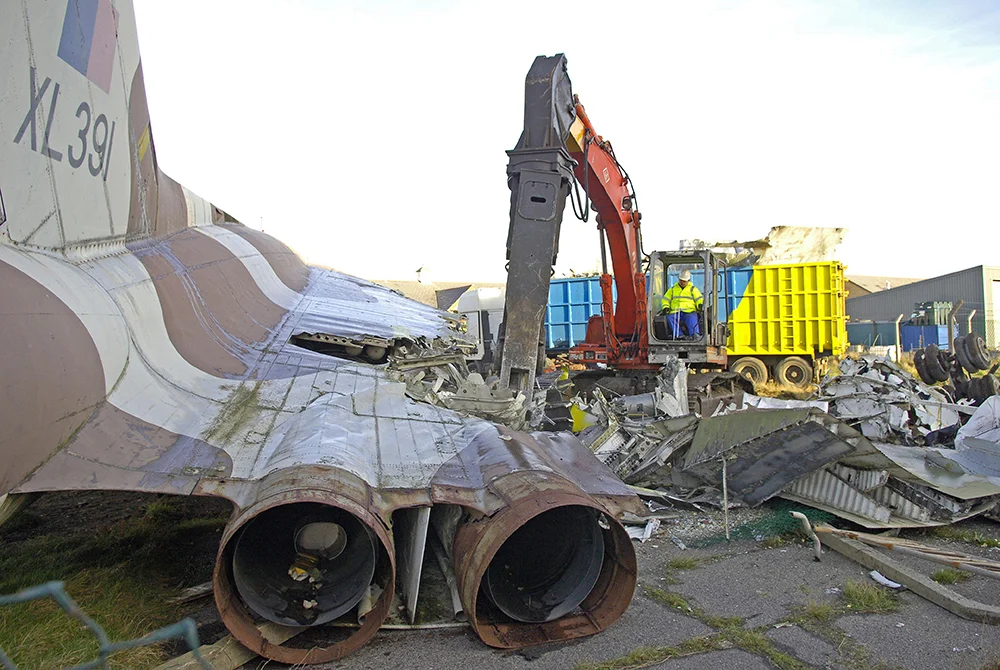
January of 2006, © Alamy
On 12 January 2006, after standing proudly at the airport entrance for twenty-three years, XL391 was dismantled and removed. The aircraft was broken up on site, bringing to an end one of Blackpool Airport’s most distinctive features. For many local people, the disappearance of the Vulcan marked the loss of far more than a roadside display; it represented the end of a highly visible link to Britain’s aviation history and to an aircraft that had become woven into the identity of the airport.
The Vulcan’s presence also reflected the Fylde Coast’s wider place within Britain’s aerospace story. The aircraft was designed and built by Avro, whose operations at nearby Woodford helped establish Lancashire as one of the country’s leading centres of aircraft manufacture. Blackpool Airport itself has a distinguished aviation history dating back to 1909, serving both civilian and military roles while supporting pilot training, aircraft maintenance and operations during the First and Second World Wars. Just a few miles away, BAE Systems at Warton has continued that legacy through the development and testing of aircraft including the Tornado, Eurofighter Typhoon and F-35 Lightning II, ensuring that the Fylde Coast remains at the forefront of British aerospace innovation.
Although XL391 no longer stands at the entrance to Blackpool Airport, it remains firmly embedded in local memory. For thousands of people who travelled along Squires Gate Lane, the unmistakable outline of the Vulcan became an enduring symbol of Blackpool’s rich aviation heritage and the town’s long-standing contribution to British military and civilian flight.
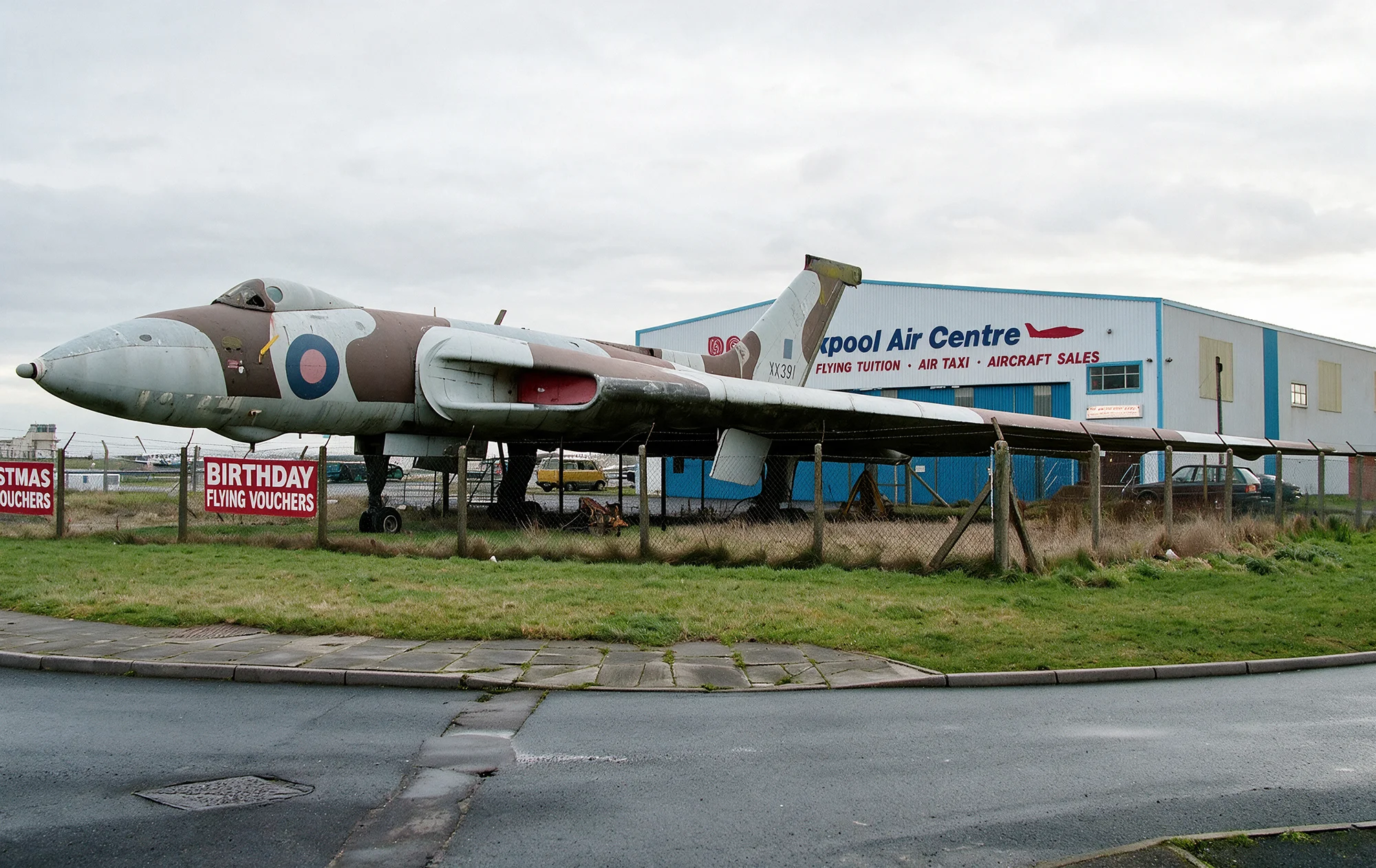
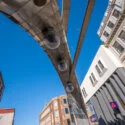
This Vulcan Bomber was on display at Blackpool Airport until 2006. The delta wings on this aircraft are huge, much bigger than most would imagine. Photographed by © Darren Wilson


