
















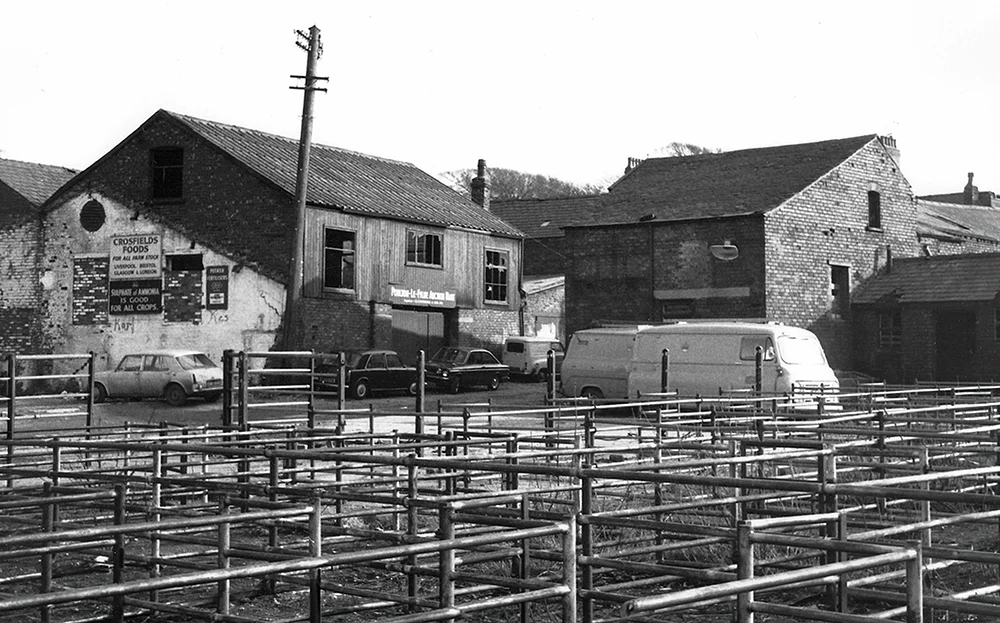
Historic photograph from 1973 provided by Red Rose Collections. Digital restoration and enhancement © Deeper Blue Marketing & Design Ltd 2026.
For almost seventy years, the Poulton Auction Mart was one of the busiest and most important livestock markets on the Fylde Coast. Established in 1897 on land behind the Golden Ball public house, the market became the focal point for generations of farmers, livestock dealers and auctioneers, transforming a former pub garden into a thriving centre of agricultural commerce.
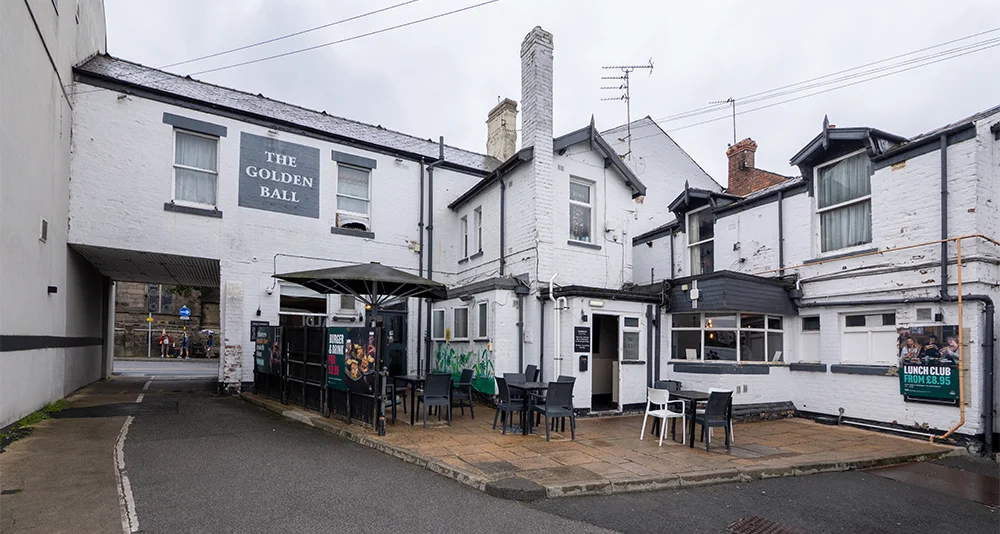
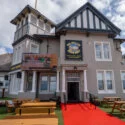
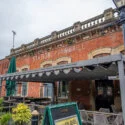
Outdoor seating in back of the Golden ball.
Before the auction mart was built, livestock trading took place in Poulton Market Place, where market days brought cattle, sheep and other farm animals into the centre of the town. As Poulton continued to grow during the nineteenth century, the increasing number of animals, traders and shoppers led to severe congestion. To relieve pressure on the streets while preserving the town’s long-established market tradition, a purpose-built auction mart was constructed behind the Golden Ball, providing dedicated facilities for the buying and selling of livestock.
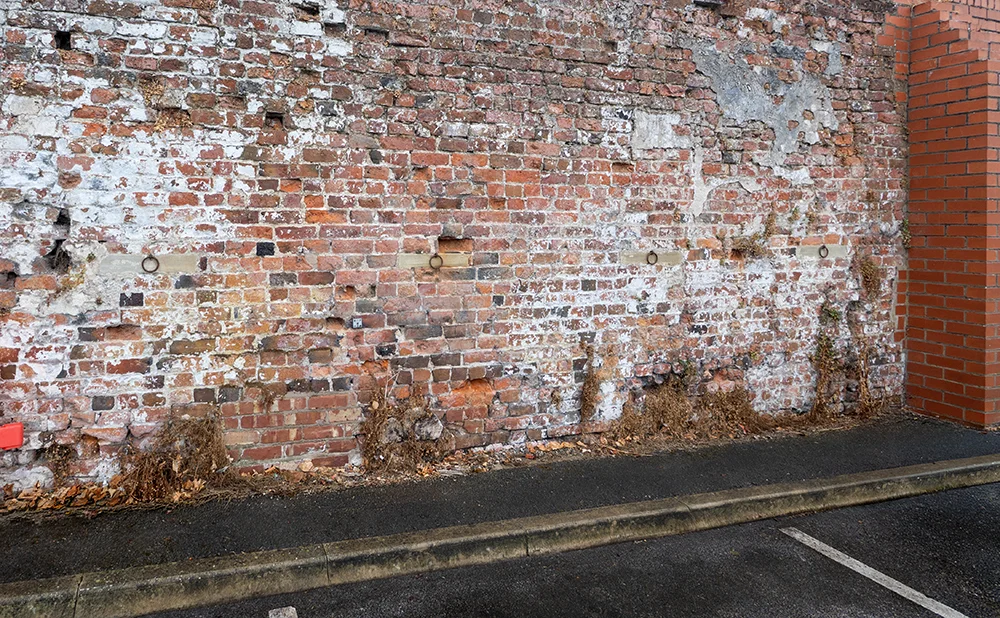
In the car park today, four bull rings can still be seen hanging on the wall.
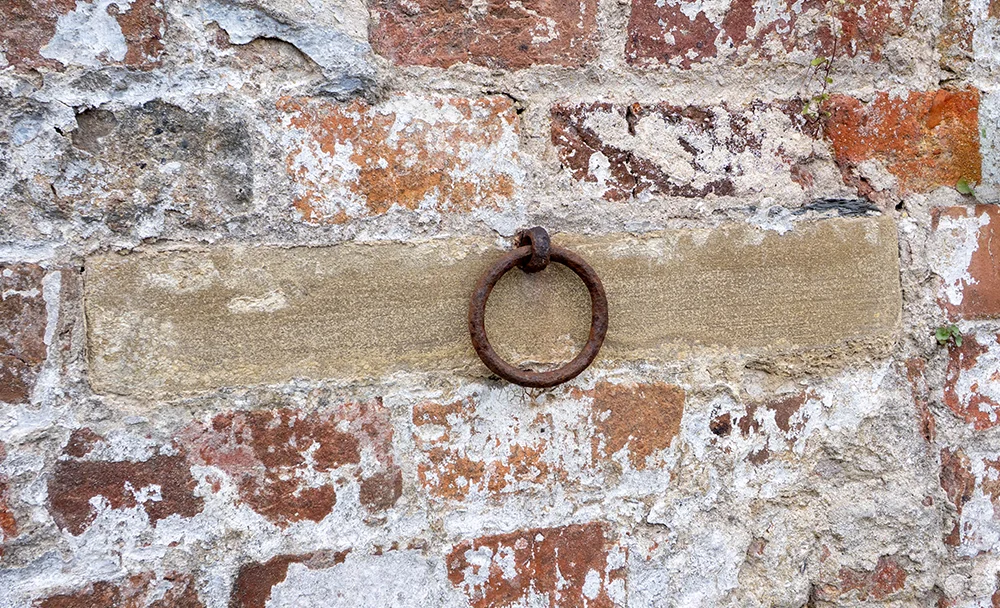
Close-up on one of the four bull rings.
The new market was equipped with livestock pens, a bull ring and a calf ring, allowing animals to be displayed and auctioned in a controlled environment. A circular auction ring, surrounded by tiered wooden seating, enabled prospective buyers to view livestock before bidding began. On market days, the site was filled with the sounds of cattle, sheep and farmers conducting business, while merchants from across the Fylde gathered to negotiate prices and inspect stock. The auction mart quickly became an essential part of rural life, supporting the region’s agricultural economy for decades.
The market also strengthened the Golden Ball’s position at the centre of community life. Farmers frequently gathered in the inn before and after sales, discussing prices, arranging deals and sharing local news. The close relationship between the public house and the auction mart reflected the traditional role of market-town inns as places where business and social life naturally came together.
By the mid-twentieth century, however, agriculture was changing. Improvements in transport, larger specialist livestock centres and modern marketing methods gradually reduced the need for smaller local auction markets. The Poulton Auction Market Company eventually ceased trading in 1964, bringing an end to almost seventy years of livestock sales behind the Golden Ball. Rather than remaining derelict, parts of the site found a new purpose, with the former market buildings converted into small independent businesses including Gleeson’s Joiners, The Victorian Birdcage, The Paper Tree and a charity shop.
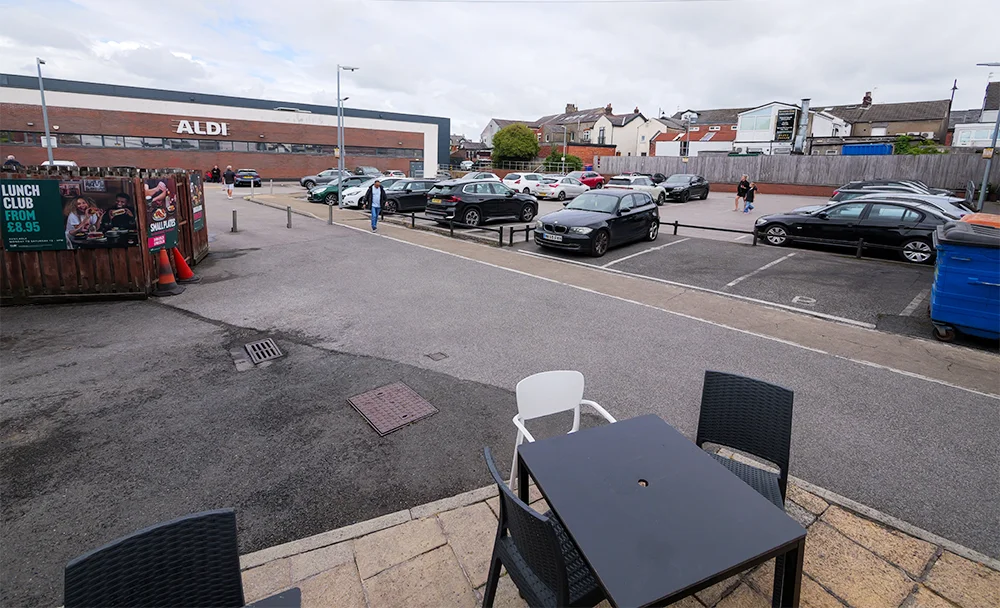
The view from the back of the Golden Ball, looking out onto the Aldi car park where livestock was once sold.
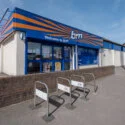
Those buildings survived until 2006, when they were demolished as part of the redevelopment of the area. Today, the former auction mart is occupied by the ALDI supermarket car park, yet careful observers can still discover traces of its agricultural past. Sections of the old boundary walls remain, and the original iron tethering rings once used to secure bulls are still embedded in the masonry, providing a rare physical reminder of the thousands of animals that once passed through the market.
Although the livestock auctions have long since ended, the story of the Poulton Auction Mart remains an important chapter in the town’s history. For generations it linked the surrounding farming communities with Poulton’s historic market centre, reinforcing the town’s role as the commercial heart of the Fylde. Today, the surviving bull rings and historic photographs preserve the memory of a place where agriculture, commerce and community came together at the very centre of rural Lancashire.
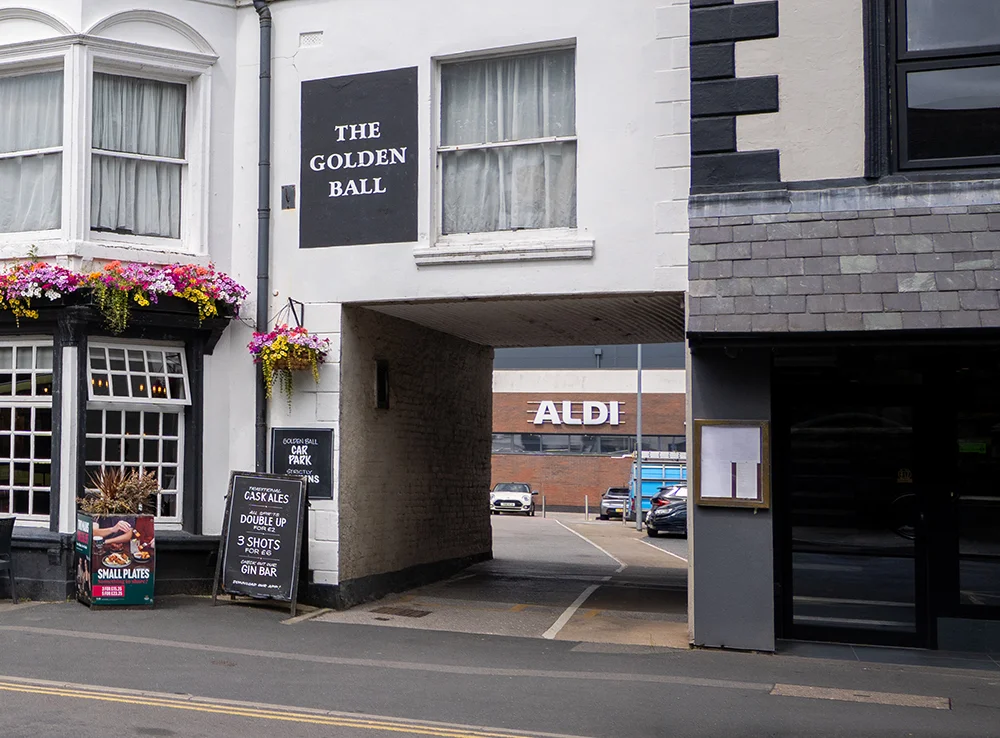
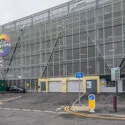
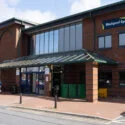
The entrance to what was once the Auction Mart, and what now is a car park for Aldi.
Images by © Deeper Blue Marketing & Design Ltd


