




























Myerscough College has been educating generations of people connected with agriculture and the countryside for more than 130 years, although the institution did not begin at Myerscough and would not adopt the Myerscough College name for almost a century. Its story began at Hutton, south of Preston, in 1894, with just ten students and an emphasis on the practical skills required by Lancashire’s agricultural industry.
The origins of the college can be traced to the beginning of the 1890s, when Lancashire County Council began considering how agricultural education could be improved across the county. Technical education was receiving greater public support and agriculture itself was changing, creating a need for formal instruction that combined practical experience with a growing understanding of agricultural science.
The result was the Lancashire County Institute of Agriculture. Four possible farms were considered before Home Farm at Hutton was selected. The property covered approximately 147 acres, largely consisting of pasture and meadowland, and provided the farmland and buildings necessary to establish a working agricultural school. The site was inspected on 31 January 1894 and leased from landowner Lawrence Rawstorne. Lancashire County Council took possession on 25 March, and during the following weeks livestock and equipment were acquired and the farm prepared for its new educational role. John Winder was appointed Farm Bailiff and General Manager.
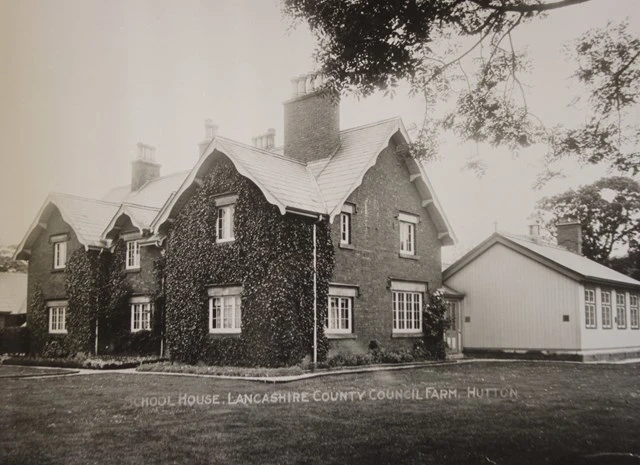
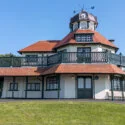
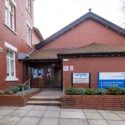
The School House at Lancashire County Council Farm, Hutton, where the institution that would eventually become Myerscough College began in 1894.
The School House became part of the heart of the early institution. It was a very different setting from the large modern campus at Bilsborrow, but the principle established at Hutton would remain central to the college: students would combine formal education with practical experience in a working rural environment.
The first ten students arrived on 14 May 1894, and all ten were women. Their studies concentrated particularly on butter and cheese making, reflecting the importance of dairy farming to Lancashire agriculture. A movable wooden dairy, previously used for agricultural instruction near Kirkham, was brought to Hutton to provide practical training.
The date creates an unusual connection with Blackpool’s history. On the very same day, 14 May 1894, Blackpool Tower opened to the public. While crowds were entering Blackpool’s new landmark for the first time, ten women were beginning their studies at Hutton at an institution that would also survive well into the following century.
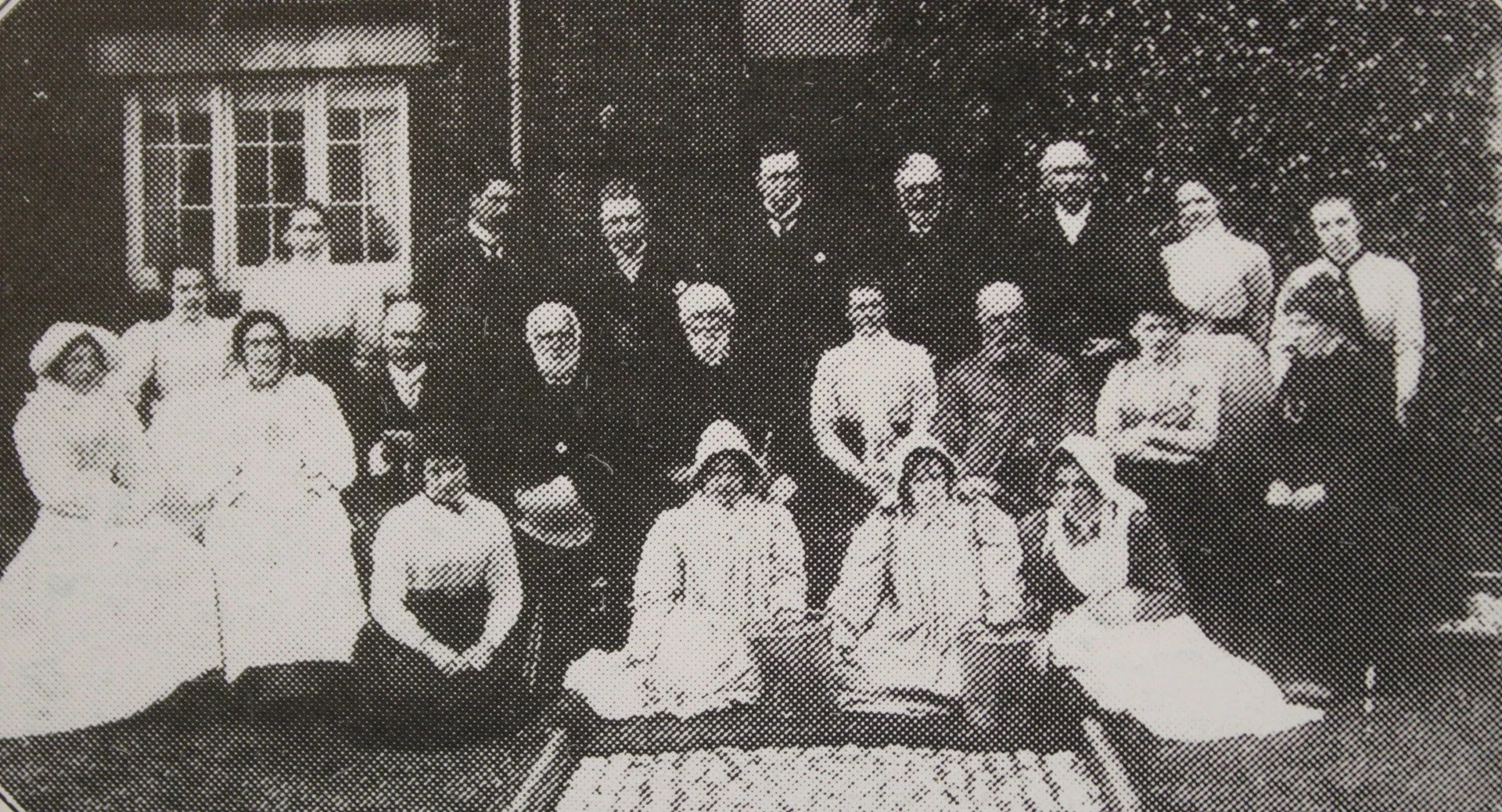
Students and staff at the Lancashire County Institute of Agriculture at Hutton in 1894, during the opening year of the institution that became Myerscough College.
The surviving group photograph from 1894 provides a rare glimpse of the Institute during its first year. The formal Victorian scene is far removed from the modern college, but these students and staff represent the beginning of an educational institution that would eventually serve thousands of people across a remarkable range of subjects.
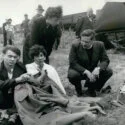
Miss Macqueen served as Directress and Matron and taught butter and soft cheese making. Poultry keeping was soon added to the subjects being taught, and Hutton gradually developed beyond its original concentration on dairy work. Another figure associated with the institution during this early period was the Rev. J. C. Wood.
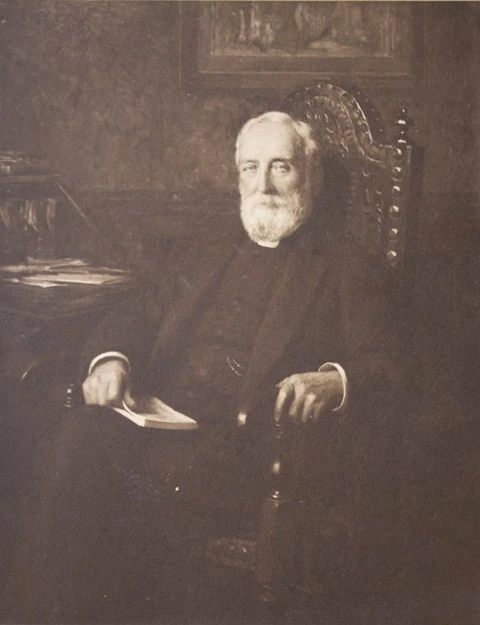
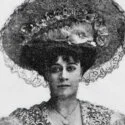
The Rev. J. C. Wood, pictured in 1894 and associated with the Lancashire County Institute of Agriculture during its earliest period at Hutton.
During the closing years of the 19th century, the Institute expanded both its educational activities and the work of its farm. Students gained practical experience alongside formal instruction, while livestock, dairy production and poultry became part of everyday life at Hutton. By the beginning of the 20th century, what had started as a small experiment in agricultural education was becoming an established Lancashire institution.
The First World War demonstrated the increasing importance of agricultural knowledge. Britain needed to maintain food production while large numbers of men who had worked on the land were serving in the armed forces. Agricultural education therefore assumed an importance extending beyond simply preparing people for employment. Hutton survived the disruption of the war and continued to develop during the 1920s and 1930s as farming became increasingly influenced by science, machinery and new methods of production.
The outbreak of the Second World War once again transformed the Institute’s work. Normal teaching was disrupted as its staff and facilities contributed to Britain’s drive to increase domestic food production. One of Hutton’s most important wartime roles was training members of the Women’s Land Army. Almost 500 Land Girls received training through the institution, helping to replace agricultural labour lost to military service and supporting the farms on which Britain’s wartime food supply depended.
The end of the war brought another period of expansion. In 1947, Lancashire County Council acquired Winmarleigh Hall, north of Garstang, followed by adjoining farmland. Winmarleigh became a second centre for agricultural education alongside Hutton and provided additional space at a time when demand for training was increasing.
One of the people who became particularly important during this period was Frank Peregrine. He joined the institution in 1945 and later became Vice Principal responsible for Winmarleigh. His career would eventually span one of the greatest changes in the college’s history.
By the 1950s, the limitations of operating from Hutton and Winmarleigh were becoming increasingly apparent. Full-time courses were attracting considerable demand and thousands of people were also participating in part-time agricultural education. An inspection in November 1957 concluded that a larger site was needed where the institution’s activities could eventually be brought together and new courses developed.
Neither Hutton nor Winmarleigh offered sufficient room for what was being planned. The search for a new home eventually led to Myerscough, near Bilsborrow.
Lancashire County Council acquired land centred on Myerscough Hall and its farm, providing hundreds of acres on which a modern agricultural college could be created. New teaching, agricultural, administrative and residential buildings were planned, while Myerscough Hall itself was eventually demolished as the purpose-built campus took shape.
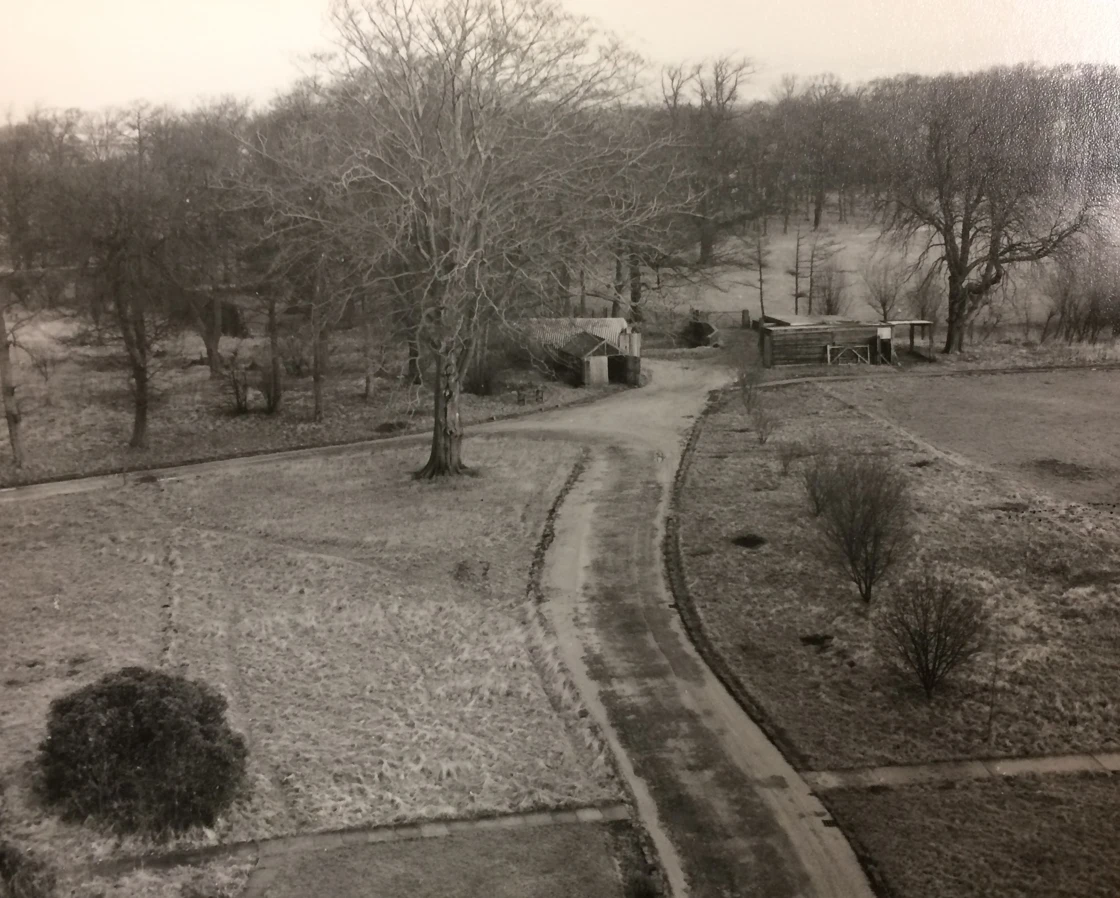
Myerscough Hall in 1962, ahead of campus building work.
Before the move was completed, the institution received a new name. In 1967, the Lancashire County Institute of Agriculture became the Lancashire College of Agriculture, reflecting how far it had developed from the comparatively small establishment founded at Hutton.
Frank Peregrine became Principal on 1 October 1968, with former student and lecturer Tony Fox becoming Vice Principal. Then, in September 1969, 75 years after the first ten students had arrived at Hutton, the new Myerscough campus received its first full intake.
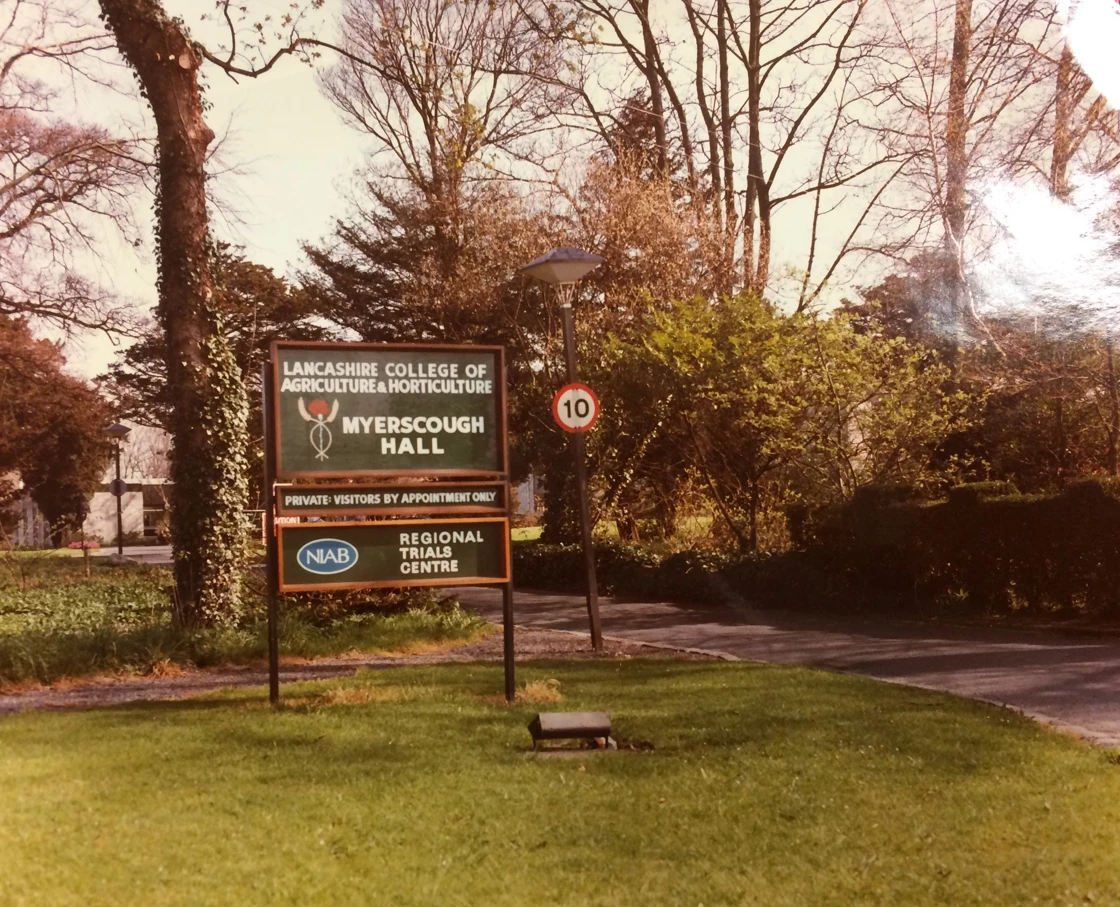 Almost 900 students enrolled, including students from overseas. Courses included Agriculture and Dairying, Amenity Horticulture, Poultry Practice and Agricultural Engineering. The scale of the new campus represented an enormous change from the School House and movable dairy of 1894.
Myerscough provided purpose-built classrooms, laboratories, workshops, a library and specialist agricultural facilities. Residential accommodation enabled students to live on campus, while recreational and social facilities helped create a community around the college. Working farmland remained an essential part of teaching, preserving the combination of theory and practical experience that had existed since Hutton.
On 17 October 1969, Queen Elizabeth II formally opened the Lancashire College of Agriculture at Myerscough, marking one of the most important moments in the institution’s history. The Queen made future appearances at the College in her later years of 1999 and again in 2015.
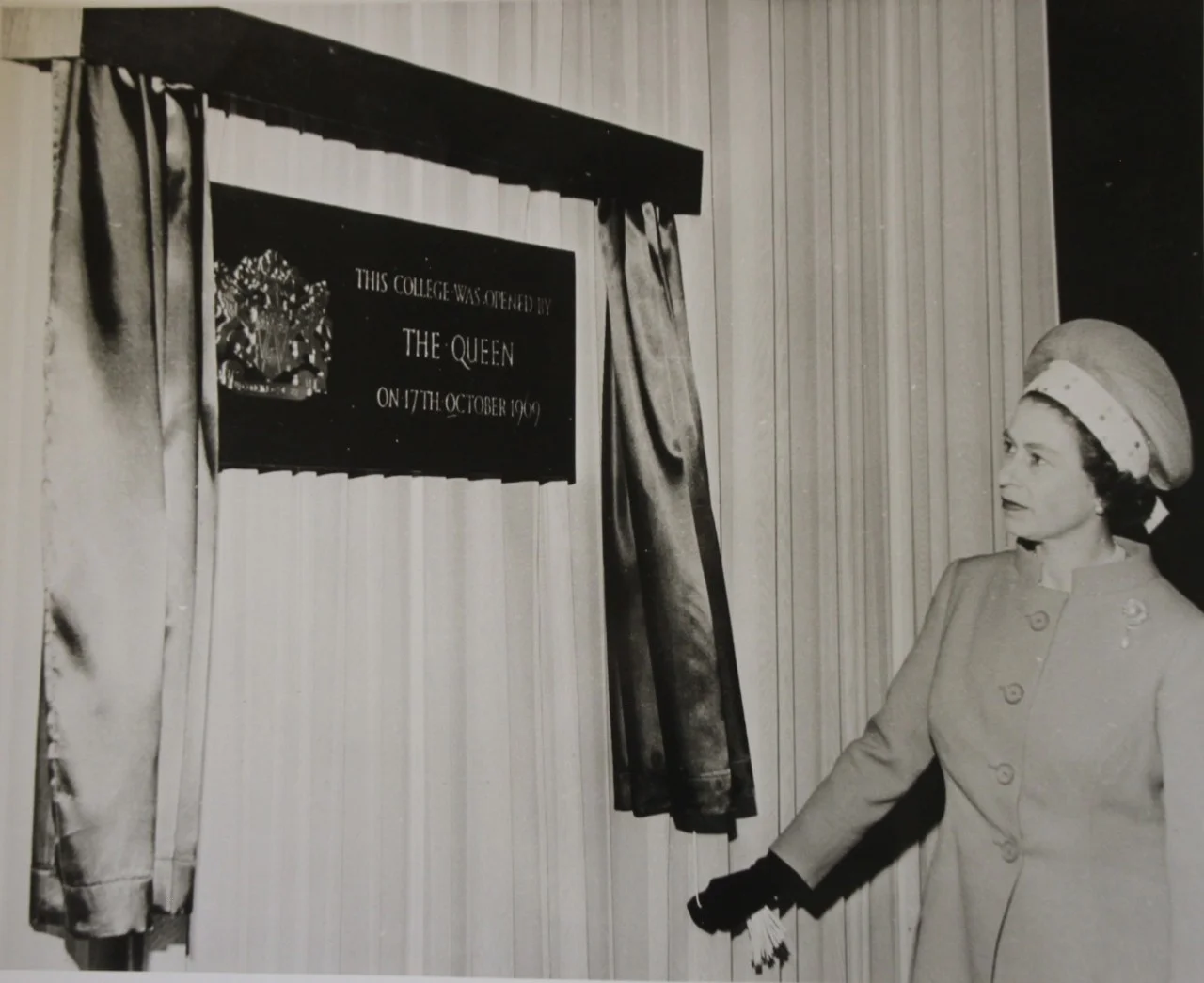
Queen Elizabeth II formally opens the Lancashire College of Agriculture at Myerscough on 17 October 1969, marking the official opening of the new campus.
The move did not immediately bring the story of Hutton and Winmarleigh to an end. Courses continued at the older sites while activities were gradually concentrated at Myerscough. The college expanded further during the 1970s and its changing character was reflected in another new name. In 1979, it became the Lancashire College of Agriculture and Horticulture, recognising the growing importance of horticulture alongside its traditional agricultural work.
Expansion continued through the 1980s. A substantial new teaching development opened in 1985, providing additional lecture rooms, library facilities and audio-visual resources. The same year marked the end of an era when Frank Peregrine retired. Tony Fox, whose association with the college stretched back to his arrival as a student in 1953, succeeded him as Principal.

Principal Tony Fox
By the beginning of the 1990s, the institution had become very different from both the dairy school of 1894 and the agricultural college that had arrived at Myerscough in 1969. Agriculture remained fundamental, but education increasingly encompassed the wider land-based economy.
Another decisive change followed the Further and Higher Education Act 1992. On 1 April 1993, the college left Lancashire County Council control and became an independent corporate body. At the same time, the institution formally adopted the name by which it is now familiar: Myerscough College. The change came 99 years after those first students had arrived at Hutton.
The gradual concentration of the college at Myerscough was completed during the remainder of the decade. The original Hutton site closed in 1997, bringing to an end more than a century of the institution’s presence there. Winmarleigh was sold in 1999, completing the long transition to the Myerscough campus.
During the following years, the college continued to diversify. Agriculture remained an important part of its identity, but courses expanded across horticulture, arboriculture, animal studies, veterinary nursing, equine studies, farriery, agricultural engineering, motorsport, sport, golf and sports turf management.
Higher education also became increasingly important. Myerscough developed degree-level provision in partnership with the University of Central Lancashire, while a purpose-built Higher Education Centre opened in 2007. University Centre Myerscough subsequently became the identity associated with much of its higher education provision.
The college also strengthened its links with employers and professional organisations, while apprenticeships and specialist vocational training became an increasingly significant part of its work. Some of the modern subjects would have been completely unfamiliar to the students photographed at Hutton in 1894, but others maintain a direct connection with the institution’s beginnings. Agriculture still involves livestock, crops, machinery and land management, although science, automation, sustainability and precision farming have transformed the way those subjects are practised and taught.
The modernisation of Myerscough continued on a major scale during the following decade. In 2017, the college completed its new Food and Farming Innovation and Technology Centre, known as the FFIT Centre, at Lodge Farm. The facility represented a new generation of agricultural education at Myerscough, bringing farming technology and innovation into the practical teaching environment and continuing the college’s long tradition of combining education with a working farm. Completed in August and opened in 2017, the centre formed part of a much wider programme of investment in the campus, which also included new facilities for engineering, rural skills, veterinary nursing, foundation learning and animal studies. By this period Myerscough had invested around £30 million in enhancing its facilities, transforming a campus originally developed in the 1960s for the needs of modern land-based education.
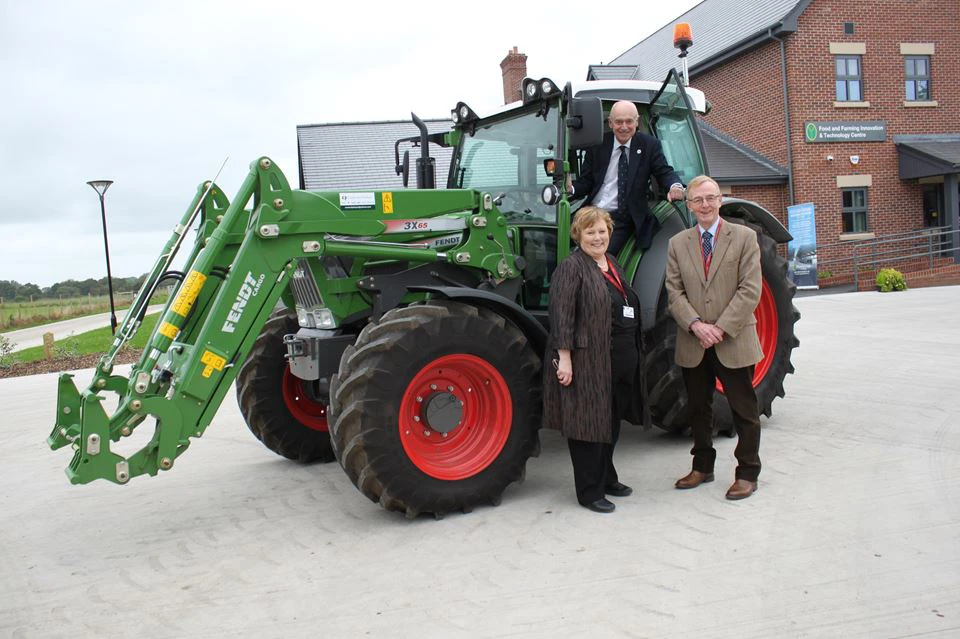
The Food & Farming Innovation & Technology Centre on opening day.
The development was particularly fitting given the college’s origins. In 1894, its first students had learned practical dairy skills on a Victorian farm at Hutton; 123 years later, students at Lodge Farm were being introduced to the technologies shaping the future of agriculture.
In 2019, Myerscough celebrated its 125th anniversary, providing an opportunity to look back at the transformation from ten women studying dairy work at Hutton to a specialist college and university centre serving numerous land-based industries. Five years later, in 2024, the institution reached its 130th anniversary.
In 2026, Myerscough College and University Centre continues from its main campus near Bilsborrow, more than half a century after the Lancashire College of Agriculture first moved there. Its modern role extends far beyond traditional farming, with further education, higher education, apprenticeships and professional training covering a wide range of specialist land-based and related subjects.
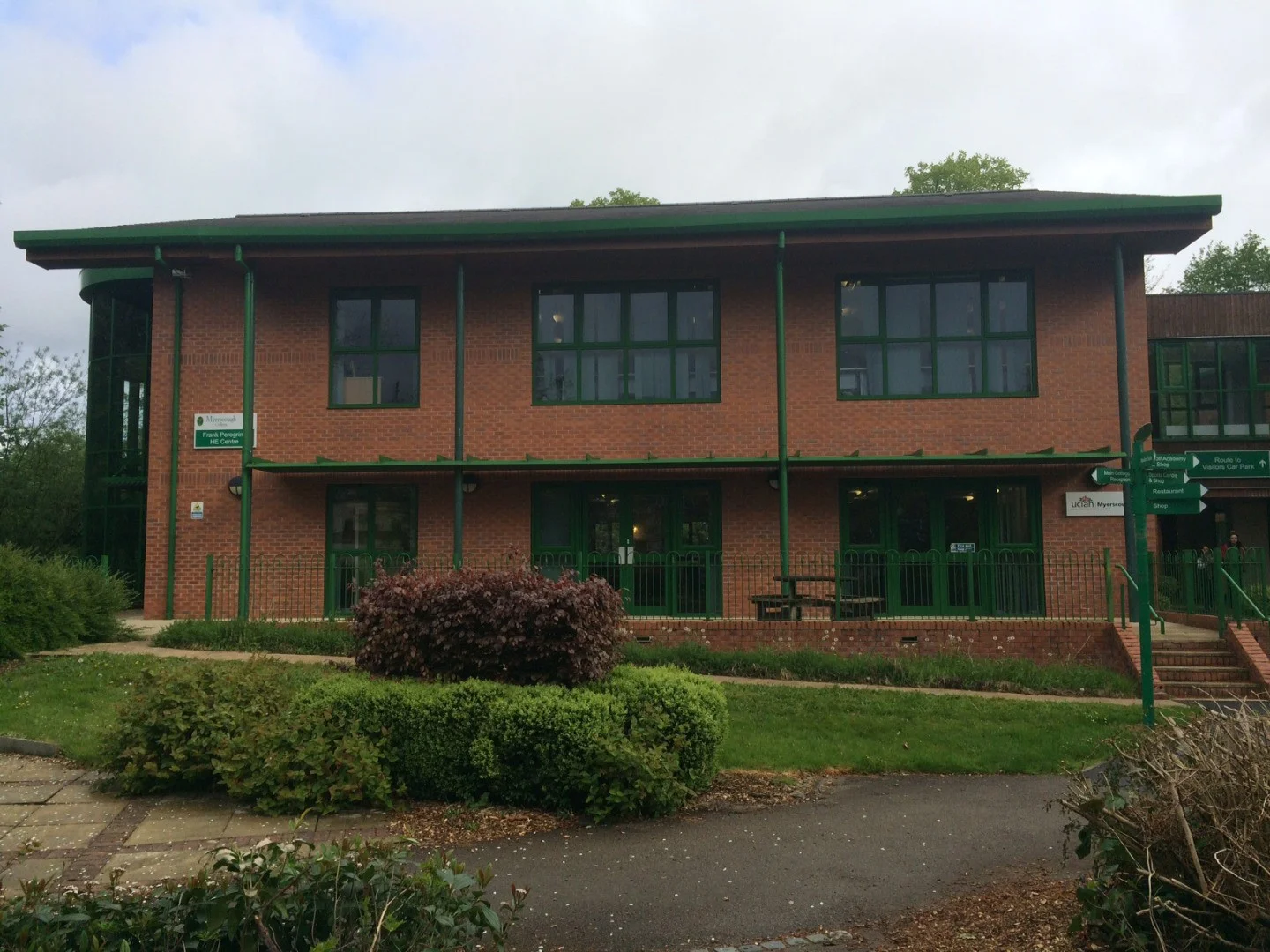 Yet the connection with 1894 remains clear. The equipment, science and technology have changed almost beyond recognition, but the basic principle behind the institution has endured: combining knowledge with practical experience and preparing students for work connected with agriculture, animals, engineering, sport and the land.
The Myerscough name is therefore only one part of a much longer story. The institution had already existed for 75 years when it moved to Myerscough in 1969, and for 99 years before it formally became Myerscough College in 1993.
Its story begins instead with the School House at Hutton, a working Lancashire farm and ten women arriving to learn butter and cheese making on 14 May 1894. On that same day, Blackpool Tower opened its doors for the first time. Two very different Lancashire institutions were beginning important chapters in their histories on exactly the same date, and more than 130 years later, both remain part of the county’s story.
The School House at Lancashire County Council Farm, Hutton, where the institution that would eventually become Myerscough College began in 1894.
Additional Images © Stuart Davidson, Director of MarketingMyerscough College


