














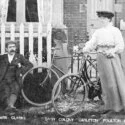





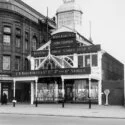








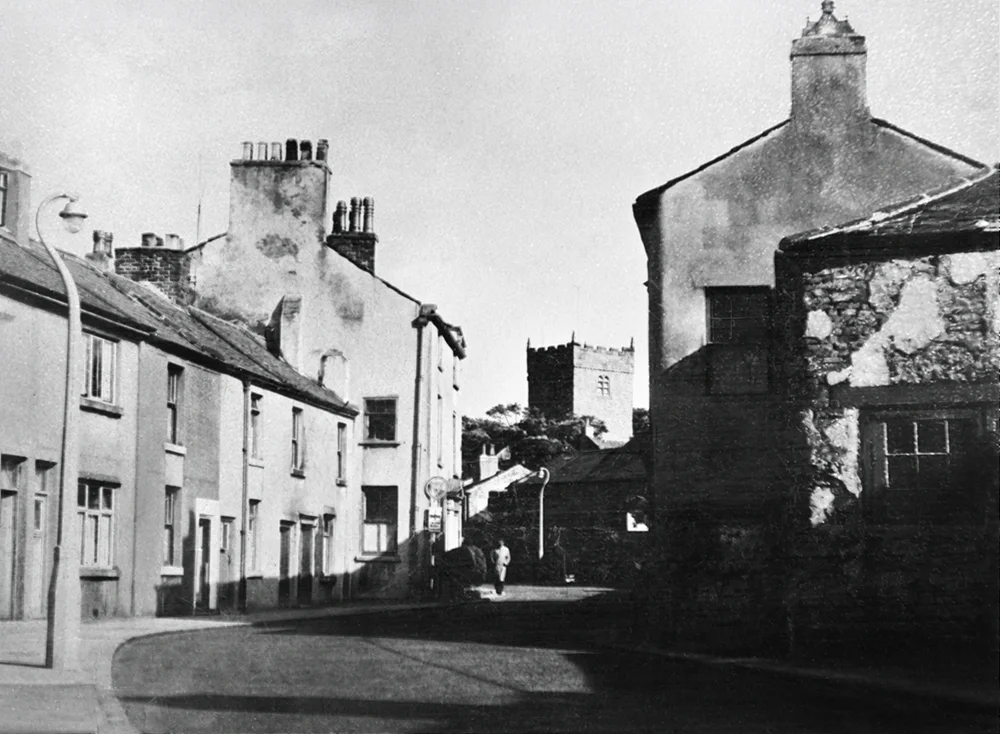
Historic photograph from 1930s provided by Red Rose Collections. Digital restoration and enhancement © Deeper Blue Marketing & Design Ltd 2026.
For centuries, the south side of Ball Street beside the Golden Ball was lined with a remarkable collection of timber-framed houses, cottages and commercial buildings that represented some of the oldest surviving architecture in Poulton-le-Fylde. Standing between the market square and St Chad’s Church, the closely packed buildings reflected the character of the medieval town, where homes, businesses and workshops developed gradually over generations to form a bustling centre of everyday life. The historic row consisted of a mixture of dwellings and commercial premises that had evolved to meet the changing needs of the community. Contemporary records describe three shops, a coach house, stables, a billiard room and several houses occupying the site, while numerous outbuildings filled the land behind them. Among the properties was a private school run by Thomas Hammond, illustrating how many of Poulton’s domestic buildings were adapted for education, trade and other community uses as the town expanded.
Architecturally, the buildings were among the most distinctive in Poulton. Their exposed timber framing, irregular rooflines and centuries of alterations reflected the gradual growth of the market town rather than planned development. Together with the neighbouring Golden Ball, they created one of the most picturesque streetscapes in the Fylde, preserving a glimpse of how Poulton had appeared long before the arrival of Victorian improvements and motor traffic.
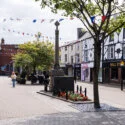
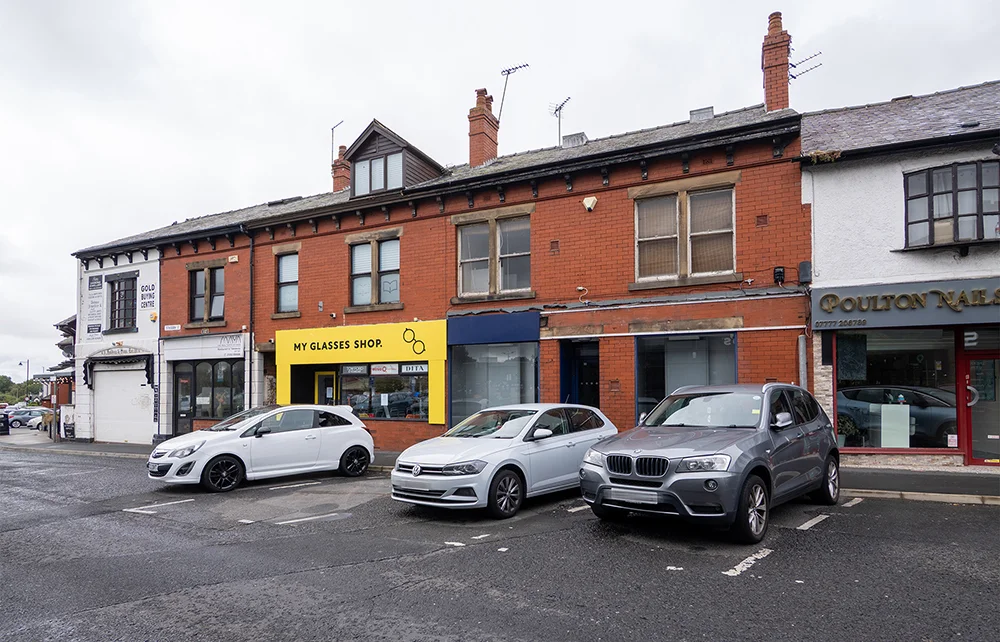 By the beginning of the twentieth century, however, the narrow route through Ball Street had become increasingly congested. To improve traffic flow and create a wider approach to the town centre, Poulton Urban District Council approved a major road-widening scheme. During 1910 and 1911, the historic buildings on the south side of Ball Street were demolished, opening up the impressive view of St Chad’s Church that visitors enjoy today. While the scheme modernised the town centre, it also resulted in the loss of one of Poulton’s oldest groups of historic buildings.
Not everything was swept away. The redevelopment affected only one side of Ball Street, allowing the Golden Ball and other historic buildings on the opposite side to survive. Their preservation means that, although much of the medieval streetscape disappeared, an important part of old Poulton’s architectural character remains visible today.
Although the timber-framed houses have long since vanished, they remain an important part of Poulton’s history. Historic photographs reveal a lively streetscape of homes, shops and businesses that served the community for generations before making way for a more open and accessible town centre. Their story reflects the balance between preserving the past and adapting to the changing needs of a growing market town, ensuring that the memory of Ball Street’s historic houses continues to form part of Poulton-le-Fylde’s rich heritage.
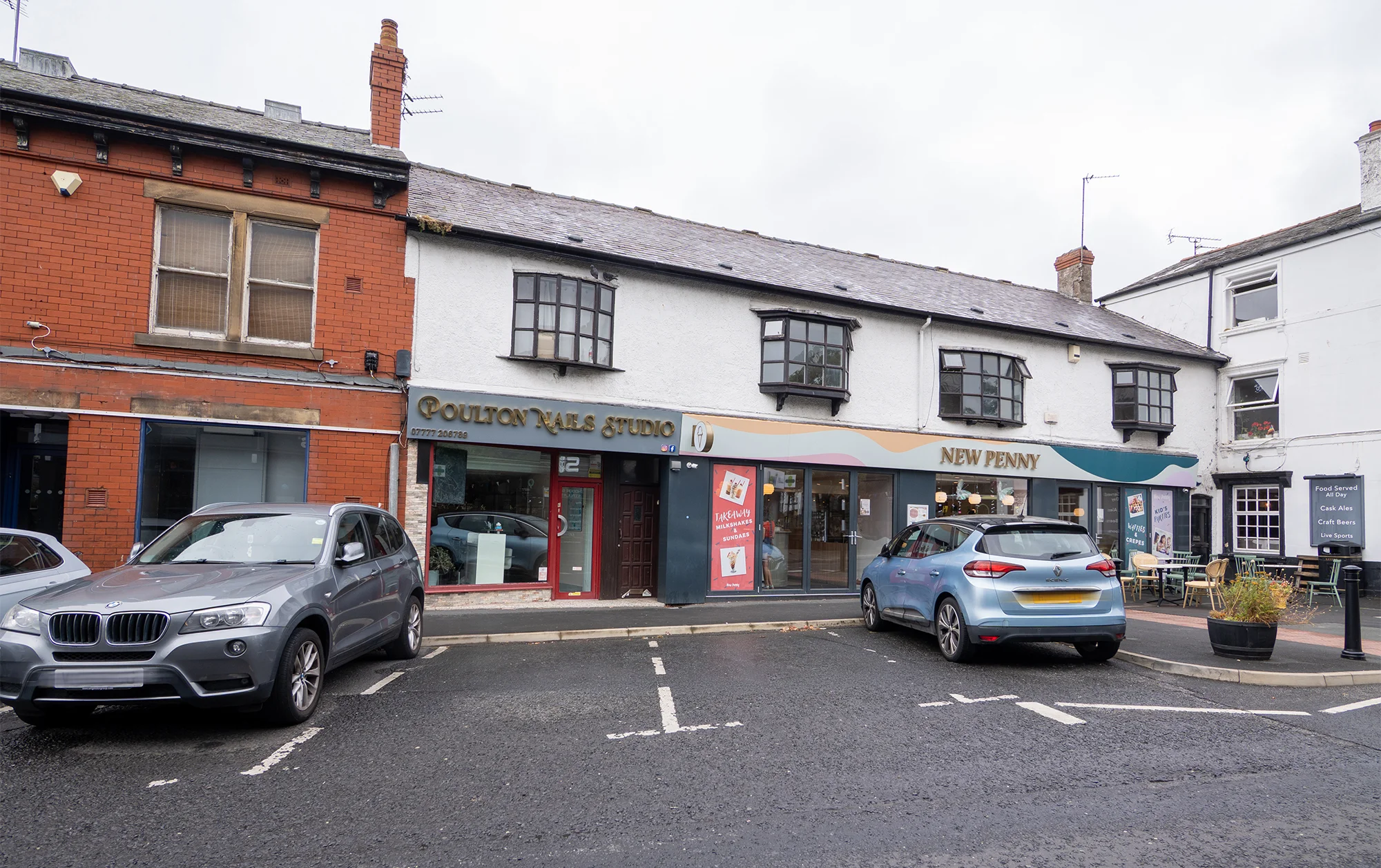
Images by © Deeper Blue Marketing & Design Ltd


