

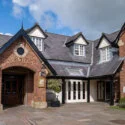










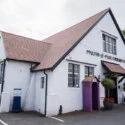


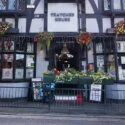











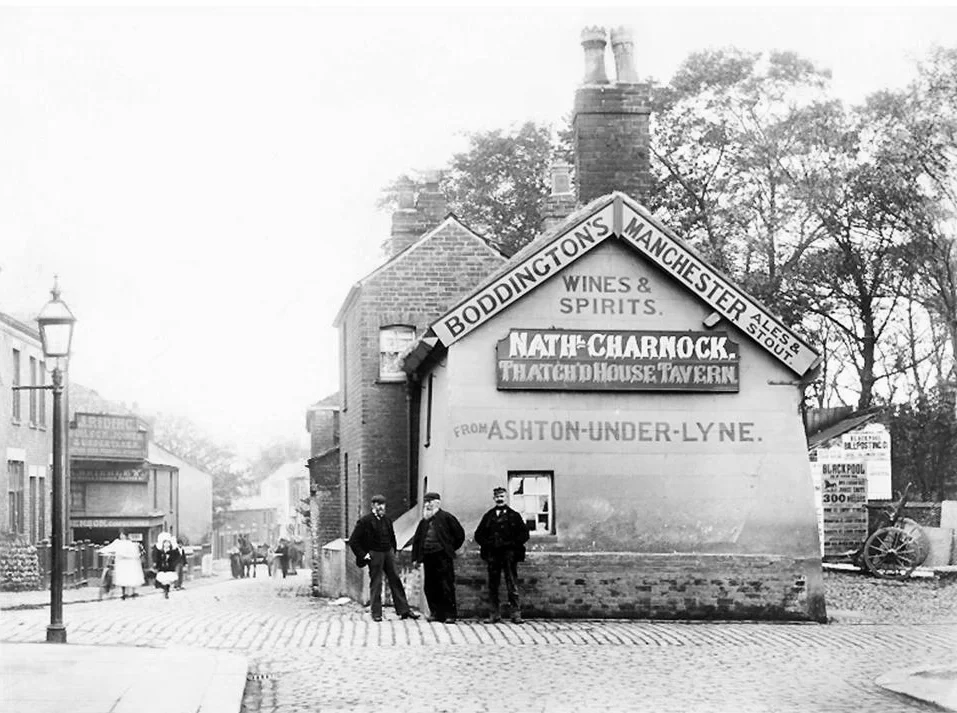
Left wall of the Old Thatched, with Chapel Street to the left.
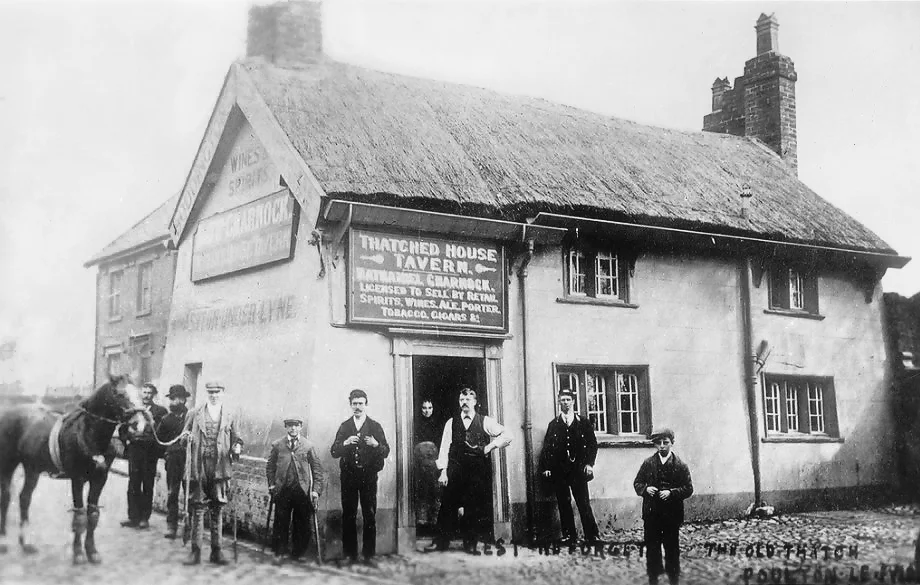
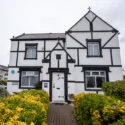
The Old Thatch (1900/1), facing the end of the houses on the south side of Ball Street.
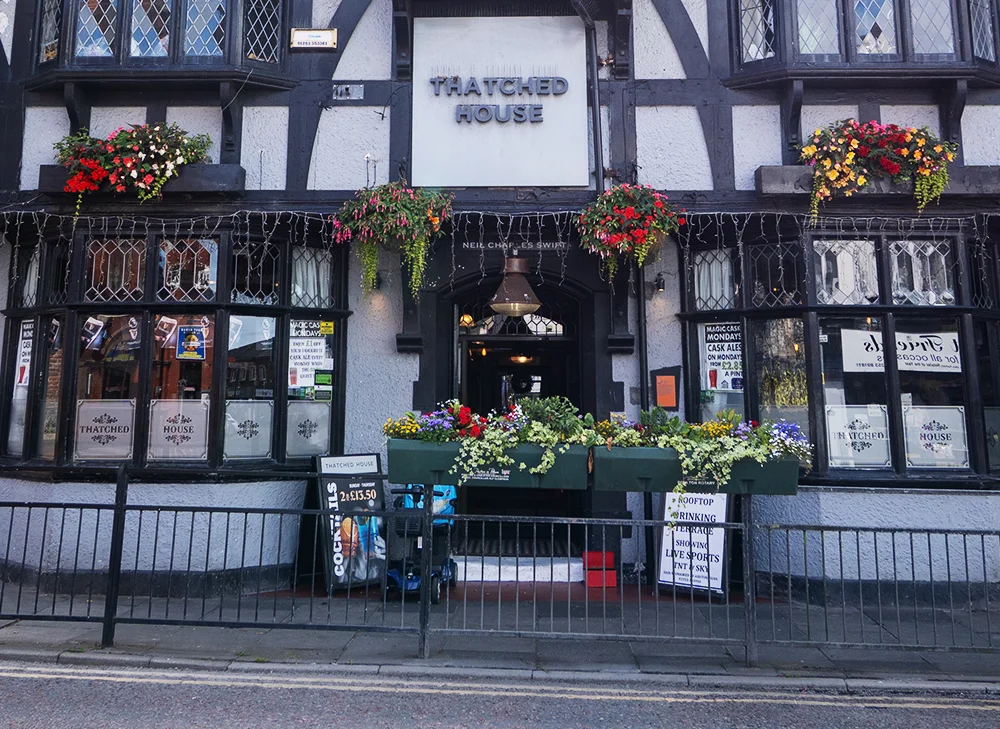
Standing beside the churchyard of St Chad’s Church, the Thatched House is one of Poulton-le-Fylde’s best-known and most recognisable historic inns. For more than two centuries it has welcomed travellers, townspeople and market visitors, its prominent position at the corner of Ball Street and Chapel Street making it an enduring feature of the town’s historic centre. Although the present building dates from the early twentieth century, the history of the inn stretches back much further. The earliest confirmed reference to the inn dates from 1793, when it occupied the same site adjoining the churchyard. Some historians believe the original tavern may have had medieval origins, serving visitors arriving in Poulton when the town was the principal market centre of the Fylde. Before the arrival of the railway and the growth of Blackpool, Poulton attracted traders, farmers and travellers from across the district, and inns such as the Thatched House played an important role by providing food, drink and accommodation.
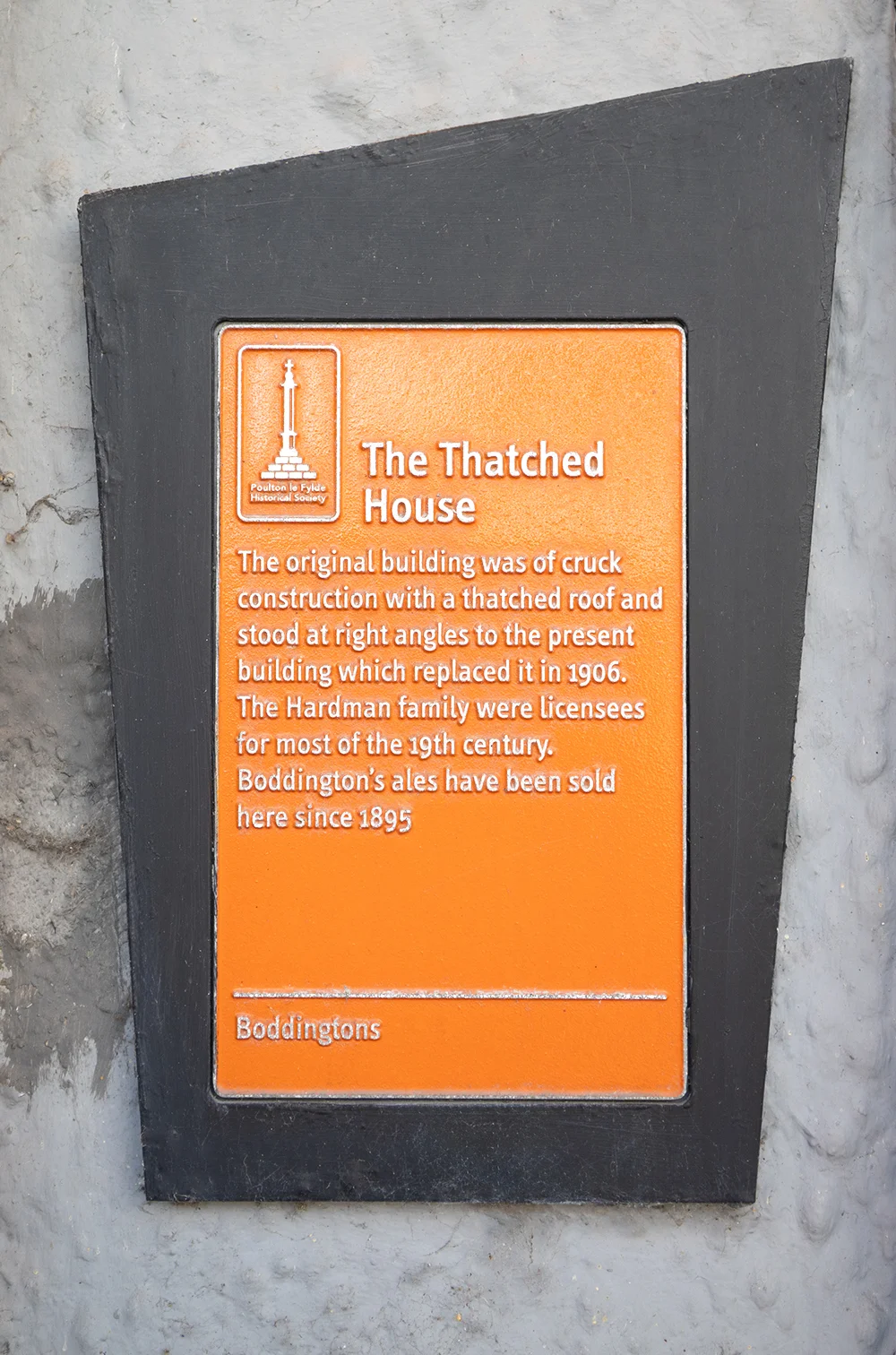 Originally, the building stood at right angles to Ball Street and featured the traditional thatched roof from which it took its name. Earlier records suggest it may once have been known as the Green Man, although by the end of the eighteenth century it had become established as the Thatched House Tavern. Coaching inns such as this were an essential part of everyday life, providing stabling for horses, coaching facilities and a meeting place for local business and social gatherings. As Poulton continued to prosper, the original building eventually became outdated. Around 1907 the old inn was demolished and replaced with the striking Mock Tudor building that stands today. During the rebuilding, trade continued while the old structure was gradually removed. The new premises retained the historic name of the inn, preserving the connection with the original thatched building even though its roof was no longer constructed from thatch. Nicholas Charnock became the first landlord of the new building, and period photographs show him watching the demolition from an upper window as work progressed.
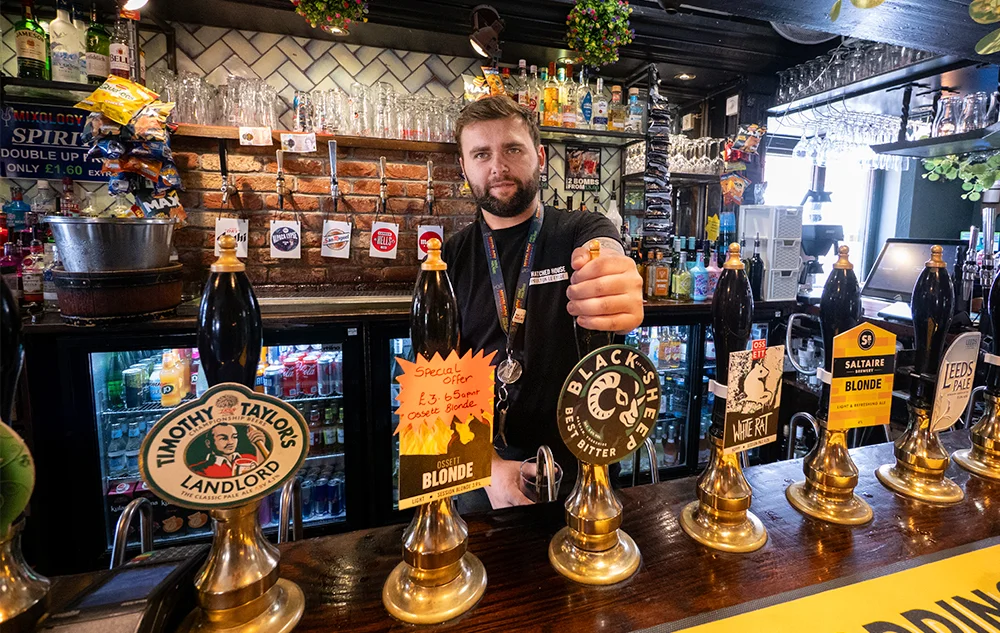
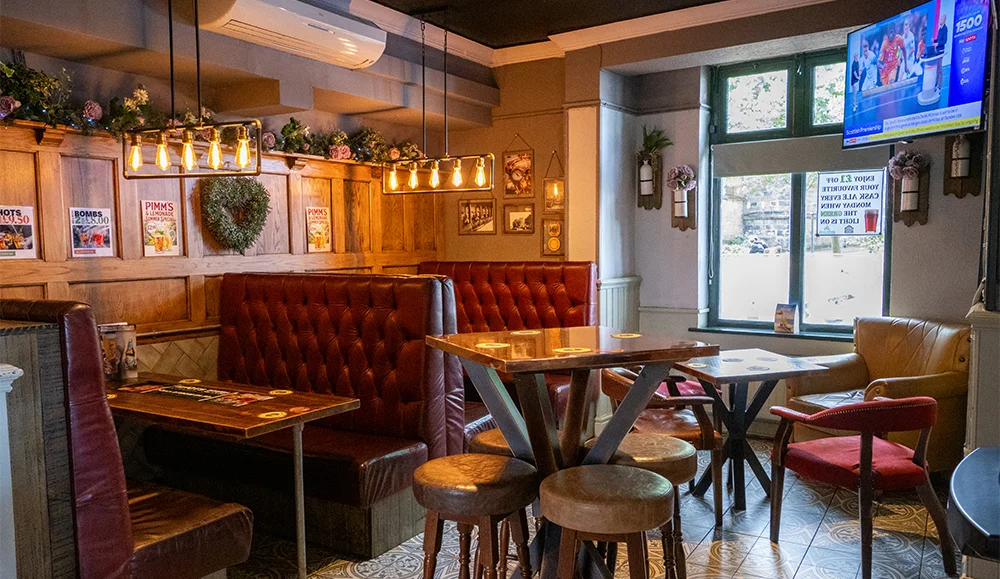
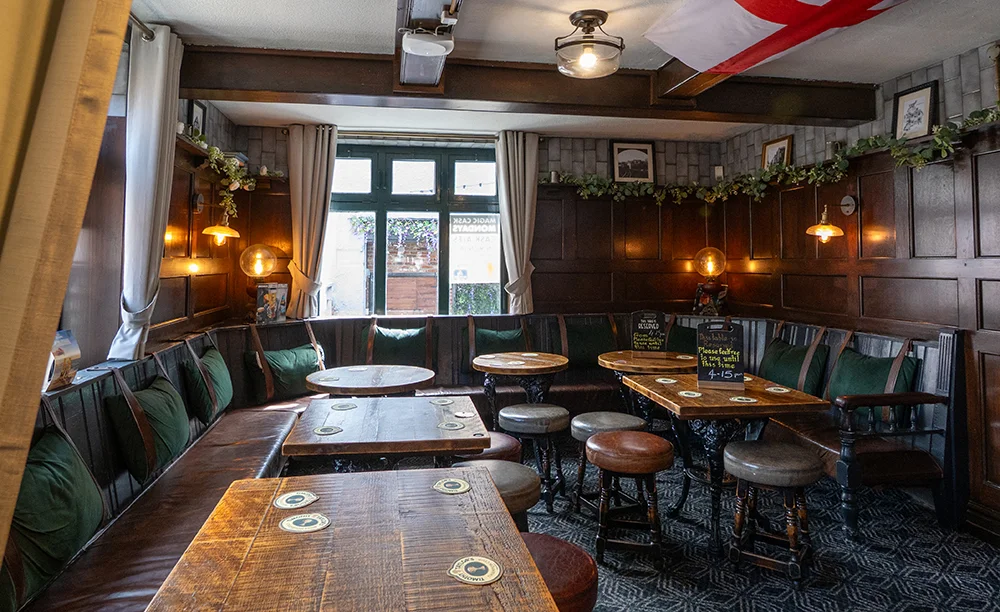
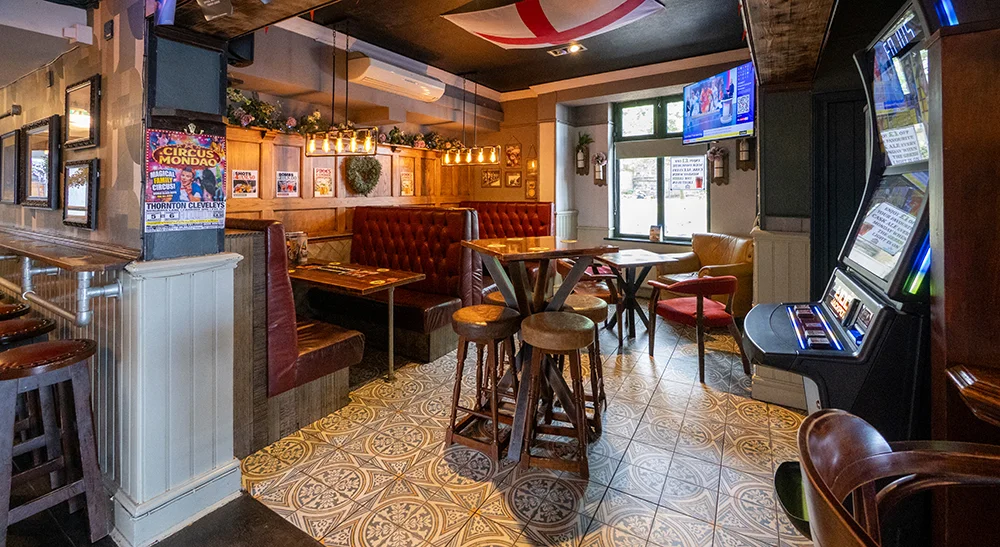
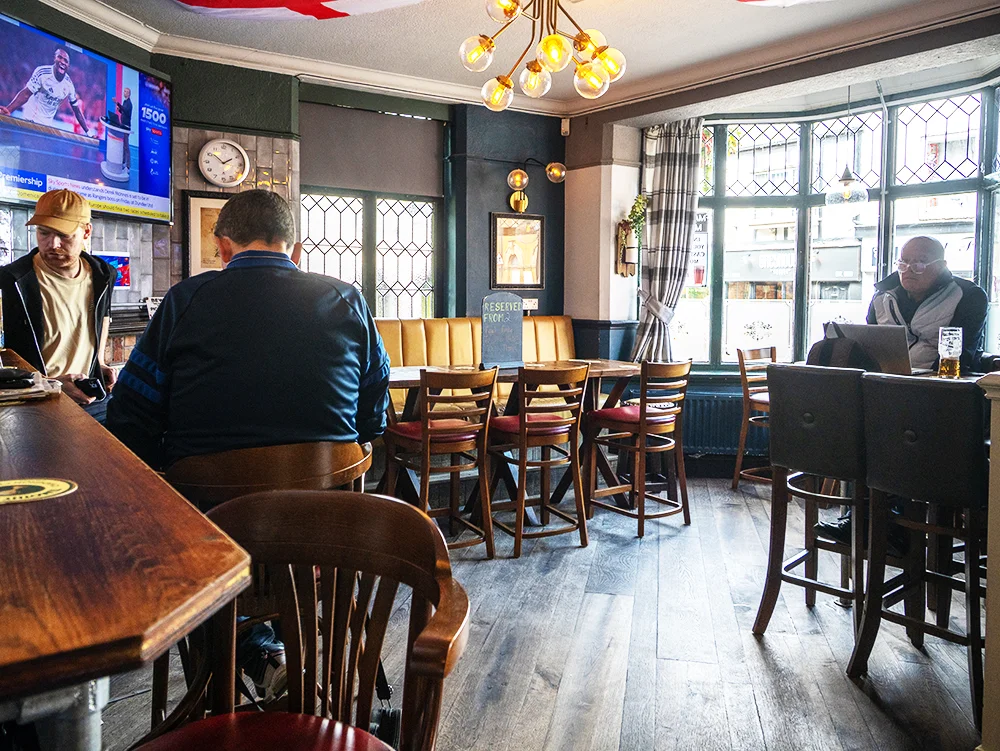 The new Thatched House quickly became one of Poulton’s architectural landmarks. Its decorative timber framing, steep gables and prominent location beside St Chad’s Church made it one of the most distinctive buildings in the town centre. Today it is recognised as an important contributor to the character of the Poulton Conservation Area, reflecting the Edwardian enthusiasm for revival architecture while commemorating a much older coaching inn. Throughout the twentieth century the Thatched House remained a popular meeting place for local residents and visitors alike. It witnessed the changing fortunes of Poulton as the town evolved from a busy agricultural market centre into a thriving residential community, continuing to serve successive generations while retaining its historic identity. In recent years, sympathetic improvements, including the addition of a roof terrace and the establishment of the Chapel Street Brew House in the former coaching sheds, have ensured the building continues to adapt while respecting its heritage.
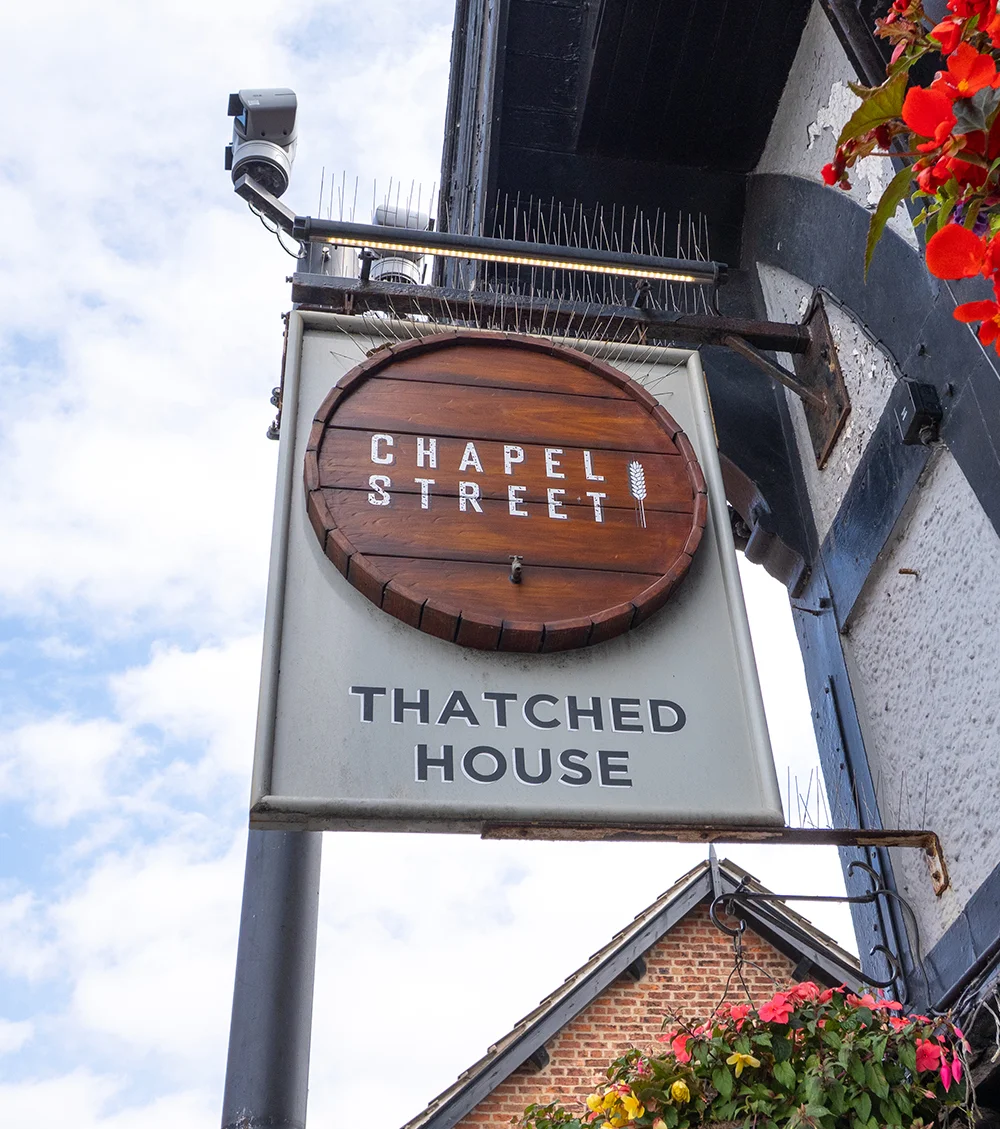 Today, although the original thatched roof has long disappeared, the Thatched House remains one of Poulton-le-Fylde’s most familiar landmarks. Its name preserves a link with the town’s coaching era, while its prominent position beside St Chad’s Church continues a tradition of hospitality that has endured for well over two centuries.