



















The claim that Blackpool Pleasure Beach’s Noah’s Ark is the world’s oldest surviving example has been independently assessed and is not just a marketing statement. It forms part of the official reasons why the attraction was granted Grade II listed status by Historic England in 2017.
Noah’s Ark was one of the most famous and enduring attractions at Blackpool Pleasure Beach. For more than 80 years, generations of visitors experienced its rocking decks, moving floors, spinning barrels and optical illusions, making it one of the park’s best-loved walk-through attractions. The ride opened in 1922, making it one of the earliest purpose-built fun houses at the Pleasure Beach. It was designed by the renowned American roller coaster engineer William Homer Strickler, who was responsible for several important attractions at Blackpool during the early twentieth century. The centrepiece was a full-sized wooden ark mounted on a giant rocking mechanism, surrounded by an artificial mountain representing Mount Ararat and encircled by water. Visitors climbed aboard before making their way through a series of humorous and disorientating obstacles.
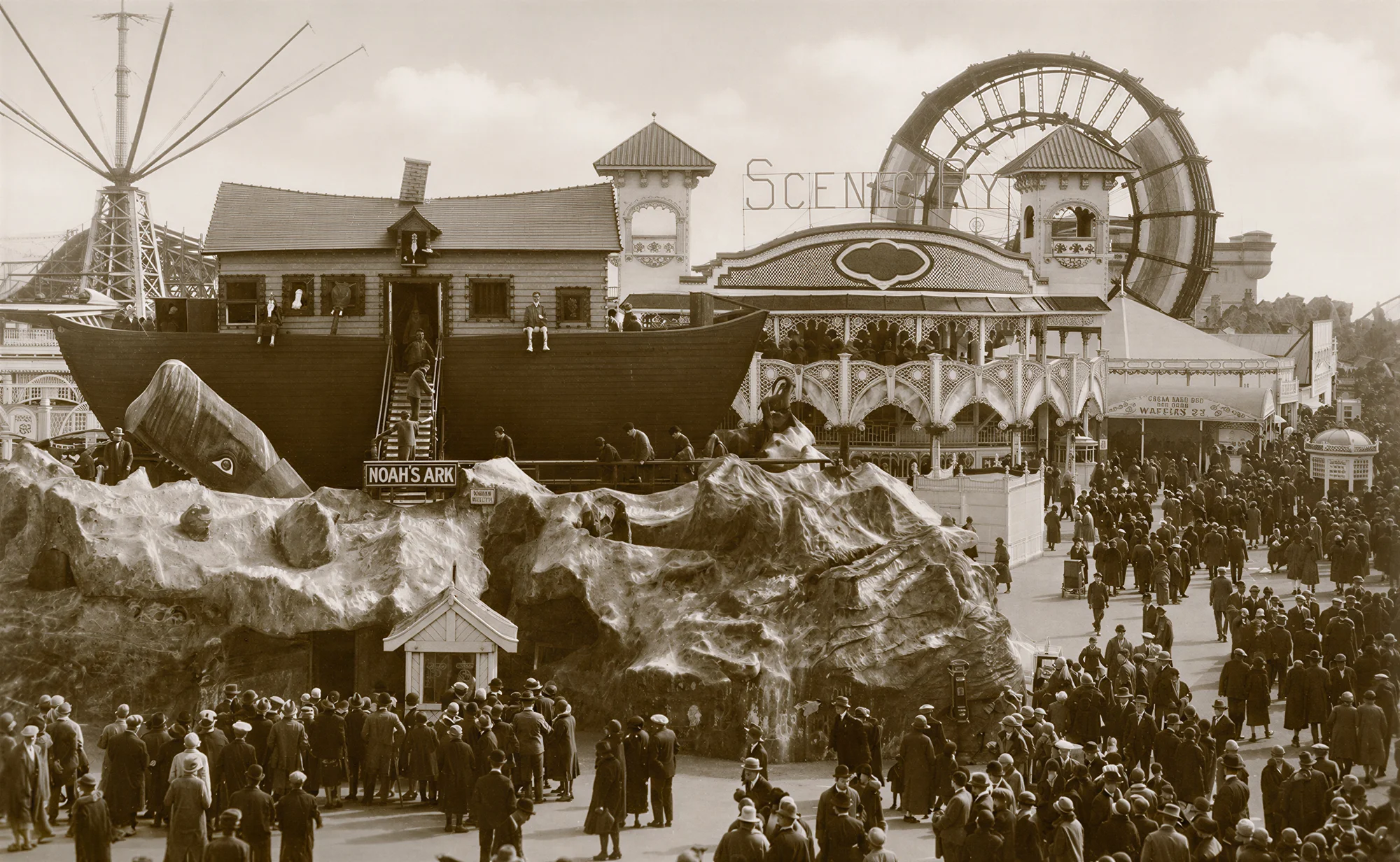
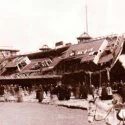
Noah’s Ark at Blackpool Pleasure Beach, 1927. © Alamy
Unlike a conventional dark ride, Noah’s Ark was a walk-through attraction. The constantly rocking vessel made it difficult to keep your balance, while inside visitors encountered moving floors, tilting walkways, spinning barrels, compressed air jets, mirrors, unexpected noises and various themed scenes inspired by the biblical story. The combination of physical effects and comedy made it a favourite with families for decades.
The attraction proved so successful that it was substantially rebuilt in 1935 following structural work, although it retained its original concept and rocking mechanism. Over the following decades, the Pleasure Beach continually refreshed the interior by introducing new “gags”, updated scenery and replacement animal figures while preserving the distinctive rocking ark that had become an icon of the park. Major alterations were also carried out during a refurbishment in 1996, when the surrounding mountain was reconstructed and many of the display figures were replaced.
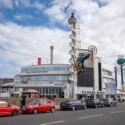
Sadly, Noah’s Ark closed to the public at the end of the 2008 season. Although visitors can no longer walk through the attraction, the ark itself still survives within the Pleasure Beach and continues to rock using its original 1922 mechanism. Today, every visitor entering the park still passes beneath the structure, making it a silent reminder of one of Blackpool’s classic amusements.
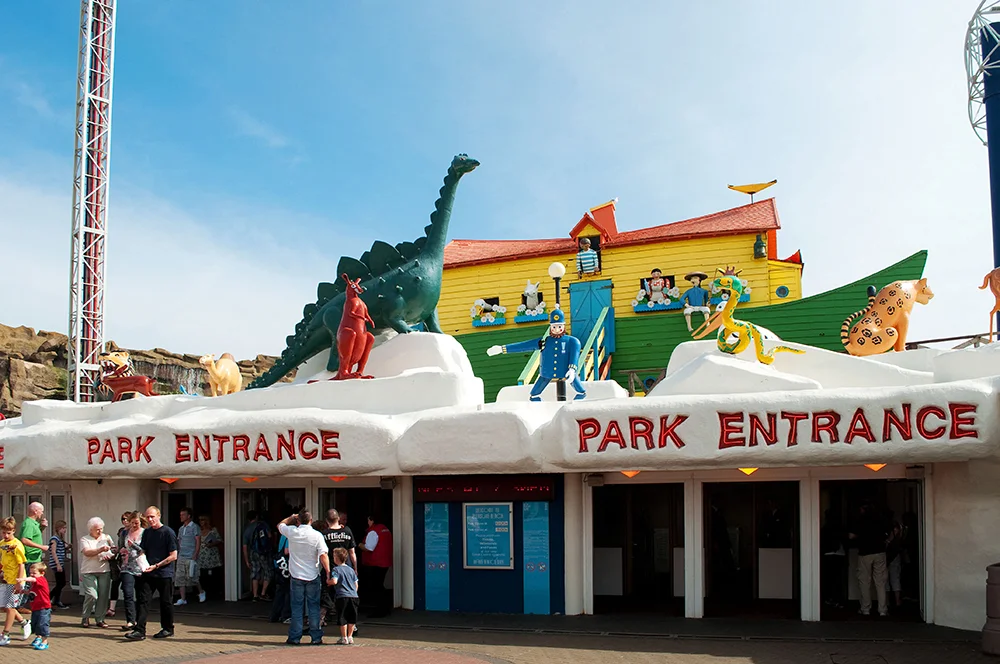
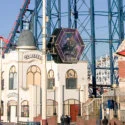
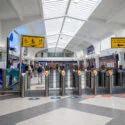
The entrance to the Pleasure Beach. 16 August 2010 © Alamy
In recognition of its historical importance, Historic England awarded Noah’s Ark Grade II listed status on 19 April 2017. The listing describes it as the oldest surviving Noah’s Ark walk-through attraction in the world and one of the most significant surviving examples of early twentieth-century amusement architecture. Despite alterations over the years, its original rocking mechanism remains intact, making it an exceptionally rare survivor of Britain’s seaside entertainment heritage.
For many people who grew up visiting Blackpool, Noah’s Ark is remembered as much for its atmosphere as its special effects. The combination of creaking timber, rocking decks, dimly lit passages and unpredictable obstacles created an experience unlike any other attraction in the park. Even after its closure, it continues to inspire nostalgia among former visitors, with old photographs and videos regularly shared online by enthusiasts who remember making their way across its swaying decks.

© Alamy. Restored and enhanced by © Deeper Blue Marketing & Design Ltd


