










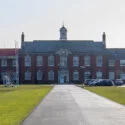


























During the Second World War, Blackpool Technical College became home to one of Britain’s most important military training establishments when the Royal Air Force No. 2 School of Photography was established there in August 1940. Based at the Technical College and the neighbouring Palatine Secondary School on Palatine Road, the school was created to meet the growing demand for highly trained photographers and photographic technicians whose work would prove vital to Allied intelligence.
Initially training male RAF personnel, the school began accepting members of the Women’s Auxiliary Air Force (WAAF) in 1941. The first intake of 26 women arrived on 2 August 1941, beginning a rigorous 13-week course that transformed volunteers into skilled photographic specialists. New groups of trainees arrived every fortnight, while around 45 officers and instructors delivered intensive training designed to prepare them for operational service.
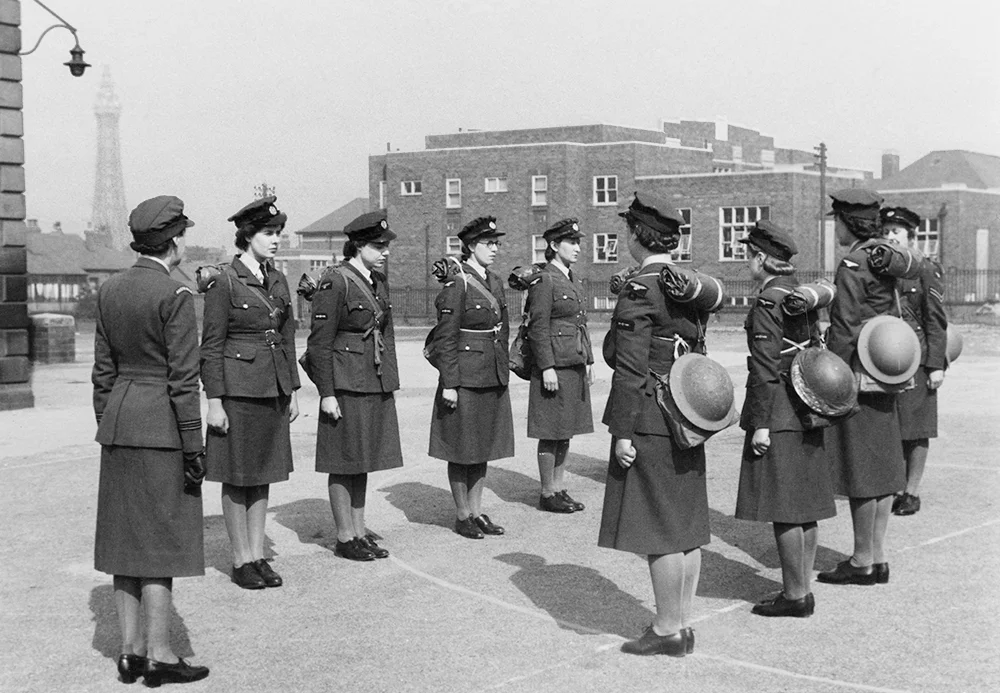
Royal Air Force No. 2 School of Photography, Palatine Road, Blackpool, 1942-1943. WAAF (Women’s Auxiliary Air Force) trainees preparing for fire picquet duty outside the No. 2 School of Photography. The RAF School of Photography was established in August 1940 to meet the rapidly increasing need for more photographers and photographic technicians to aid with aerial reconnaissance during the WW2. The School was based at the Blackpool Technical College and Palatine Secondary School in Blackpool. Training of women at the School began in 1941.
The women were taught far more than conventional photography. Their training included operating military cameras, processing and developing film, enlarging photographs, interpreting aerial reconnaissance images, plotting photographs onto maps and working in mobile darkrooms that could be deployed close to the front line. One exercise even required trainees to handle photographic film while blindfolded, simulating the conditions of working in complete darkness. Their technical expertise became essential to the interpretation of aerial reconnaissance photographs that guided bombing missions, identified enemy positions and supported the planning of major Allied operations.
The school quickly gained a reputation for the quality of its instruction. Contemporary reports noted that after women joined the programme, the consumption of photographic materials increased by around 15 percent, a change attributed to their manual dexterity and the greater volume of photographic work they were able to complete. The growing importance of aerial photography meant that every trainee played a direct role in the intelligence network that underpinned the Allied war effort.
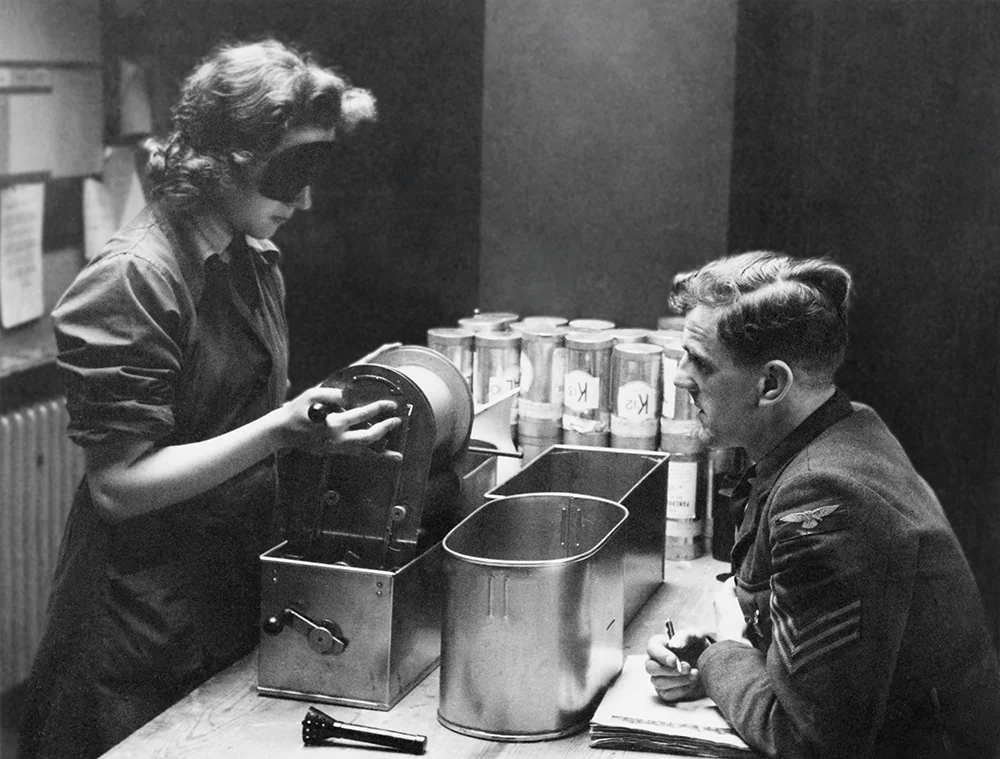
Royal Air Force No. 2 School of Photography, Palatine Road, Blackpool, 1942-1943. A Women’s Auxiliary Air Force (WAAF) trainee handling a roll of photographic film whilst wearing an eye mask to simulate working in the dark, during the Trade Test Board examination at the end of the training course. The RAF’s No. 2 School of Photography was established in August 1940 to meet the rapidly increasing need for more photographers and photographic technicians to aid with aerial reconnaissance during the WW2.
Life at the school was demanding but also fostered strong friendships. Historic photographs show WAAF trainees learning in classrooms, practising with cameras on the parade ground, processing film in laboratories, attending outdoor lectures and taking part in formal inspections and passing-out parades. Many of these images survive today thanks to Dorothy “Knicky” Chapman, one of the first women to train at Blackpool. After completing her course, she remained as a sergeant on the instructional staff before later joining the RAF Film Production Unit at Pinewood Studios, where she contributed to wartime filmmaking. Her remarkable collection of photographs now provides one of the most comprehensive visual records of life at the Blackpool school.
Although the Royal Air Force No. 2 School of Photography existed only for the duration of the war, its contribution was immense. Hundreds of men and women passed through its classrooms, acquiring the specialist skills that enabled the RAF to exploit aerial photography as one of its most valuable sources of intelligence. Today, the former college buildings continue to form part of the Blackpool and The Fylde College campus, while the surviving photographs of the WAAF trainees preserve the story of a little-known chapter in Blackpool’s wartime history and the pioneering women whose work behind the camera helped shape victory.
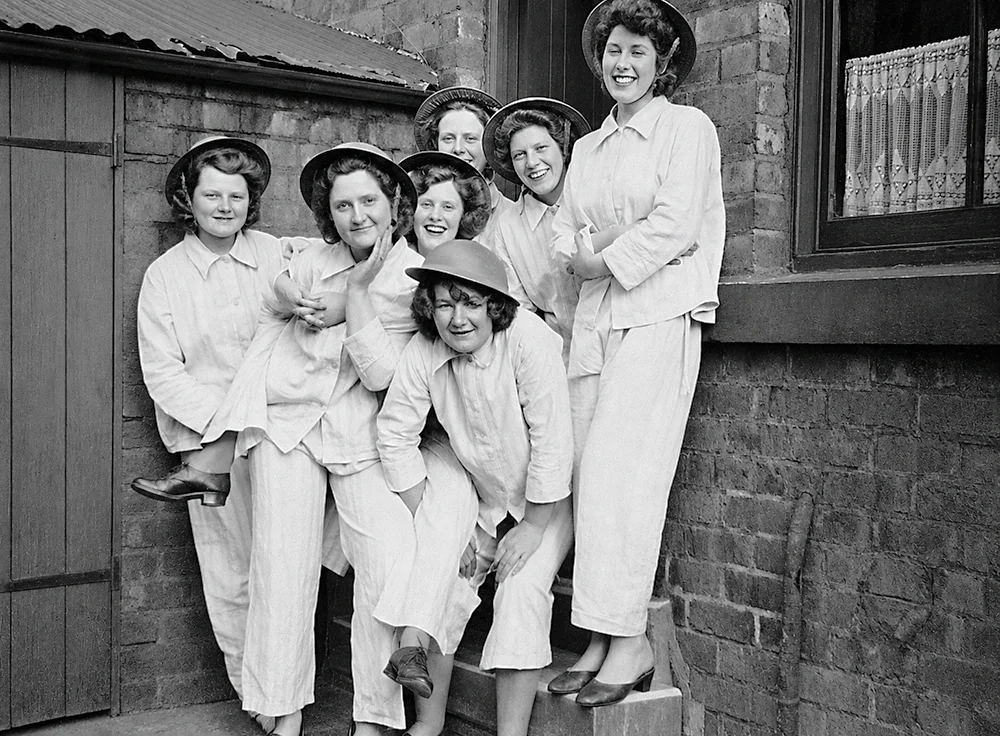
Blackpool, 1942-1943. WAAF (Women’s Auxiliary Air Force) trainees at the No. 2 School of Photography in Blackpool, posed for the camera whilst off-duty, in their pyjamas and metal hats. The RAF’s No. 2 School of Photography was established in August 1940 to meet the rapidly increasing need for more photographers and photographic technicians to aid with aerial reconnaissance during the Second World War. The School was based at the Blackpool Technical College and Palatine Secondary School in Blackpool. Training of women at the School began in 1941.


