




















Surviving rail crash passengers walk away in Blackpool. 16 July 1961
On 16 July 1961, one of the most serious railway disasters in the history of the Fylde Coast occurred at Singleton Bank, between Weeton and Singleton, on the railway line between Colne and Fleetwood. The collision involved the 8.50 am express service from Colne to Fleetwood, carrying holidaymakers and passengers travelling to connect with the Belfast ferry. What began as a routine summer journey ended in tragedy when the train collided with a stationary engineering ballast train, resulting in the deaths of seven people and injuries to 116 others. Shortly after 10.25 am, the diesel multiple unit approached Singleton Bank at approximately 45 mph. As it rounded a curve, the driver was confronted with a ballast train standing on the line while engineering work was being carried out. With almost no time to react, the express crashed into the rear of the stationary wagons.
The force of the impact was devastating. The leading vehicle rode over the ballast wagons before plunging around 15 feet down the embankment. Several coaches jack-knifed, overturned or were left precariously balanced above the wreckage, while passengers were thrown violently through the carriages as windows shattered and debris was scattered across the site. The train’s driver was killed instantly, and many passengers became trapped inside the twisted remains of the coaches. Emergency services, railway staff, local residents and passing motorists quickly converged on the scene. Firefighters and rescue workers spent hours cutting through mangled steel to free those trapped, while ambulances carried the injured to hospitals across the Fylde Coast and Preston. The scale of the rescue operation made headlines throughout the country.
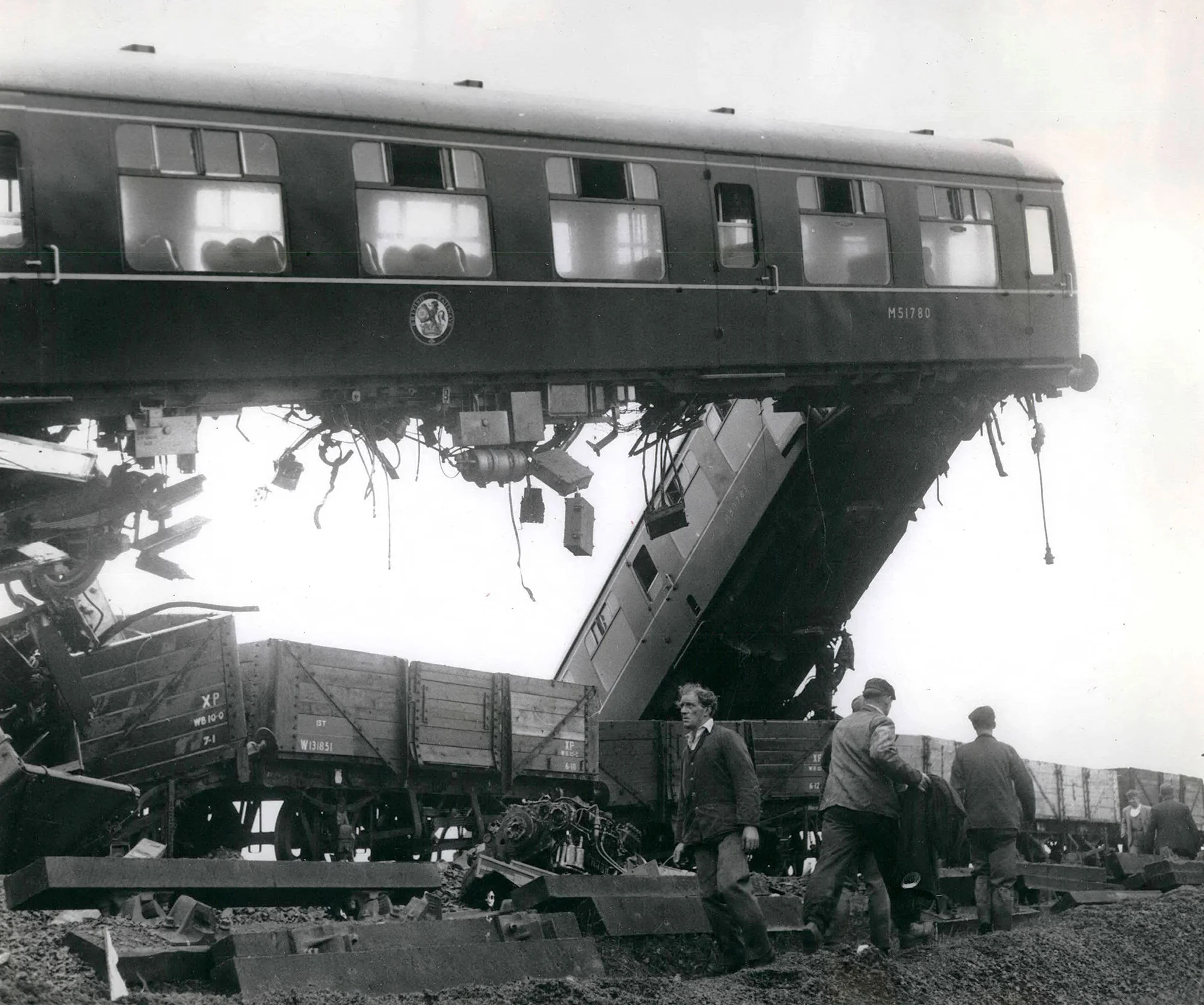
Six killed and 120 injured in Train Crash: Six persons were killed and 120 were injured yesterday when a holiday express crashed and ”leapfrogged” over a stationary train at Blackpool. Photo shows the crash scene. 7 July 1961.
In the immediate aftermath of the disaster, newspapers reported that six people had died and around 120 others had been injured. These preliminary figures were widely circulated by news agencies and remain attached to many contemporary newspaper photographs and archive images. However, following the death of another seriously injured passenger, the Ministry of Transport’s official investigation confirmed the final casualty figures as seven fatalities—the driver and six passengers—and 116 people injured, including 18 who required extended hospital treatment. The official inquiry concluded that the collision resulted from a signalling error during engineering operations. The signalman at Singleton Bank misunderstood a telephone message concerning the position of the ballast train and mistakenly accepted the express into a section of line that was already occupied. Investigators also criticised the local operating procedures in place during the engineering works, finding that established safety regulations had not been properly followed. While the immediate cause was human error, the inquiry determined that weaknesses in working practices had contributed significantly to the disaster.
The Singleton Bank Rail Crash led to important changes in British Rail’s safety procedures, particularly in the way engineering works were protected and how communication between signal boxes and work sites was managed. The recommendations of the inquiry strengthened operational safeguards and helped reduce the risk of similar accidents in the future. More than sixty years later, the Singleton Bank Rail Crash remains one of the darkest chapters in the history of the Fylde Coast’s railway network. Occurring during the height of the summer holiday season, when thousands of visitors were travelling to and from Blackpool, the disaster cast a shadow over the resort and served as a powerful reminder of the importance of railway safety. Although little evidence of the collision remains today, it is remembered as one of the most significant rail accidents ever to affect the Blackpool area.
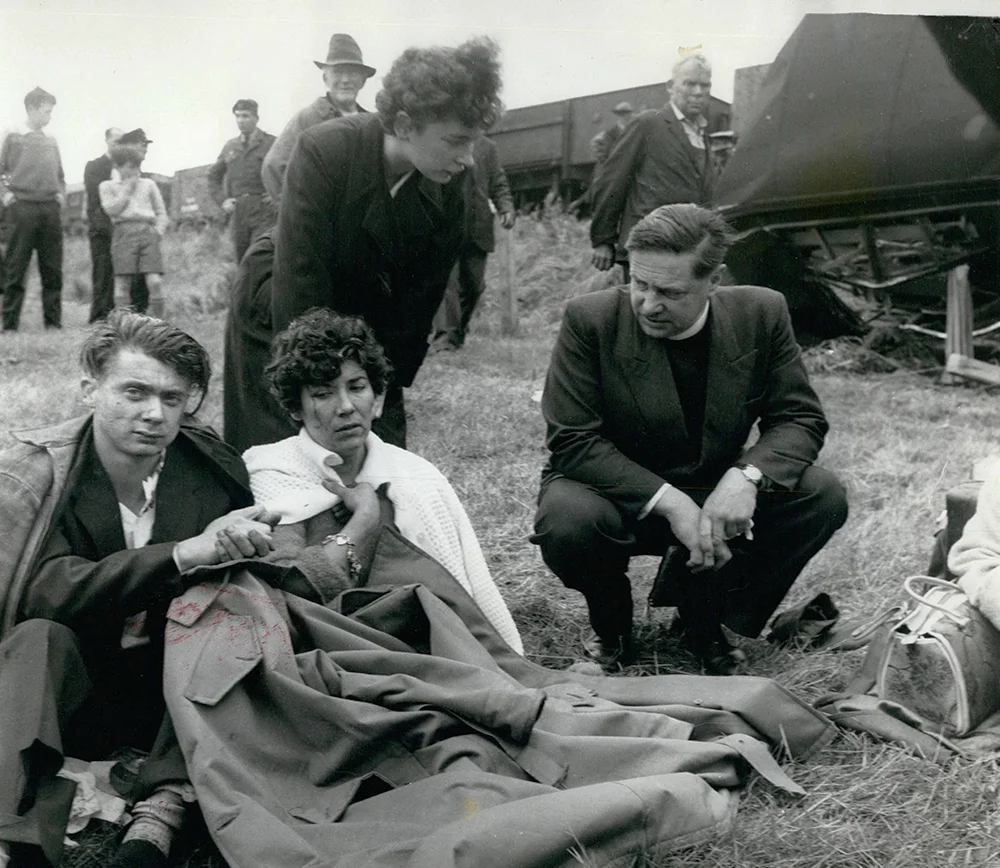
Six killed and 120 injured in train crash: Six persons were killed and 120 were injured when a holiday express crashed and ”leap-frogged” over a stationery train at Blackpool. Photo shows rescue crews working among the wreckage and passengers leaving the crash scene. 7 July 1961.


