



























For much of the twentieth century, few shops were as familiar to Blackpool residents and holidaymakers as Woolworths. Whether buying toys for the children, buckets and spades for the beach, sweets, records or household goods, a visit to “Woolies” became a traditional part of a day in the resort. For generations, the distinctive red-and-gold branding was as recognisable as Blackpool Tower itself. The F. W. Woolworth Company, founded in the United States in 1879, expanded rapidly throughout Britain after opening its first UK store in Liverpool in 1909. Blackpool soon became an obvious destination, with its millions of annual visitors creating a huge demand for affordable goods and souvenirs.
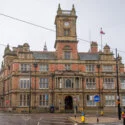
Over the years, Woolworths operated three major stores in Blackpool, each serving a different part of the town. The earliest store was located on the Promenade, close to Blackpool Tower. During the 1930s, a striking new Art Deco building was constructed on the corner of Adelaide Street West, opening in 1936. Its modern architecture, curved corner and prominent clock tower made it one of the resort’s best-known commercial buildings. The store quickly became a landmark for both residents and visitors arriving in the town centre, and today the building is recognised on Blackpool’s Local Heritage List for its architectural significance.
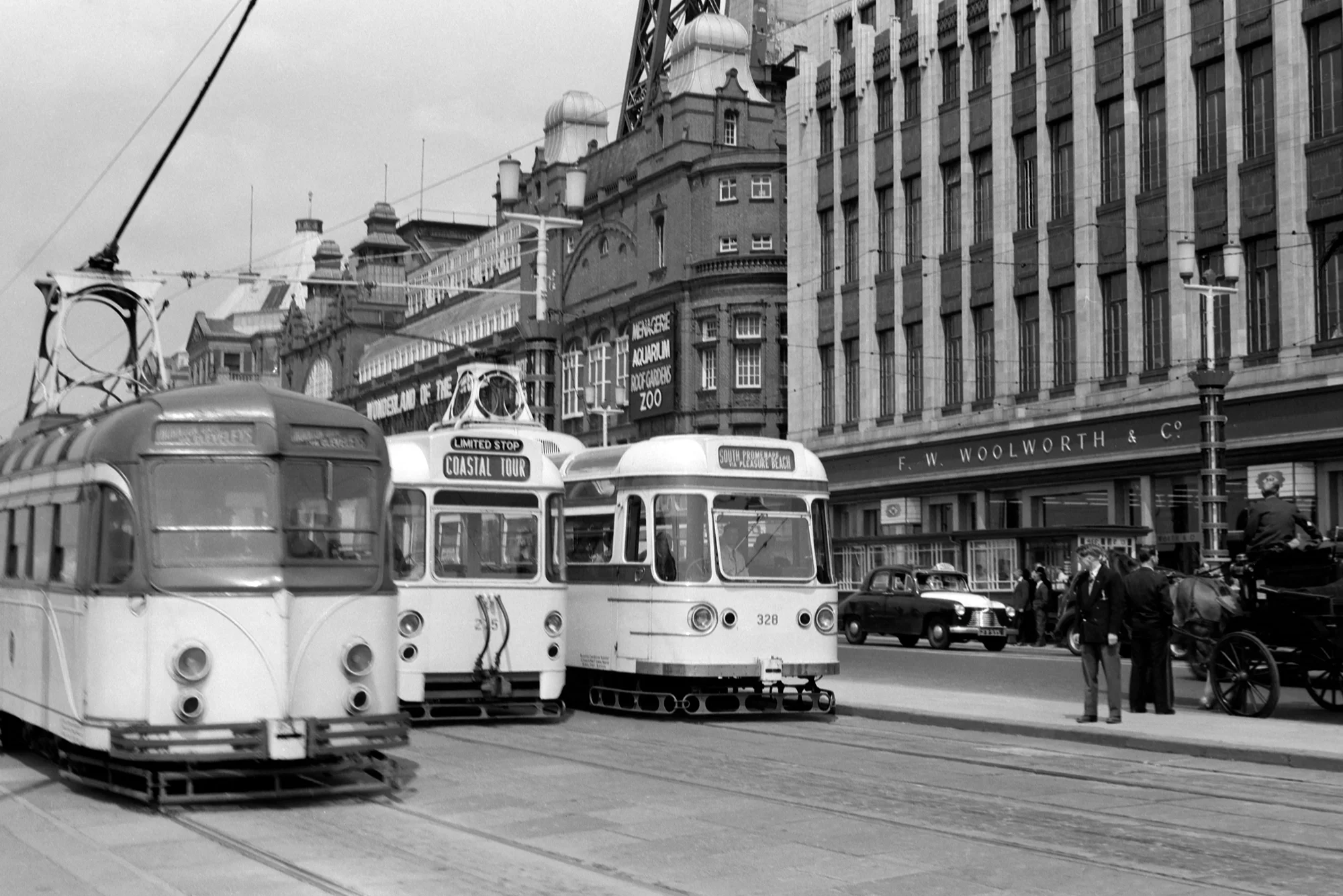
1960s in Blackpool, Lancashire with three single deck trams outside Woolworths store (note the old shopfront and logo/livery). © Alamy
As Blackpool continued to expand, Woolworths opened further branches to serve other shopping districts. By the late 1930s, a substantial Woolworths store was trading on Waterloo Road in South Shore, alongside retailers such as Boots and Saxone. At the time, Waterloo Road rivalled Bond Street as one of South Shore’s busiest shopping streets, with department stores, banks, a post office and the nearby Palladium Cinema attracting shoppers throughout the year. A third major Blackpool store opened at 51–59 Talbot Road in 1954, strengthening Woolworths’ presence in the town centre. The branch became one of the company’s busiest Lancashire stores, later being remodelled as a Woolworths General Store during the 2000s before finally closing with the rest of the chain.
Inside every Woolworths store, customers found an extraordinary variety of products. Shelves were filled with toys, stationery, records, household goods, confectionery, cosmetics, clothing and seasonal gifts. For many children visiting Blackpool on holiday, spending a little pocket money in Woolworths became as much a tradition as visiting the Pleasure Beach or eating fish and chips on the promenade. One of the store’s best-loved features was its café and luncheon counter. Before the era of fast-food chains, Woolworths restaurants provided affordable meals and refreshments for shoppers and holidaymakers alike. Many visitors still remember stopping for tea, cakes or a cooked lunch during a busy day exploring the resort. Surviving menus from the Blackpool stores show a wide range of traditional British dishes served at remarkably modest prices, reflecting the company’s commitment to offering value for money.
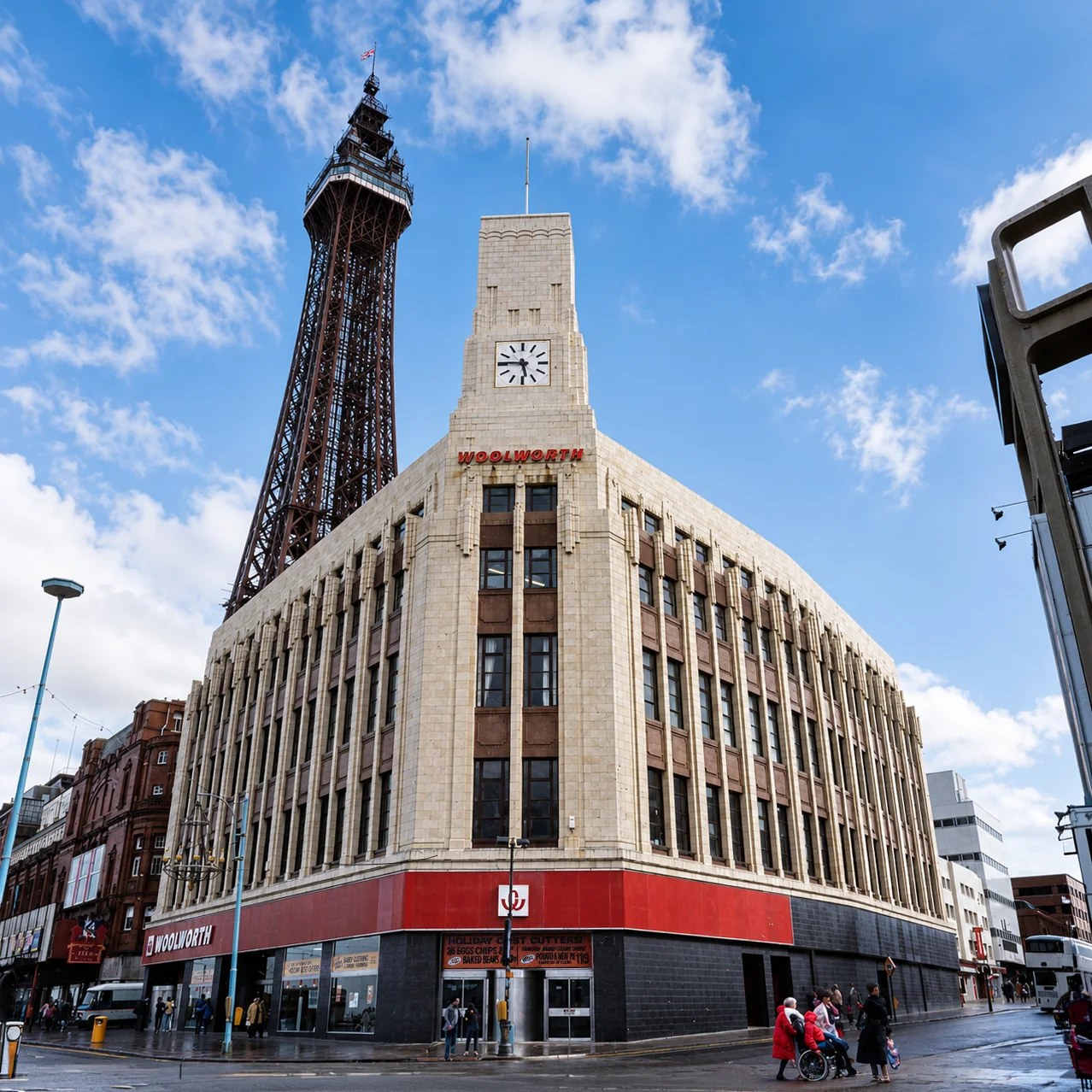
FW Woolworth and Company Limited, Bank Hey Street, Blackpool, 1970s-1980s. The Woolworth’s store on Bank Hey Street, showing the tall square tower on the south-west elevation. F W Woolworth first opened a store at the site in 1916. The premises were expanded and reconstructed in 1936 and reopened in 1938. It was store no. 66 and, at the time, was the largest Woolworth’s store in the world. The shop closed as a Woolworth’s in the 1980s and was later occupied by Price Busters, Sports Direct, and Wetherspoons. © Alamy
Christmas was an especially memorable time. Decorations, toys and festive displays transformed the stores into magical destinations, with countless children making Woolworths one of the first stops when searching for presents. The toy department became particularly busy in the weeks leading up to Christmas, while holidaymakers visiting Blackpool during the Illuminations often combined an evening on the Promenade with shopping in Woolworths. By the late twentieth century, however, changing shopping habits, retail parks and increasing competition began to affect the company. Like many traditional high street retailers, Woolworths struggled to adapt to a rapidly changing retail landscape.
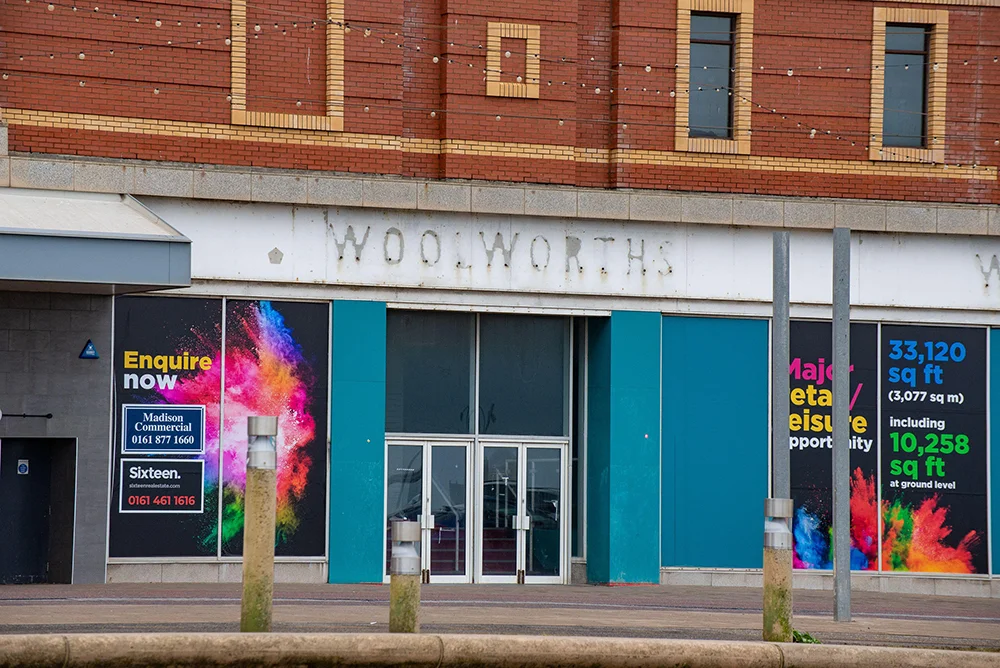
Empty and closed down Woolworths shop at Bank Hey Street. © Alamy
In December 2008, after almost a century on Britain’s high streets, Woolworths entered administration, resulting in the closure of all its UK stores. The Blackpool branches closed alongside more than 800 others nationwide, bringing an end to a retail institution that had served generations of customers. The Talbot Road store later became Home Bargains, while the former Promenade building has since housed other retail and leisure businesses.
Although the name has disappeared from Blackpool’s streets, Woolworths remains one of the town’s most fondly remembered shops. For many people, it was more than simply a place to shop. It was where children spent their holiday money, where families paused for lunch, where Christmas traditions began and where countless memories of visits to Blackpool were made. Today, the former Woolworths buildings still form part of Blackpool’s streetscape, serving as reminders of a time when Britain’s favourite seaside resort was also home to one of the nation’s most beloved high street stores.
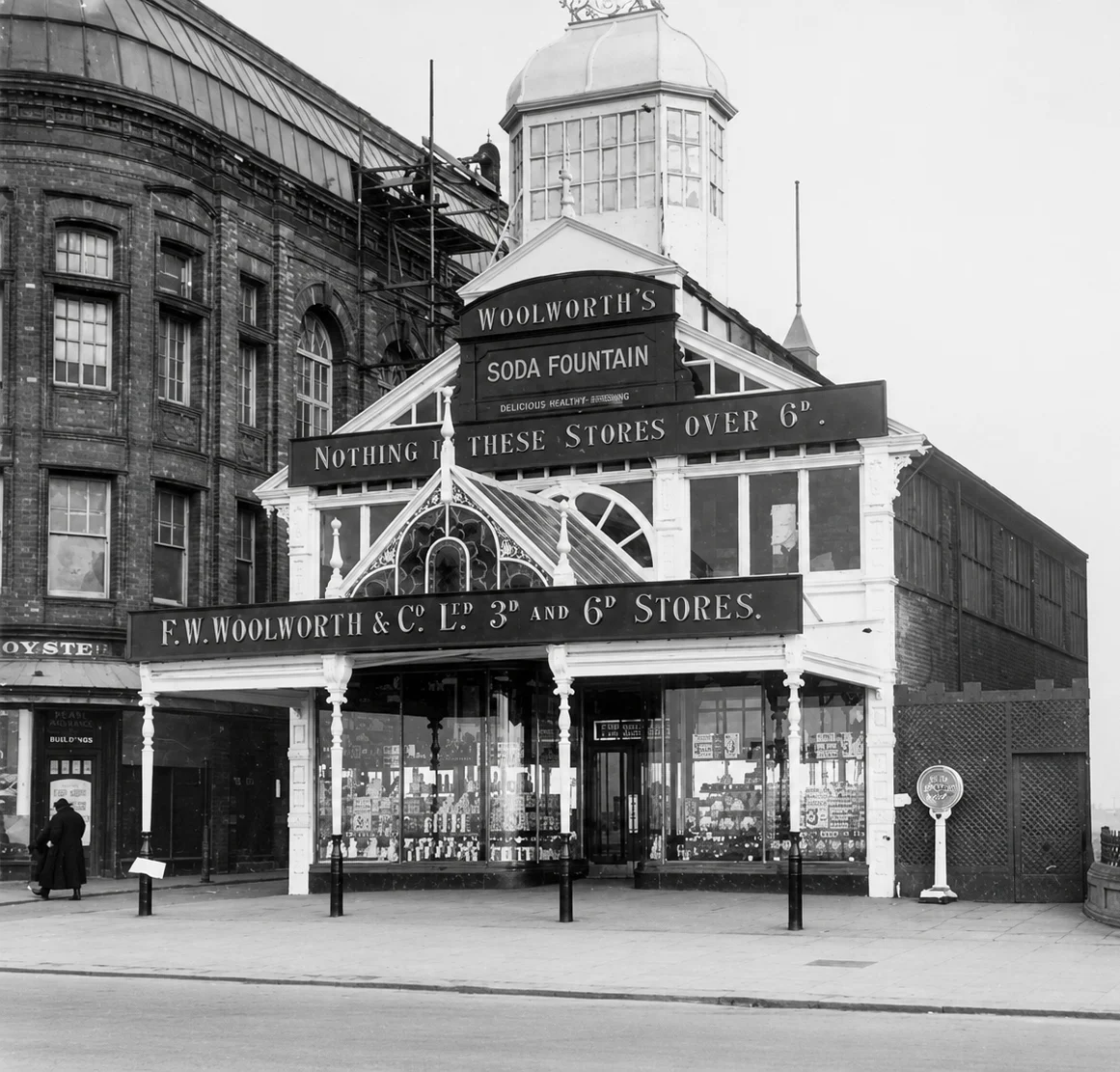
Featured Image © Blackpool Council/Planning Department Collection
Additional Images © Alamy
Background Image © Alamy


