




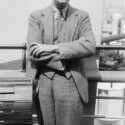
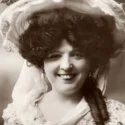







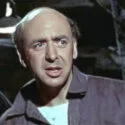




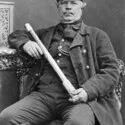







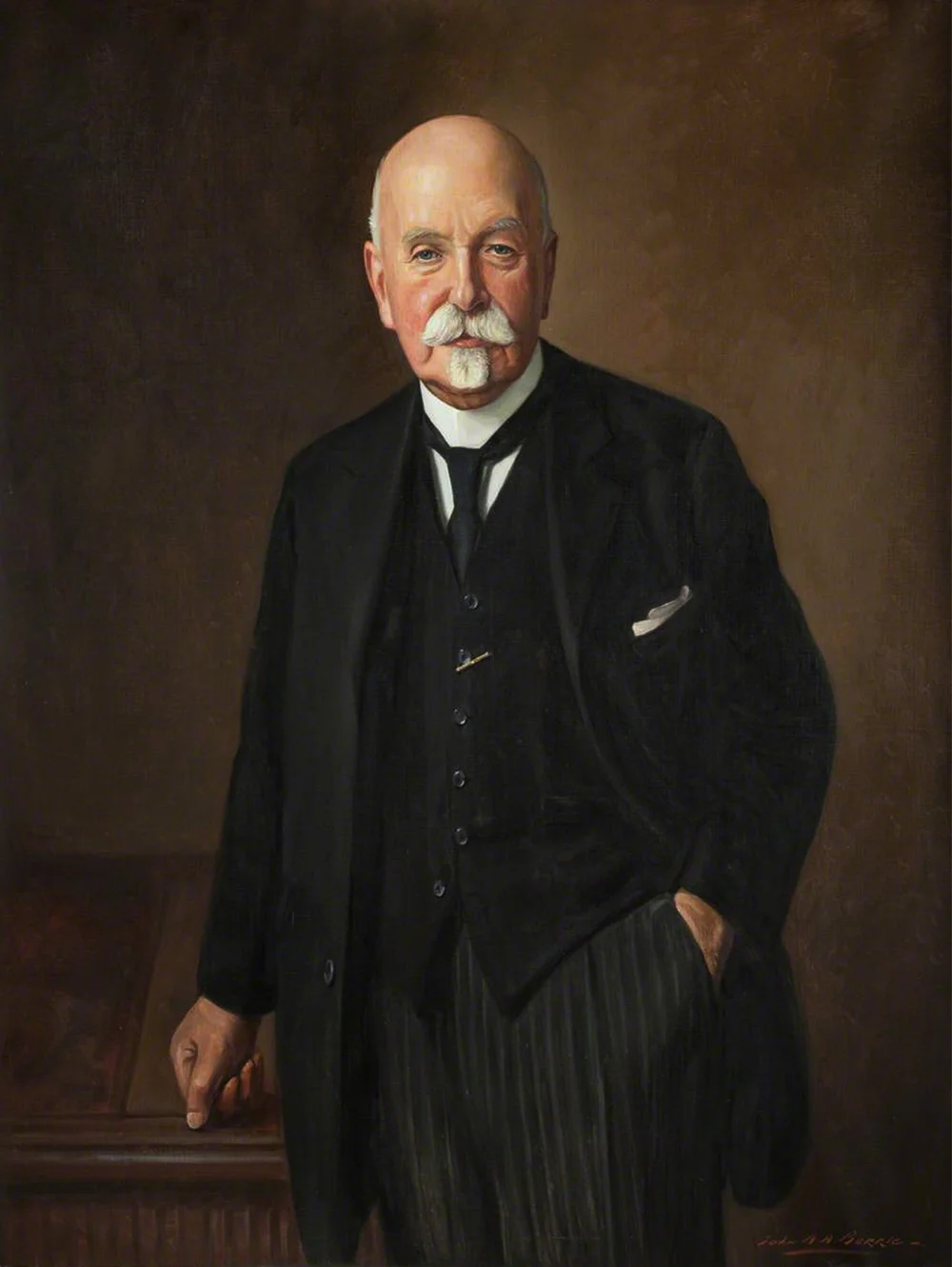
Portrait of Sir William Hodgson by John Archibald Alexander Berrie (1887–1962) Lancashire County Council.
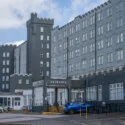
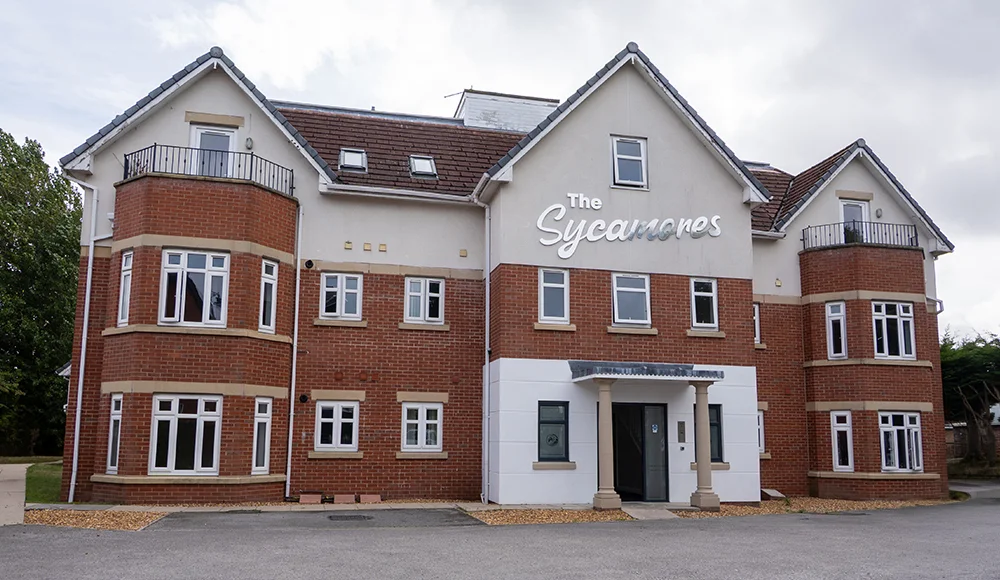
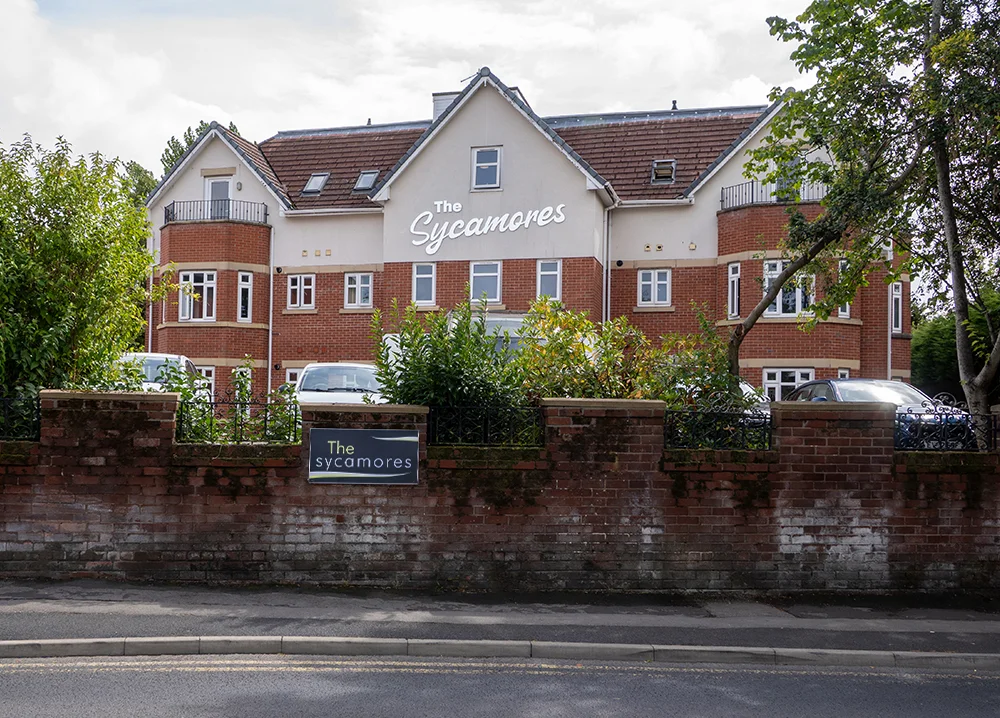
The Sycamores once stood on Blackpool Old Road in Poulton-le-Fylde, approximately opposite the site of today’s Poulton Library. Although the house has disappeared, its name survives in the modern residential development occupying the site. Its historical importance is closely connected with the Hodgson family and, above all, Sir William Hodgson, whose career in local government eventually took him to the chairmanship of Lancashire County Council.
The Hodgsons were established in Poulton by the early nineteenth century and accumulated a considerable portfolio of property in and around the town. Their holdings included cottages and commercial premises in Bull Street, houses in Sheaf Street, property around the site of the later railway station and buildings extending from Market Place towards the Spread Eagle. The family also owned agricultural land and The Sycamores, together with its gardens and shippon. The family’s prosperity was associated particularly with the tanning trade. During the nineteenth century William Hodgson and his brother John were successful tanners in Poulton and were sufficiently prosperous to retire while still in their forties. Both men had married sisters from the Lewtas family, but both were widowed relatively young. By the late 1840s the brothers were living together at the property that later became firmly established as The Sycamores, accompanied by William’s daughters Margaret and Jane.
The circumstances through which the house passed to the man who became Sir William Hodgson formed an unusual part of the family’s history. Margaret Hodgson married Robert Bond at St Chad’s Church in 1856 and moved to Preston, where her husband worked as an assistant court bailiff. Their son was born on 29 August 1857 and was named William Hodgson Braithwaite Bond. Within only a few years the child’s circumstances changed dramatically. Both of his parents died in 1860, leaving him orphaned at around three years old. He subsequently came into the care of his maternal grandfather, William Hodgson, and returned to Poulton. He would spend much of the remainder of his life associated with the family property on Blackpool Old Road. His grandfather had no male descendant through whom the Hodgson surname would otherwise continue. An arrangement was therefore made under which the younger William would relinquish the surname Bond and take Hodgson as his family name, in return becoming heir to his grandfather’s property. Following the elder William Hodgson’s death in 1875, William Bond became William Hodgson and inherited the family’s estate.
 In 1880 he married Isabella Ellen Hammond at St Chad’s Church. She was the daughter of Thomas Hammond, who had operated a school for many years in buildings close to the Golden Ball on Ball Street. The marriage therefore brought together two families with established connections to nineteenth-century Poulton. Although the property had existed considerably earlier, the name The Sycamores is recorded in the 1891 census. William Hodgson continued to live there for the rest of his life, making the house his home during an extraordinary period of public service extending across more than six decades.
His public career began at a comparatively local level. In 1881 Hodgson became a Guardian of the Poor for the Fylde, part of the system responsible for administering poor relief before the development of the modern welfare state. His interests increasingly extended into county government and in 1901 he was elected a Lancashire county councillor. Hodgson became an alderman in 1912 and developed particular interests in education, public health and housing. He served as vice-chairman of the Lancashire Education Committee and chairman of the Public Health and Housing Committee. These were substantial responsibilities at a time when local authorities were becoming increasingly involved in schools, housing provision, sanitation and improvements to public health.
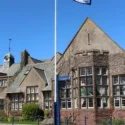
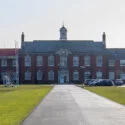
Education became one of the areas with which his name was most closely associated in Poulton. A new senior school opened in the town on 5 September 1932, providing modern accommodation for secondary-age pupils. Hodgson was chairman of the Lancashire Education Committee and played an important role in its establishment. The school was officially opened by him on 12 November 1932 and was named Hodgson Senior School in his honour. The institution developed considerably during the following decades and the Hodgson name has remained attached to the school, now Hodgson Academy. It provides one of the most visible surviving reminders in Poulton of the man who once lived at The Sycamores.
Hodgson became vice-chairman of Lancashire County Council in 1931 and was knighted in 1935 for his long record of public service. In 1937 he became chairman of Lancashire County Council. He was also invited to stand for Parliament for the Fylde constituency but declined, preferring to continue his work in county government. Despite the increasingly important positions he occupied, Poulton remained his home. The Sycamores consequently became associated with a figure whose responsibilities extended far beyond the town. For decades, decisions affecting communities across Lancashire were being made by a man who returned to this house on Blackpool Old Road.
The Hodgson family’s connection with St Chad’s Church was equally strong. Sir William had worshipped there from his youth and served as a churchwarden for almost half a century. His eldest son, William Hammond Hodgson, became a doctor and surgeon in Blackpool. He died in 1927, aged only 45, and is commemorated inside St Chad’s Church by a memorial recording him as the elder son of William and Isabella Ellen Hodgson of The Sycamores.
 Sir William remained active in public life into remarkable old age. Only shortly before his death he announced his intention to retire from the chairmanship of Lancashire County Council after a career representing some 65 years of public service. He died at The Sycamores in February 1945 at the age of 87. His funeral was held at St Chad’s Church on 2 March. The extent of the attendance demonstrated the standing he had acquired both locally and across Lancashire. Every pew in the church was occupied and additional mourners were unable to enter. His coffin was carried by police officers from The Sycamores to St Chad’s, physically linking his family home with the church that had played such an important part in his life.
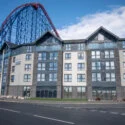
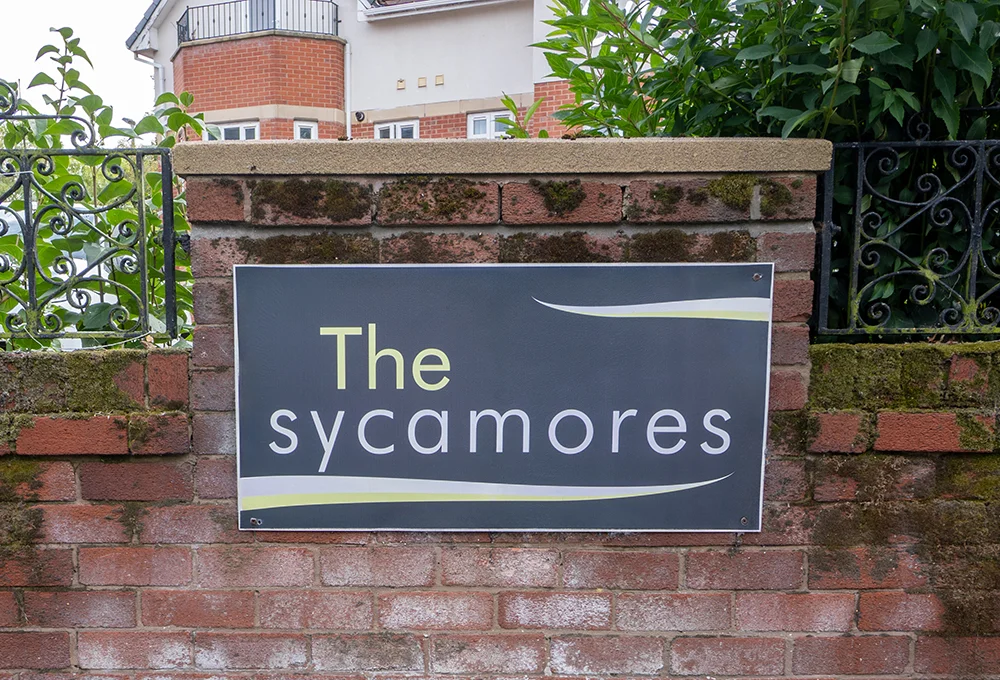
Sir William left an estate valued at £18,622, a substantial sum at the time, with probate granted to his three surviving children. His death effectively brought to a close one of the most significant chapters in the history of The Sycamores. The house itself did not survive the later redevelopment of central Poulton. Its former grounds were eventually transformed and the original residence disappeared. Modern apartments now occupy the site opposite Poulton Library, but significantly the development retained the name The Sycamores.
That surviving name gives the site considerably greater historical meaning than might initially be apparent. It recalls not simply a demolished house, but a Poulton family whose interests once included businesses, cottages, workshops, farmland and other properties throughout the town. More importantly, it marks the home of Sir William Hodgson, whose progression from Guardian of the Poor to chairman of Lancashire County Council reflected the enormous changes taking place in local government between the Victorian period and the end of the Second World War. The Sycamores has gone, but two particularly prominent reminders of its former occupant remain in Poulton. His surname continues through Hodgson Academy, while the modern residential development on the site of his former home preserves the name of the house in which he lived for most of his long life
Images by © Deeper Blue Marketing & Design Ltd


