



















Long before the construction of Blackpool Tower and decades before modern aquariums became common visitor attractions, Blackpool was home to one of Britain’s earliest public aquariums. Opened in 1875, Dr William Henry Cocker’s Aquarium, Menagerie and Aviary quickly became one of the resort’s great attractions, drawing thousands of visitors eager to experience the wonders of the natural world beneath the sea. At a time when few people had ever seen exotic marine life, it represented a remarkable combination of education, science and entertainment. The aquarium was the vision of Dr William Henry Cocker, a successful local surgeon and entrepreneur. Having purchased land on Blackpool’s Central Promenade, Dr Cocker originally hoped to sell it to Blackpool Council for the construction of new municipal offices. When the proposal was rejected, he decided to develop the site himself, creating an ambitious visitor attraction unlike anything the town had previously seen. When the attraction opened in 1875, it joined only a handful of public aquariums in Britain. Following London’s pioneering public aquarium in 1853, Brighton had opened its celebrated seaside aquarium in 1872, with Southport following in 1874. Blackpool’s aquarium was therefore among the earliest examples in the country and reflected the town’s determination to establish itself as one of Britain’s leading holiday resorts.
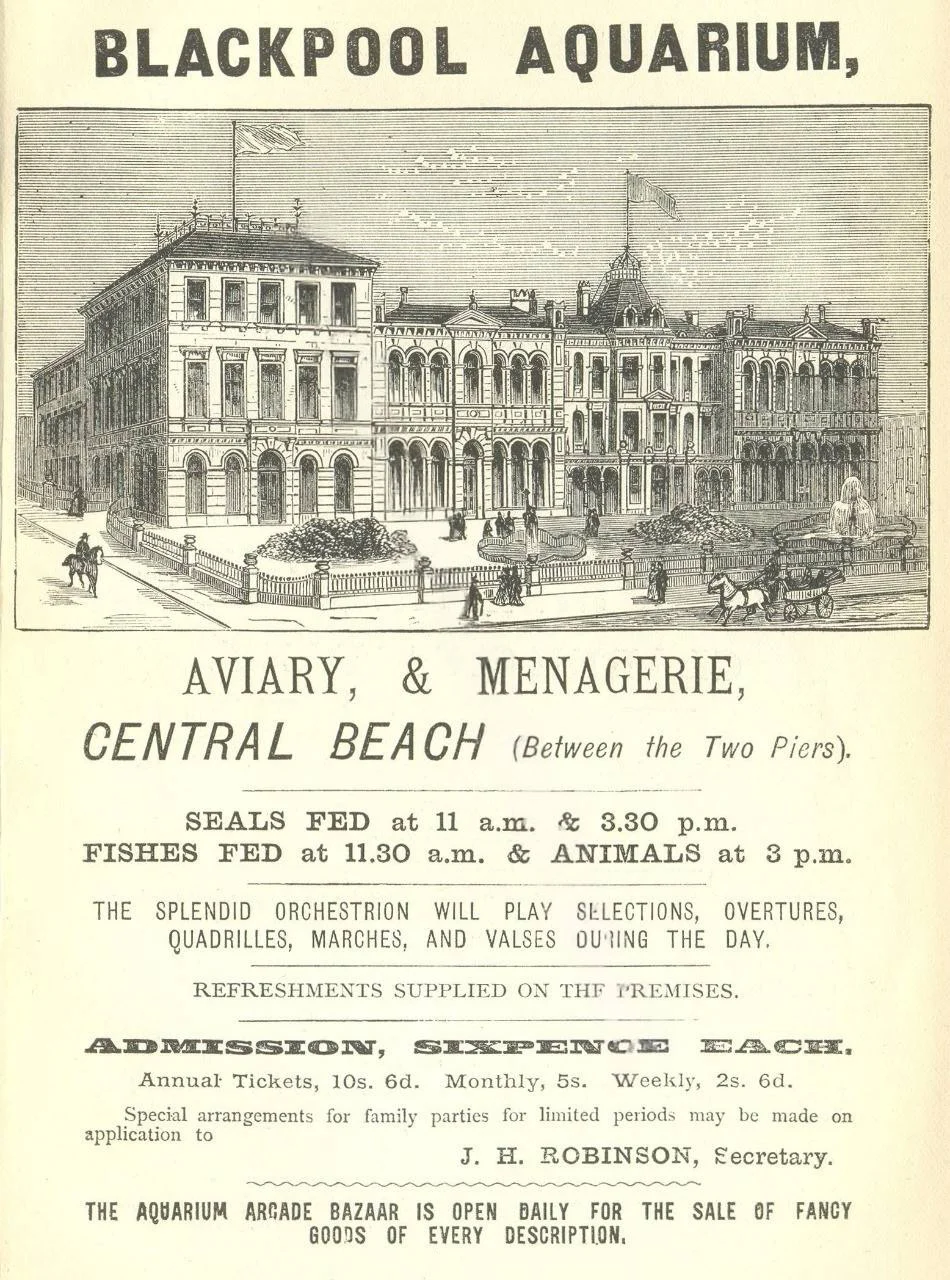
The complex extended well beyond its aquarium. Visitors could also explore a menagerie of exotic animals and an aviary containing birds from around the world. The combination proved enormously popular, offering holidaymakers an opportunity to encounter creatures they would otherwise only have read about in books. Victorian families marvelled at tropical fish, seals, monkeys, parrots and many other animals, making the attraction one of Blackpool’s earliest centres of scientific curiosity and family entertainment. Marine life was displayed in specially constructed saltwater tanks supplied with seawater from the nearby Irish Sea. Maintaining these exhibits required considerable technical ingenuity, with pumping and circulation systems helping to sustain the collection. For many visitors, the aquarium provided their first glimpse of unfamiliar marine creatures, long before underwater photography, cinema and television made the underwater world familiar to a mass audience. The success of Dr Cocker’s attraction coincided with Blackpool’s rapid expansion during the late Victorian period. As ever larger entertainment venues appeared across the resort, the aquarium became an established part of the town’s visitor offer, appearing in promotional material alongside the piers, theatres and Winter Gardens. A promotional poster from 1889 proudly listed the Aquarium, Menagerie and Aviary among Blackpool’s principal attractions.
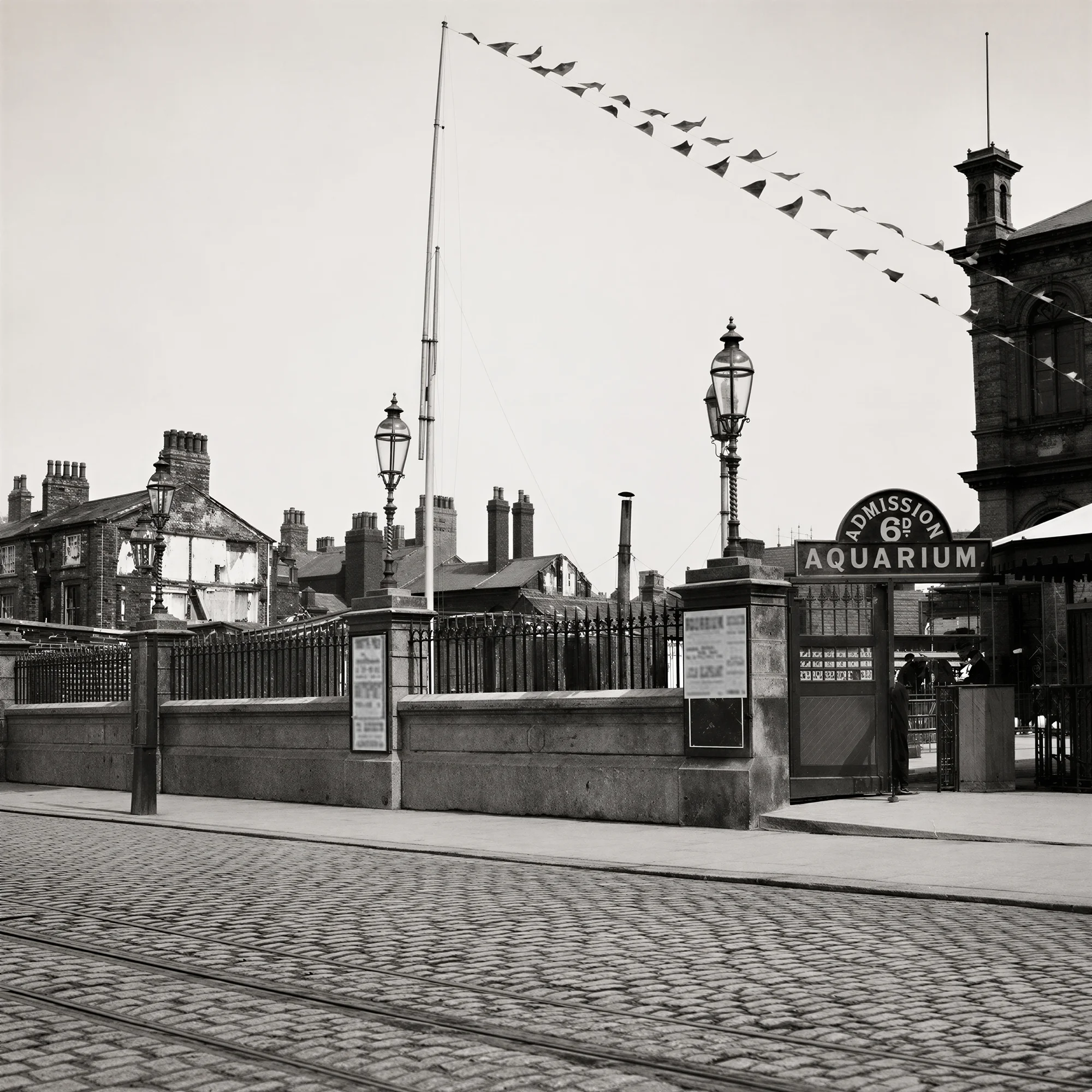
Image provided by © Blackpool Council/Planning Department Collection. Digital restoration and enhancement © Deeper Blue Marketing & Design Ltd 2026.
The most remarkable chapter in the aquarium’s history began when plans emerged for Blackpool Tower during the early 1890s. The aquarium occupied part of the site required for the enormous new entertainment complex, but rather than simply demolishing the established attraction and replacing it with another aquarium, the developers retained it. The Tower buildings were constructed around the aquarium and it was incorporated into the southern wing of the new complex. When Blackpool Tower opened in 1894, Dr Cocker’s aquarium therefore did not disappear. It became the Tower Aquarium, continuing an attraction that was already nineteen years old. This distinction is important because the aquarium remembered by later generations inside Blackpool Tower was not an unrelated successor elsewhere in the building, but the continuing development of the Victorian attraction established by Dr Cocker in 1875. The aquarium evolved considerably as the decades passed. Displays were altered, tanks and facilities were modernised and new species were introduced, but the connection with the original attraction remained. A major refurbishment took place in 1968, when it was promoted as the New Aquarium, while later generations came to know it as Undersea World. This continuity extended into the Tower World era. When the Tower complex underwent a major transformation and was relaunched as Tower World in 1992, the aquarium remained part of the visitor experience. Holidaymakers entering Undersea World during the 1990s were therefore visiting the latest incarnation of an attraction whose history stretched directly back to Dr Cocker’s aquarium of 1875. By then the surroundings, presentation and technology had changed almost beyond recognition, yet the attraction itself had survived the construction of the Tower and more than a century of changing tastes in Blackpool entertainment. Victorian visitors entering Dr Cocker’s Aquarium, families visiting the Tower Aquarium during the twentieth century and holidaymakers exploring Undersea World during the Tower World years were all experiencing different generations of the same remarkable Blackpool attraction.
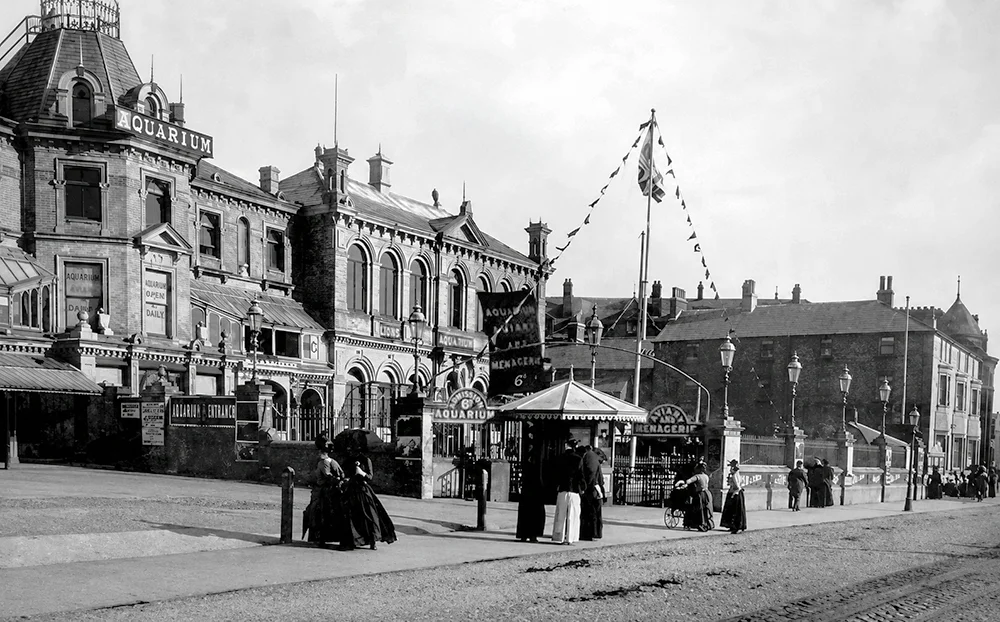
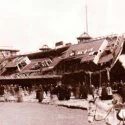
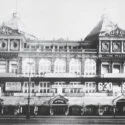
Dr Cockers Aquarium & Menagerie. The tower buildings were built in and around the existing aquarium to keep it open during the tower’s construction. Image provided by © Blackpool Council/Planning Department Collection. Digital restoration and enhancement © Deeper Blue Marketing & Design Ltd 2026.
One of the more tragic episodes in its long history occurred on 17 June 1915, when Jim Walmsley, the aquarium’s long-serving general manager, accidentally drowned in the saltwater tanks beneath the attraction. Walmsley had been instrumental in developing the aquarium and caring for its collection of animals, making his death a significant loss for Blackpool’s entertainment community. After serving generations of visitors, the historic Tower Aquarium eventually closed in November 2010, bringing to an end approximately 135 years of aquarium history on the site. Almost all of its fish and marine creatures were transferred to the Sea Life Centre on Central Promenade, which had opened in 1990 on the site of the former Luna Park. In an unexpected link between old and new, the Sea Life Centre was able to utilise the original seawater pumping infrastructure first established on the site of Read’s Sea Water Baths during the nineteenth century. The former aquarium area within the Tower was subsequently redeveloped as part of the changes that introduced the Blackpool Tower Dungeon.
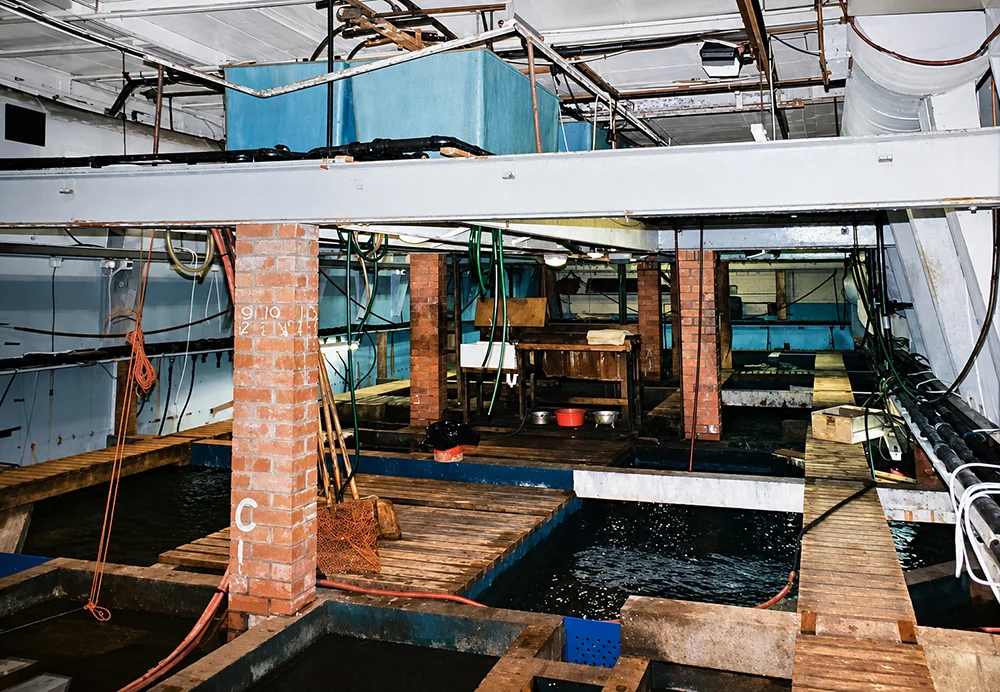
Above the tanks in the centre block showing the walkways that would be used to maintain the tanks and feed the fish. Image by © David Hulme
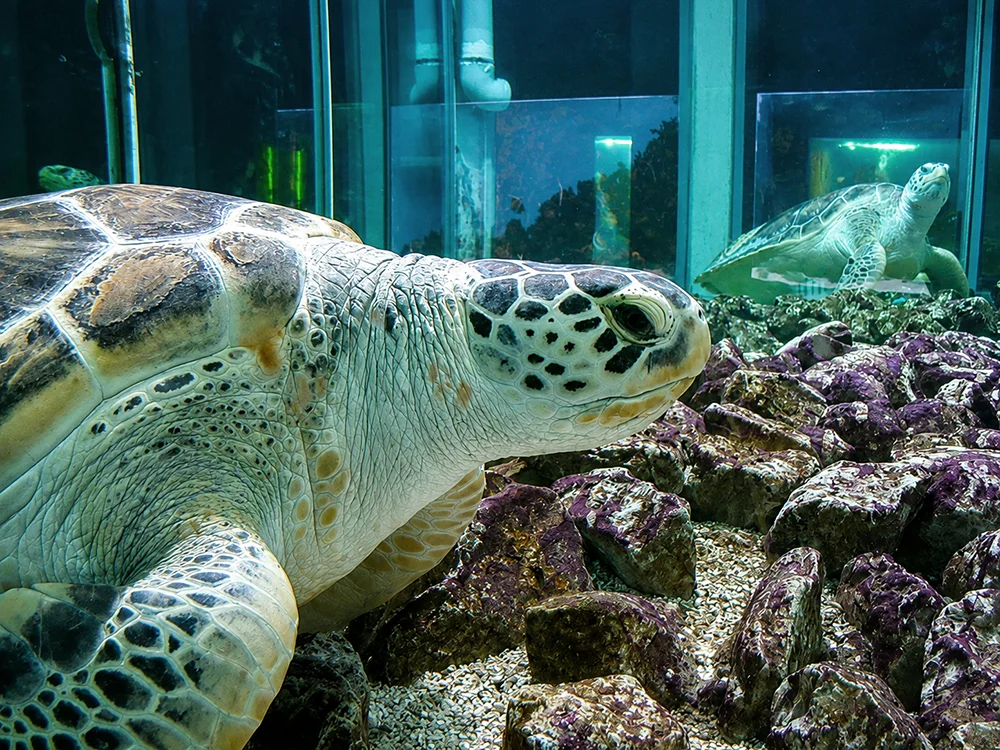
One of the green turtles housed at the tower in a purpose-built display tank much bigger and better than what had gone before. Image by © David Hulme
Although Dr Cocker could never have imagined the Tower World attraction that eventually evolved from his Victorian enterprise, the survival of the aquarium was remarkable. It pre-dated Blackpool Tower by nineteen years, was incorporated into the Tower rather than swept away by its construction, survived through successive generations of the landmark and remained an attraction into the twenty-first century. Its legacy therefore extends considerably further than the Victorian Aquarium, Menagerie and Aviary with which the story began. From Dr Cocker’s attraction in 1875, through the Tower Aquarium and Undersea World to the Tower World years, generations of visitors encountered marine life on essentially the same historic site. Few Blackpool attractions could claim such a continuous connection between the resort’s Victorian beginnings and its modern tourism industry.
This exclusive video of the aquarium at Tower World was made by © Deeper Blue Marketing & Design Ltd
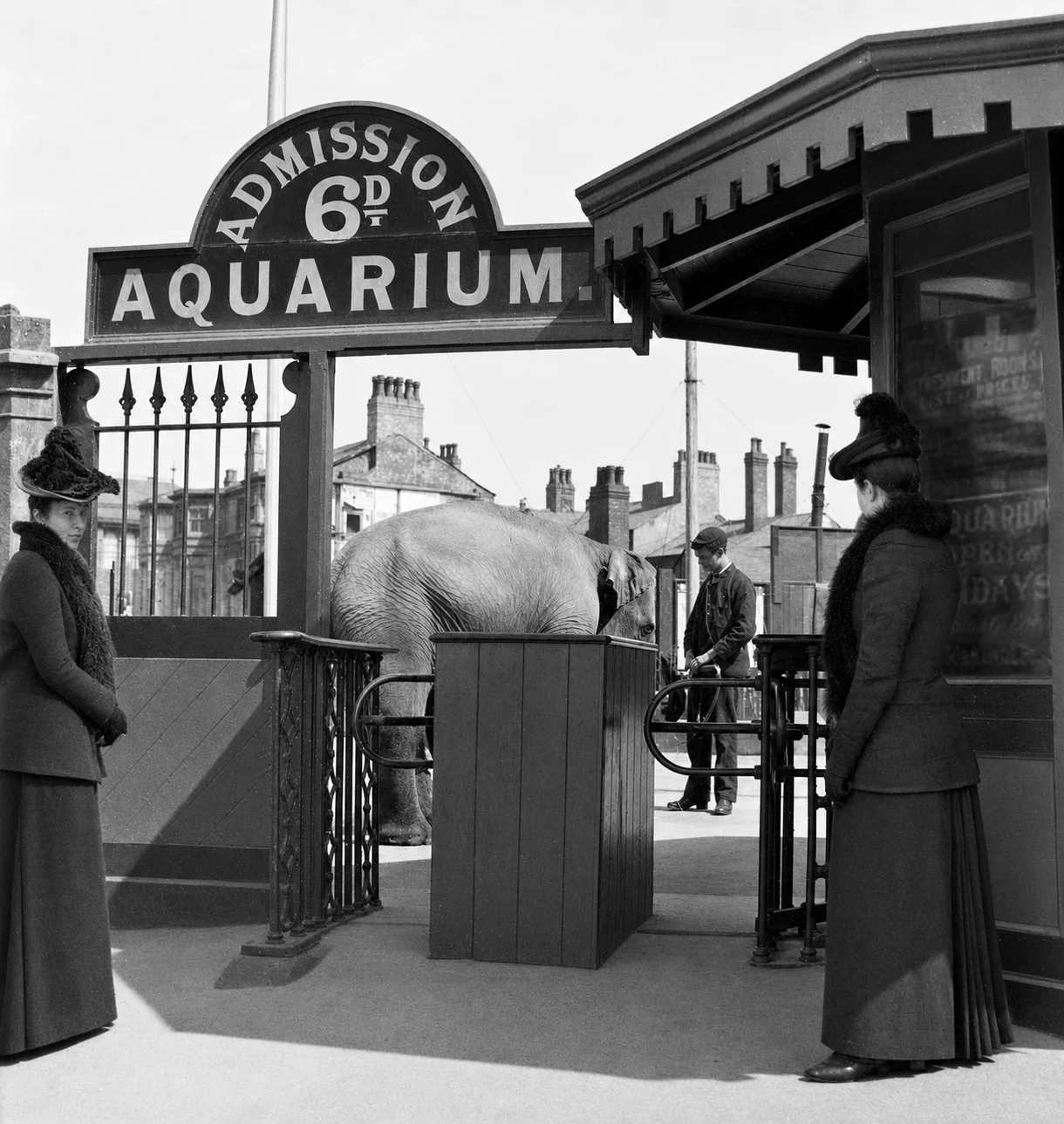
Image provided by © Blackpool Council/Planning Department Collection. Digital restoration and enhancement © Deeper Blue Marketing & Design Ltd 2026.
Featured Image © Blackpool Council/Planning Department Collection
Additional Images © David Hulme
Background Image © Blackpool Council/Planning Department Collection


