


























Long before the construction of Blackpool Tower, the Winter Gardens and the famous amusement parks, one of the resort’s earliest visitor attractions stood on the Central Promenade. Known as Read’s Baths and Bazaar, it combined shopping, entertainment and the health-giving benefits of sea bathing, helping to establish Blackpool as a growing seaside destination during the Victorian era. The attraction was built by local entrepreneur William Read and officially opened on 4 September 1861 on South Beach, close to the site now occupied by SEA LIFE Blackpool and neighbouring attractions on the Golden Mile. At a time when Blackpool was beginning to transform from a small coastal village into a nationally recognised holiday resort, Read’s development represented one of the town’s most ambitious commercial projects.
Constructed in an elegant neo-classical style, the complex contained a covered bazaar, market stalls, sea-water bathing facilities and assembly rooms. Visitors could browse a variety of shops before enjoying what was then regarded as one of the healthiest leisure activities available—immersing themselves in heated, filtered seawater drawn directly from the Irish Sea. The development reflected the Victorian belief that sea bathing could improve health, treat rheumatism and promote general wellbeing. The bazaar itself housed around 30 market stalls, selling everything from souvenirs and clothing to fancy goods and household items. At a time when purpose-built shopping arcades were still relatively uncommon, Read’s Bazaar offered visitors an indoor shopping experience protected from Blackpool’s often unpredictable weather. Assembly rooms within the building also hosted meetings and social gatherings, making the complex an important centre of community life as well as tourism.
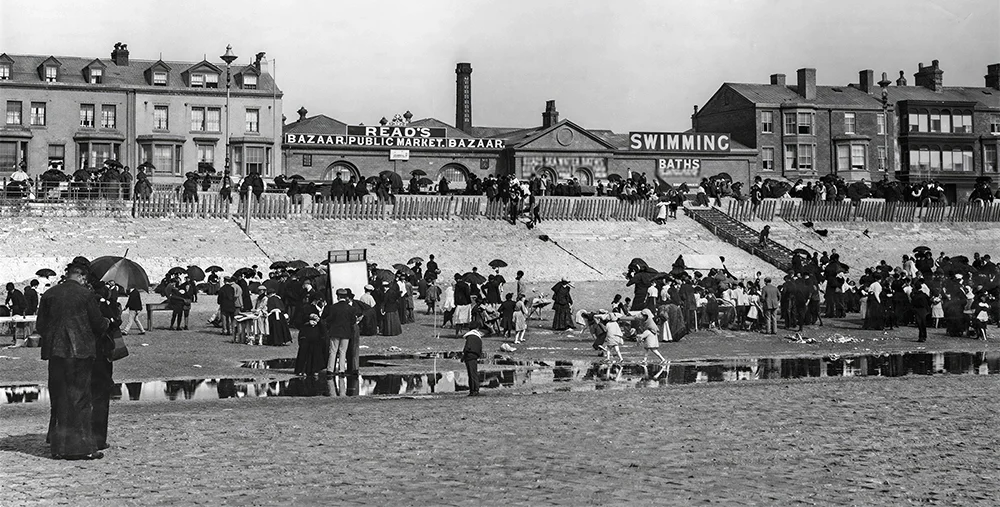
Reads Bath Bazaar
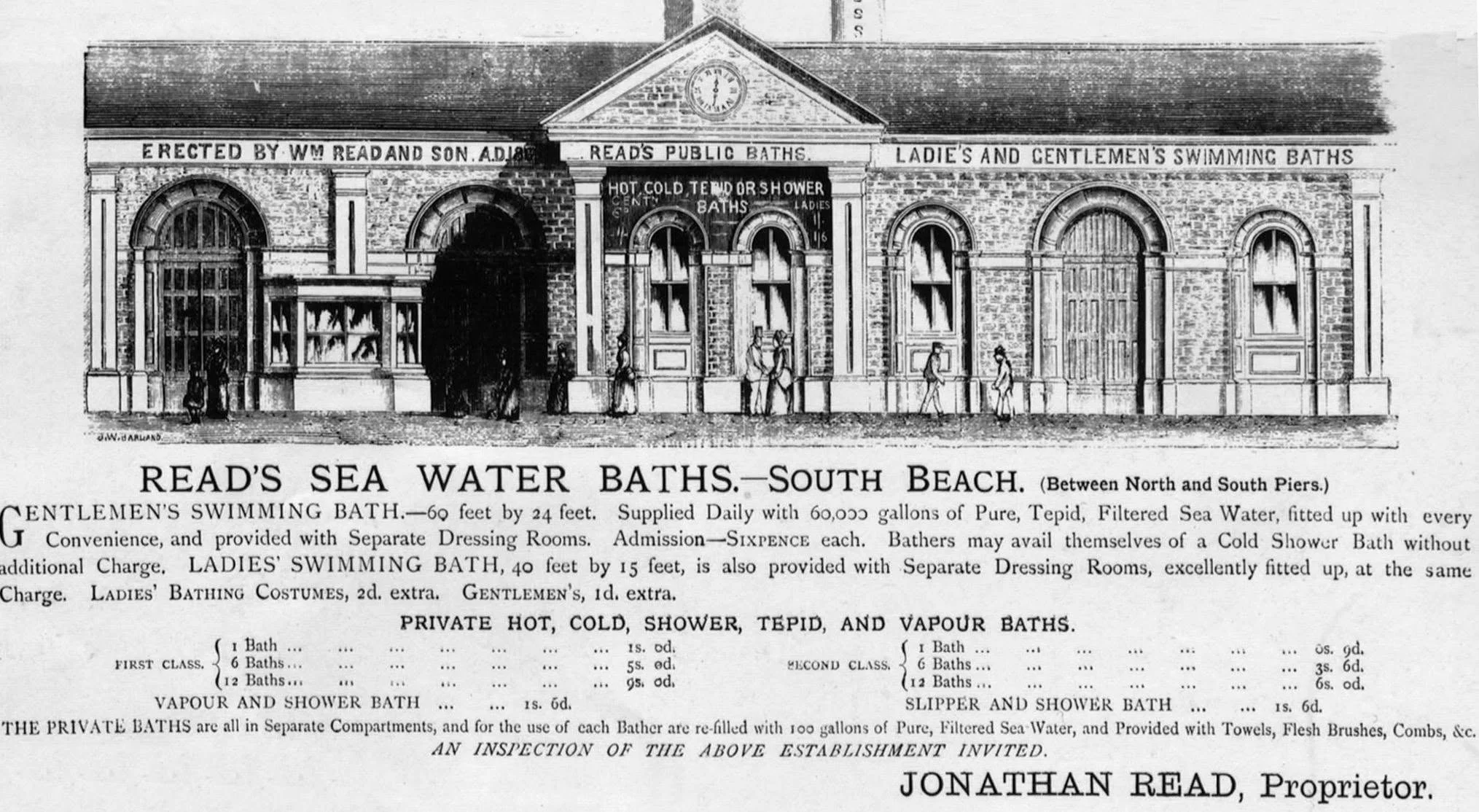
The sea-water baths quickly became one of the attraction’s principal draws. Separate facilities were provided for ladies and gentlemen, each with private changing rooms. Contemporary advertisements proudly stated that every bath was supplied with 100 gallons of pure filtered seawater, freshly pumped from the sea using steam-powered machinery. The water was heated to a comfortable temperature, while clean towels and bathing equipment were provided for visitors. Such facilities were considered luxurious for the period and reflected Blackpool’s growing ambition to compete with Britain’s leading seaside resorts. Read’s Baths were continually improved throughout the nineteenth century. By the 1870s, advertisements claimed the complex could pump 100,000 gallons of seawater every tide, demonstrating the scale of the operation. The baths became popular with both holidaymakers and local residents seeking the therapeutic benefits of seawater, which Victorian medicine widely promoted as beneficial for circulation, joint conditions and general health.
The attraction also gained a reputation for unusual exhibitions. During 1878, Read’s Baths displayed a live whale for approximately three weeks, creating considerable public interest and attracting large crowds eager to see the enormous marine creature. While such exhibitions would not be acceptable today, they reflected the Victorian fascination with natural curiosities and spectacle that characterised many early seaside attractions. Disaster struck on 8 August 1877, when a serious fire destroyed the bazaar and market section of the complex. Although the baths survived and continued operating, the fire marked the beginning of significant changes to the site. Over the following decades, the original buildings gradually disappeared as Blackpool’s rapidly expanding entertainment industry demanded new attractions and larger developments.
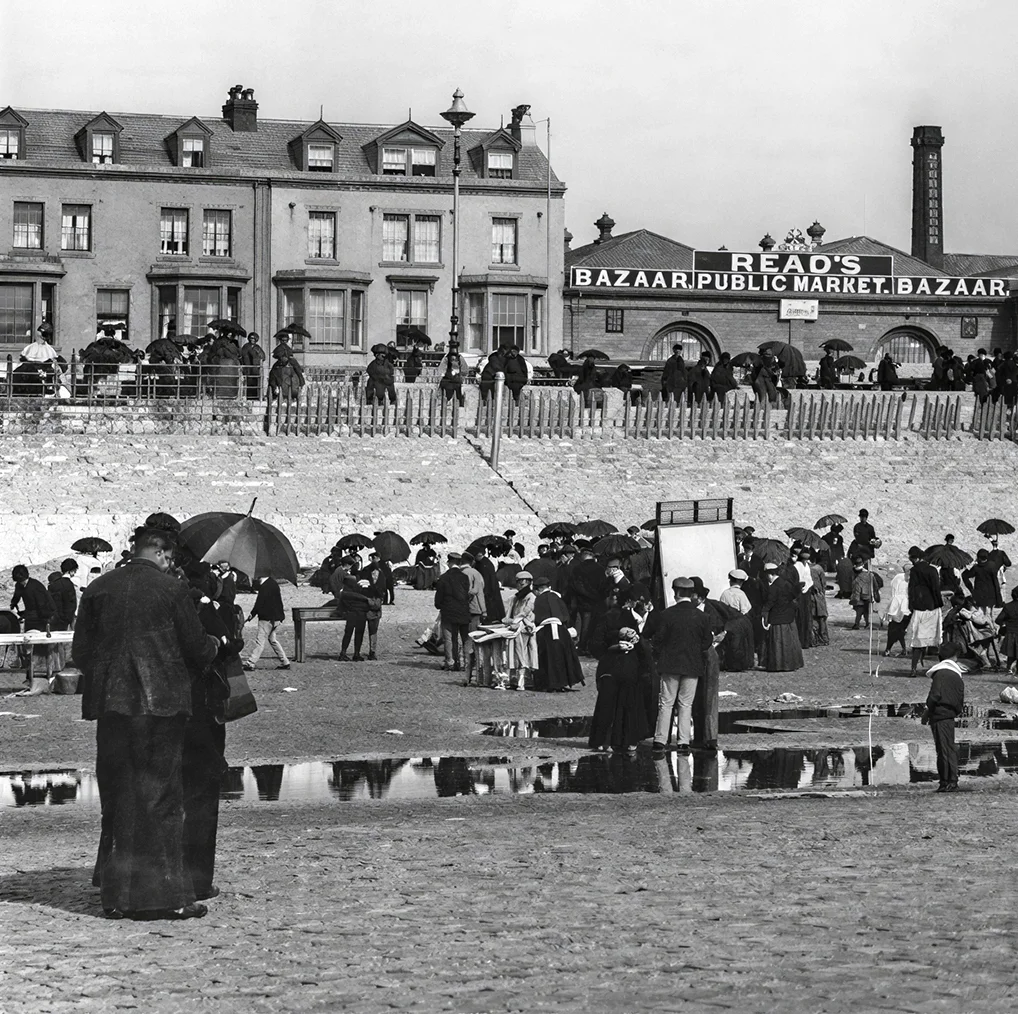 The sea-water baths continued serving visitors until 1920, when they finally closed after almost sixty years of operation. Soon afterwards, the site entered a new phase in its history as it became home to Coney Island, one of Blackpool’s early amusement centres. This was followed in 1929 by the construction of Luna Park, another popular entertainment venue that reflected the changing tastes of twentieth-century holidaymakers. Fires, redevelopment and further expansion of the Golden Mile eventually transformed the area beyond recognition. Although nothing of Read’s Baths and Bazaar survives today, its influence on Blackpool’s development was considerable. At a time when the town was still finding its identity as a seaside resort, it demonstrated that visitors wanted more than simply a beach. Shopping, entertainment, social spaces and leisure facilities were becoming essential parts of the holiday experience.
Read’s enterprise also reflected the entrepreneurial spirit that would define Blackpool during the Victorian era. By combining commerce, recreation and the fashionable pursuit of healthy sea bathing, the attraction helped pave the way for the remarkable growth that followed during the second half of the nineteenth century. Today, thousands of people walk past the site each day without realising that beneath one of Blackpool’s busiest stretches of promenade once stood one of the resort’s earliest visitor attractions. Although long vanished, Read’s Baths and Bazaar occupies an important place in Blackpool’s history, representing an early milestone in the town’s journey from quiet coastal settlement to Britain’s most famous seaside resort.
Images by © Blackpool Council/Planning Department Collection


