










































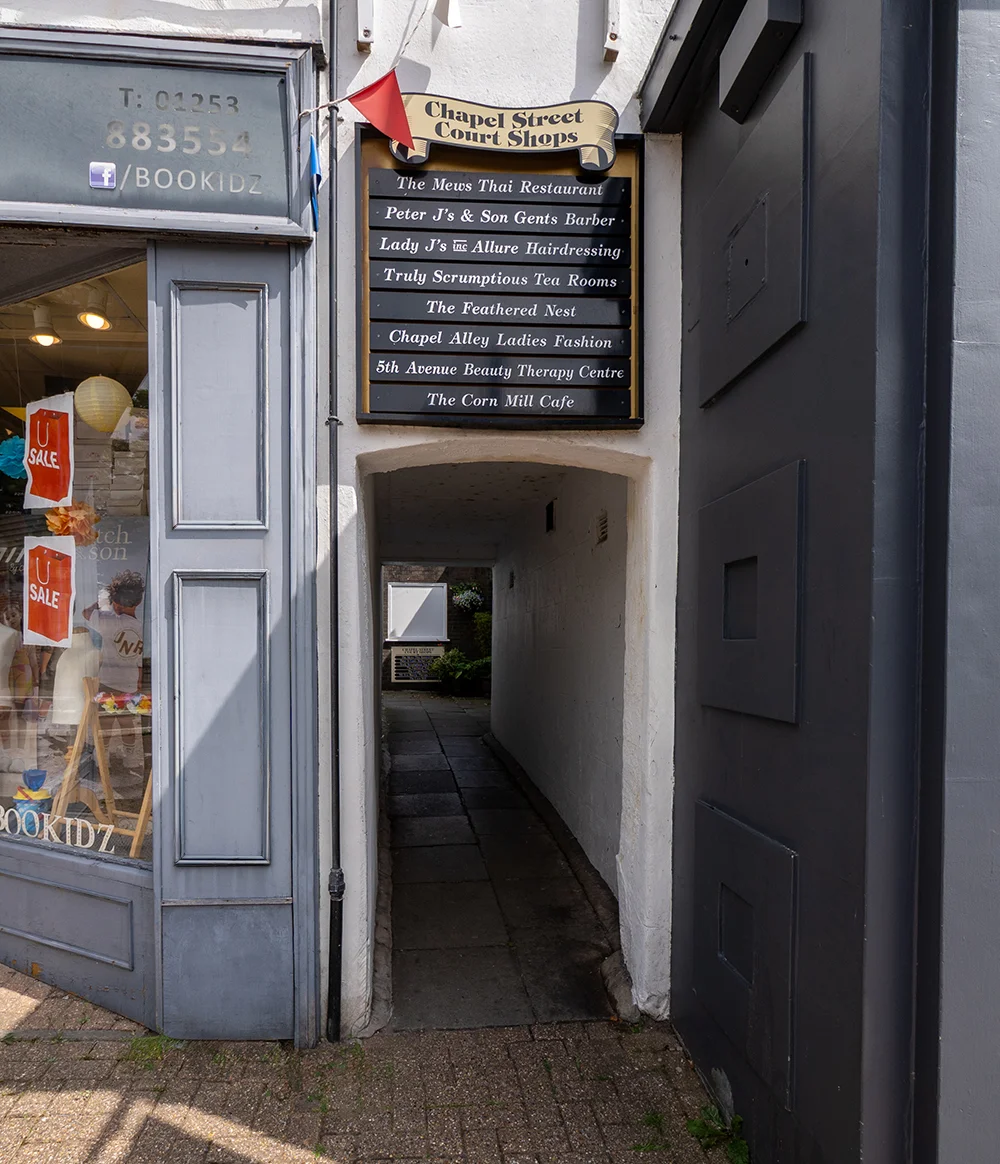
 Potts Alley was once one of the most distinctive narrow passages in the centre of Poulton-le-Fylde, running beside the churchyard of St Chad’s and linking the Market Place with Chapel Street. Although the name has largely disappeared from modern use, the route survives and provides a reminder of a very different side of life in the historic market town.
During the 19th century, Potts Alley was much more than a convenient passage between two streets. Houses were packed along the narrow route, including properties on the northern side adjoining the churchyard. While Poulton’s Market Place represented the commercial and civic heart of the town, Potts Alley became associated with some of its poorest housing and most overcrowded living conditions.
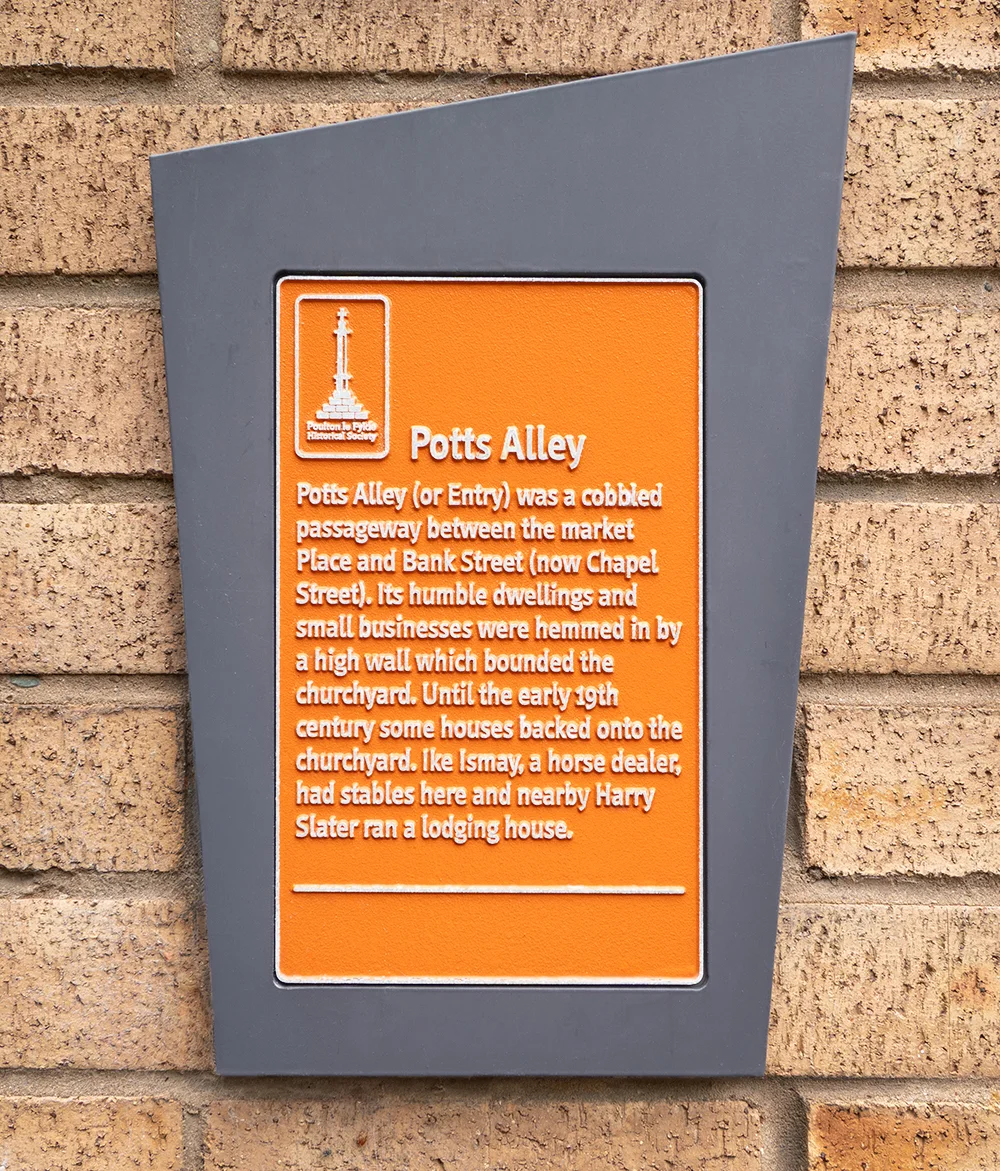
Its historical importance is particularly evident in accounts of public health conditions during the Victorian period. Potts Alley was identified as one of Poulton’s most deprived areas, with overcrowded and insanitary properties attracting criticism during the middle of the 19th century. A public health report of 1852 was particularly critical of conditions in this part of the town. The alley therefore provides an important contrast with the more prosperous image presented by Poulton’s shops, inns, substantial houses and busy market.
Despite those conditions, Potts Alley was home to ordinary working families rather than simply being an anonymous collection of poor dwellings. Census evidence confirms people living there during the later 19th century, including tradesmen and their families. In 1881, for example, joiner James Danson was recorded living in Potts Alley with his wife Maria and their young family. Such records help illustrate how densely occupied passages and courts formed an important part of everyday life behind Poulton’s principal streets.
 The area was also closely associated with the industrial development of Chapel Street. Parkinson Tomlinson’s large steam-powered corn mill became a major feature of this part of Poulton, dominating the surroundings of Chapel Street and Potts Alley before eventually being demolished and replaced by shops during the early 1970s.
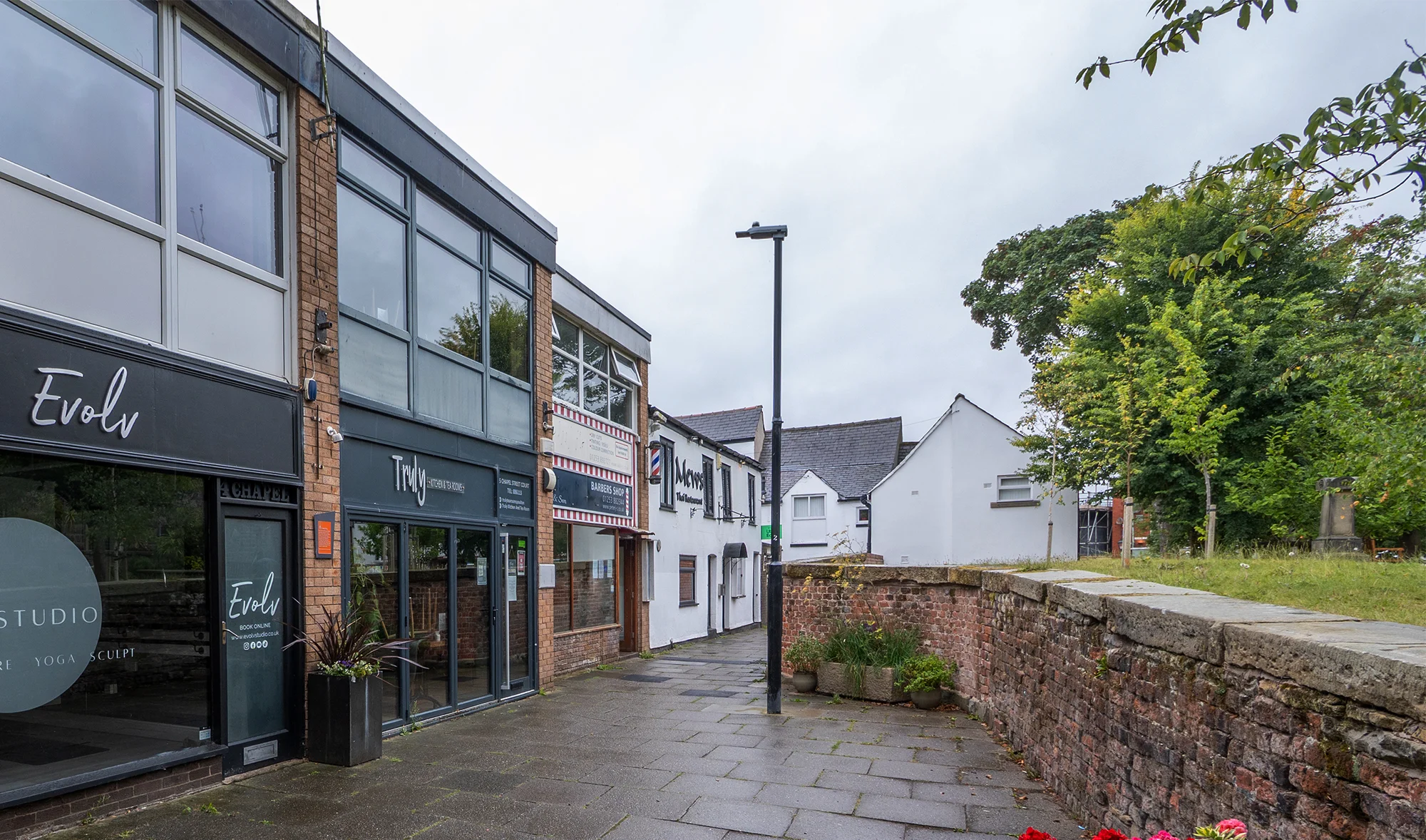
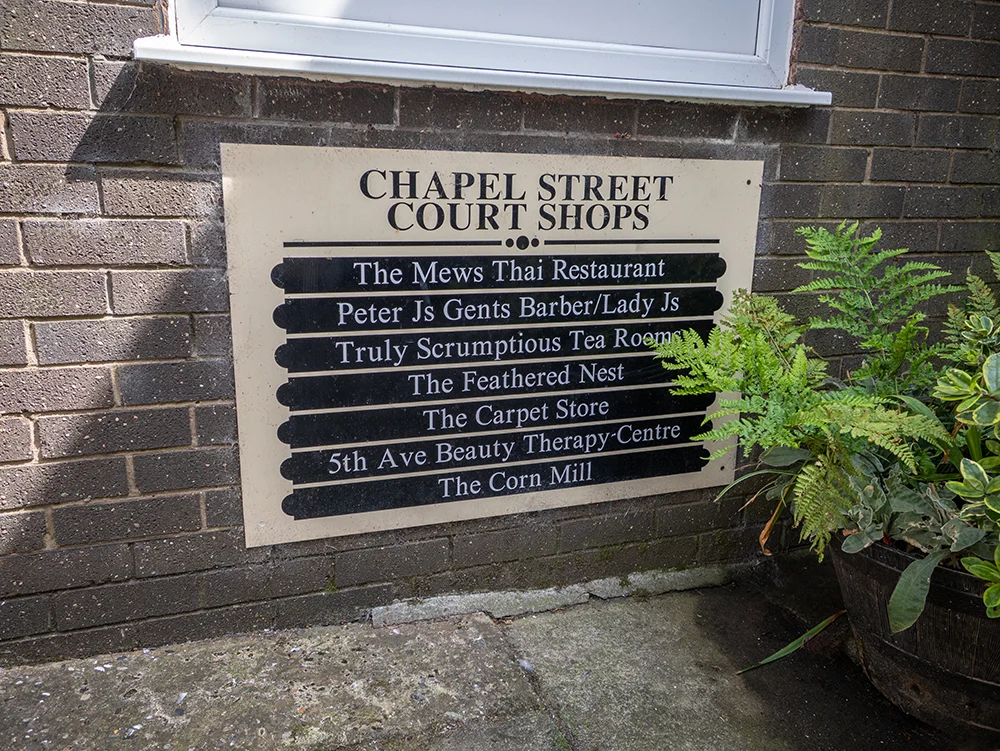
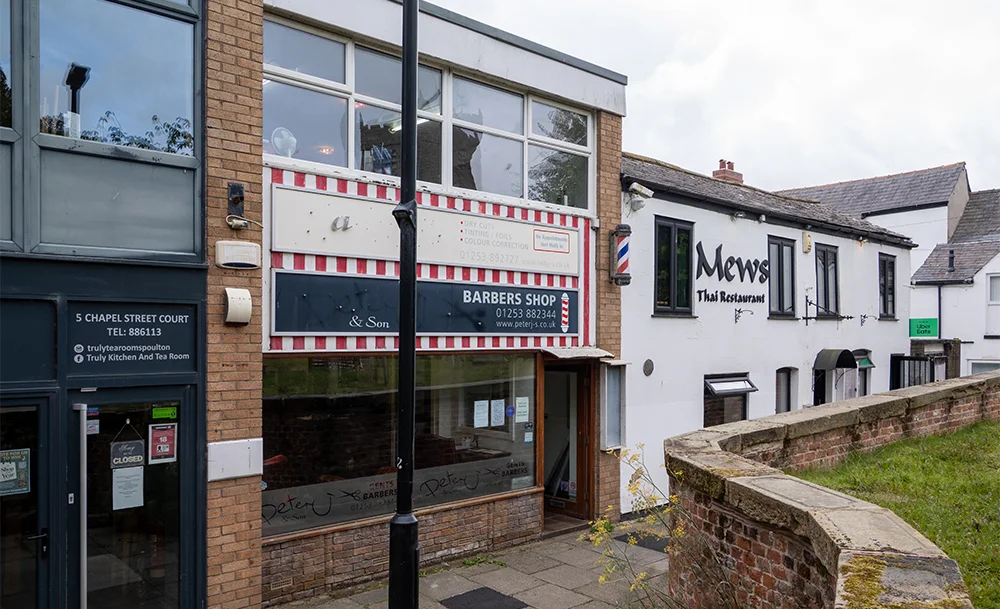 Around 1900, Potts Alley was renamed Chapel Street Court, although the old name remained part of Poulton’s local history. Lancashire County Council’s historic photographic collection records the passage as running west to east between Market Place and Chapel Street and notes an especially interesting survival from the original development. Doorsteps belonging to houses that once stood on the northern, churchyard side of the alley can still be identified incorporated into the wall, providing a physical trace of homes that have otherwise disappeared.
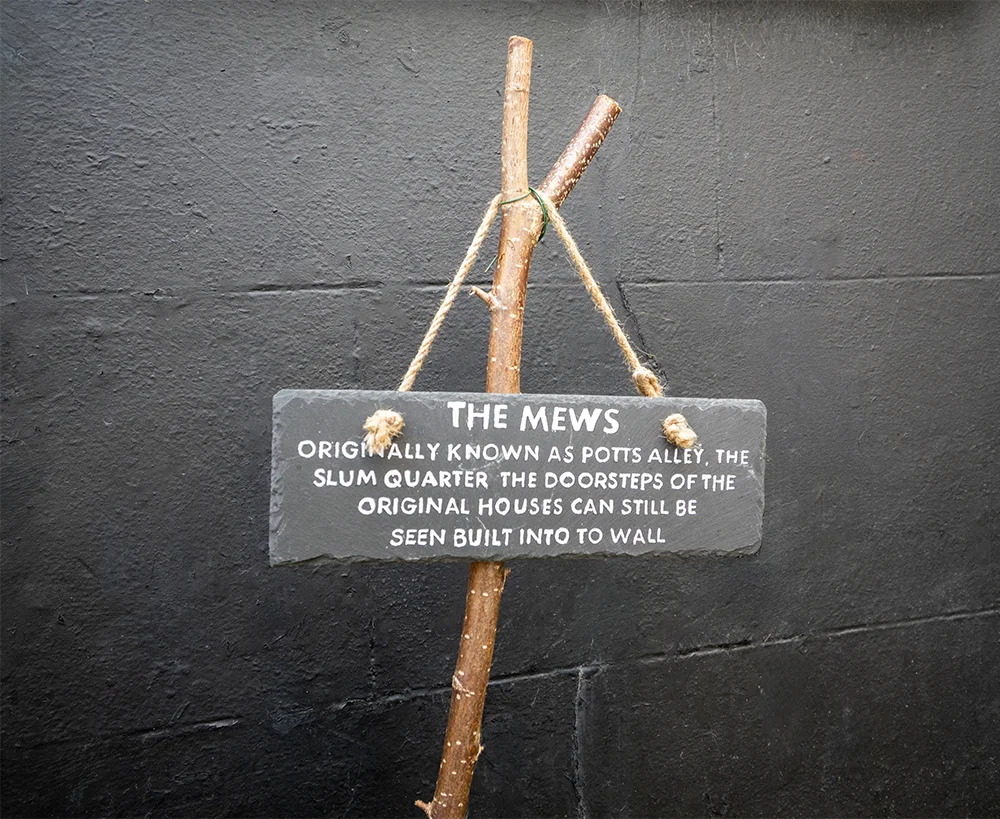
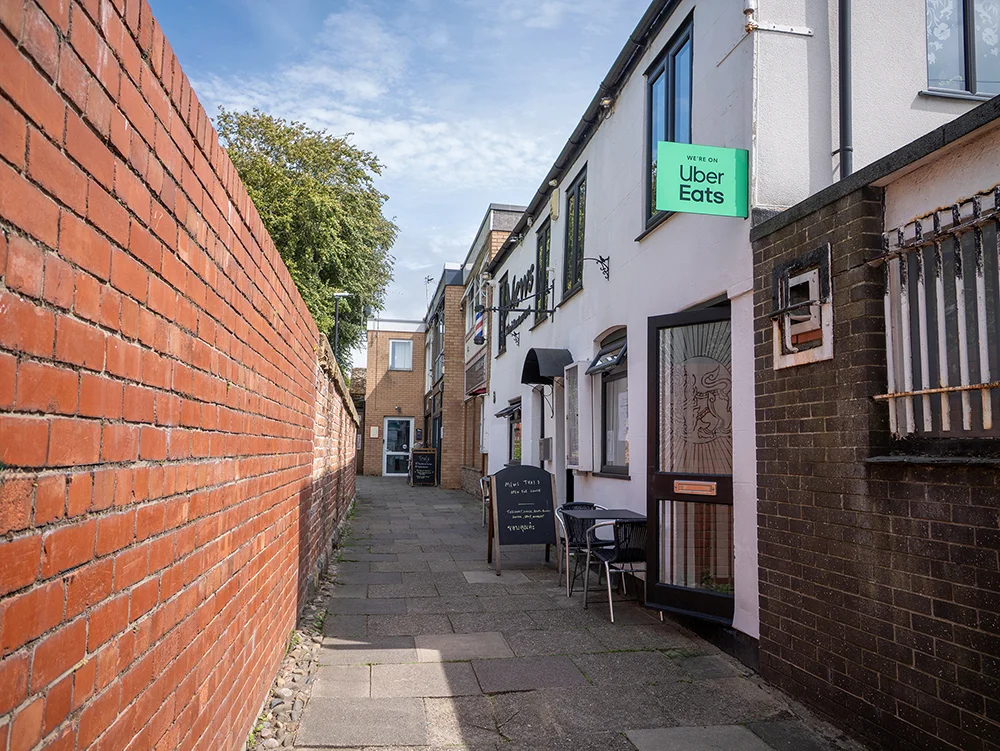
The passage has subsequently also been known as Chapel Street Walk, and today it forms part of the network of pedestrian routes and small businesses connecting Chapel Street with the Market Place. Its historic importance has been recognised through Poulton’s heritage interpretation scheme, with Potts Alley included among the locations within the town’s Conservation Area to receive a historical information plaque.
Potts Alley is significant because it preserves more than an old street name. It represents a part of Poulton’s social history that can easily be overlooked among the attractive buildings surrounding the Market Place. The surviving passage, together with traces of the former houses beside St Chad’s churchyard, recalls the cramped Victorian homes, working families and changing conditions that once existed only a few yards from the centre of one of the Fylde’s oldest market towns.
Images by © Deeper Blue Marketing & Design Ltd


