
















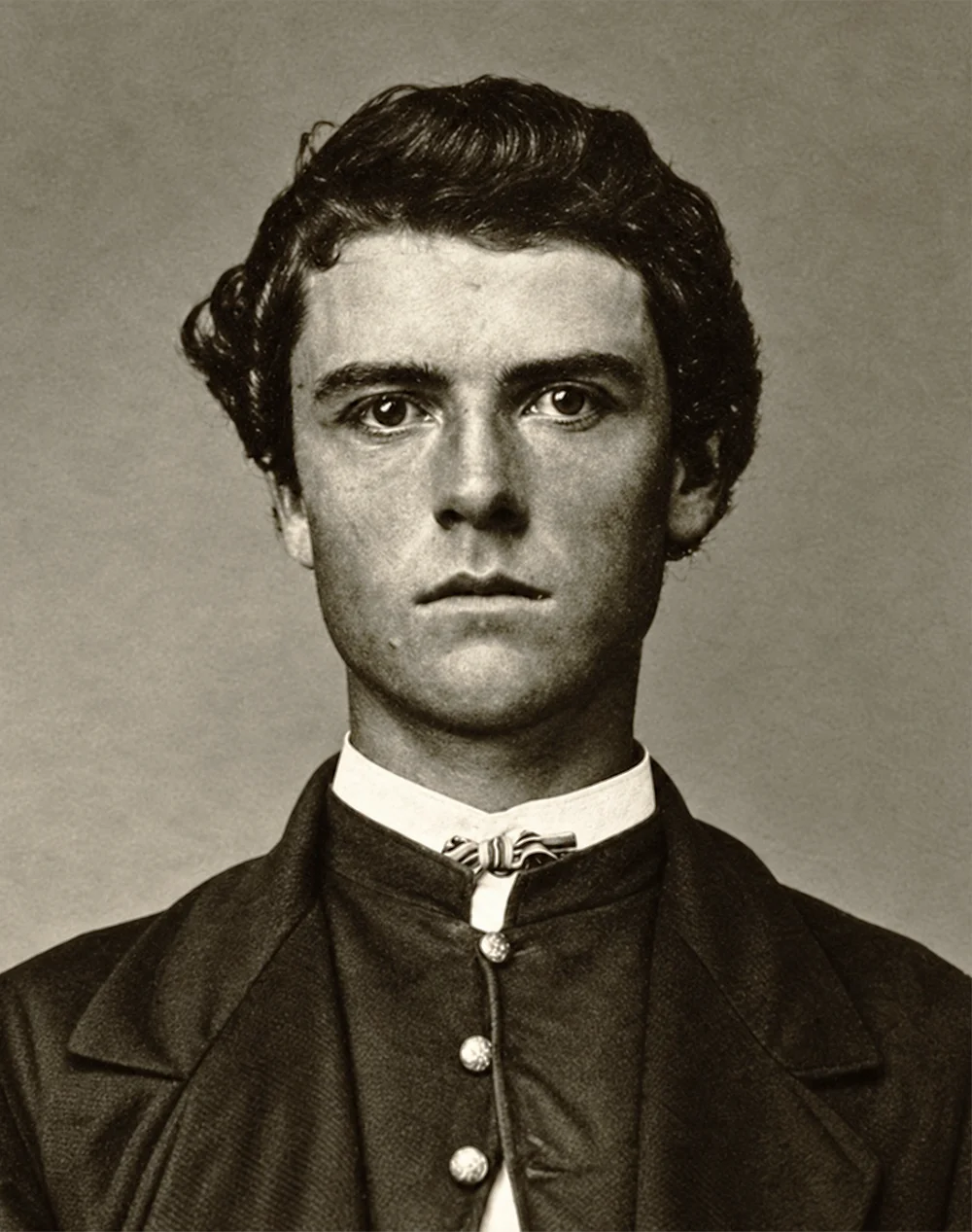
William Frederick Cody in 1864 at the age of 19
On 24 September 1904, William Frederick Cody, known internationally as Buffalo Bill, brought his Wild West attraction to Blackpool. The engagement was recorded in the company’s touring itinerary, placing the resort between appearances in Lancaster and Preston. For Blackpool audiences, it offered an opportunity to see a man whose reputation as an American frontier scout had developed into an international showbusiness career, accompanied by a travelling company presenting horsemanship, marksmanship and dramatic scenes of life in the American West.
By then, the attraction was known as Buffalo Bill’s Wild West and Congress of Rough Riders of the World. Its appeal extended beyond the familiar image of cowboys and covered wagons, bringing together Native American performers and riders from different countries in a programme built around their riding skills and contrasting traditions. Shooting exhibitions, daring feats on horseback and staged frontier encounters helped turn the American West into a spectacle that could be transported from town to town. Although promoted through its association with Cody’s experiences, the entertainment presented a carefully arranged theatrical interpretation of frontier history.
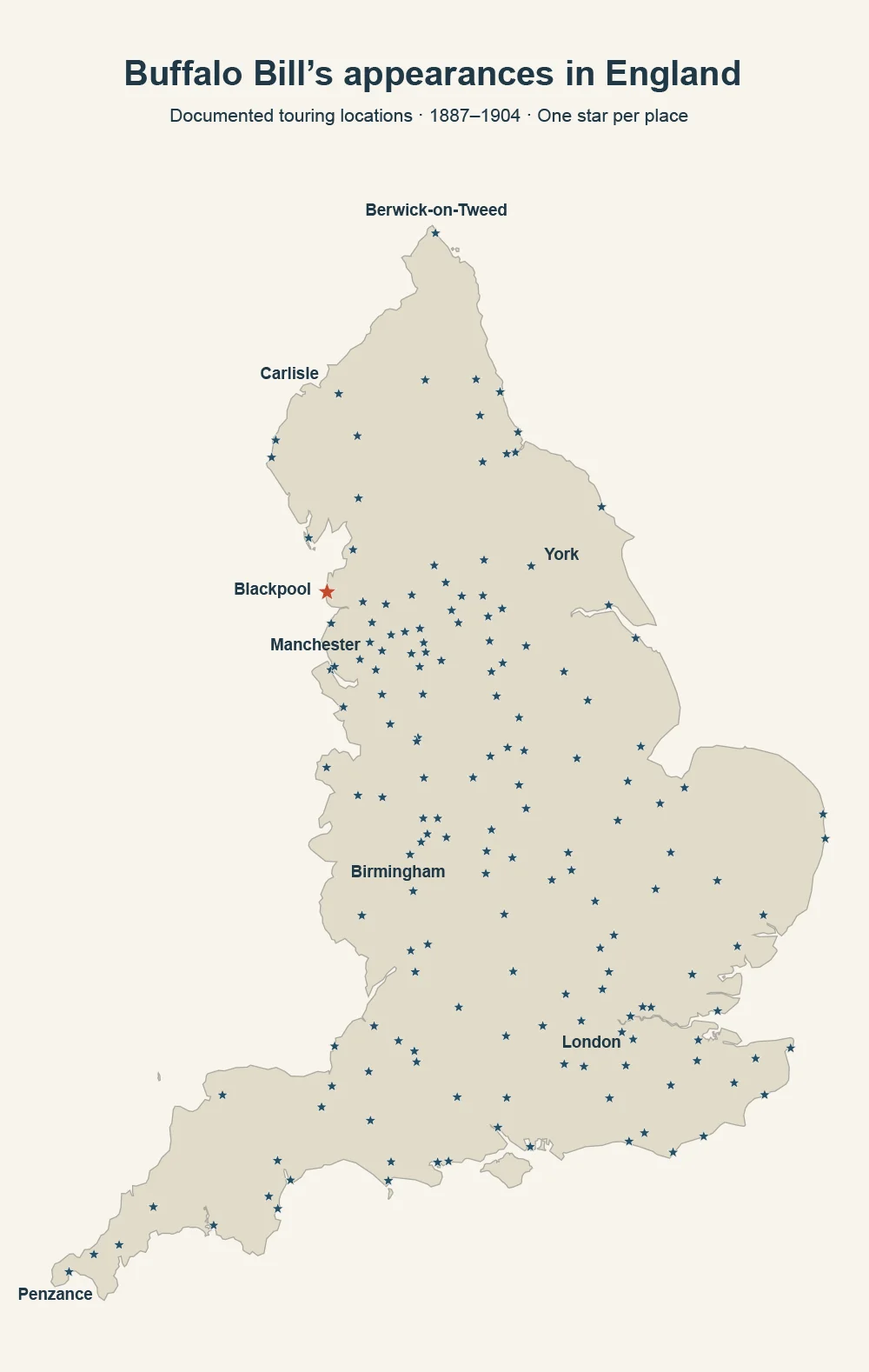
Source: Buffalo Bill Museum and Grave, Did Buffalo Bill Visit Your Town? (revised 2010), England section. Three broad entries omitted: Norfolk, North Tyneside and South Tyneside. Newport omitted because its location is unclear. Source spellings normalised, including Cambourne → Camborne and Workingham → Workington (1904 tour context). Wellington is plotted in Shropshire; London districts listed separately in the source retain their own stars.
The Blackpool appearance came during an intensive journey through northern Britain. The company performed in Kendal on 22 September and Lancaster the following day before reaching Blackpool on the Saturday. Preston followed on 26 September, with Blackburn on 27 September. Moving such an attraction required considerable organisation, with performers, horses, equipment and accommodation travelling by special trains. Contemporary accounts of the neighbouring engagements convey the scale of the operation. Reporting on the Blackburn visit, the Blackburn Times described a company of approximately 800 people and 500 horses and estimated that 30,000 spectators attended its two performances. Those figures related specifically to Blackburn, but they indicate the size of the travelling enterprise which appeared in Blackpool during the same week.
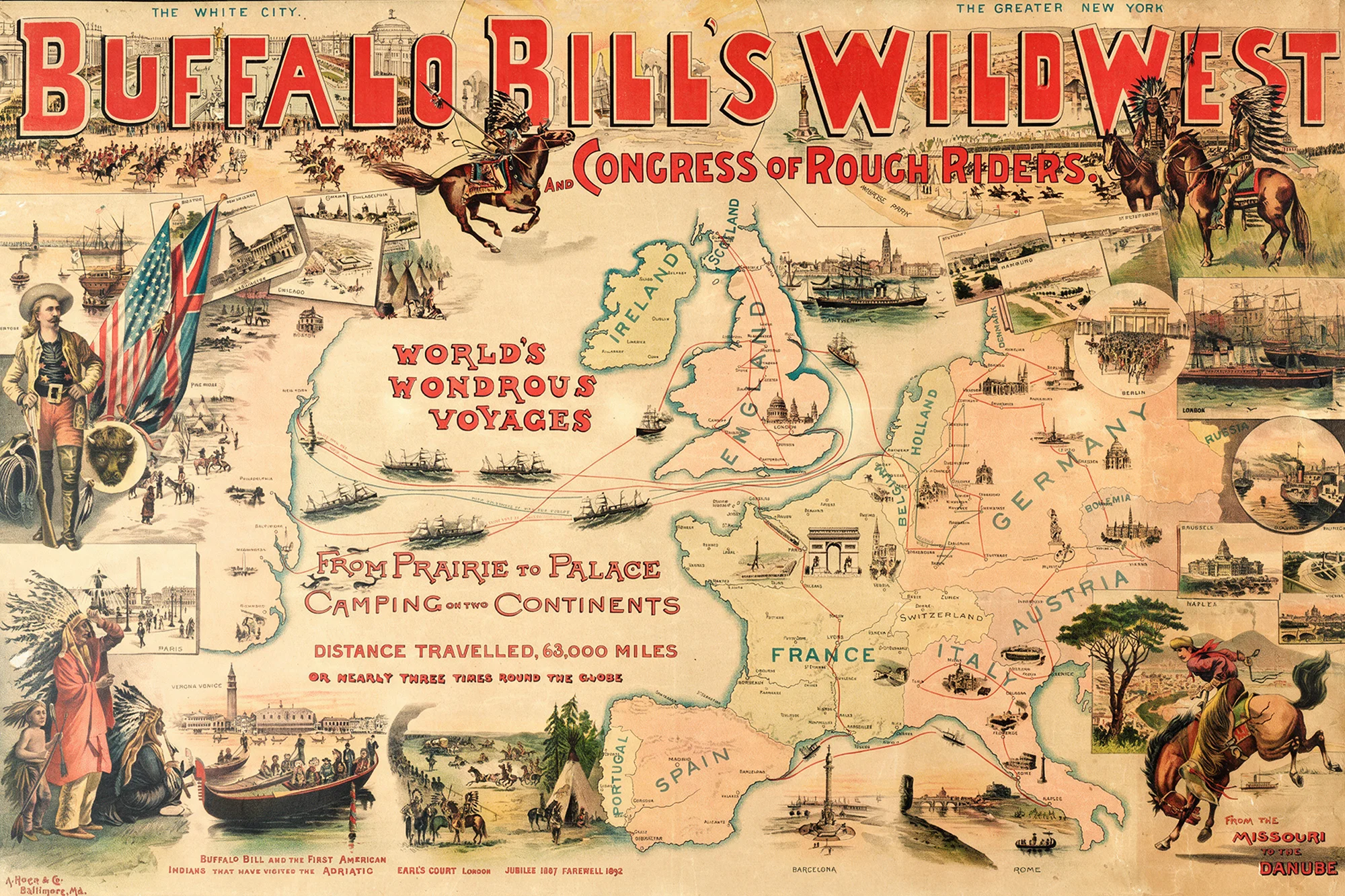 Cody had first brought his Wild West attraction to Britain in 1887, during Queen Victoria’s Golden Jubilee year, and its success encouraged further visits. By 1904, British audiences had already encountered the imagery of the American frontier through touring entertainments, illustrated publications and popular fiction. Buffalo Bill’s presence gave that fascination a recognisable personality. His show offered the excitement of seeing celebrated riders and performers in person, while its international programme broadened the spectacle beyond the American setting suggested by its name.
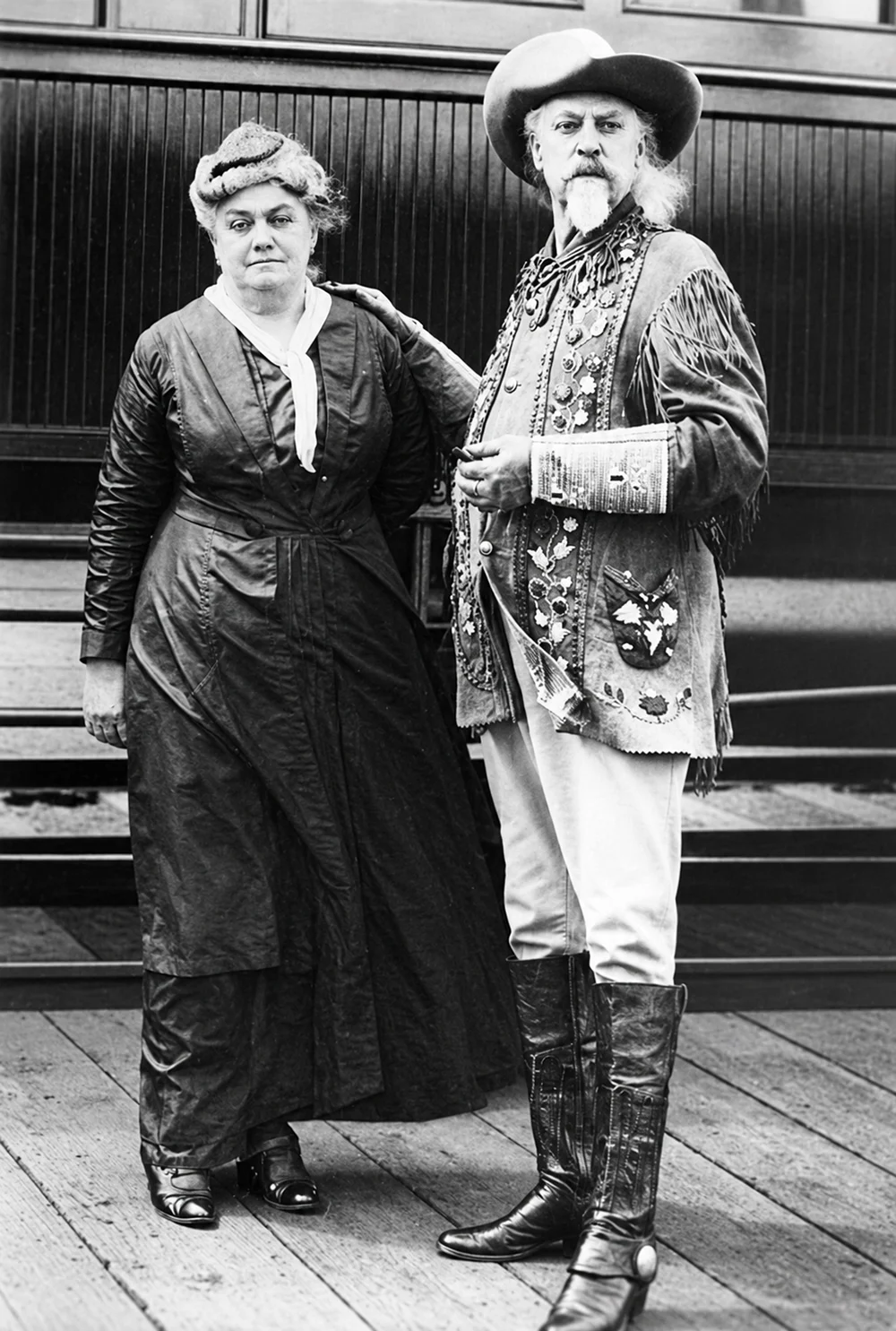
Buffalo Bill and his wife, Louisa – Courtesy of Dickinson Research Center at the National Cowboy & Western Heritage Museum
Buffalo Bill was sometimes confused with another famous figure of the American West, Wild Bill Hickok. They were different men: Cody was the showman who appeared in Blackpool in 1904, while James Butler Hickok, the gunfighter known as Wild Bill, had been killed in Deadwood in 1876. The distinction matters when tracing the resort’s connection, which rests on the documented visit of Cody and his touring company.
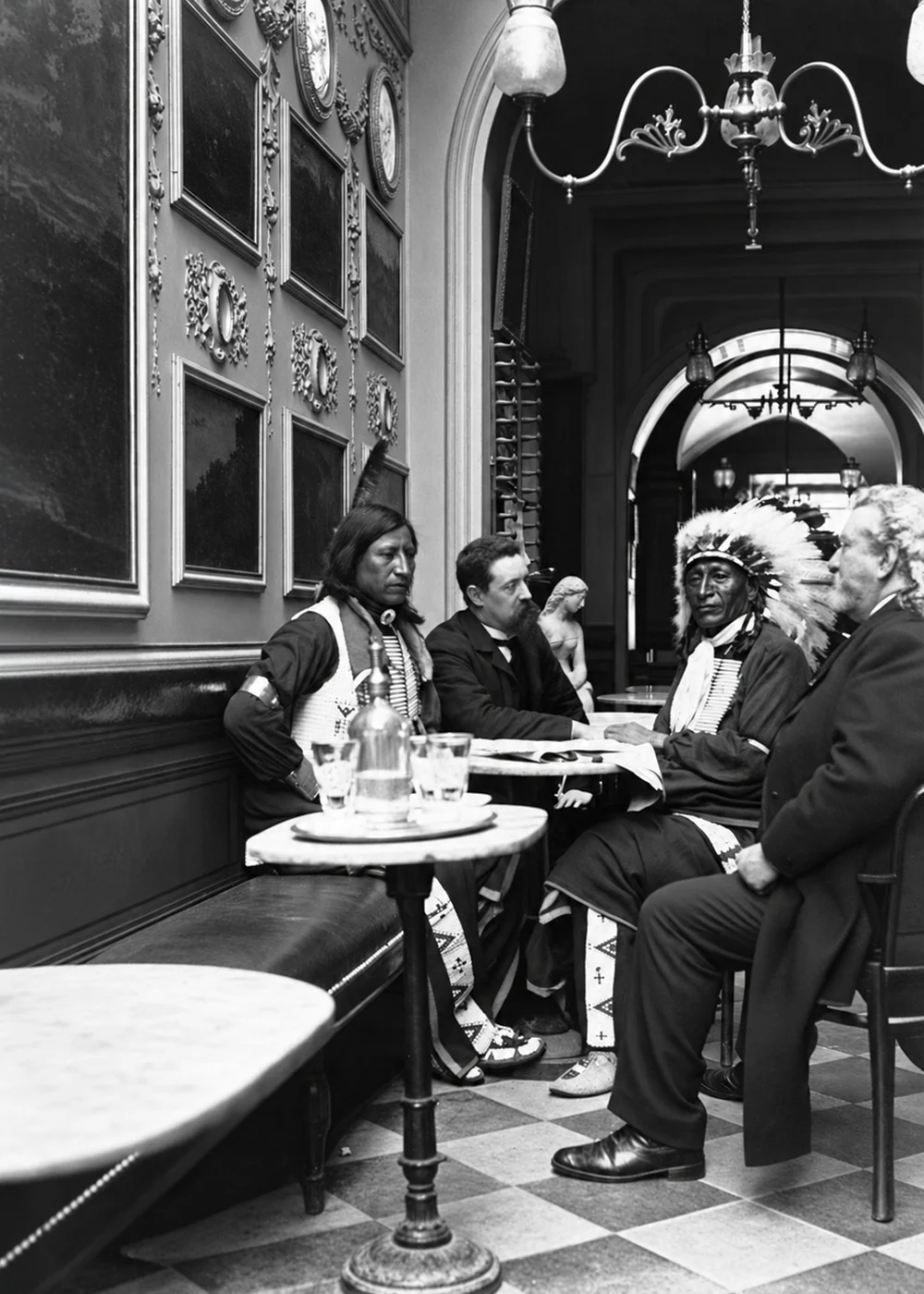
Buffalo Bill (far right), Sitting Bull, Black Elk and the Italian journalist and writer Diego Angeli at the famous Antico Caffè Greco in Rome in February 1890, during the Italian tour of the Wild West Show.
Blackpool’s place in that itinerary formed a brief but distinctive episode in its entertainment history. Alongside the resort’s established theatres, pleasure grounds and circus attractions, the visiting Wild West company brought an international outdoor spectacle whose reputation had been built across Europe and North America. The precise circumstances of its Blackpool performances still require further local newspaper research, but the recorded date establishes that, for one September engagement, Buffalo Bill’s travelling version of the American frontier became part of the town’s varied entertainment offering.
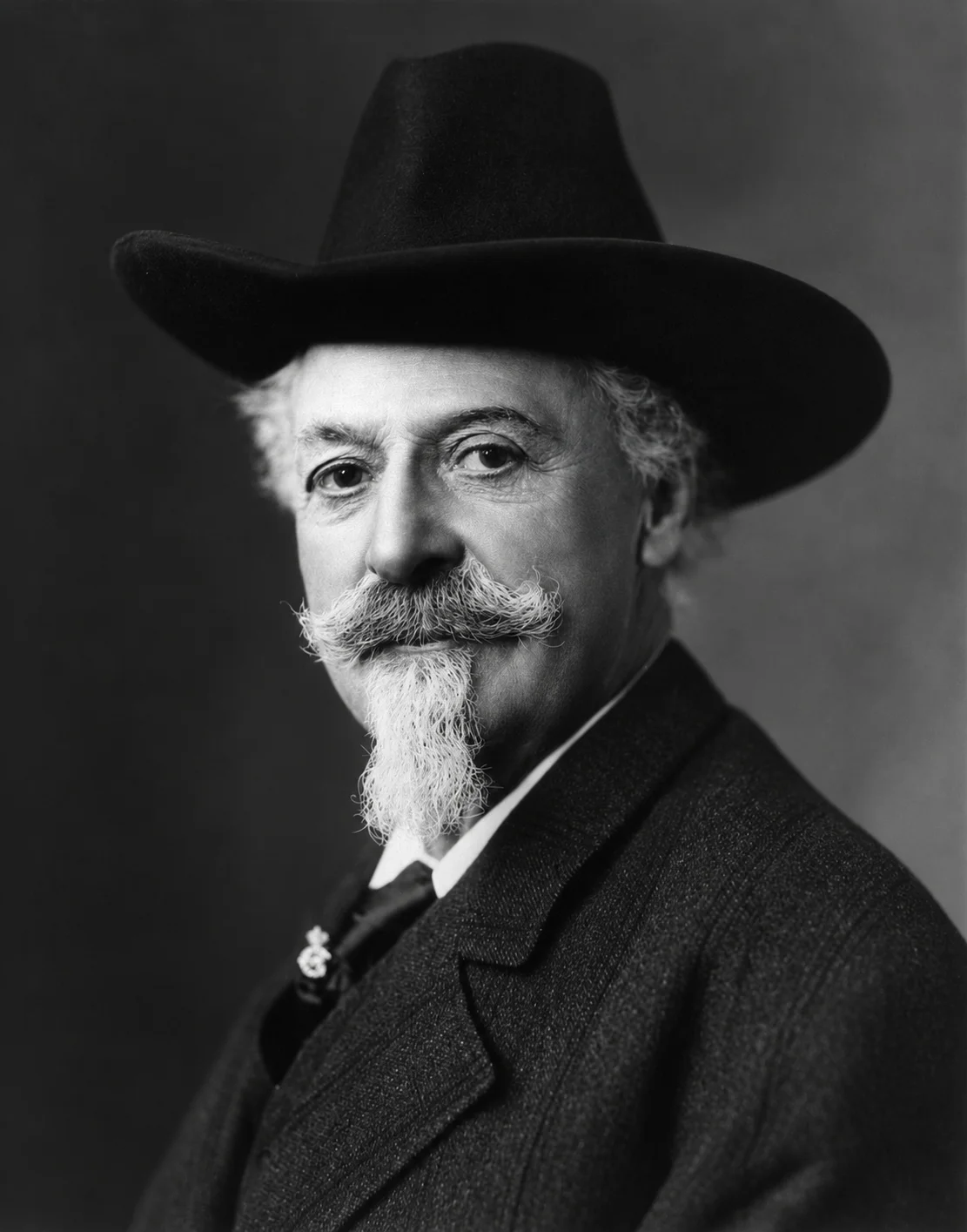
Buffalo Bill in 1911


