





































For many years, the trawler Jacinta stood as one of the most important surviving reminders of Fleetwood’s proud fishing heritage. Once a hardworking deep-water fishing vessel that sailed to the rich fishing grounds of the North Atlantic, she later became a floating museum and heritage attraction. However, after decades of preservation efforts, the decision was made in 2019 to scrap the vessel following serious structural deterioration, marking the end of a remarkable chapter in Fleetwood’s maritime history.
Launched in 1972, Jacinta was built as a modern stern trawler, representing a new generation of fishing vessels. Unlike older trawlers that hauled their catches over the side, Jacinta was designed to bring nets aboard over the stern, allowing safer and more efficient fishing operations in the often-harsh conditions of northern waters. Throughout her working life, Jacinta became one of Fleetwood’s best-known fishing vessels. She earned a place in local fishing folklore when she landed a record catch of 188 tonnes of fish following a nineteen-day voyage to the Icelandic fishing grounds. The achievement demonstrated both the capability of the vessel and the skill of the crews who worked aboard her.
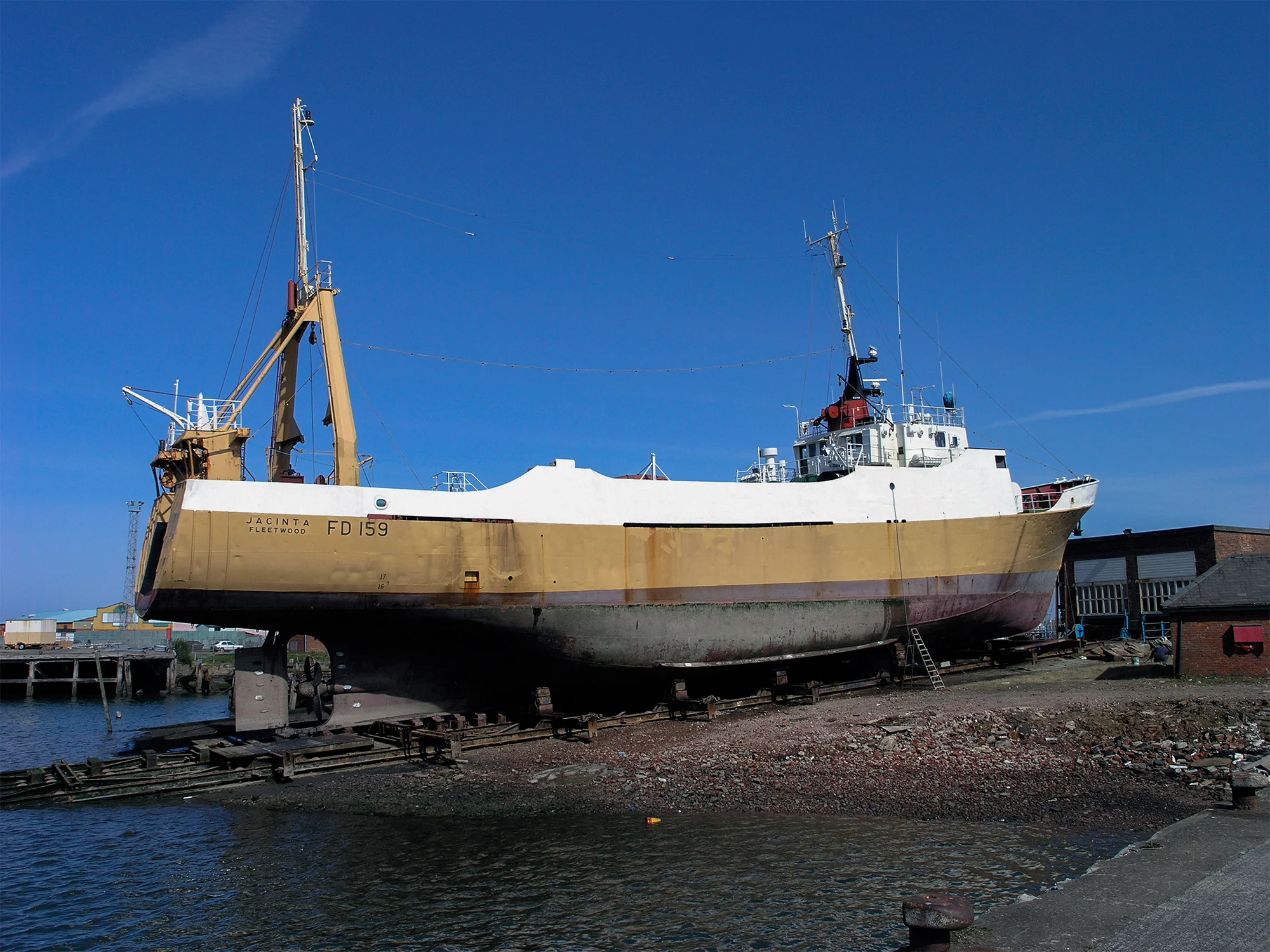
The Trawler Jacinta on the slips. Image shot 2005.
Although based in Fleetwood for much of her career, Jacinta later operated from Hull during the 1990s and was on course to become the first British trawler to land more than £2 million worth of fish in a single year. However, a major mechanical breakdown prevented that milestone from being achieved. By the mid-1990s, Britain’s distant-water fishing industry had largely disappeared. Fleetwood, once one of the country’s most important fishing ports, had suffered a long decline following the Cod Wars of the 1970s. The dispute between Britain and Iceland resulted in Iceland extending its fishing limits to 200 miles, severely restricting access to some of the richest fishing grounds in the North Atlantic. The impact on Fleetwood was devastating.
During the fishing industry’s heyday in the 1950s and 1960s, around 120 trawlers operated from Fleetwood and approximately 11,000 people were employed directly or indirectly by the industry. At one point, almost a third of the town’s population relied upon fishing-related work. The loss of distant-water fishing transformed Fleetwood forever. Recognising Jacinta’s historical importance, a group of heritage enthusiasts purchased the vessel for just £1 in 1995. Their aim was to preserve one of the last surviving symbols of Fleetwood’s deep-sea fishing fleet and ensure that future generations could learn about the town’s maritime past.
Over the following years, volunteers worked tirelessly to restore and maintain the vessel. Between 2003 and 2012, Jacinta travelled to maritime festivals and heritage events around the United Kingdom, helping to promote Fleetwood’s fishing history to wider audiences. She later returned home and became a floating heritage centre, allowing visitors to step aboard and experience life on a traditional deep-water trawler.
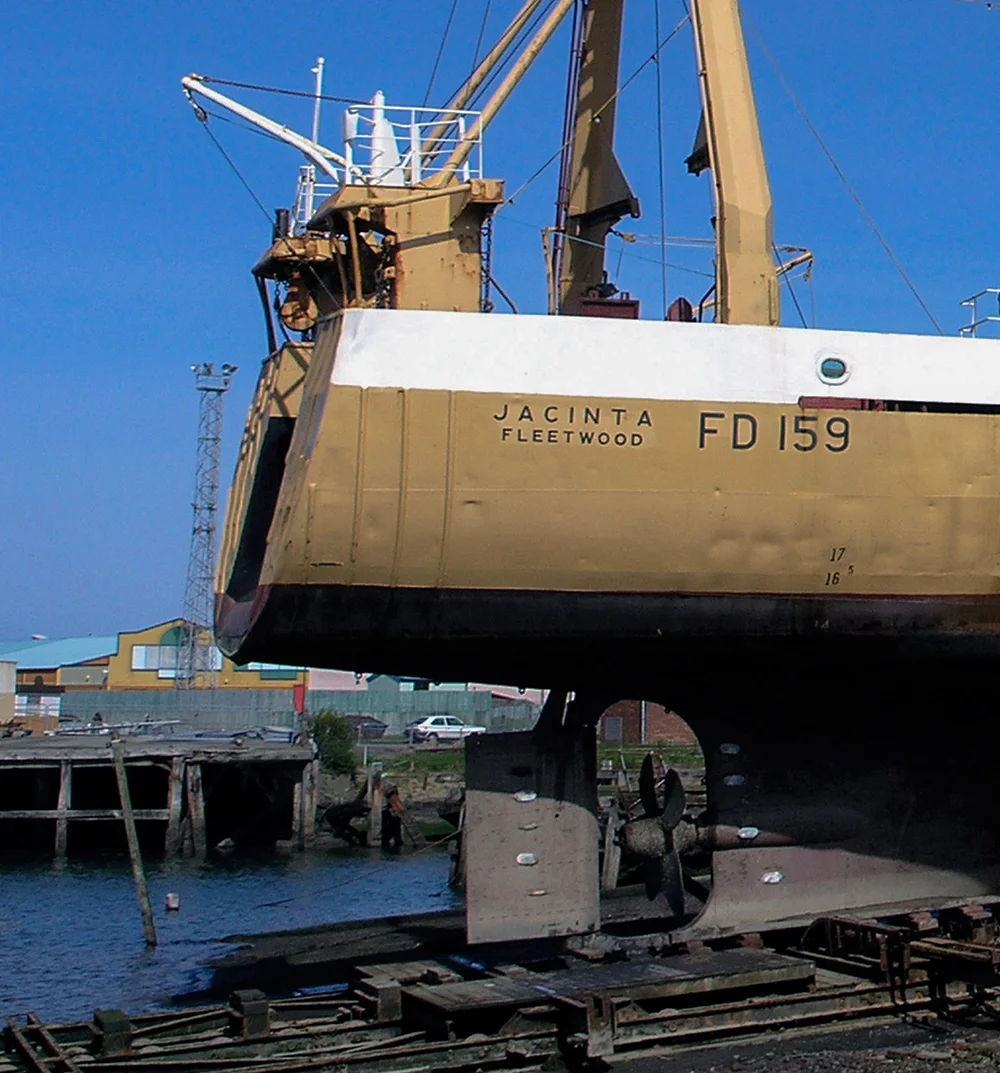
The Trawler Jacinta on the slips. Image shot 2005.
For many former fishermen and their families, Jacinta became far more than a museum. She represented memories of a time when Fleetwood’s docks were filled with trawlers, when fishing voyages could last weeks at a time, and when the town’s fortunes were closely tied to the sea. Despite the dedication of volunteers and trustees, maintaining a large steel vessel proved increasingly difficult and expensive. Years of exposure to the elements took their toll, and by 2019 serious structural problems had emerged. Leaks were discovered in the hull, and attempts by professional divers and marine craftsmen to carry out temporary repairs revealed further deterioration.
The situation became critical when the Maritime and Coastguard Agency determined that Jacinta was no longer seaworthy. Plans to move the vessel to the Cammell Laird shipyard in Birkenhead for repairs had to be abandoned because the ship was considered unsafe to make the journey. The trustees also faced additional challenges following the loss of two key members of the charitable trust responsible for preserving the vessel. Combined with the mounting repair costs and worsening condition of the ship, the difficult decision was made that preservation was no longer viable.
Announcing the decision, trust chairman David Pearce described the situation as deeply sad, acknowledging that after years of efforts to save the vessel, they had reached the end of the road. Although the ship itself would be lost, efforts were made to preserve elements of its story. Parts of Jacinta were donated to Fleetwood Museum, ensuring that pieces of the vessel and the memories associated with it would survive for future generations.
The scrapping of Jacinta marked more than the loss of a historic vessel. It represented the passing of one of the last tangible links to Fleetwood’s once-mighty fishing industry. As the final Arctic trawler to land fish at Fleetwood, she embodied a period when the town was one of Britain’s most important fishing ports and thousands of local families depended on the sea for their livelihoods. Today, while Jacinta herself is gone, her story remains an important part of Fleetwood’s heritage. Through photographs, museum exhibits and the memories of those who sailed aboard her, the vessel continues to tell the story of a fishing industry that shaped the identity of the town for generations.
The loss of Jacinta was undoubtedly the end of an era, but her legacy remains a powerful reminder of Fleetwood’s proud maritime past and the men and women whose lives were built around the fishing fleets that once sailed from its docks.
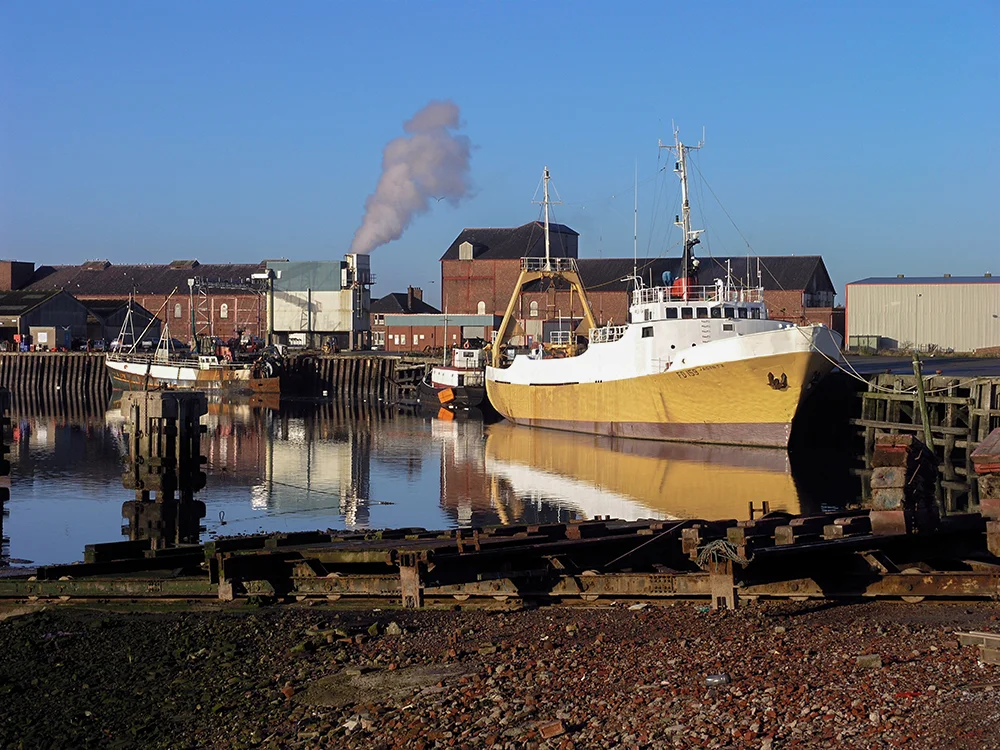
The Trawler Jacinta in Fleetwood Dock. Image shot 2005.


