


























Long before the motor car and the motorway transformed travel, thousands of visitors arrived in Blackpool by sea. For more than a century, elegant paddle steamers sailed from the resort’s piers, carrying holidaymakers across the Irish Sea to destinations including the Isle of Man, Southport, Liverpool, Llandudno, Barrow and Menai Bridge. Their distinctive paddle wheels, towering funnels and billowing clouds of steam became as much a part of Blackpool’s skyline as its famous piers. Pleasure steamer services began to flourish following the opening of Blackpool North Pier in 1863 and the South Jetty—later renamed Central Pier—in 1868. Both piers were built with landing stages that allowed steamships to embark and disembark passengers, making Blackpool one of the busiest excursion ports on the Lancashire coast.
The paddle steamers quickly became one of the great attractions of a Blackpool holiday. Excursions offered visitors the chance to spend a day at sea before returning to the resort in the evening. During the height of the season, steamers departed daily, carrying passengers to seaside towns around the Irish Sea and across to the Isle of Man. Handbills advertising sailings often carried the initials “G.W.” and “W.P.”, standing for “God Willing” and “Weather Permitting”, a reminder that the sea always had the final say. One of the earliest and most famous vessels was the Bickerstaffe, built in 1879 for the Bickerstaffe family, who owned the South Jetty. The vessel became synonymous with Blackpool’s Isle of Man service and developed a loyal following among holidaymakers. Contemporary accounts recalled that its afternoon departures conveniently coincided with local public houses calling time, prompting a rush of passengers eager to enjoy refreshments once the ship reached international waters, where licensing laws no longer applied.
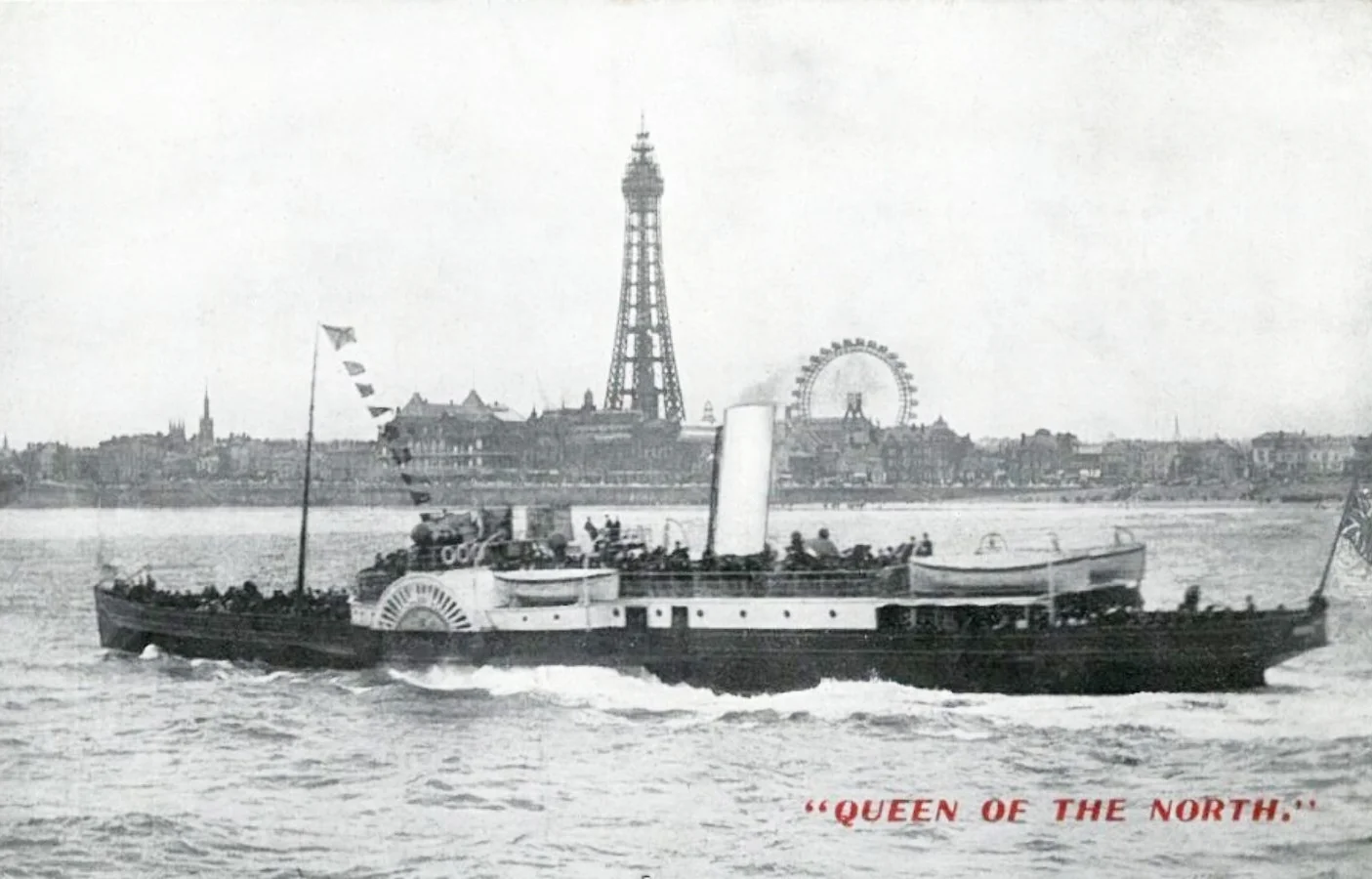
Queen of the North Steamer
Another celebrated vessel was the Queen of the North, launched in 1895 for the Blackpool Steamship Company. Larger and faster than the Bickerstaffe, she became one of the finest excursion steamers operating from the resort. The ship was so well known that one of the earliest motion pictures ever shown in Blackpool featured the vessel arriving at the pier, demonstrating how closely the paddle steamers had become associated with the town’s identity. Operating from North Pier was the magnificent Greyhound, another vessel introduced in 1895. Widely regarded as the finest paddle steamer in Blackpool’s fleet, she combined luxurious first-class accommodation with remarkable speed, capable of reaching around 22 miles per hour. Her elegant saloons featured upholstered seating, fine carpets and even a grand piano, allowing passengers to enjoy music and dancing while crossing the Irish Sea. Captains of rival steamers were known to compete informally to achieve the fastest crossing to the Isle of Man, adding further excitement to the journey.
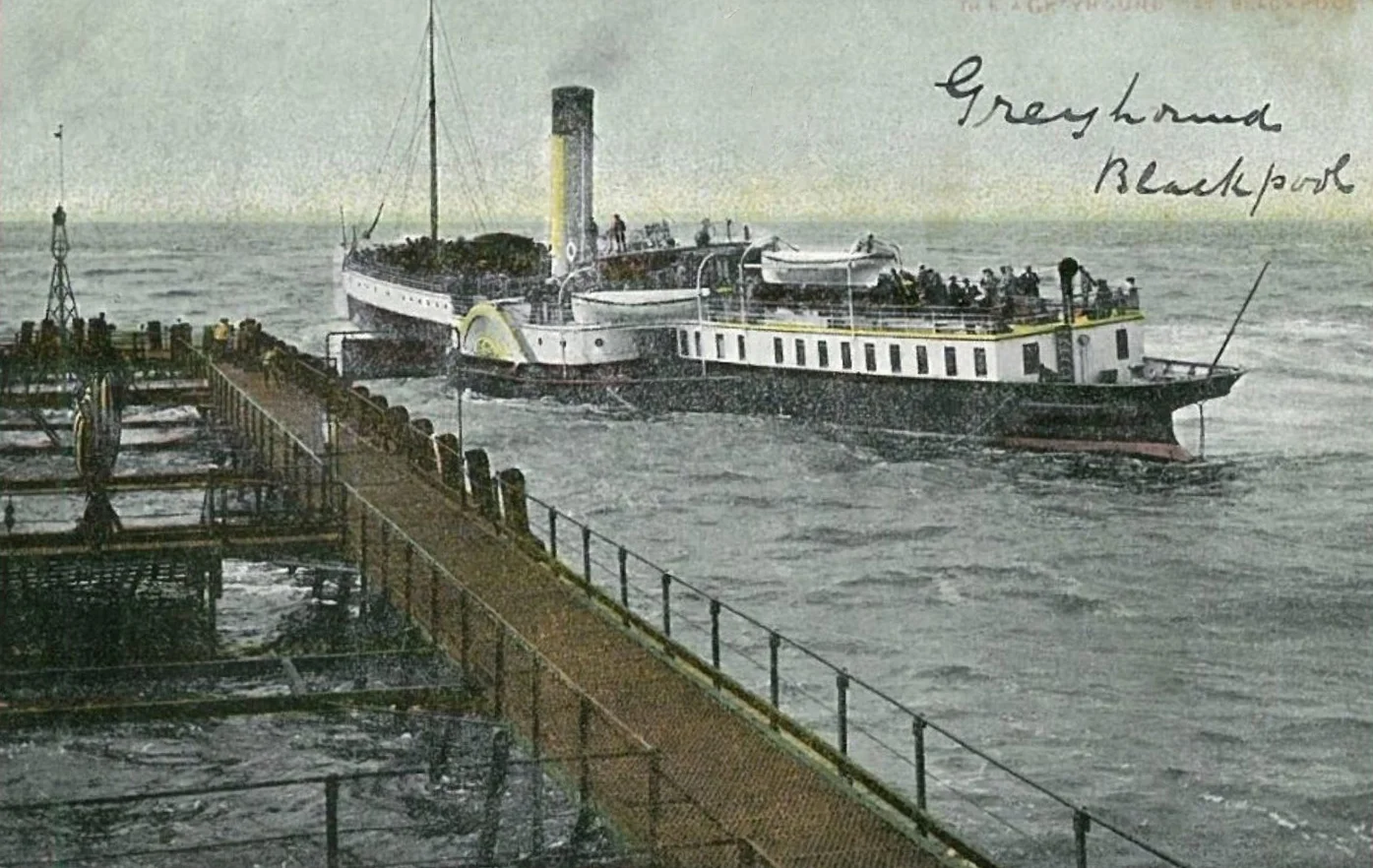
The Greyhound Steamer
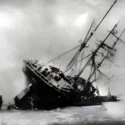
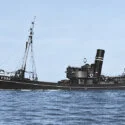
The steamers transformed Blackpool into a gateway for coastal travel. Excursions linked the resort with communities across Lancashire, North Wales and the Isle of Man, helping establish Blackpool as one of Britain’s leading holiday destinations. Visitors could arrive by train, spend several days enjoying the attractions of the resort and then embark on a leisurely sea voyage to another destination before returning home. The outbreak of the First World War brought dramatic changes. Many of Blackpool’s paddle steamers, including the Bickerstaffe, Queen of the North and Greyhound, were requisitioned by the Admiralty and converted into minesweepers and patrol vessels. Their civilian careers were interrupted as they entered military service protecting Britain’s coastal waters from enemy mines. Tragically, the Queen of the North struck a mine off the Suffolk coast on 20 July 1917, sinking with the loss of 29 crew members.
Although excursion services resumed after the war, the great age of the paddle steamer was beginning to fade. Some vessels returned to service, while newer ships such as Minden, Queen of the Bay, Jubilee Queen and Atalanta attempted to revive Blackpool’s pleasure cruises during the 1920s and 1930s. Despite these efforts, changing travel habits, increasing competition from road transport and the economic difficulties of the inter-war years meant that passenger numbers never again reached their pre-war heights. The arrival of the Second World War effectively brought Blackpool’s paddle steamer era to an end. Services ceased, and although a handful of post-war excursion vessels briefly returned to the resort, the golden age had passed. Increasing car ownership and improvements to the road network meant that day trips by sea were no longer the attraction they had once been.
Today, no paddle steamers sail regularly from Blackpool’s piers, but their legacy remains woven into the town’s history. The landing stages built to receive them transformed the piers into bustling transport hubs, while generations of visitors experienced the excitement of setting sail across the Irish Sea from Britain’s favourite seaside resort. For more than one hundred years, the rhythmic beat of paddle wheels and the sound of steam whistles formed part of everyday life on Blackpool’s waterfront. These graceful vessels not only connected the resort with destinations around the Irish Sea but also helped shape the town’s reputation as one of Britain’s great holiday gateways, carrying countless passengers on voyages that became treasured memories of the Victorian and Edwardian seaside.
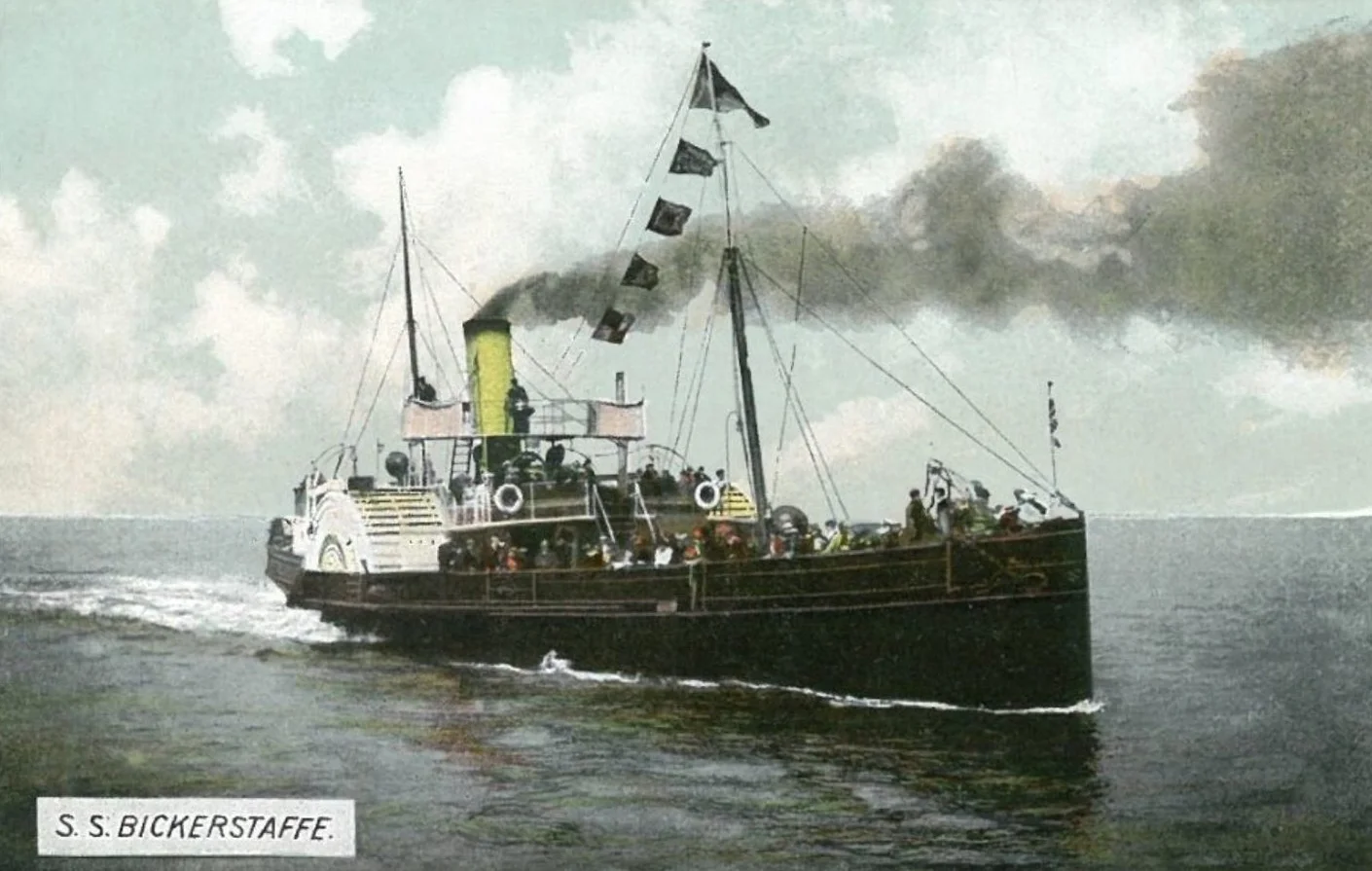
The Bickerstaffe Steamer
Featured Image © Blackpool Council/Planning Department Collection
Additional Images © Blackpool Council/Planning Department Collection
Background Image © Alamy


