


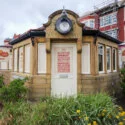






























A photo of a Sam Lomas clock that recently came home to Poulton after 250 years! The image was kindly provided by Dr William A. Heap.
Among the most skilled craftsmen to work in eighteenth-century Poulton-le-Fylde was Samuel Lomas, the town’s first recorded clockmaker. Working from a small smithy behind his home on Sheaf Street—now Hardhorn Road—Lomas produced longcase clocks that earned a reputation far beyond the Fylde. More than 250 years after his death, surviving clocks bearing his signature remain highly sought after by collectors and stand as lasting examples of Lancashire craftsmanship.
Samuel Lomas began his career as an apprentice to the Bolton clockmaker John Royle, with his apprenticeship formally recorded in 1736. After completing his training, he moved to Poulton in 1744, establishing his workshop behind his house at 21 Sheaf Street, next to the Wheatsheaf Inn. From there he worked for almost half a century, producing clocks engraved “Lomas Poolton”, a spelling commonly used during the eighteenth century.
 His workshop was ideally placed in the centre of Poulton, then the principal market town of the Fylde. Farmers, merchants and landowners visiting the weekly markets required reliable timepieces for both business and domestic life, and Lomas became known locally as “Poulton’s clockmaker.” His longcase clocks, constructed in oak or mahogany and fitted with finely engraved brass dials, combined precision engineering with decorative craftsmanship. Several examples dating from the 1740s to the 1770s have survived and have since appeared in specialist collections and auction houses, demonstrating the quality of his work.
 Life was not without hardship. Parish records show that Samuel and his wife Elizabeth suffered the loss of several children during their lifetimes, a tragic reality for many eighteenth-century families. Despite these personal losses, Lomas continued to work in Poulton until his death in May 1793, when he was buried in the churchyard of St Chad’s Church on 30 May 1793. His wife was buried beside him two years later.

St Chads Church Clock as it appears today.
Although the neighbouring Wheatsheaf Inn has since disappeared, the house where Samuel lived still survives at what is now 16 Hardhorn Road, providing a rare physical link to one of Poulton’s earliest craftsmen. Historic photographs identify the location as the residence and workshop of Samuel Lomas, preserving the memory of a man whose skill brought distinction to the town during the Georgian period.

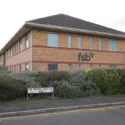
16 Hardhorn Road as it is today, previously known as 10 Sheaf Street.

16 and 14 Hardhorn Road as they are today.

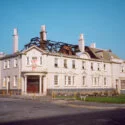
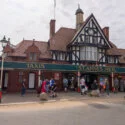
Sheaf Street which is now known as Hardhorn Road.
Today, Samuel Lomas is remembered not only as a talented clockmaker but also as one of Poulton-le-Fylde’s earliest known specialist craftsmen. His surviving clocks continue to keep time more than two centuries after they were made, while the remaining smithy serves as a reminder of the industry, craftsmanship and enterprise that once flourished in the heart of the historic market town.
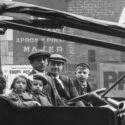
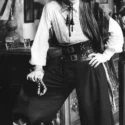
Some images in this post are artistic impressions created for illustrative purposes. Where no contemporary visual record exists, scenes and appearances have been interpreted from the available historical context. Any resemblance to actual individuals is entirely coincidental.


