







































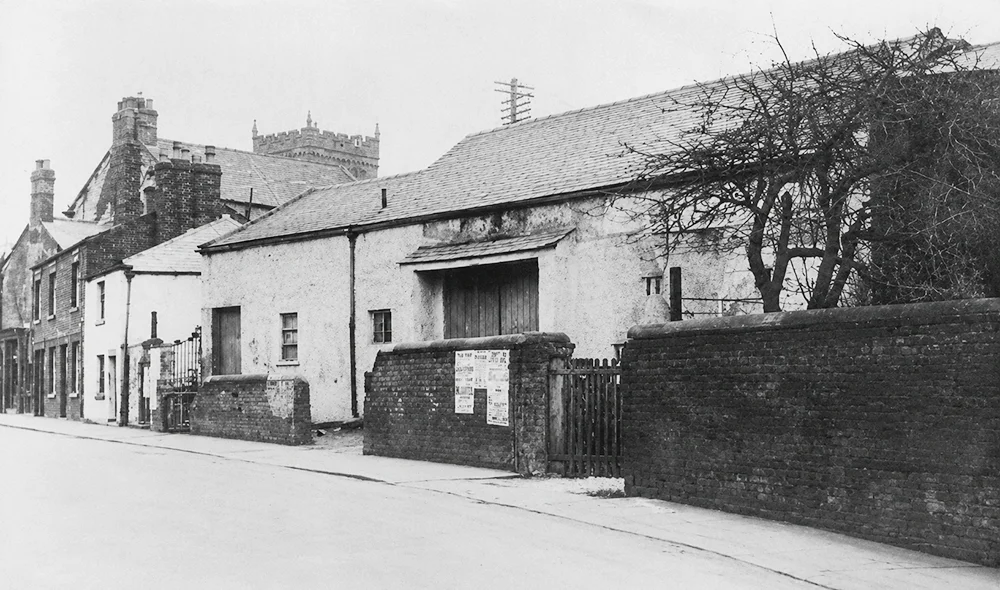
The Old Tithebarn, on Tithebarn Street. Image taken in 1949, provided by Red Rose Collections. Digital restoration and enhancement © Deeper Blue Marketing & Design Ltd 2026
For centuries, one of the most important buildings in Poulton-le-Fylde stood close to the town’s historic Market Place. Known simply as the Tithe Barn, it served as a reminder of Poulton’s importance as the administrative and agricultural centre of the Fylde. Although demolished during the late 1960s, the barn gave its name to Tithebarn Street, ensuring that its place in the town’s history lives on. The exact date of the barn’s construction is unknown, but its position immediately beside the medieval town centre strongly suggests an ancient, possibly medieval origin. Tithe barns were common throughout medieval England and were used to store the tithe—a tenth of agricultural produce that farmers were required to give to the Church. Rather than paying money, tenants often contributed grain, hay, wool and other produce, all of which needed to be stored securely until it could be distributed or sold.
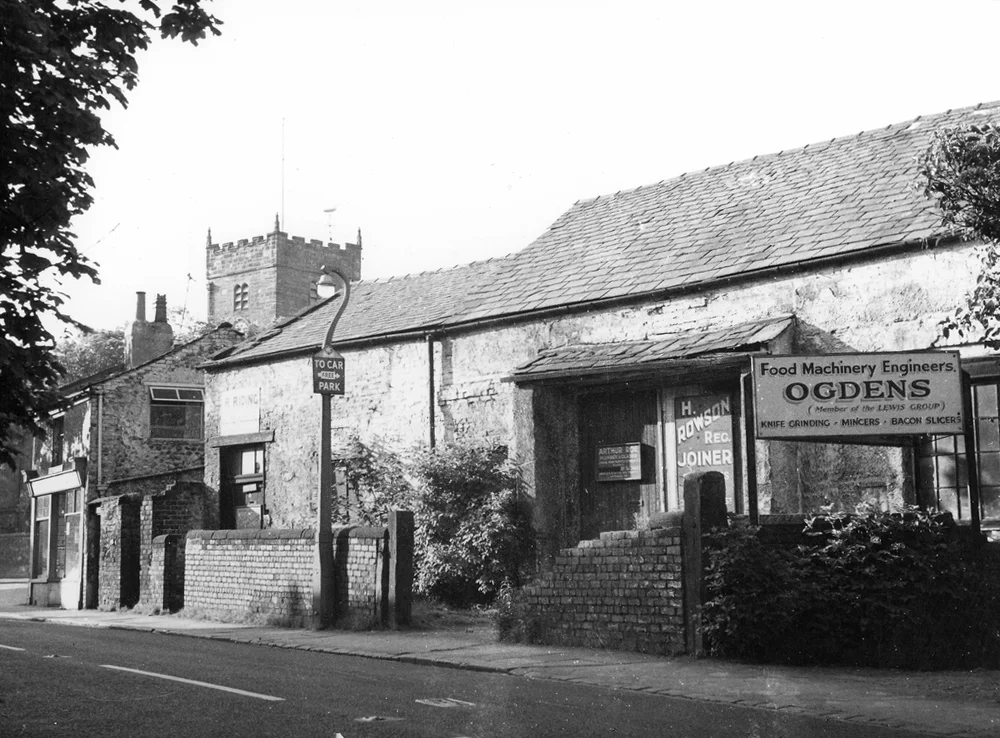
The Old Tithebarn, on Tithebarn Street. Before demolition in 1969. Note the names on the signboards: Ogden’s – Food Machinery Engineers, H.Rowson – Joiner, Arthur Roe – Plumbing & Glazer. Image taken in c1960s, provided by Red Rose Collections.
Its location beside Poulton’s Market Place was no coincidence. During the Middle Ages, Poulton was the principal market town of the Fylde, serving the surrounding farming communities and acting as the administrative centre for the district. The presence of a substantial tithe barn reflects the town’s importance within the medieval economy and its close relationship with St Chad’s Church, whose parish once covered much of the Fylde. As the centuries passed and the system of paying tithes in produce came to an end during the nineteenth century, the barn found new uses. By 1822, it had even been converted into a theatre, hosting travelling acting companies who brought entertainment to the growing market town. In later years, the building served as a joiner’s workshop and was also occupied by a food machinery engineering business, demonstrating how historic buildings were adapted to meet changing commercial needs.
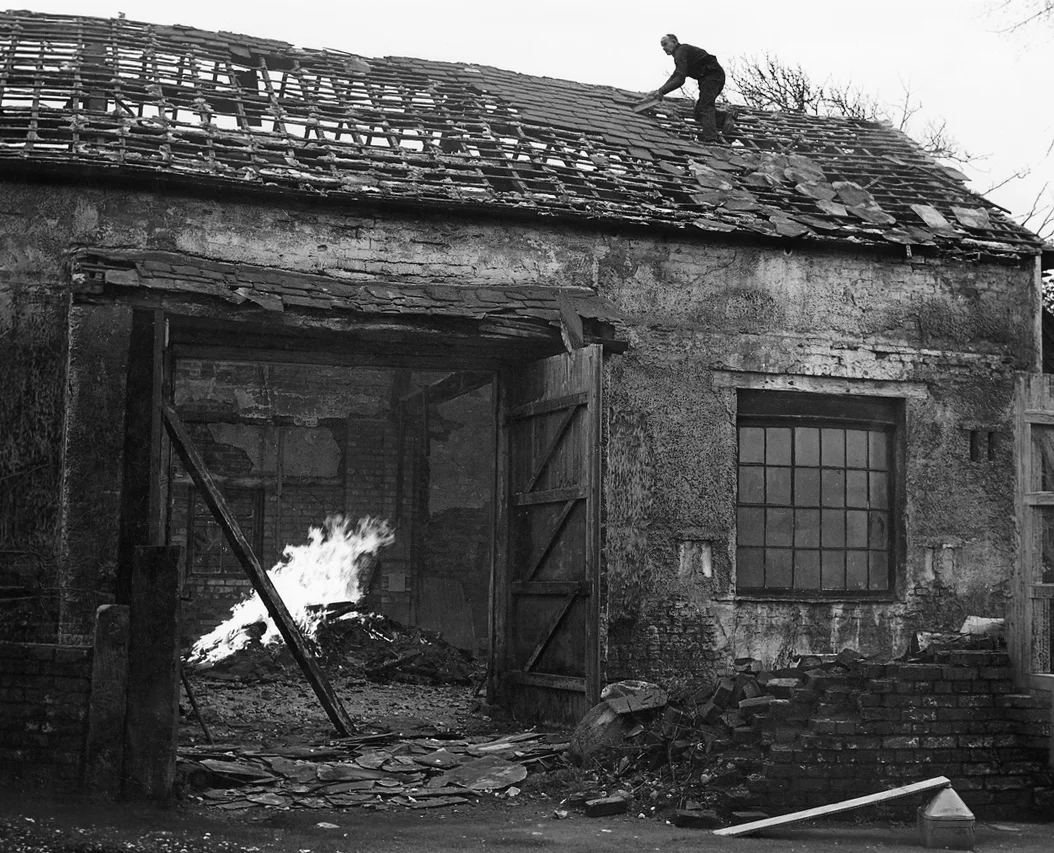
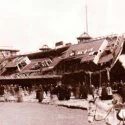
Demolition of the original Tithe Barn, Tithebarn Street in 1968. The area is now on edge of the Teanlowe car park. Image provided by Red Rose Collections.
Despite its historical significance, the ancient structure survived into the twentieth century in an increasingly deteriorated condition. During the programme of post-war redevelopment, the decision was taken to demolish the building. The Tithe Barn was demolished in 1968, and by 1969 the site had been cleared and converted into a public car park for Teanlowe Shopping Centre, removing one of Poulton’s oldest surviving medieval landmarks. Although the building itself has disappeared, its memory survives in Tithebarn Street, which still follows the route past the former site. Historic photographs show the distinctive whitewashed building with its large barn doors standing alongside the bustling street, providing a tangible link to Poulton’s agricultural past. Today, few visitors realise that the modern car park occupies the site of a building that had stood for centuries and had witnessed the transformation of Poulton from a medieval market settlement into the thriving town it is today.
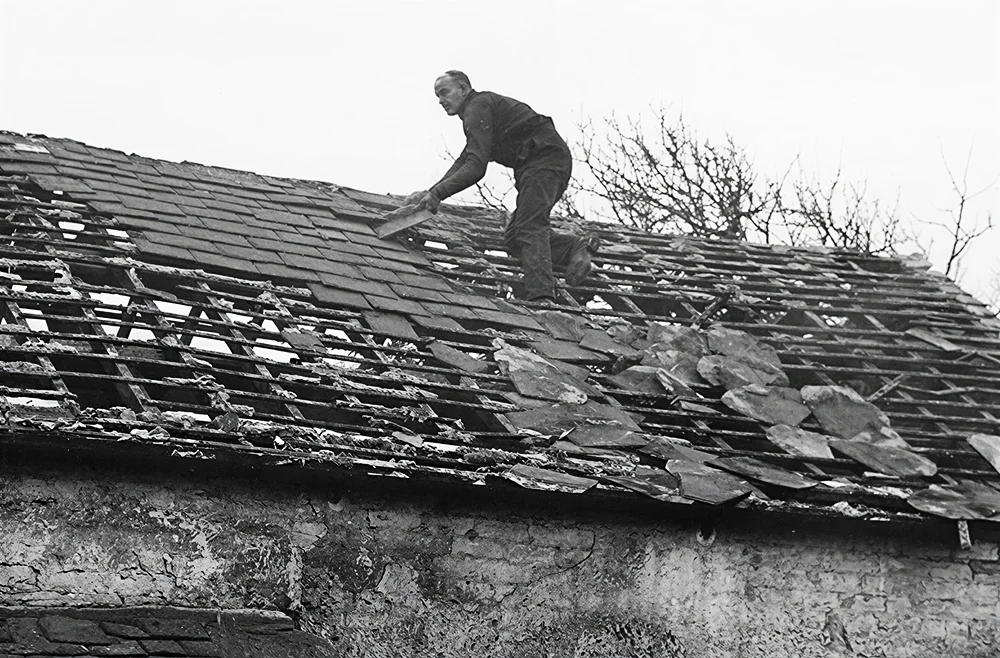
Demolition of the original Tithe Barn, Tithebarn Street in 1968. The area is now on edge of the Teanlowe car park. Image provided by Red Rose Collections.
Images by © Red Rose Collections


