























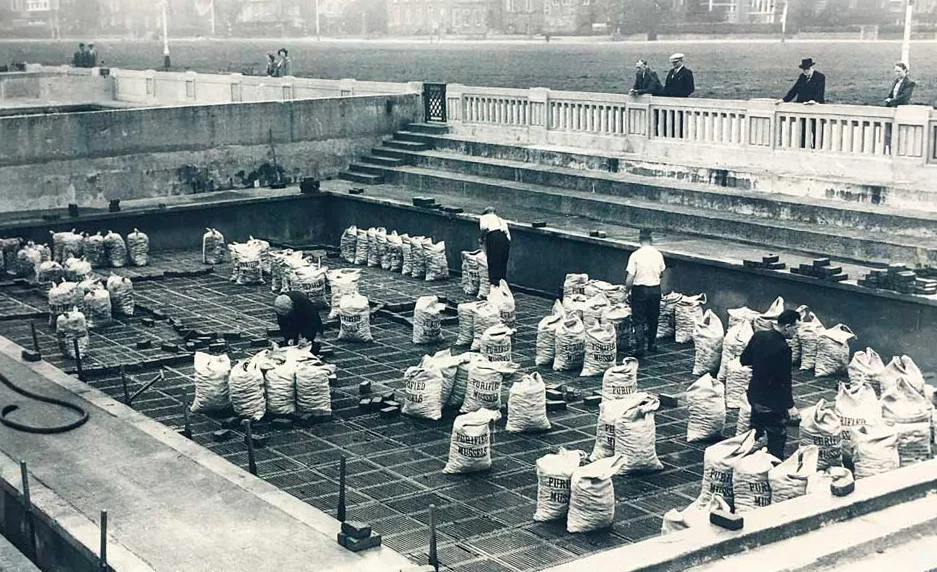
 Standing on Lytham Green overlooking the Ribble Estuary is one of the most distinctive public spaces on the Fylde Coast. Today it is a peaceful viewing area where visitors can sit and enjoy sweeping views across the estuary towards Southport, the Welsh hills and the open sea. Few people realisehowever, that this attractive space occupies the site of one of Lytham’s most important pieces of maritime infrastructure. The Mussel Tank Project was created to preserve and celebrate the history of the former mussel purification tanks that once stood here, ensuring that an important chapter of Lytham’s fishing heritage would not be forgotten. The original mussel tanks were constructed in 1934, following growing concerns about the safety of shellfish harvested from the Ribble Estuary. During the early twentieth century, pollution in the estuary led to several outbreaks of food poisoning linked to contaminated mussels. To address the problem, Lancashire County Council funded the construction of three large reinforced concrete purification tanks at a cost of around £8,000—a substantial investment at the time. The facility officially opened in 1935 and became an essential part of the local shellfish industry.
 Mussels were brought to Lytham from along the Lancashire coast, including the extensive mussel beds of Morecambe Bay. The purification process took place in three stages. The shellfish were first stored, then chlorinated to remove harmful bacteria before finally being cleansed in fresh circulating seawater. Only after completing this process could they legally be sold for human consumption, helping to restore public confidence in locally harvested shellfish. At its peak, the facility processed thousands of bags of mussels each year, becoming an important part of the Fylde’s fishing economy. Although Lytham has never been associated with large fishing fleets in the same way as Fleetwood, shellfish gathering formed a significant local industry for many decades, with the Ribble Estuary providing rich natural mussel beds. Changing environmental conditions eventually brought the operation to an end. By the late 1950s, alterations to the estuary and the decline of the local mussel fishery meant the purification tanks were no longer required, and they were decommissioned. Rather than being demolished immediately, the robust concrete structures found new uses.
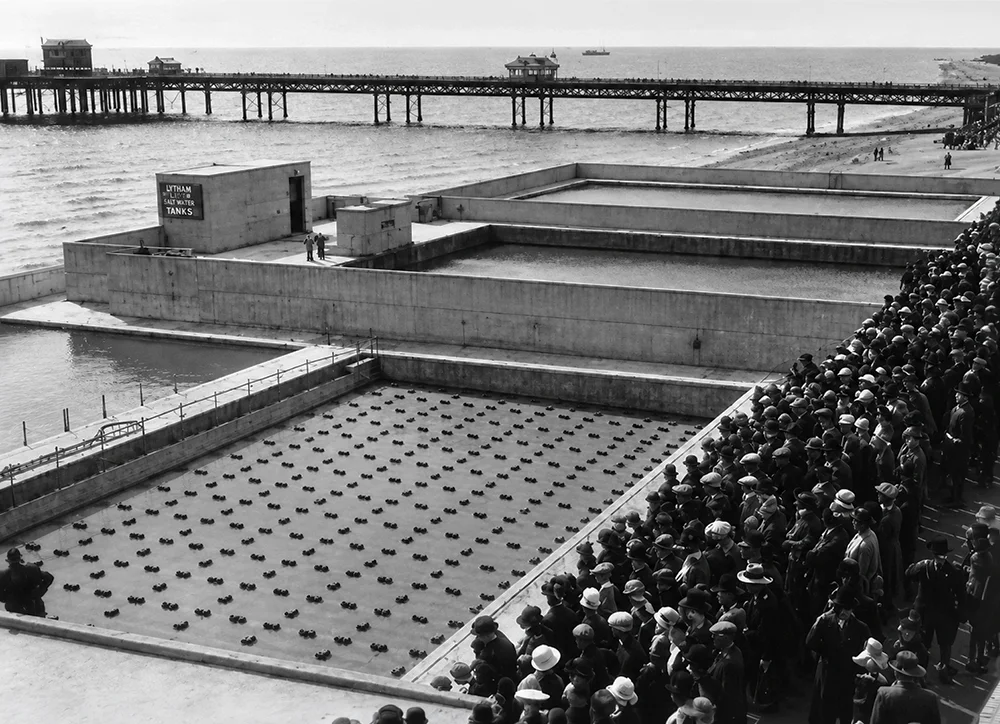 One tank became the base for the RNLI Inshore Lifeboat Station, another was occupied by the Ribble Cruising Club, while the third served for several years as an informal outdoor paddling and swimming pool enjoyed by local families. Later, part of the site was redeveloped as a restaurant known as The Anchorage, which subsequently became a nightclub. Following years of decline, vandalism and fire damage, the buildings eventually fell into dereliction.
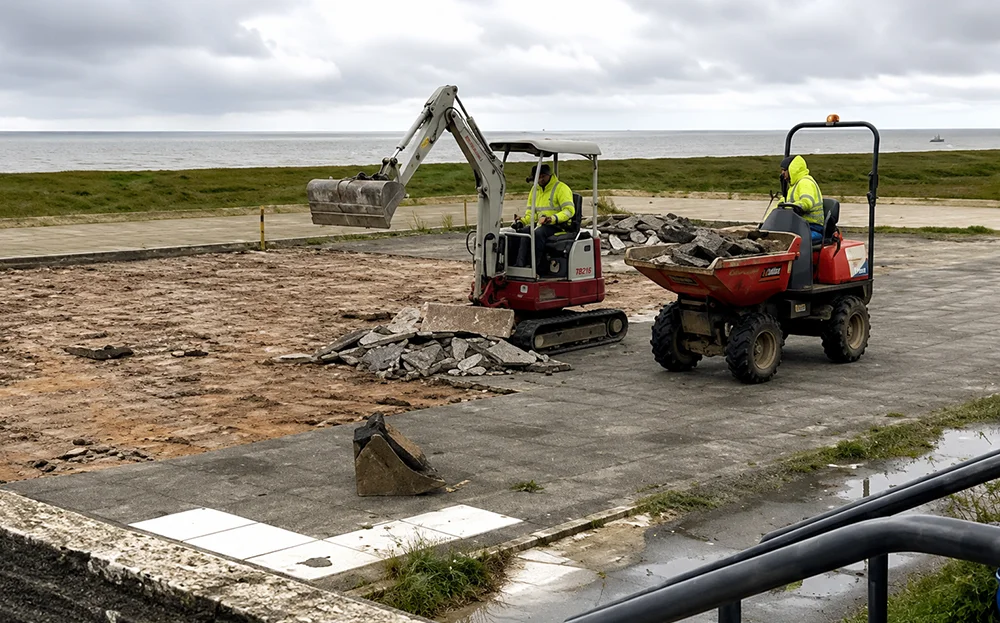
Preparing the site.
During the 1990s, proposals were put forward to redevelop the site commercially. Many local residents feared that further development would permanently alter one of Lytham Green’s most iconic open spaces. The Lytham St Annes Civic Society played a leading role in opposing inappropriate redevelopment, campaigning to preserve the openness of the Green while recognising the historical importance of the former mussel tanks. The Society successfully argued that the site should remain a public space celebrating Lytham’s maritime heritage rather than becoming another commercial development. Over the following years, the Civic Society worked closely with Fylde Borough Council, local charities, landscape architects and community organisations to develop a scheme that would both improve the area and interpret its history. Financial support came from a number of organisations, including the Tom Blasson Foundation and the Lytham Schools Foundation, while local volunteers and community groups contributed to the project’s development.
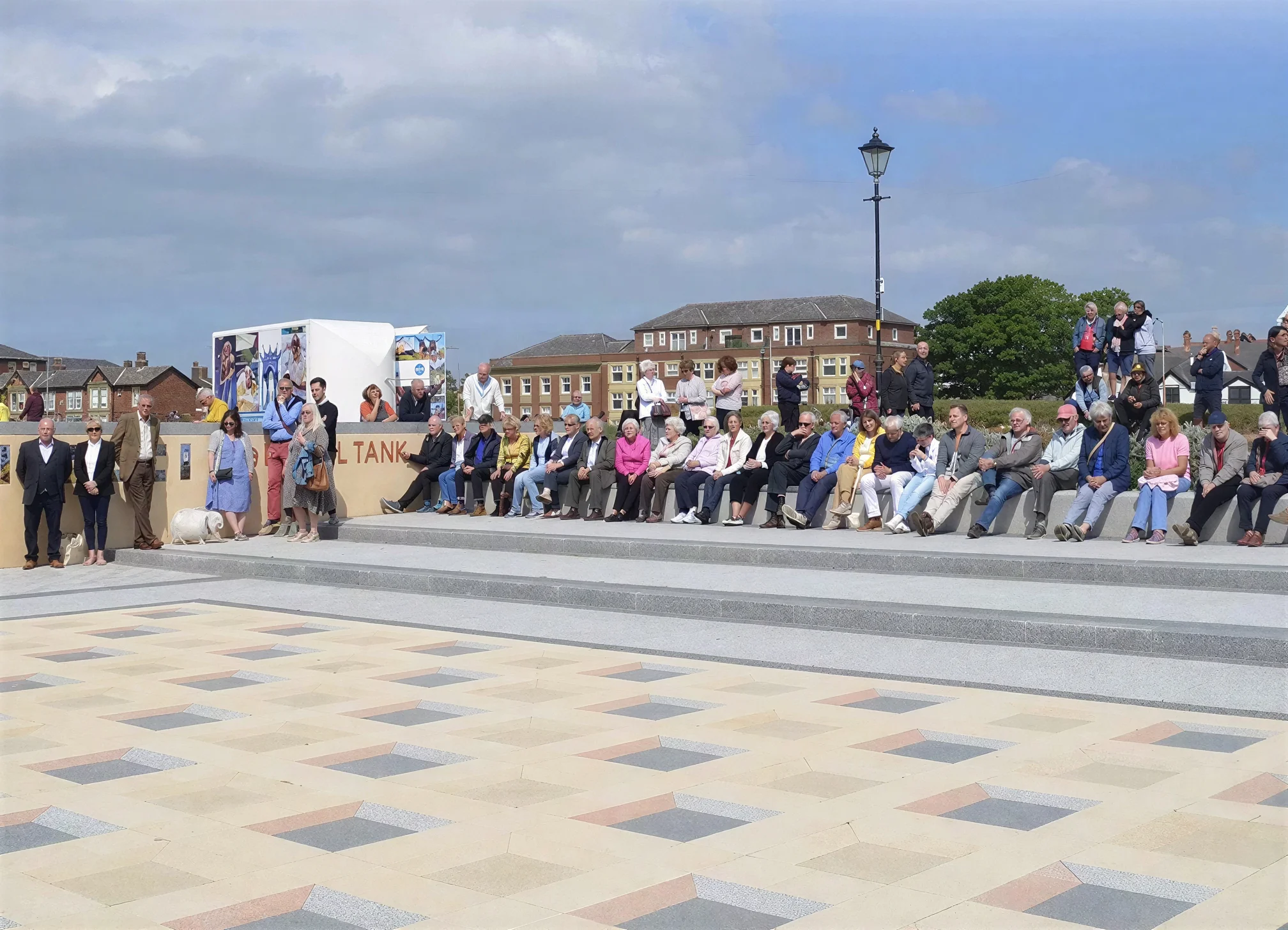
Grand Opening Saturday 18 May 2019 – Crowd gathering for the Opening
Completed in 2018, the Mussel Tank Project transformed the former storage tank into an attractive public space that subtly reflects its industrial past. The most striking feature is the geometric paving pattern across the floor, designed using computer modelling and precision-cut stone to recreate the arrangement of the original brick plinths on which sacks of mussels once rested during the cleansing process. Rather than simply installing decorative paving, the designers created a permanent reminder of the site’s former purpose. Interpretation boards explain both the history of mussel fishing and the ecology of the Ribble Estuary, while ceramic artwork produced by local students illustrates aspects of Lytham’s maritime heritage. Native salt-tolerant planting reflects the surrounding estuarine landscape, and carefully positioned seating allows visitors to enjoy panoramic views while learning about the site’s history.
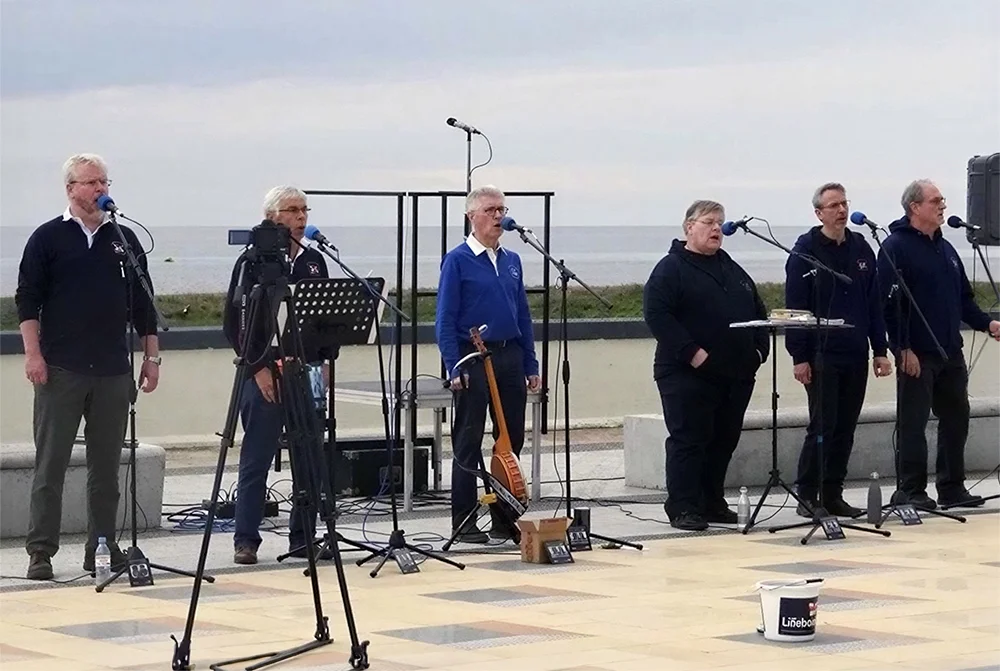
Grand Opening Saturday 18 May 2019 – The Sea Shanty Singers
The project represents far more than the restoration of an old industrial site. It demonstrates how an important part of the Fylde Coast’s working heritage can be preserved without recreating the original structures. Instead, thoughtful landscape design allows visitors to appreciate the history of the location while enjoying one of the finest viewpoints anywhere on Lytham Green. Today, many people pass through the Mussel Tank without realising that beneath their feet lies the story of a once-thriving shellfish industry that helped support local fishermen and protect public health. Thanks to the vision of the Lytham St Annes Civic Society and its partners, this overlooked chapter of the town’s maritime past has been permanently woven into the landscape, ensuring that future generations can continue to appreciate both the heritage of the Ribble Estuary and the people whose livelihoods depended upon it.
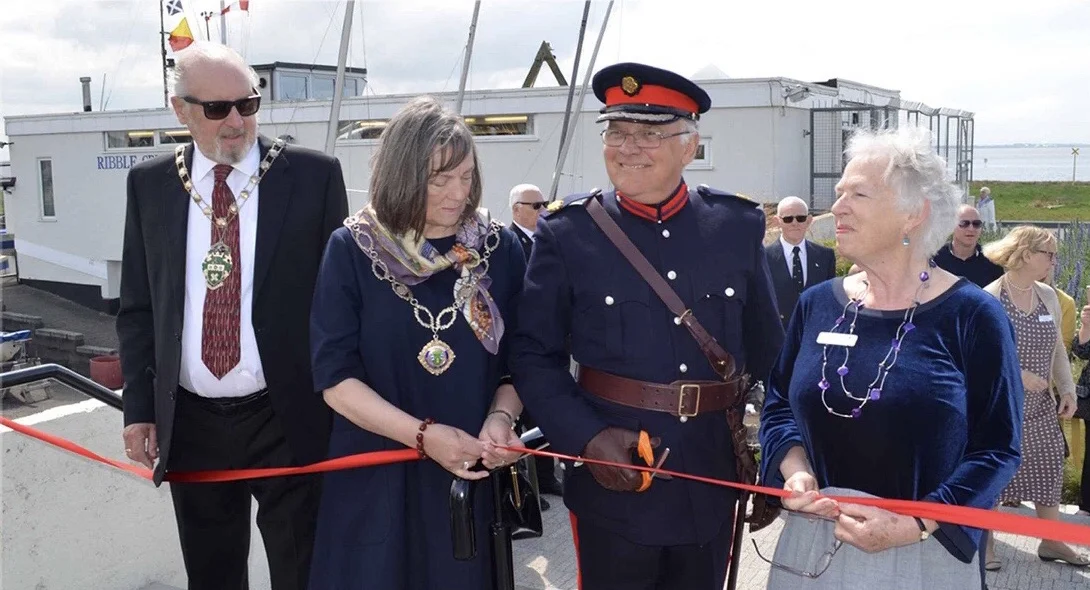
Grand Opening Saturday 18 May 2019. Pictured L-R Mr. Steve Barker, Consort, Mrs. Jan Barker, Deputy Mayor, David Cam and Marion Coupe
Images by © Lytham St Annes Civic Society


