








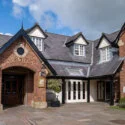





















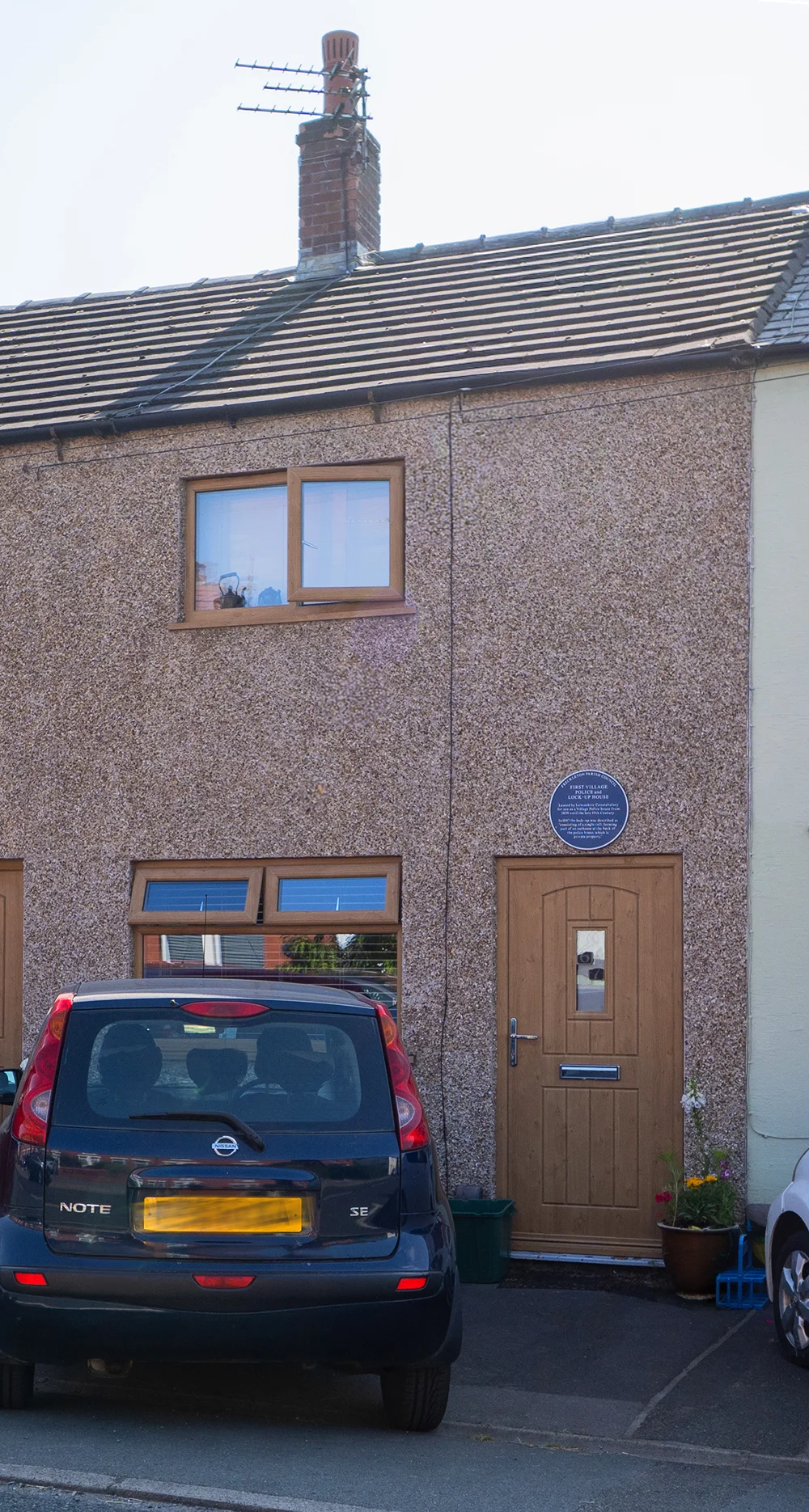
The former Police House at 67 Kirkham Road stands as one of Freckleton’s most significant surviving civic buildings, preserving the story of policing in the village before the arrival of dedicated police stations. The earliest documented evidence of a resident policeman and a formal police house in Freckleton appears in the 1841 Census, which records the earliest known village policeman living on Higher Road, now known as Kirkham Road. While policing almost certainly existed in the village before this date, the census provides the earliest surviving documentary evidence of the building’s role as the centre of local law enforcement.
During the early nineteenth century, policing in rural Lancashire was carried out by parish constables, whose homes often served as both their residence and place of work. Rather than operating from purpose-built police stations, they lived amongst the communities they protected, relying on local knowledge, personal authority and the respect of local residents. Their duties included preserving the peace, investigating thefts and disturbances, serving warrants and bringing offenders before the local magistrates. In a village the size of Freckleton, the Police House became the focal point of local justice and a familiar place where residents could seek assistance.
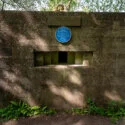
The Police House also formed part of a wider system of village law enforcement. Those arrested for minor offences could be held temporarily in a nearby lock-up, affectionately known by local residents as The Cage.
A significant change came in 1840 with the formation of the Lancashire County Constabulary under the County Police Act 1839. The creation of an organised county police force gradually brought an end to the centuries-old parish constable system and introduced a more professional approach to policing. Dedicated police stations, complete with offices and holding cells, increasingly replaced village police houses, although buildings such as the one on Kirkham Road continued to serve their communities during the transition.
As policing evolved throughout the Victorian era, the role of the Police House gradually diminished, but its historical importance remained. Today, it provides a rare insight into a time when law and order across an entire village rested largely in the hands of a single constable working from his own home. The building reflects an era when policing was deeply rooted within the local community and justice was administered on a far more personal scale than it is today.
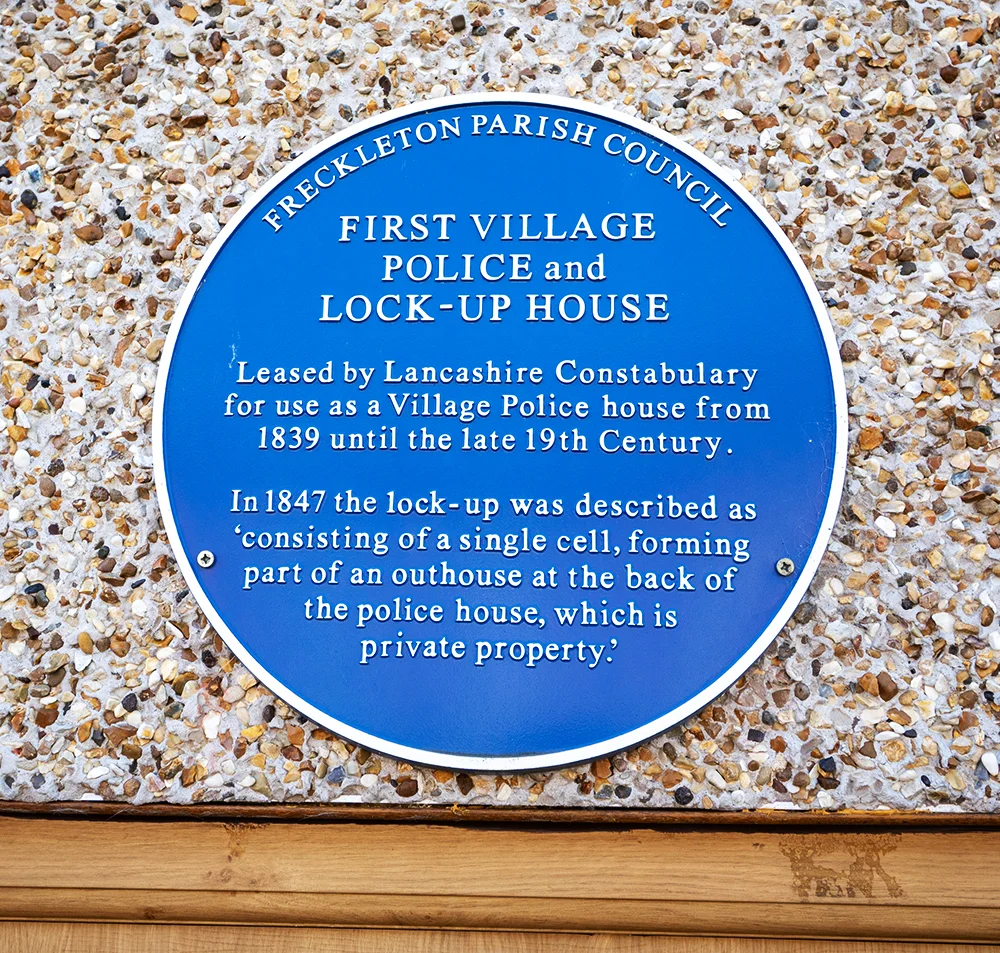
In recognition of its importance, Freckleton Parish Council approved the building to receive the village’s first Blue Plaque in 2023, with the plaque installed the following year. The designation celebrates not only the building itself but also the generations of parish constables who served Freckleton before the establishment of modern policing. Today, the former Police House remains an enduring symbol of the village’s civic heritage and offers a valuable insight into how justice was administered in rural Lancashire during the nineteenth century.
Images by © Deeper Blue Marketing & Design Ltd


