
































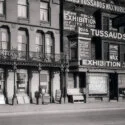


Among the most intriguing archaeological discoveries ever made on the Fylde Coast is the story of the Rossall Roman Hoard – a remarkable collection of Roman silver coins discovered near Fleetwood and surrounded by a mystery that remains unsolved nearly two centuries later. Unlike many archaeological finds, the Rossall Hoard is not simply a story of buried treasure. It is also a tale of mistaken identity, bankruptcy, missing artefacts and a museum display that may not actually contain the original treasure at all.
The story begins in 1840 when workmen digging for clay near Rossall, on the coast between Fleetwood and Cleveleys, uncovered a substantial hoard of Roman coins buried beneath the ground. Contemporary reports described around 400 silver coins, known as denarii, dating from the first to third centuries AD. The discovery immediately attracted attention, not least because Roman finds were relatively uncommon on the Fylde Coast. The coins eventually came into the possession of Sir Peter Hesketh-Fleetwood, founder of the town of Fleetwood and owner of nearby Rossall Hall. As an enthusiastic collector of antiquities, Sir Peter added the coins to his growing collection of historical artefacts, medals and curiosities housed within the hall.
At first glance, the discovery appeared straightforward. A Roman treasure had been found, preserved and recorded. Yet within just a few years the trail of evidence would begin to disappear. In 1844, Sir Peter’s ambitious plans for Fleetwood ran into financial difficulty. Having invested heavily in developing the new port and resort town, he was declared bankrupt. Rossall Hall and its contents were sold at auction, dispersing one of Lancashire’s most significant private collections. Somewhere during this process, the original Rossall Hoard appears to have vanished.
Today, the mystery centres on a collection of Roman coins displayed at the Harris Museum in Preston. For many years these coins were believed to be the Rossall Hoard. The collection consists of 388 silver siliquae, late Roman coins minted between approximately AD 355 and AD 402 during the final decades of Roman rule in Britain. The coins bear the images of emperors including Constantius II, Julian II, Valens, Theodosius and Honorius, representing some of the last Roman currency to circulate in Britain before the collapse of Roman administration around AD 410.
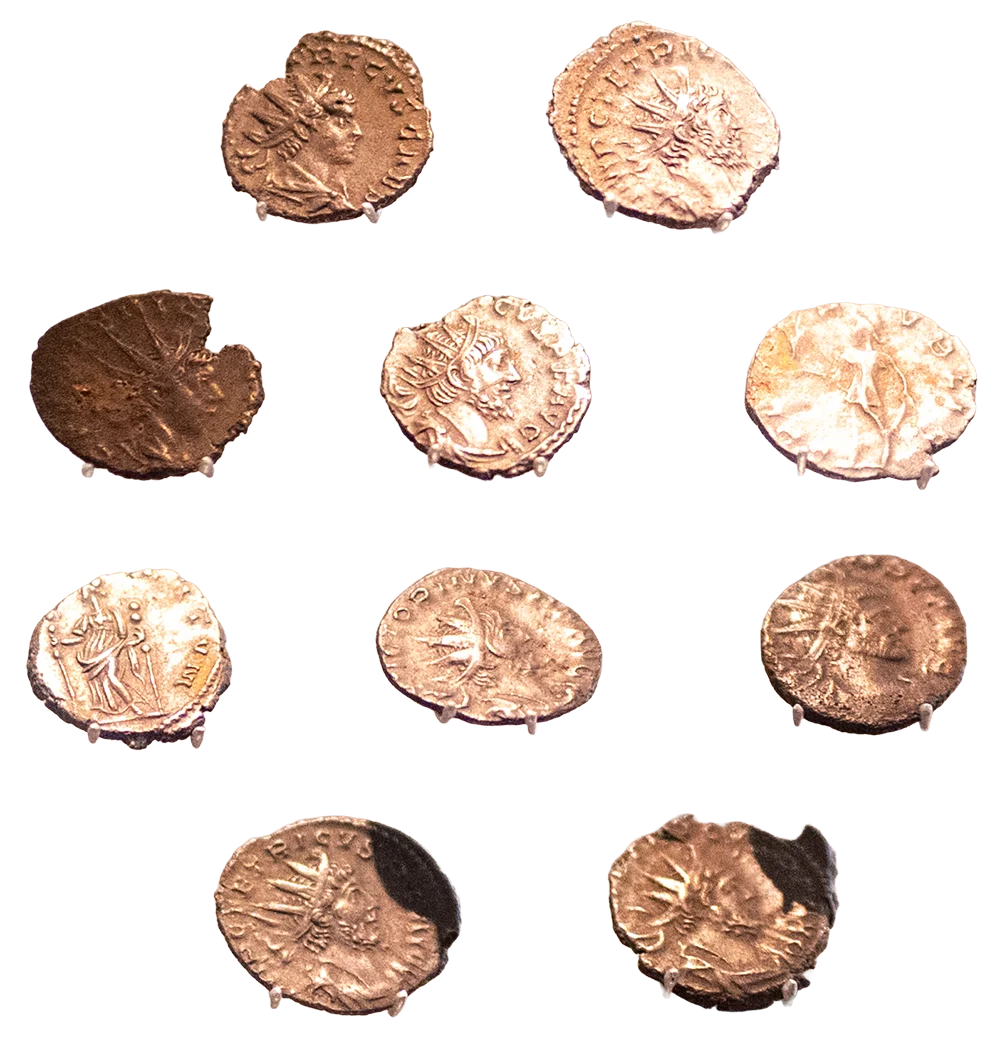
Harris Museum text: Hoards help us understand the geography and timeline of Roman activity in the North West. This hoard of 330 radiates – coins showing the Roman emperor wearing a sun crown – dates from 260-274. It was found in 1926 on the bank of the River Wyre, near Knott End. Millions of these low value coins were minted in the 200s – even a large hoard like this had very little value when it was buried.
The display remains one of the most important Roman exhibits connected with the Fylde Coast and can still be viewed at the Harris Museum in Preston. Visitors examining the tiny silver coins are looking at a genuine Roman hoard, but there is one problem: historians now believe it is not the hoard found at Rossall in 1840. Research undertaken by museum specialists revealed a major discrepancy. The coins described when the Rossall Hoard was first discovered were first-to-third-century silver denarii. The coins displayed today are fourth- and early fifth-century siliquae. They are entirely different types of coins from a completely different period of Roman history.
Somewhere between the discovery at Rossall and the later museum donation, two separate Roman hoards appear to have become confused. One theory suggests that during the sale of Rossall Hall and its contents, an auctioneer mistakenly identified the late Roman siliqua hoard as the Rossall Hoard. The collection was subsequently purchased by Alderman Brown of Preston and later passed to the Harris Museum. Because everyone involved believed it to be the genuine Rossall Hoard, the error went unnoticed for generations. As a result, the original Rossall Hoard effectively disappeared from the historical record. No one knows what became of the actual treasure discovered by the clay workers in 1840. The original coins may have been sold individually by dealers, dispersed among private collectors, or simply lost over time. It is even possible that some survive today in collections whose owners have no idea of their connection to one of Lancashire’s most important archaeological discoveries. Nearly 185 years after the find, historians are still attempting to trace their fate.
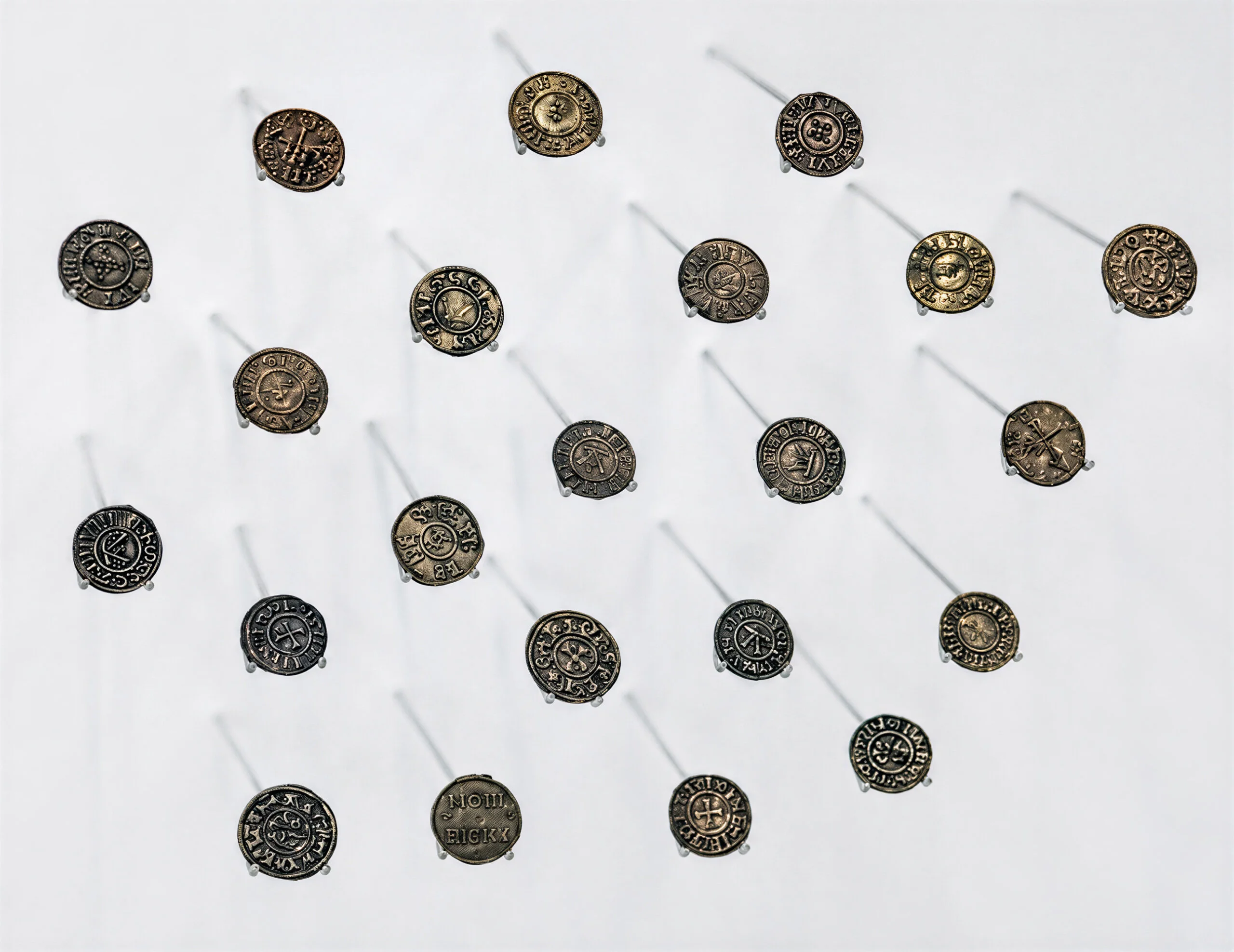
More Roman coins on display at the Harris Museum in Preston
The mystery becomes even more fascinating when viewed in the wider context of Roman Britain. The Fylde Coast lay on the north-western frontier of the Roman world. Although there is no evidence for a major Roman town at Fleetwood, the discovery of a substantial coin hoard demonstrates that Roman influence extended into the region. Whether the coins belonged to a trader, landowner, soldier or traveller remains unknown. Like many Roman hoards discovered throughout Britain, the treasure was probably buried during a period of uncertainty. The owner may have intended to recover it later but was prevented by death, migration or changing circumstances. The hidden wealth remained untouched for more than sixteen centuries before being rediscovered by chance.
Today, visitors to the Harris Museum can still see the coins associated with the Rossall Hoard story. While they may not be the original treasure found near Fleetwood, they remain an important part of the mystery and a fascinating reminder of Lancashire’s Roman past. The museum has actively encouraged research into the collection in the hope that new evidence might eventually reveal what happened to the genuine hoard. The Rossall Hoard therefore occupies a unique place in Fylde history. It is simultaneously a Roman treasure, a Victorian detective story and one of Lancashire’s greatest unsolved archaeological mysteries. Somewhere, perhaps hidden in a private collection, misidentified in an auction catalogue or resting unnoticed among thousands of Roman coins, the real Rossall Hoard may still exist. Until it is rediscovered, the story remains one of the most fascinating lost treasures ever associated with the Fylde Coast.
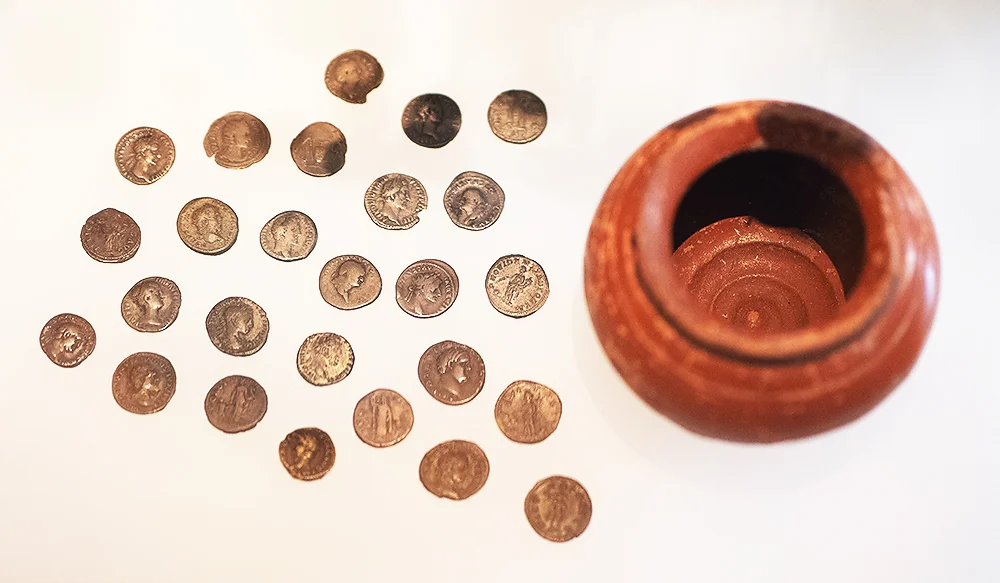
Harris Museum text: The Kirkham hoard is a mixture of 36 denarii dating from 14-238. The oldest coin is almost pure silver and is much more valuable than the younger coins. There were no banks, so the hoard’s owner – possibly someone connected to the nearby fort – protected their money by burying it in this samian-ware pot. On loan from Mrs Bowdler and family
Images by © Deeper Blue Marketing & Design Ltd


