




























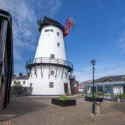









Few natural disasters have had as profound an impact on the history of Lytham as the Great Flood of 1719–1720. Occurring more than three centuries ago, the catastrophe devastated farmland, destroyed homes and left many local families facing ruin after the sea breached the fragile coastal defences protecting the low-lying landscape. The flood took place during the night of 18–19 December 1719. However, because Britain was still using the Julian calendar at the time, with the new year beginning on 25 March, contemporary records often describe the event as occurring in 1720. Today, historians generally refer to it as the 1719–1720 flood.
At the beginning of the eighteenth century, the coastline around Lytham looked very different from the one we know today. There was no promenade or substantial sea wall. Instead, the land bordering the Ribble Estuary was protected by a series of earth embankments and sea banks constructed to keep the tide from flooding valuable agricultural land. Much of the surrounding countryside consisted of reclaimed marshland lying only a short distance above sea level.
When an exceptionally high spring tide coincided with a violent north-westerly storm, enormous waves crashed against these modest sea defences. The embankments were unable to withstand the force of the sea, and several sections collapsed, allowing floodwater to pour inland. Within hours, vast areas of farmland lay beneath salt water. Winter crops were destroyed, barns and outbuildings flooded, livestock drowned and homes left uninhabitable. Salt contamination rendered many fields unusable long after the water had receded, placing an enormous financial burden on the farming community.
The scale of the disaster is vividly described in a petition presented to the Lancashire Quarter Sessions shortly afterwards. Local landowners and tenants referred to the event as an “extraordinary and uncommon flood”, explaining that the sea had burst through the embankments and swept across the countryside.
The petition recorded that the flood had:
“…utterly destroyed their winter corn… done very great damage to all their houses, barns, corn, hay, household goods and a great number of their cattle.”
The losses were estimated at more than £2,000, an immense sum in the early eighteenth century. For many farming families, the flood represented the loss of an entire year’s livelihood, with little prospect of immediate recovery.
Recognising the scale of the catastrophe, permission was sought to raise charitable donations to assist those affected. Communities elsewhere in Lancashire were encouraged to contribute towards rebuilding homes, repairing sea defences and helping local people recover from one of the worst natural disasters the area had ever experienced. The flood also served as a stark reminder of the vulnerability of the Fylde Coast. In the years that followed, considerable effort was devoted to strengthening and improving the coastal embankments. Although storms would continue to threaten the coastline in later centuries, the events of 1719–1720 marked a turning point in the long history of coastal defence around Lytham.
Today, much of what we know about the flood has been preserved through local historians and heritage organisations. Among those helping to keep the story alive is the Lytham St Annes Civic Society, which has researched and documented the disaster as part of its wider work to preserve the town’s history and heritage. By recording events such as the Great Flood, the Society ensures that modern generations can better understand the challenges faced by earlier communities and appreciate the importance of the coastal landscape that surrounds Lytham today.
Standing on Lytham Green, it is difficult to imagine that the peaceful expanse overlooking the Ribble Estuary was once the scene of such devastation. Modern sea defences now provide protection that eighteenth-century residents could scarcely have imagined, but the Great Flood of 1719–1720 remains one of the defining events in the town’s history. More than 300 years later, it continues to remind us that the prosperity of the Fylde Coast has always depended not only on the sea, but also on humanity’s determination to live alongside it.
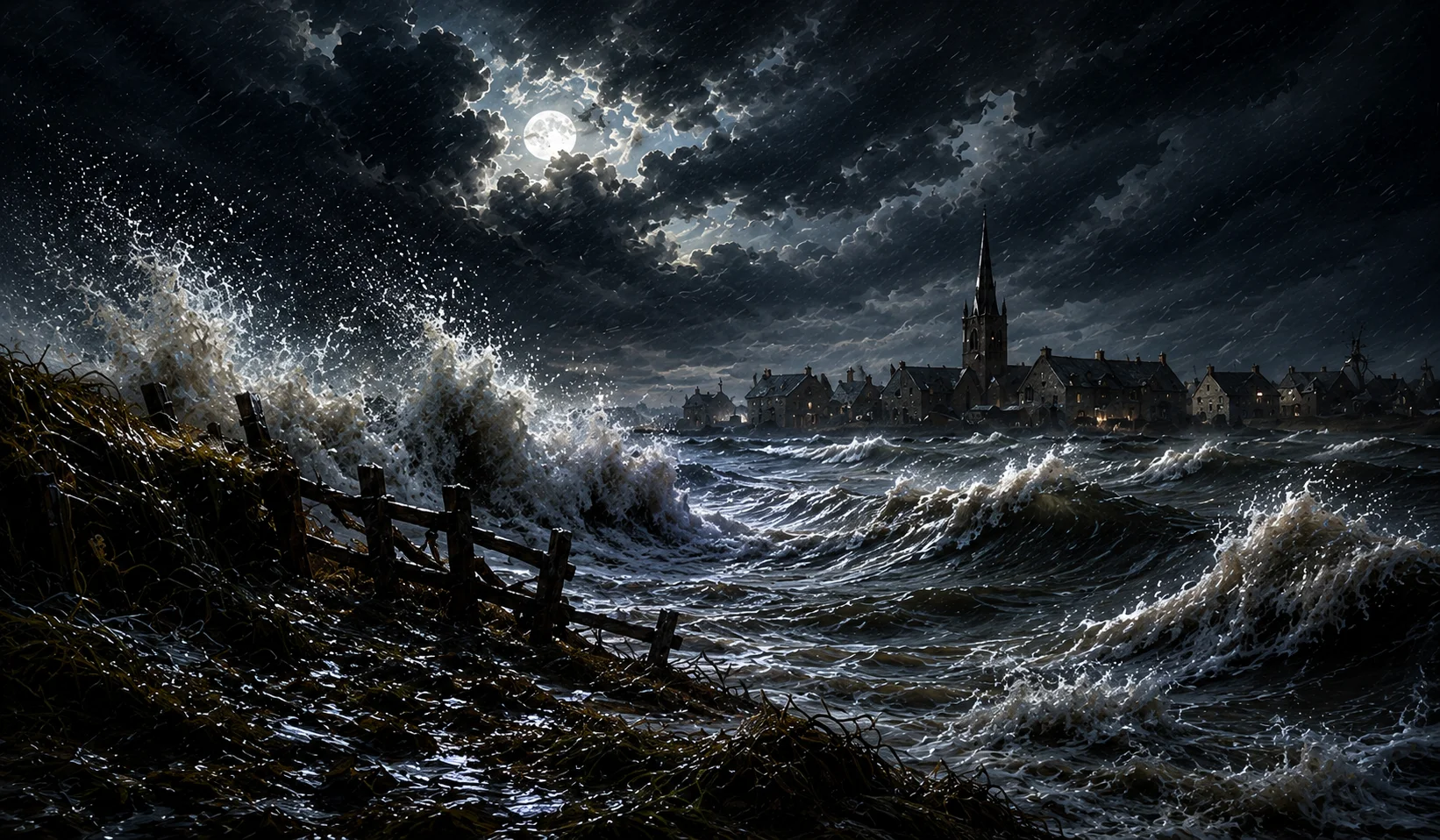
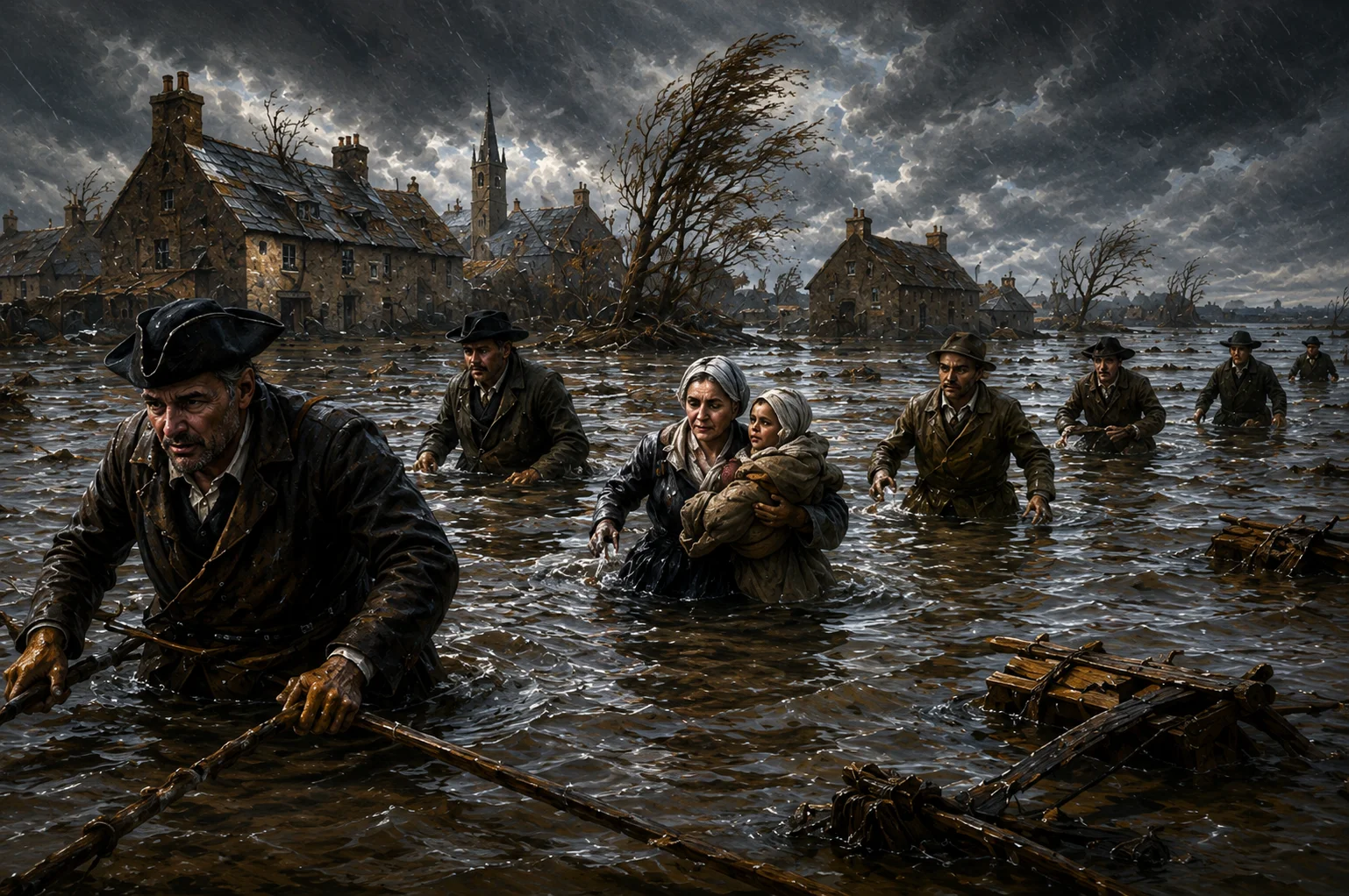
Images by © ChatGPT (Concept art)


