


































Today, the area surrounding Blackpool Cricket Club forms part of the beautiful landscape of Stanley Park, but before the park was created it was home to one of the town’s most important sporting venues. Known officially as the Blackpool Athletic Grounds, and later popularly referred to as Whitegate Park, the site became the centre of sporting life in Blackpool during the late Victorian era. The Athletic Grounds officially opened on 5 August 1893, providing Blackpool with a purpose-built complex for a variety of sports. Situated alongside Whitegate Drive, then on the outskirts of the rapidly expanding town, the new venue was developed by the Blackpool Athletic Ground Company to cater for the growing popularity of organised sport.
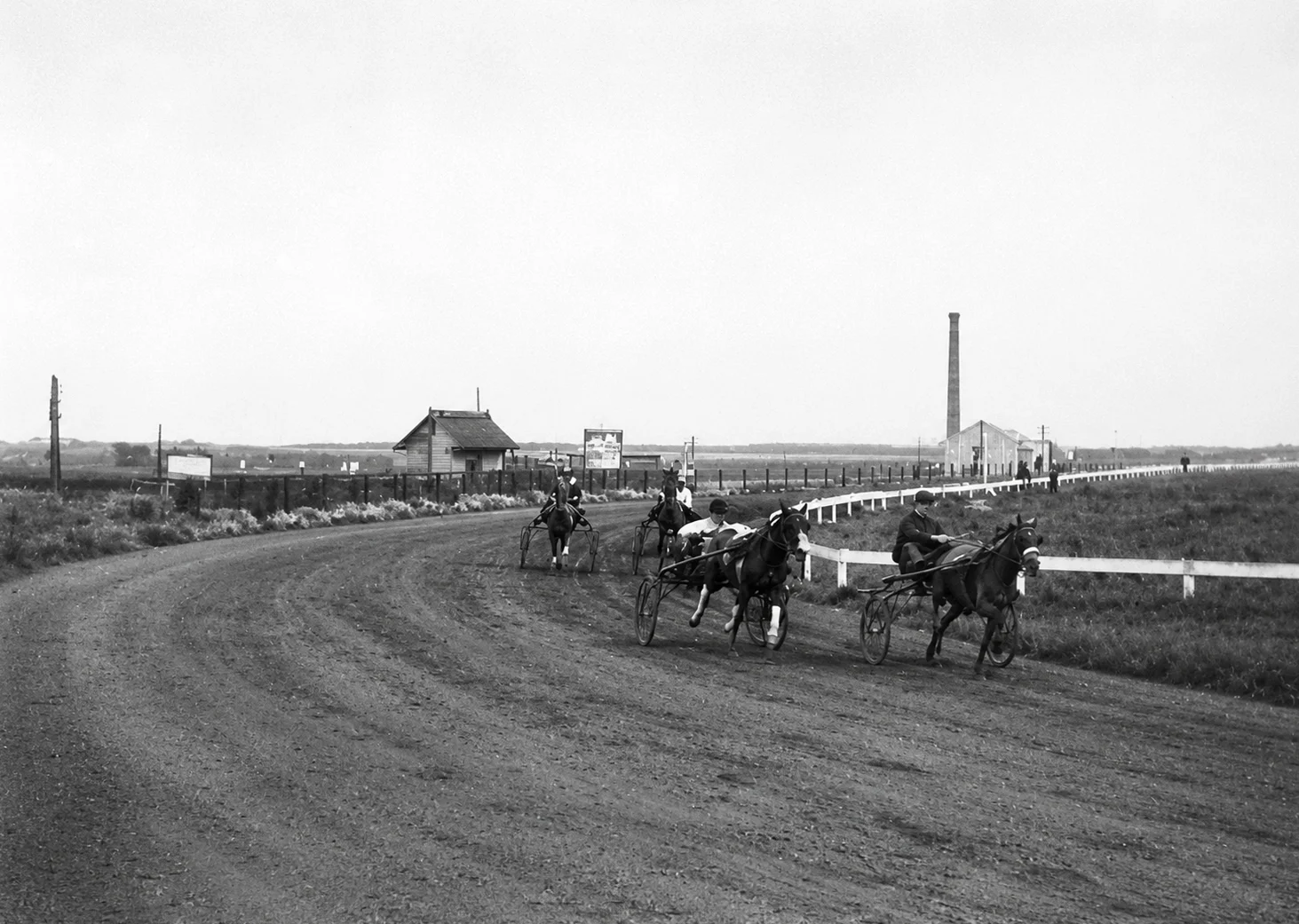
One of the most distinctive features of the complex was its large oval horse trotting track. Unlike traditional horse racing, competitors raced in lightweight sulkies pulled by horses maintaining a fast trot rather than a gallop. Trotting meetings attracted enthusiastic crowds and became one of the venue’s principal attractions, reflecting the popularity of the sport during the Victorian period. Inside the trotting circuit lay a cinder cycling track, where competitive races were held during Britain’s cycling boom of the 1890s. The infield accommodated athletics meetings, football matches and other sporting events, making the complex one of the most versatile sporting venues in Lancashire.
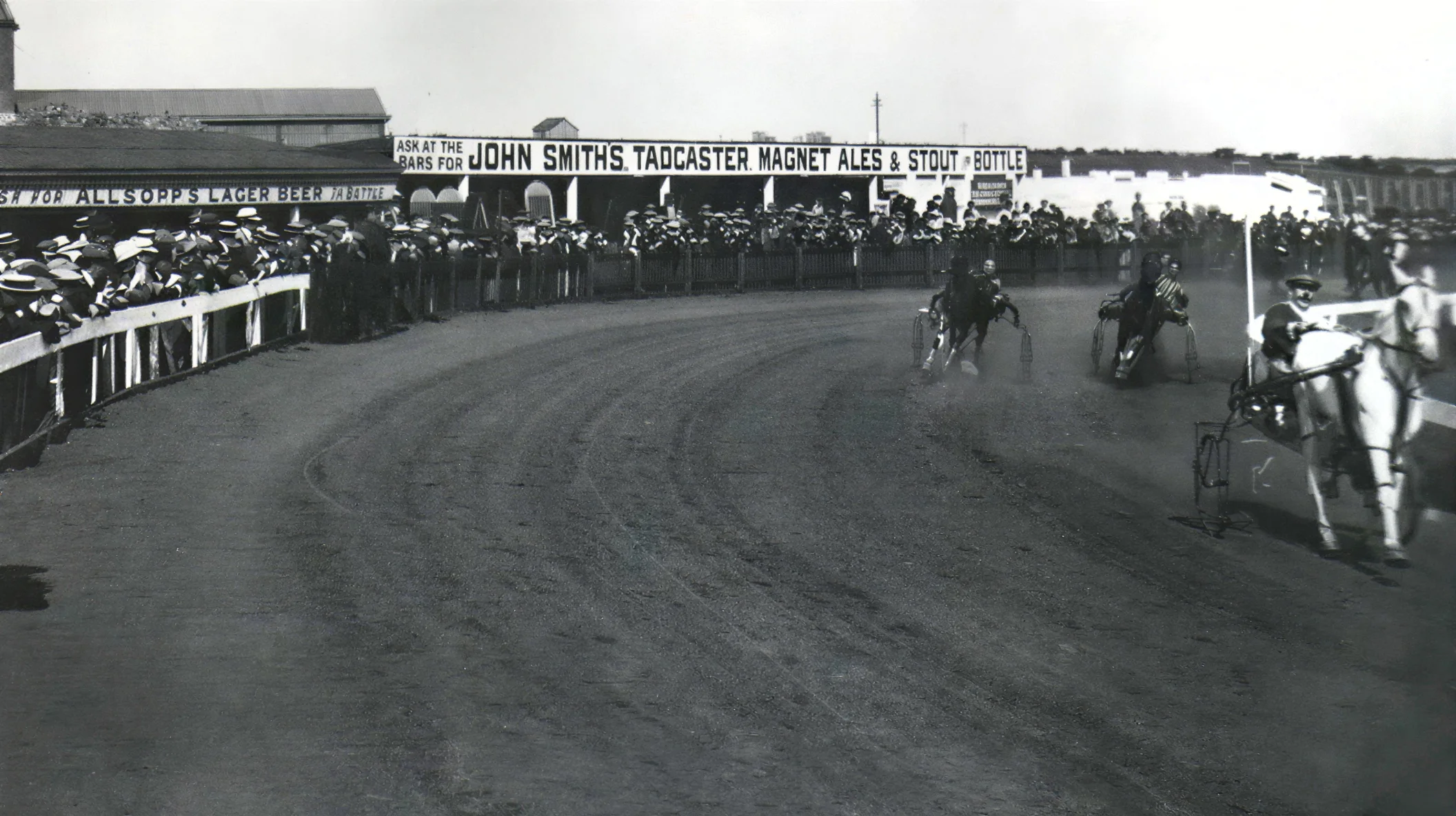 The grounds also became the new home of Blackpool Cricket Club, which relocated there in 1893 after leaving Raikes Hall. The club’s first fixture at its new home was a prestigious match against the touring Australian cricket team, immediately establishing the venue as an important cricket ground. Although officially known as the Blackpool Athletic Grounds, local residents gradually began referring to the venue as Whitegate Park, a name derived simply from its location beside Whitegate Drive. Despite becoming widely used, Whitegate Park was never the site’s official title.
During the early twentieth century, changing sporting interests and financial difficulties affected the Athletic Grounds. Horse trotting and cycling gradually disappeared, while cricket became the site’s principal activity. By the early 1920s, Blackpool Corporation had acquired the surrounding land as part of an ambitious plan to create a magnificent public park for the town. Landscape architect Thomas H. Mawson was commissioned to design what would become Stanley Park, one of Britain’s finest examples of an inter-war municipal park. Rather than replacing the Athletic Grounds, the new park was carefully designed around them. A new pavilion for Blackpool Cricket Club was completed in 1925, and when Stanley Park officially opened in 1926, the former Athletic Grounds became an integral part of the new development.
Today, little remains to indicate that horses once raced where cricketers now play or that cyclists once competed around an oval track that echoed with the cheers of Victorian spectators. Yet the site played a significant role in Blackpool’s sporting history, helping establish organised recreation at a time when the resort was rapidly growing into one of Britain’s leading holiday destinations. Although the name Whitegate Park has largely faded from everyday use, its legacy lives on within Stanley Park. The cricket ground continues to host matches more than 130 years after it first opened, ensuring that one of Blackpool’s oldest sporting venues remains at the heart of the town’s recreational life.