

















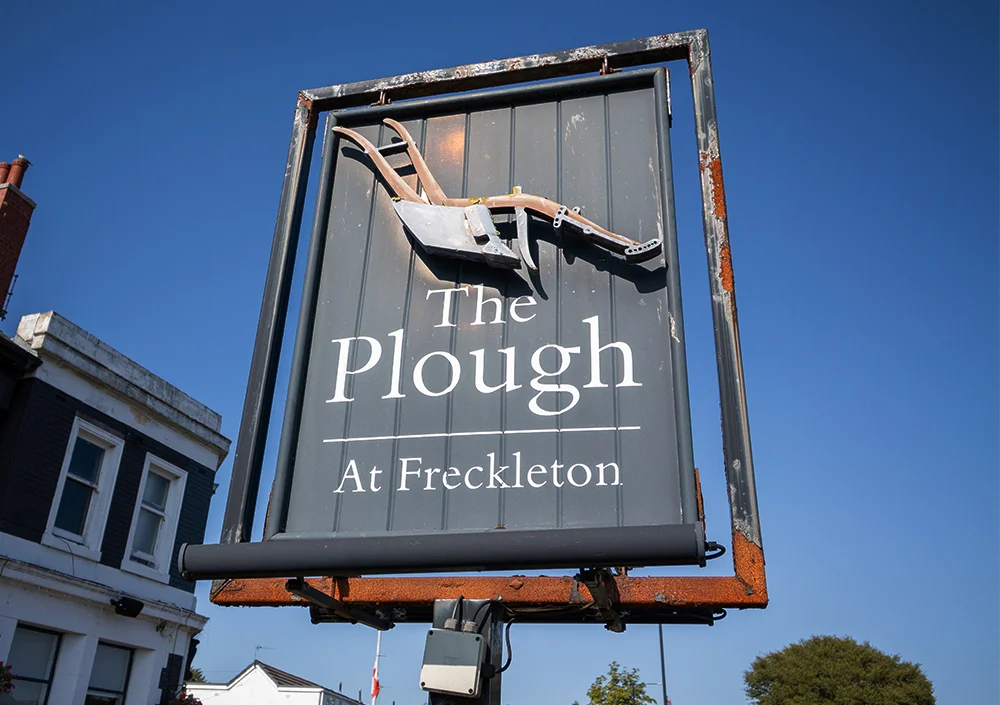
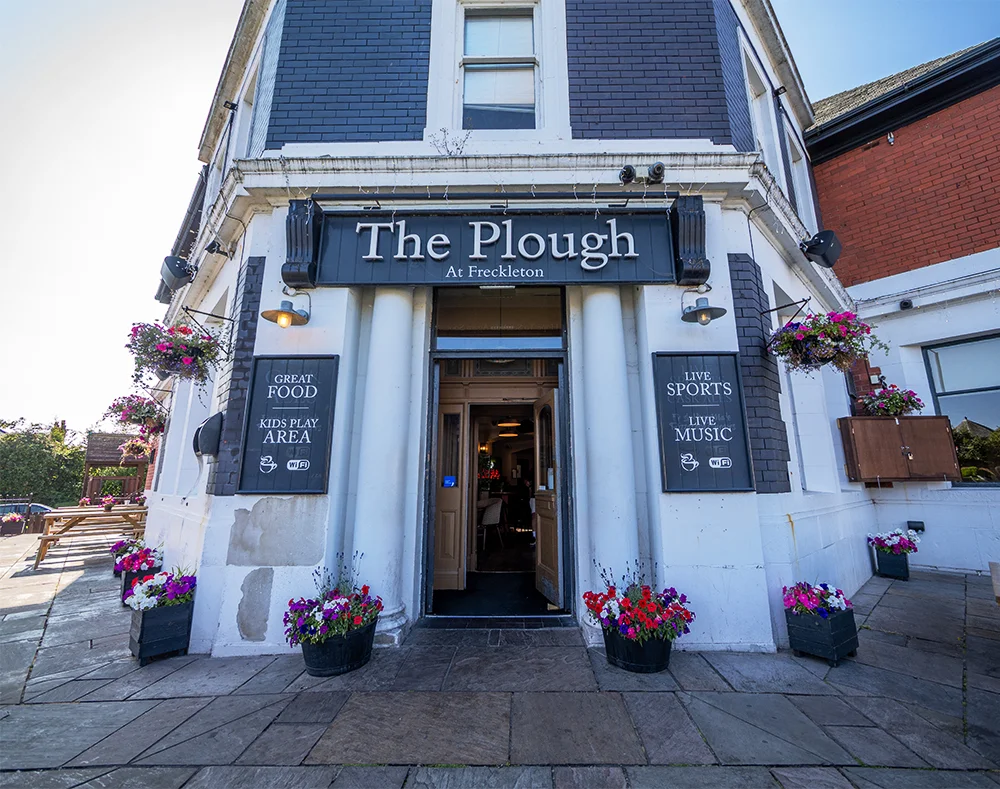
 For almost two centuries, The Plough has been a familiar feature of village life in Freckleton, serving generations of residents, farmers, travellers and visitors. Although the present building dates from around 1930, its history stretches back to an earlier inn that stood nearby, making The Plough one of the village’s longest-established licensed premises and an enduring part of Freckleton’s social history.
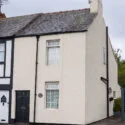
The original Plough Inn opened in 1830 as a beer house, occupying a site close to the present building on Lytham Road. Under the Beerhouse Act of that period, such establishments were permitted to sell beer but not wines or spirits, encouraging the growth of local inns to serve expanding rural communities. Freckleton was still largely an agricultural village during the early nineteenth century, and The Plough quickly became a popular meeting place for farm workers, craftsmen and local residents, reflecting the importance of agriculture to the area’s economy. As the village expanded, so did the role of the inn. By 1890, records show that The Plough was providing accommodation, refreshments and stabling for horses, illustrating its importance to travellers moving between Preston, Kirkham, Lytham and the surrounding Fylde villages. Before the widespread use of motor vehicles, inns such as The Plough were essential stopping places where visitors could rest, take refreshments and change horses before continuing their journeys. Its position on one of the principal routes through Freckleton made it a natural centre of village activity.
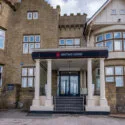
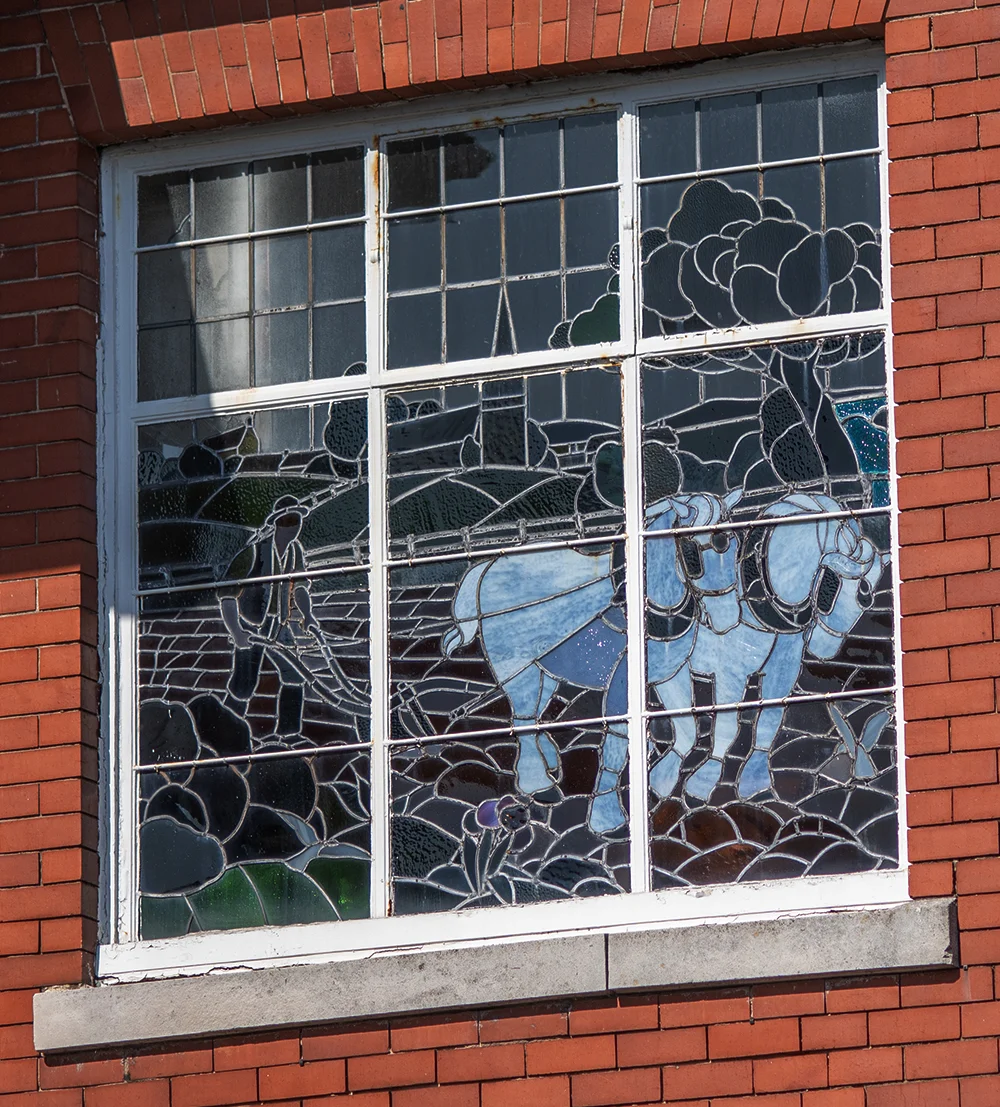
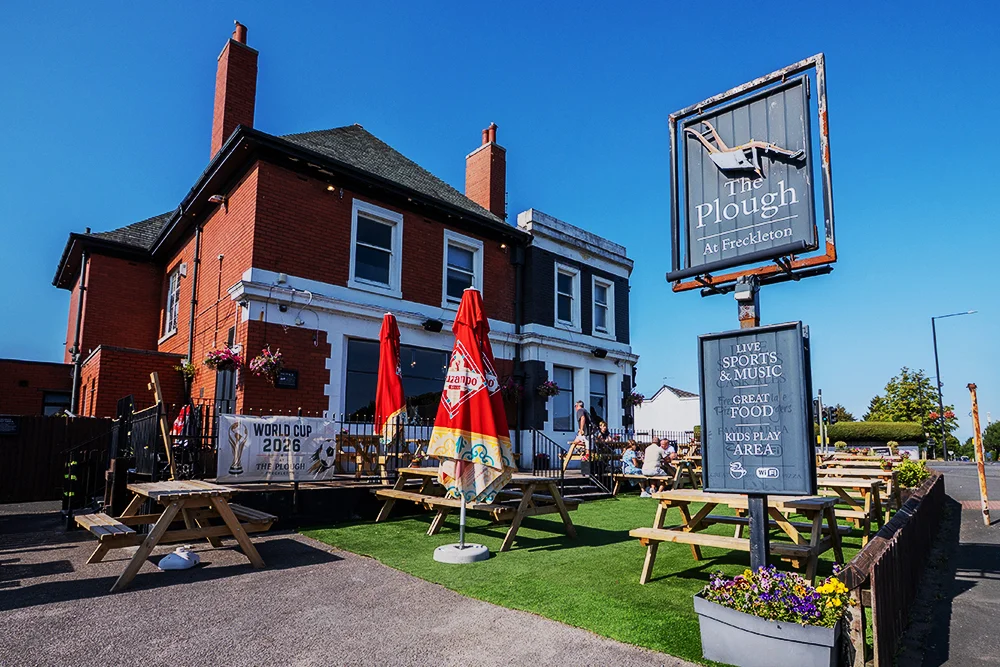
The original inn remained in use until the late 1920s, when major road improvements transformed the centre of Freckleton. The construction of the new road to Preston required the demolition of the nineteenth-century Plough Inn, bringing to an end almost a century of continuous service on its original site. Rather than disappearing altogether, however, the inn was rebuilt nearby, with the present Plough Hotel being completed around 1930. This ensured that one of the village’s best-known public houses continued to serve the community while adapting to the changing demands of the motor age. The new building retained the traditional name while presenting a more modern appearance. One of its most distinctive features is the stained-glass window overlooking the car park, depicting two powerful Shire horses pulling a plough. The artwork pays tribute to the agricultural heritage of Freckleton and the farming traditions that shaped the village for centuries, while also reflecting the origin of the inn’s name.
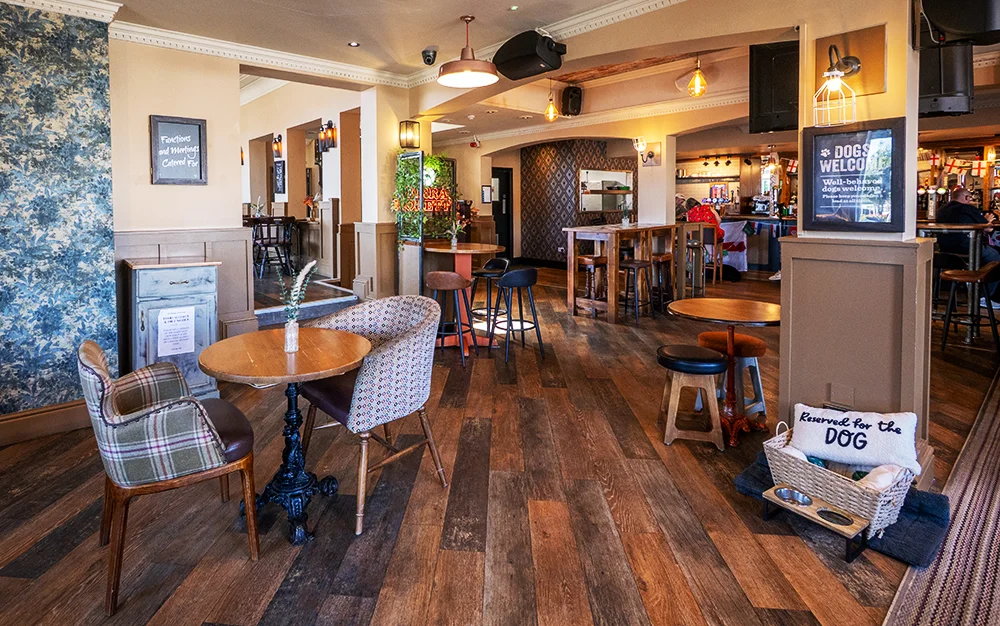
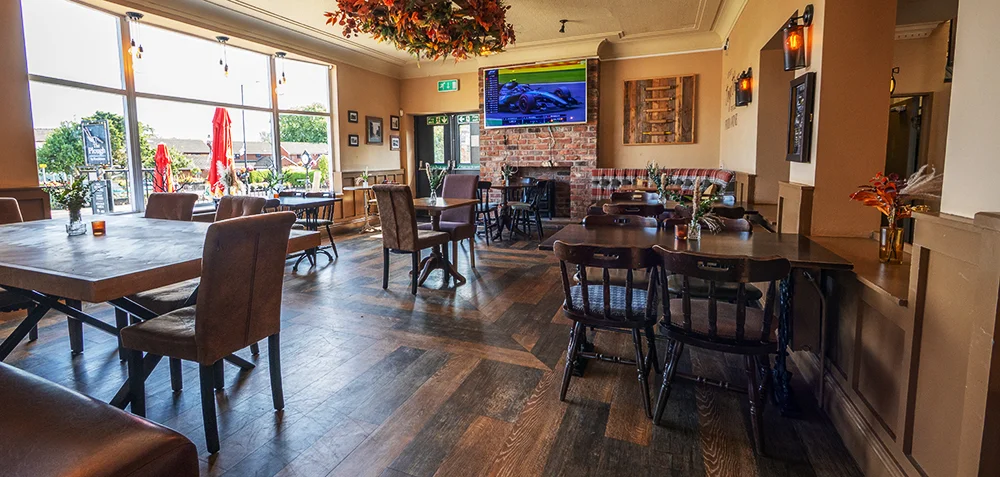
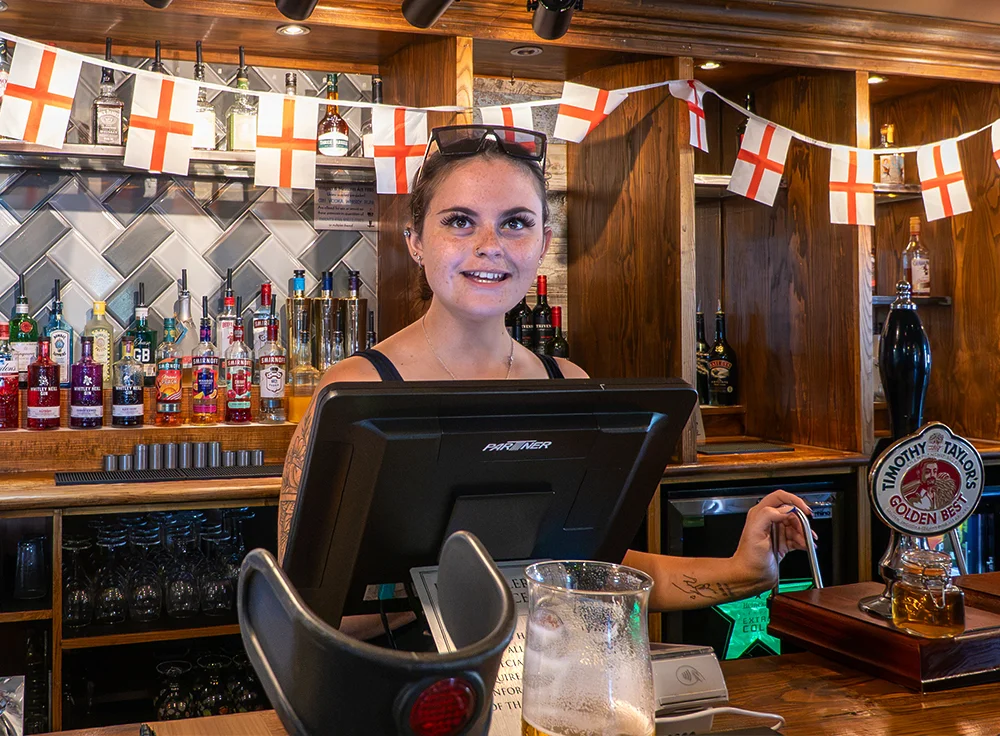 Throughout the twentieth century, The Plough continued to occupy an important place within village life. Like many traditional Lancashire inns, it became a venue for family celebrations, local gatherings, community organisations and sporting supporters, providing a social hub where generations of residents came together. As farming gradually gave way to residential growth, the pub adapted to changing tastes while maintaining its role as one of Freckleton’s best-known landmarks. Today, The Plough remains a popular public house and restaurant in the heart of Freckleton. Although the original beer house has long since disappeared, the present building preserves nearly two centuries of local tradition, continuing the hospitality first established in 1830. Together with Holy Trinity Church, Hall Cross House and other historic buildings nearby, it forms part of the rich heritage that tells the story of one of the Fylde Coast’s oldest villages.
Images by © Deeper Blue Marketing & Design Ltd


