
























Author: Ed

Wesleyan Chapel Establishes Methodism in Poulton – Plaque at Poulton Dry Cleaning Centre

The opening of the Wesleyan Chapel on Tithebarn Street in 1819 marked an important chapter in the religious history of Poulton-le-Fylde. Built to serve the town’s growing Methodist congregation, the chapel reflected the rapid expansion of the Wesleyan movement during the early nineteenth century and provided an alternative place of worship alongside the ancient parish church of St Chad’s. Methodism had spread throughout Lancashire following the preaching of John Wesley and his followers during the eighteenth century. Their message of personal faith, regular preaching and practical Christianity attracted increasing numbers of worshippers, particularly among tradespeople, labourers and farming communities. As…
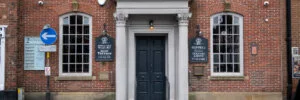
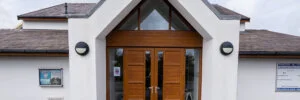
Sir Alexander Rigby Builds His Poulton Town House – Plaque at Stocks and Shillings

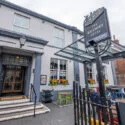
Although best known as the owner of Layton Hall, Sir Alexander Rigby also left a lasting mark on Poulton-le-Fylde. In 1693, he built an impressive town house on the south side of Market Place, creating one of the finest residences in the town. More than three centuries later, the building survives, and the Rigby family coat of arms together with the date 1693 can still be seen on its exterior, providing a tangible link with one of the Fylde’s most influential families. The Rigbys were among Lancashire’s leading landowning families. Their estates included Layton, Great and Little Layton, Warbreck, Blackpool,…

United Reformed Church Serves a Growing Poulton

Standing on Tithebarn Street, the United Reformed Church has been an important part of community life in Poulton-le-Fylde since the mid-twentieth century. Opened in 1955 as Tithebarn Christian Fellowship, the church was established to meet the spiritual and social needs of a growing population as new housing developments expanded the town in the years following the Second World War. The congregation traces its roots to the Congregational Church, a branch of Protestant Christianity that emphasised the independence of individual congregations rather than central church authority. This tradition had played an important role in English religious life since the seventeenth century….

Birthplace of William Thornber – Amanda’s Posy Bowl and Cinco’s Mexican Restaurant

William Thornber, Famous historian of Blackpool and the Fylde. 1837. The orange heritage plaque at 5–7 Breck Road marks the site of the former home of the Thornber family, one of Poulton-le-Fylde’s notable local families. Although the building has undergone considerable change and has served a number of commercial purposes over the years, its historical significance reaches back to the beginning of the 19th century and the birth of the Rev. William Thornber in 1803, who became one of the earliest important historians of Blackpool and the Fylde. The house was the residence of Giles Thornber and his wife Elizabeth,…

Potts Alley, Chapel Street Walk and Victorian Poulton

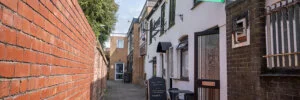
Potts Alley was once one of the most distinctive narrow passages in the centre of Poulton-le-Fylde, running beside the churchyard of St Chad’s and linking the Market Place with Chapel Street. Although the name has largely disappeared from modern use, the route survives and provides a reminder of a very different side of life in the historic market town. During the 19th century, Potts Alley was much more than a convenient passage between two streets. Houses were packed along the narrow route, including properties on the northern side adjoining the churchyard. While Poulton’s Market Place represented the commercial and civic…

America’s First World War Troops Arrive in Blackpool

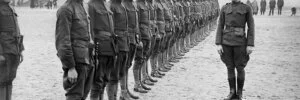
The arrival of the first United States military personnel in Blackpool during the First World War marked a significant moment in both the town’s history and the wider story of the American Expeditionary Forces. Following the United States’ declaration of war against Germany on 6 April 1917, Britain became the first destination for thousands of American servicemen crossing the Atlantic before continuing to the battlefields of France. Among the earliest to arrive were members of U.S. Army Base Hospital No. 4, who landed at Liverpool on 18 May 1917 before being billeted in Blackpool. They were the first detachment of…

Glenda Miziura – Creating Art on the Fylde Coast

Among the contemporary artists contributing to the Fylde Coast’s vibrant creative community is Glenda Miziura, whose paintings have featured in exhibitions across the region. Drawing inspiration from colour, texture and the landscapes of Lancashire, her work reflects a lifelong passion for art that began with formal training in Blackpool. Glenda studied at Palatine College of Art in Blackpool from 1972, one of the town’s best-known art colleges, which trained generations of artists, designers and creative professionals before later becoming part of Blackpool and The Fylde College. Her education provided the foundations for an artistic career that has continued to develop…

Norman Barrett MBE Becomes the Voice of Blackpool Tower Circus

Few performers became as closely associated with Blackpool Tower Circus as Norman Barrett MBE. During a remarkable 25-year association with the Tower, Barrett became one of Britain’s best-loved ringmasters, delighting millions of visitors with his commanding presence in the ring, his partnership with legendary clown Charlie Cairoli, and his extraordinary act featuring performing budgerigars. His long service helped define an era that many regard as the golden age of the Tower Circus. Born in York on 20 December 1935, Norman was raised in a circus family. His parents, George and Winifred Barrett, owned Barrett’s Circus, where he learned the skills…

Illawalla Becomes Europe’s Largest Bungalow

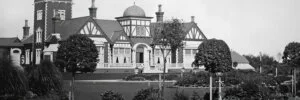
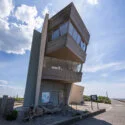
Standing on Skippool Road overlooking the River Wyre, The Illawalla was one of the Fylde Coast’s most remarkable private residences. Built in 1902, the striking Edwardian mansion was regarded as the largest bungalow in Europe at the time of its completion. With its distinctive tower, extensive landscaped grounds and commanding views across the estuary, it became one of the best-known landmarks in Skippool for almost a century before its demolition in 1996. The house was commissioned by Charles Valentine Howarth, chairman of Blackpool’s Alhambra Theatre, who had previously converted an old warehouse at Skippool into a residence named Tarn Howes….

Blackpool Football Supporters Movement Honoured with Blue Plaque

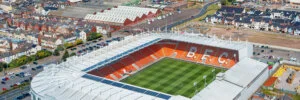
A Blue Plaque recognising an important chapter in the history of Blackpool Football Club’s supporters was unveiled at The Armfield Club on Bloomfield Road on 30 August 2025. The plaque commemorates the activities of the Seasiders Independent Supporters Association and the wider supporters’ movement that developed during one of the most turbulent periods in the football club’s history. The Seasiders Independent Supporters Association, generally known as SISA, was formed in January 2013 as concerns among supporters about the ownership and direction of Blackpool Football Club continued to grow. The organisation provided an independent voice for supporters and became part of…