




























Author: Ed

Poulton War Memorial is Unveiled

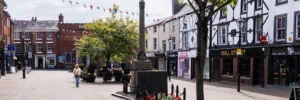
Standing at the northern end of Market Place, Poulton War Memorial serves as the town’s principal place of remembrance, commemorating the men and women who gave their lives in service to their country. Set amongst the historic buildings of the old market town, it has been the focus of annual remembrance services and civic commemorations for more than a century, providing a lasting reminder of the sacrifices made by generations of local people. When the First World War began in 1914, Poulton-le-Fylde was a relatively small agricultural market town with a population of around 2,600. Many local men worked on…

Jean Stansfield’s Legacy Lives On in Poulton

Although Jean Stansfield herself lived only a short life, her memory has become permanently woven into the history of Poulton-le-Fylde through one of the town’s best-loved green spaces. The Jean Stansfield Memorial Park, commonly known as Jean Stansfield Park, was created not because of any public achievement, but as an extraordinary act of generosity by her parents following her untimely death. Nearly a century later, it continues to provide recreation and enjoyment for generations of local families. Jean was the only daughter of Mr and Mrs S. F. Stansfield. She died on 27 September 1923, aged just ten years old,…

The Beginning of Poulton-le-Fylde and Poulton Market Place

Standing at the northern end of Market Place, Poulton War Memorial serves as the town’s principal place of remembrance, commemorating the men and women who gave their lives in service to their country. Set amongst the historic buildings of the old market town, it has been the focus of annual remembrance services and civic commemorations for more than a century, providing a lasting reminder of the sacrifices made by generations of local people. When the First World War began in 1914, Poulton-le-Fylde was a relatively small agricultural market town with a population of around 2,600. Many local men worked on…
The Arcade Club Revives Blackpool’s Gaming Heritage

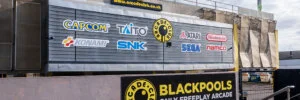
Standing at 74 Bloomfield Road, immediately beside Bloomfield Road Stadium, home of Blackpool Football Club, The Arcade Club has become one of Blackpool’s most distinctive modern attractions. Since opening in 2022, it has brought together hundreds of classic and contemporary arcade machines under one roof, continuing the town’s long-standing association with amusement gaming while introducing a new generation to the golden age of the arcade. Unlike the traditional amusement arcades that have lined Blackpool’s promenade for more than a century, The Arcade Club operates on an all-inclusive admission model. Visitors pay a single entrance fee before enjoying unlimited use of…

Blackpool Tower’s Eight-Year Restoration Project

By the early twenty-first century, more than a hundred years of exposure to harsh coastal climate had taken its toll on Blackpool Tower’s protective paintwork. Salt-laden air, rain and strong winds had gradually weakened the coatings that shielded the steel structure from corrosion, making a comprehensive conservation programme essential rather than simply desirable. Previous generations of painters had maintained the Tower continuously, but decades of successive paint layers and hidden corrosion meant that a far more extensive approach was now required. David Hulme with Julia Bradbury for ITV’s The Wonder of Britain The restoration project began in 2008 after a…

Blackpool Celebrates Its Municipal Centenary

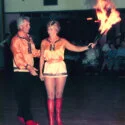
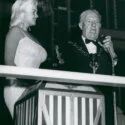
In 1976, Blackpool marked one hundred years since it was granted its Charter of Incorporation as a Municipal Borough in 1876. The centenary was celebrated with a fortnight of events held between late May and mid-June, bringing together residents, community groups and visitors for one of the largest civic celebrations the resort had staged in decades. The highlight of the programme was the Grand Carnival Finale, organised by Blackpool Round Table. Before the colourful procession set off along the Promenade from Blackpool Pleasure Beach towards Talbot Square, local escapologist Karl Bartoni thrilled the crowds with one of his trademark high-risk…

From Bay Horse to The Old Town Hall

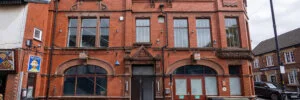
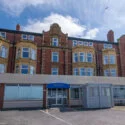
Standing on Church Street, just a short distance from Poulton’s historic Market Place, the Old Town Hall has served the town in a variety of roles for more than 150 years. Originally built as a public house, it later became the headquarters of the local council before returning to its hospitality roots. Today, it remains one of Poulton-le-Fylde’s most recognisable historic buildings, reflecting the town’s evolution from a Victorian market community into the administrative centre of the Fylde. The site was originally occupied by the Bay Horse Inn, which was established in 1869 to serve the growing market town. At…

The Cube Starts as the Ship Inn of Poulton-le-Fylde

Standing at the corner of Breck Road and Vicarage Road, the Ship Inn was one of Poulton-le-Fylde’s most distinctive public houses. Although never as genteel as some of the town’s older coaching inns, it became well known for serving a very different clientele. Throughout the nineteenth century it was regarded as a lively and sometimes unruly establishment, frequented by Fleetwood seamen, travelling labourers and local residents, reflecting Poulton’s role as an important inland market town linked to the expanding port of Fleetwood. The inn occupied a prominent position close to Poulton’s original railway station, which opened in 1840. Its location…

The Golden Ball

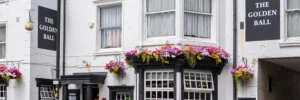
Standing on Ball Street in the heart of Poulton-le-Fylde, The Golden Ball has been one of the town’s best-known inns for more than two centuries. Throughout its history it has served travellers, merchants, magistrates, farmers and local residents, reflecting Poulton’s long-standing role as the principal market town of the Fylde. Although the present building largely dates from the late eighteenth century, with parts rebuilt and altered during the nineteenth century, the Golden Ball is believed to have originated as a coaching inn. Its location close to the Market Place made it an important stopping point for stagecoaches and travellers moving…

Blackpool Tower’s New Lifts Rise Into Place

For almost a century, the lifts inside Blackpool Tower had carried millions of visitors from the base of the Victorian landmark towards its famous viewing platform. Hidden behind the public areas, however, was a complex network of lift shafts, machinery rooms, winding drums and service corridors that required continual maintenance to keep the Tower operating safely. By the early 1990s, the time had come for one of the most significant engineering projects in the Tower’s modern history. The original lift installation dated from the opening of Blackpool Tower in 1894. Initially powered by hydraulic machinery, the lifts represented some of…