

















Mark is an artist whose work thrives on contrasts: the natural world set against the built environment, the curve of organic forms beside the sharp geometry of human design. Colour, shape and structure sit at the heart of his practice, and he is drawn to the places where these two realms meet and quietly negotiate their coexistence. It is in these spaces — unnoticed by many — that his imagination tends to settle. His work has attracted the attention of major figures in the art world. Judith Nesbitt, Chief Curator of Tate Britain, once described his approach as “a refreshing…
Author: Ed
How L. S. Lowry Found Inspiration on the Fylde Coast
L. S. Lowry, one of Britain’s most distinctive and celebrated painters, maintained a long and meaningful relationship with Blackpool and the Fylde Coast, returning to the resort repeatedly throughout his life. Although he is most often associated with the factory towns and industrial skylines of Greater Manchester and Salford, Lowry considered Blackpool an essential escape and a rich source of visual inspiration. His visits to the resort placed him among the millions of northern holidaymakers who saw Blackpool as a temporary release from the grime of industrial Britain, yet for Lowry the resort offered far more than leisure. It provided…
Bob Monkhouse’s Showbiz Start in Blackpool
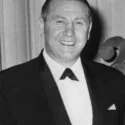
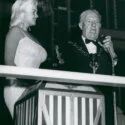
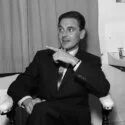
Amongst those luminary entertainers in Blackpool’s past was the quick-witted, sharp-suited comedian Bob Monkhouse. Though widely remembered as a master of television game shows and a consummate broadcaster, Monkhouse’s live stage roots ran deep, and Blackpool played a significant role in the evolution of his career. First Steps in Blackpool: 1957 Bob Monkhouse’s relationship with the resort began in 1957, when he appeared in his first Blackpool summer season at the Winter Gardens Pavilion. Already gaining recognition for his polished humour and lightning-fast delivery, Monkhouse was not the stereotypical seaside comic, yet his performances captured the energy and glamour that…
Historian Anne Charlesworth Shines a Light on Blackpool’s Past
Blackpool historian Anne Charlesworth has become a familiar and respected voice in the town’s heritage community, drawing on years of research and a long career in education to bring Blackpool’s past to life. A retired teacher, Charlesworth has spent the past decade focusing on local history, a role reflected in her public profile and her regular involvement with civic and cultural organisations across the Fylde coast. Since 2016 she has been associated with Blackpool Council as a local historian, a position that has helped her engage with residents and visitors who are keen to understand the development of the resort…
Lightpool Festival 2025 Illuminates Blackpool Once More
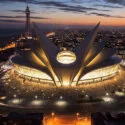
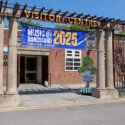
Lightpool Festival once again proves why it is one of the UK’s most creative seaside destinations. It filled the town with colour, sound and spectacle. Across October’s half-term week, visitors were treated to a dazzling programme of large-scale light installations, live performances, and 3D projection shows that transformed familiar streets and landmarks into radiant works of art. From the Comedy Carpet to the Winter Gardens, each venue offered a new perspective on how light can inspire and connect communities. Completely free to attend, the festival once again demonstrated Blackpool’s ability to combine innovation with accessibility, drawing families, artists and visitors…
The Rostrons of Lytham: A Family Fuelled by Classic Cars
For generations, the Rostron name has been woven into the motoring fabric of Lytham St Annes. What began as one man’s fascination with pre-war automobiles has become a family legacy that continues to inspire enthusiasts across Lancashire. © The Rostron Family © The Rostron Family © The Rostron Family The Early Passion: Ronald Rostron Ronald Rostron, born in the mid-1920s and a veteran of the Second World War, developed his love for fine engineering while serving overseas. Stationed in post-war Berlin, he acquired his first American car — a 1930s Cadillac V-12 — the start of a lifelong passion for…
Luke Littler’s Glorious Night in Blackpool
Under the bright lights of Blackpool, Luke Littler etched his name into darting history. The teenage phenomenon arrived at the Betfred World Matchplay with expectation heavy on his shoulders — and left with the Phil Taylor Trophy in his grasp and the Triple Crown to his name. Across the week he produced a masterclass in resilience and brilliance. In his opening match he dismantled Ryan Searle with a staggering 109 average. In the quarter-finals he went the distance in a 30-leg battle with Andrew Gilding, holding his nerve to advance. The semi-final brought his finest moment yet — a perfect…
The Beginning of the End for St Joseph’s College
St Mary’s School in Blackpool had a history far older than pupils were led to believe. Though little was ever formally recorded or taught, it began life in 1866 as a girls’ school run by the Presentation Sisters at Raikes Hall. Their pupils, dressed in full Victorian attire, studied religion and the liberal arts before moving to Layton Hill Convent by 1890. By 1880 the school accepted boys, and around 1900 numbers had grown so large that it was divided into two “houses.” The girls and youngest boys remained at Layton Hill, while the boys’ house moved to Park Road…
Brian O’Raleigh Starts His First Book
Brian O’Raleigh was born in Manchester in 1941 to Irish parents, but raised in Blackpool where he attended St Joseph’s College. After a troubled childhood, recounted in his memoirs – Waiting for Walter and Waking Walter, Brian travelled alone to Australia at the age of seventeen, running from his demons and a growing dependence on alcohol. In 1967, he volunteered for the Six Day War in Israel, but later, disillusioned with that cause, he spent the next ten years travelling throughout Europe and Asia. On returning to Australia, he worked for several years on cattle stations, mining camps and construction…
Birth of Squires Gate Football Club
Squires Gate Football Club, based in Squires Gate, Blackpool, was formed in 1948. The team began as Squires Gate British Legion, playing in the Blackpool & District Amateur League, where they won the Rawling Shield in their first season. In 1953 the club adopted the name Squires Gate F.C. and went on to win league titles in the mid-1950s, along with several cup competitions. After a season in the Fylde District League, where they also won the Fylde Cup, they moved into the West Lancashire League in 1961. For the next thirty years they remained in that competition, playing mostly…