




























Author: Ed

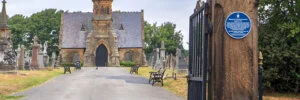
Layton Cemetery Recognised with a Blackpool Blue Plaque

Layton Cemetery, one of Blackpool’s most important surviving Victorian sites, received its own Blue Plaque in 2025, recognising more than 150 years of local history and the generations of Blackpool residents whose stories are represented within its grounds. The plaque was unveiled on 8 November 2025 by the Mayor of Blackpool, Councillor Kim Critchley, accompanied by representatives of the Friends of Layton Cemetery and Blackpool Civic Trust. It was sponsored by the Friends of Layton Cemetery and Layton councillors, with Blackpool Civic Trust recording that the plaque was installed in recognition of the cemetery’s historical and cultural significance. Layton Cemetery…

The Great Fire of Poulton

On 5 March 1732, one of the most destructive fires in Poulton-le-Fylde’s history swept through the west side of the Market Place, transforming the appearance of the town forever. At a time when most homes were built of cobbles with timber frames and thatched roofs, only a single spark was needed to unleash a devastating blaze. The fire broke out during the funeral procession of Geoffrey Hornby, one of Poulton’s leading landowners. It was customary for wealthy families to conduct evening funeral processions illuminated by burning tapers carried by mourners. As the procession passed through the Market Place towards St…

The Charabanc Brings the Fylde Coast to the Masses

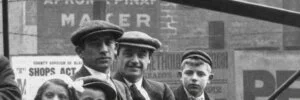
Long before the era of luxury coaches and family cars, the charabanc transformed the way people explored the Fylde Coast. These open-sided motor vehicles became one of the defining sights of the early twentieth century, carrying thousands of day-trippers from Lancashire’s mill towns to Blackpool, Fleetwood, Lytham St Annes and the surrounding villages. For many working-class families, a charabanc excursion provided their first opportunity to enjoy a day beside the sea. The word charabanc originated from the French char à bancs, meaning “wagon with benches”. Early charabancs were little more than motorised wagons fitted with rows of wooden seats and…

The Mystery of Blackpool’s Number 1 and Number 2 Public Houses

Among Blackpool’s oldest historical mysteries is the disappearance of Number 1 and Number 2, two public houses believed to have once formed part of the town’s unusual numbered inns. While The Number 3 and The Number 4 have survived into the present day, the first two establishments vanished long ago, leaving historians to debate where they stood and why they were numbered in the first place. The numbering system almost certainly originated during the eighteenth century, when Blackpool was still a small coastal settlement linked to Poulton-le-Fylde by the old road through Great Layton. Before the railway arrived in the…

Dorothy Levitt Becomes the Fastest Woman in the World at Blackpool

Dorothy Levitt and the 12 hp Gladiator car she drove in a series of reliability trials in 1903, although not in Blackpool. Historic photograph (public domain). Digital restoration and enhancement © Deeper Blue Marketing & Design Ltd 2026. During the pioneering years of British motoring, Blackpool became an important venue for the new spectacle of motor racing. The resort’s long, straight South Promenade provided an opportunity for some of the most powerful cars of the period to demonstrate their speed, and among the competitors who came to Blackpool was Dorothy Levitt, one of the most remarkable figures in early British…

The End of Poulton’s Medieval Tithe Barn

For centuries, one of the most important buildings in Poulton-le-Fylde stood close to the town’s historic Market Place. Known simply as the Tithe Barn, it served as a reminder of Poulton’s importance as the administrative and agricultural centre of the Fylde. Although demolished during the late 1960s, the barn gave its name to Tithebarn Street, ensuring that its place in the town’s history lives on. The exact date of the barn’s construction is unknown, but its position immediately beside the medieval town centre strongly suggests an ancient, possibly medieval origin. Tithe barns were common throughout medieval England and were used…

St Chad’s Church Hall to Poulton Community Hall

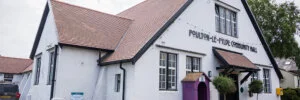
Standing on Vicarage Road beside Vicarage Park, Poulton-le-Fylde Community Hall has served generations of local residents for more than a century. Although now operated as an independent community venue, the distinctive building began life as St Chad’s Church Hall and has connections with the parish church and the development of the surrounding area stretching back to the early twentieth century. The hall was conceived as a new meeting place for the parish and wider community during the 1920s. Research undertaken into the building’s history has established that it was built and funded through public subscription, with local people and businesses…

Workhouse Square Becomes Queen’s Square

Today, Queen’s Square is one of Poulton-le-Fylde’s busiest public spaces, linking Market Place, Chapel Street, Hardhorn Road and Blackpool Old Road. Lined with historic buildings and once home to the town’s war memorial, it has long been a focal point for civic life. Few visitors, however, realise that before it became Queen’s Square, the area was known as Workhouse Square, reflecting a very different chapter in the town’s history. The square originally took its name from the parish workhouse that once stood nearby. Before the introduction of the Poor Law Amendment Act in 1834, individual parishes were responsible for caring…

Poulton Welcomes the Teanlowe Centre

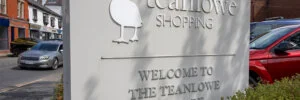
The opening of the Teanlowe Centre on 26 March 1974 represented one of the largest changes to the centre of Poulton-le-Fylde during the twentieth century. Built as a modern covered shopping precinct immediately behind the historic Market Place, the development transformed an area that had previously contained houses, narrow streets, older commercial buildings, allotments and land with connections stretching back to Poulton’s medieval past. The redevelopment had begun to take shape well before the shopping centre itself was constructed. Queensway was created around 1960, opening up land on the western side of the town centre and providing a new route…

St Chad’s Church and the Heart of Old Poulton

Standing at the northern end of Poulton-le-Fylde’s Market Place, St Chad’s Church has occupied a central place in the life of the town for more than nine centuries. Its history reaches back to the earliest recorded years of Poulton itself, and although the building seen today has been altered and rebuilt many times, evidence suggests that worship may have taken place on the site before the Norman Conquest. The earliest surviving documentary reference to the church dates from 1094, only eight years after Poulton was recorded as Poltun in the Domesday Book. In that year Roger de Poitou, the powerful…