







































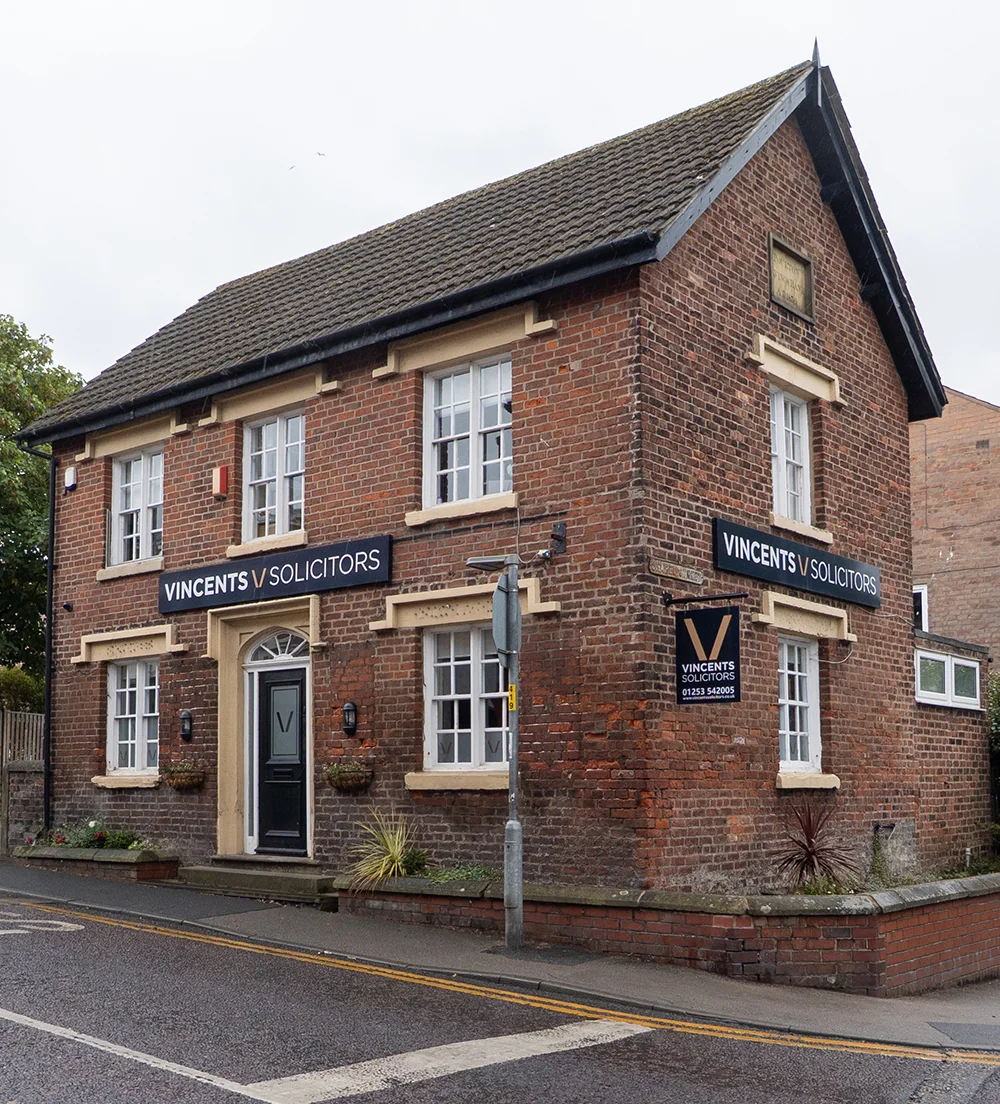
Standing at the corner of Vicarage Road and Chapel Street, the former Poulton Savings Bank is one of the town’s most distinctive historic buildings and a reminder of a time when encouraging ordinary working people to save was seen as both a financial and social responsibility. Founded on 23 February 1822, the bank was established to provide a secure place where local people could deposit even the smallest amounts of money, helping families prepare for times of hardship while promoting thrift and financial independence. It was one of the earliest trustee savings banks to be established in Lancashire following the Savings Bank Act of 1817.
The bank began modestly, operating from the Golden Ball Inn in Market Place rather than from a building of its own. Business was conducted for just one hour every alternate Monday, timed to coincide with Poulton’s busy market day so that farmers, tradespeople and local residents could conveniently deposit their savings while visiting the town. As the bank became more successful, opening hours were increased in 1850 to every Monday between 1.00 pm and 2.00 pm, although it remained open for only a single hour each week.
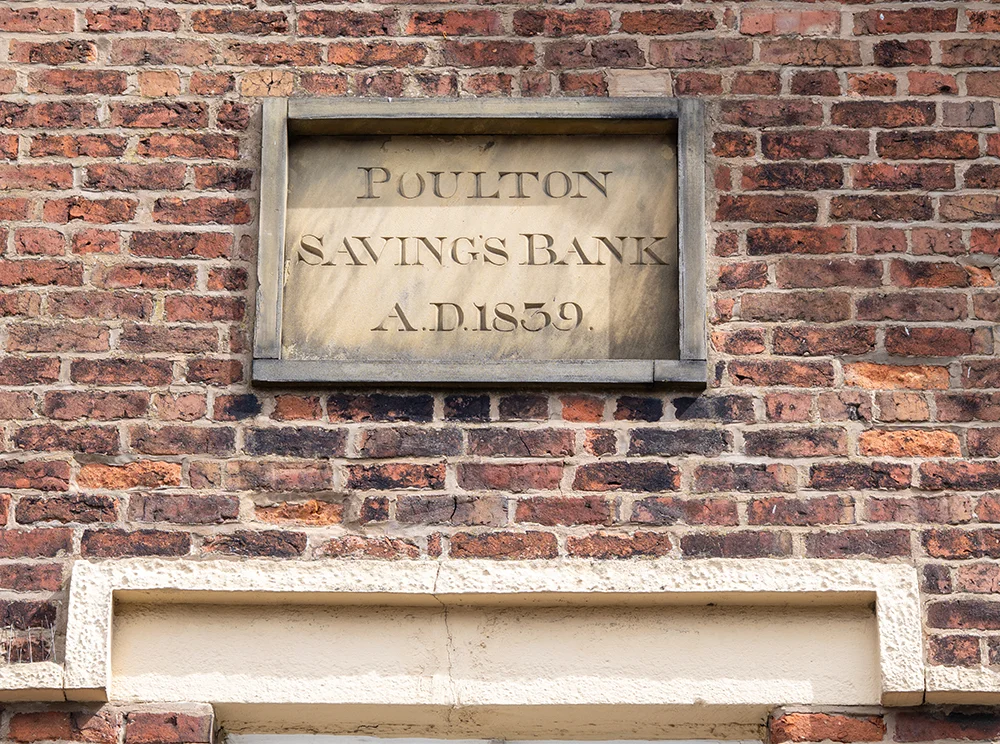 Growing public confidence in the institution soon led to the construction of a permanent home. In 1839, a purpose-built bank was erected on glebe land belonging to St Chad’s Church at the junction of Vicarage Road and Chapel Street. The attractive Tudor-style building was funded through public subscription and became much more than a banking office. It also contained a Reading Room, accommodation for a resident family and meeting rooms used by the local Bible Society, making it an important community building as well as a financial institution. The original stone inscription, “POULTON SAVINGS BANK AD 1839”, remains prominently displayed on the western gable.
The bank encouraged people of modest means to develop the habit of saving by accepting regular deposits, however small. These funds were invested in Government securities, allowing depositors to earn interest while also helping to finance the National Debt. The idea proved remarkably successful. By 1829, only seven years after opening, the bank had 270 depositors with savings exceeding £9,274. By 1861, the year before its closure, 865 individual depositors, together with local charities and friendly societies, held balances totalling more than £30,800—a remarkable achievement for a small market town.
Despite its success, the Poulton Savings Bank closed in 1862. The death of its long-serving secretary George Parkinson, the resignation of its treasurer William Hodgson, and the growing popularity of the newly established Post Office Savings Bank combined to bring the independent institution to an end. Customers were encouraged to transfer their accounts to the Post Office, marking the close of forty years of local banking.
The building itself continued to play an important role within the town. By the 1880s, it had become Poulton’s Free Library, providing residents with access to books and education before later being adapted for commercial use. Thanks to its architectural and historic significance, the building has survived into the twenty-first century and is now protected as a Grade II listed building.
Today, the former Poulton Savings Bank is occupied by Butson Blofeld, Chartered Surveyors and Estate Agents. Although its purpose has changed several times over the past two centuries, the building remains one of Poulton’s finest surviving nineteenth-century landmarks.
Images by © Deeper Blue Marketing & Design Ltd


