































When Britain entered the Second World War in 1939, the call to serve extended far beyond soldiers, sailors and airmen. Across the country, thousands of pigeon fanciers were asked to contribute their birds to the national war effort, and Blackpool was no exception. Local pigeon keepers answered the call, donating and registering their prized homing pigeons to help defend the nation during one of its darkest hours. At a time when modern communications could easily fail, carrier pigeons remained one of the most reliable methods of sending urgent messages. Radios could be damaged, intercepted or rendered unusable, but a well-trained homing pigeon could carry vital information back to its loft, often travelling hundreds of miles with remarkable accuracy. Throughout the war, pigeons became an essential part of Britain’s communications network and played a role that was far more important than many people realise today.
Blackpool had a strong tradition of pigeon racing and pigeon keeping, with many local enthusiasts maintaining lofts across the town and surrounding Fylde villages. When war broke out, these fanciers were encouraged to provide birds for military service through the National Pigeon Service, an organisation established specifically to support Britain’s wartime communications. Across the country, more than 200,000 pigeons were supplied by civilian breeders during the conflict. The birds were used by the Royal Air Force, the Army, Civil Defence organisations and intelligence services. Bomber crews and reconnaissance aircraft often carried pigeons aboard their aircraft in specially designed containers. If an aircraft was forced down at sea or crashed behind enemy lines, crew members could attach details of their location to a message capsule and release the bird. The pigeon would then attempt to fly home, carrying vital information that could help rescuers locate survivors.
Pigeons were also used during military operations in occupied Europe. Resistance fighters, spies and special operations teams relied on them to pass information back to Britain when radio communication was too dangerous. In many cases, a single pigeon carrying a small message could deliver intelligence that might otherwise have been impossible to obtain. The contribution of these birds was extraordinary. Hundreds of thousands served throughout the war and their success rate in delivering messages was remarkably high, despite enemy action, bad weather and attacks from birds of prey. Many airmen, sailors and soldiers owed their lives to messages successfully delivered by carrier pigeons.
The importance of wartime pigeons was reflected in the extraordinary measures taken to protect them. The British government regarded service pigeons as valuable military assets, and interfering with them was treated as a serious offence under wartime regulations. Pigeon fanciers were encouraged to register their birds, while special lofts were established across Britain to support military operations. The birds were carefully bred, trained and monitored to maximise their effectiveness, and volunteers worked tirelessly to care for returning pigeons after often exhausting journeys. Authorities recognised that a single pigeon could carry information capable of saving lives or influencing military operations. As a result, protecting the birds became a matter of national importance. Their value was considered so great that the government introduced measures to safeguard military lofts and communications networks. The pigeons themselves became respected members of the wartime effort rather than merely animals used for transport.
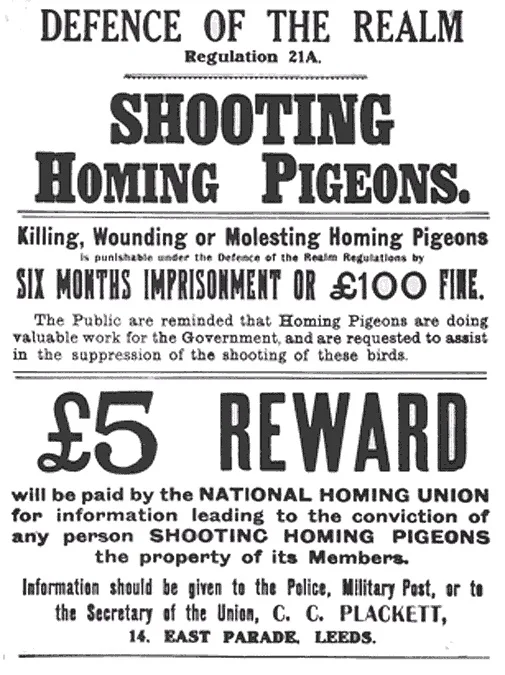
Notice stating that pigeons were protected under law.
Some wartime pigeons became national heroes. Birds such as Gustav, Commando and Royal Blue carried messages that saved lives and contributed to major military operations. Thirty-two pigeons were awarded the Dickin Medal, often described as the animal equivalent of the Victoria Cross, for acts of outstanding bravery and service during the conflict. While the names of Blackpool’s individual war pigeons have largely been lost to history, the town’s pigeon fanciers undoubtedly played their part in this remarkable story. By donating birds and supporting the National Pigeon Service, local residents helped maintain a communications network that operated across Britain, occupied Europe and the battlefields of the Second World War.
For many Blackpool pigeon keepers, donating their birds represented a significant sacrifice. These were often prized racing pigeons that had been carefully bred and trained over many years. Yet, like millions of people across the country, they were prepared to contribute whatever they could to support the war effort. Today, the story of Blackpool’s wartime pigeons serves as a reminder that victory depended not only on the bravery of servicemen and women but also on the efforts of ordinary civilians and their animals. In lofts across the town, pigeons bred for sport and racing found themselves carrying messages that could mean the difference between life and death.
Although modern technology has long since replaced carrier pigeons, their wartime achievements remain one of the most fascinating and often overlooked aspects of Britain’s home-front history. The pigeons donated by Blackpool’s fanciers became silent heroes of the conflict, flying through danger to deliver vital messages and playing a small but important role in helping Britain win the war. More than eighty years later, their contribution remains a remarkable chapter in Blackpool’s wartime story — proof that even the smallest volunteers could make a significant difference when the nation needed them most. More than eighty years after the war, gatherings and commemorative events continue to highlight the importance of homing pigeons, while recognising the care and dedication required to maintain these remarkable birds today.
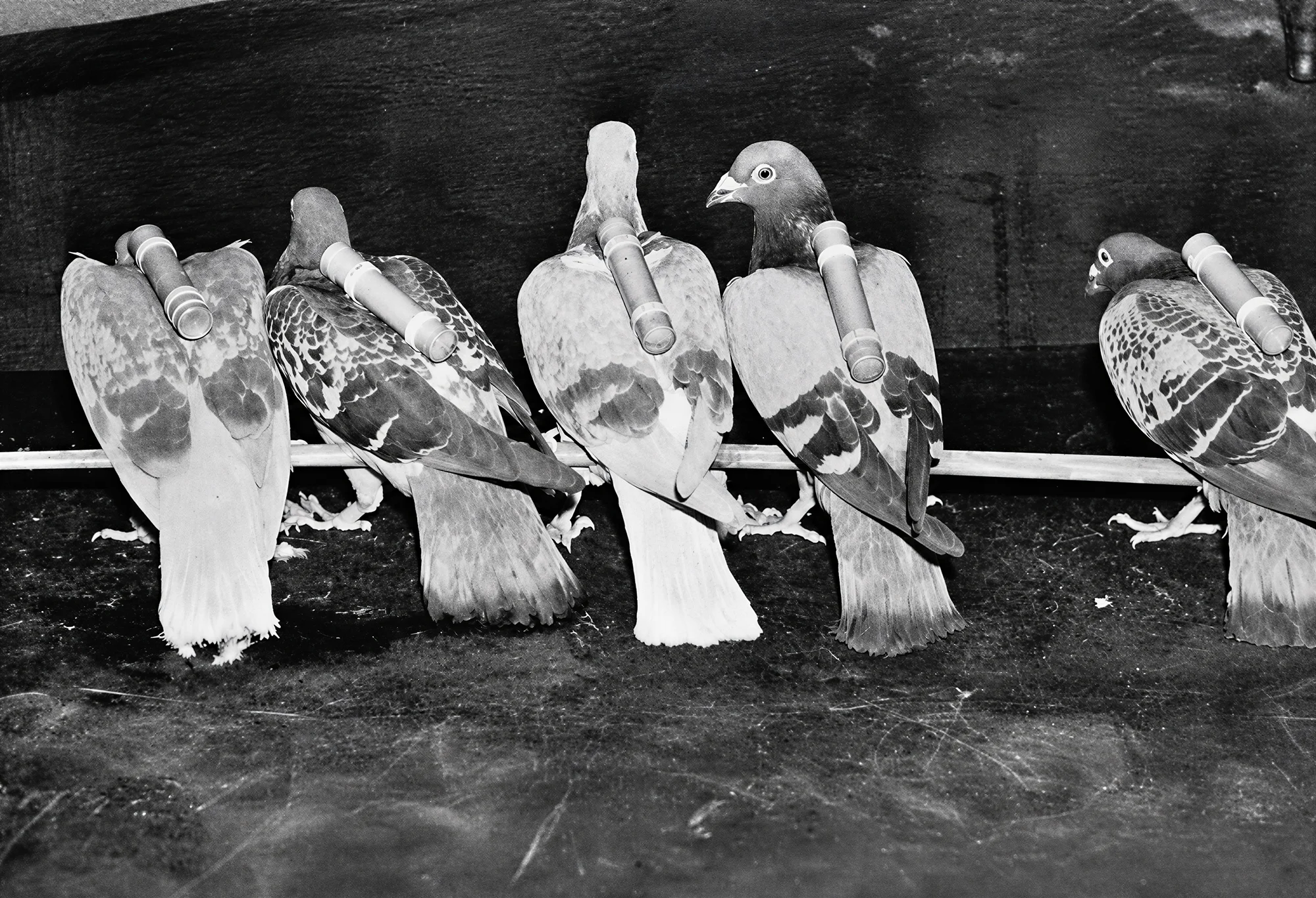
Pigeons with canisters ready for action
One of the most fascinating reminders of the vital role pigeons played during the Second World War emerged decades after the conflict had ended. In 2012, builders working on a house in Surrey discovered the skeleton of a carrier pigeon lodged inside a chimney. Attached to one of its legs was a small red canister containing a message that had remained hidden for almost seventy years. The message was written on an official Pigeon Service form and is believed to have been sent from occupied France on 6 June 1944 — D-Day. It was addressed to “XO2”, thought to refer to RAF Bomber Command, and signed by “W Stot Sjt”, believed to be Sergeant William Stott. The message itself consisted of a seemingly random series of letters arranged into groups:
AOAKN HVPKD FNFJU YIDDC
RQXSR DJHFP GOVFN MIAPX
PABUZ WYYNP CMPNW HJRZH
NLXKG MEMKK ONOIB AKEEQ
UAOTA RBQRH DJOFM TPZEH
LKXGH RGGHT JRZCQ FNKTQ
KLDTS GQIRU AOAKN 27 1525/6
The discovery attracted worldwide attention. Historians, cryptographers and members of the public attempted to decode the message, while GCHQ, the modern successor to the famous Bletchley Park codebreakers, appealed for information. Despite extensive analysis, the message has never been successfully deciphered. Experts believe the text was almost certainly encrypted using a one-time pad or another highly secure wartime cipher system. Such systems were specifically designed to be impossible to break without the correct encryption key. As a result, unless the original codebook or cipher key is ever discovered, the contents of the message may remain a mystery forever.
The discovery serves as a powerful reminder of the importance of carrier pigeons during the war. Birds like the one found in Surrey carried messages that could contain intelligence reports, troop movements, weather observations or details of military operations. While countless wartime pigeon messages reached their destinations successfully, this particular bird never completed its mission, leaving behind one of the Second World War’s most enduring unsolved mysteries.
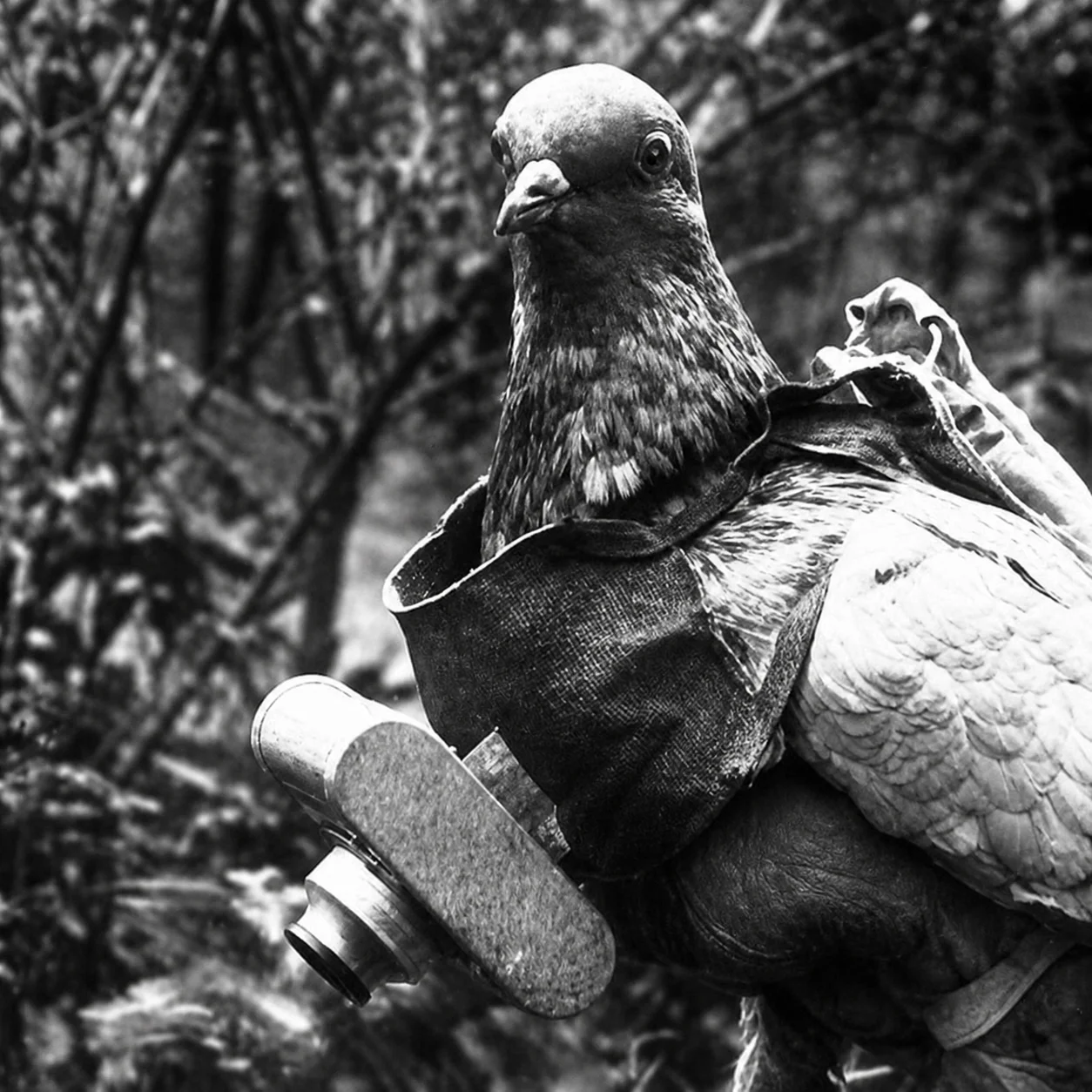
Featured Image © Lancashire Museum StoriesCreative Commons Attribution-Share Alike 3.0 German
Additional Images © Lancashire Museum Stories
Background Image © Imperial War MuseumCreative Commons Attribution Non Commercial Licence


