






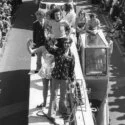





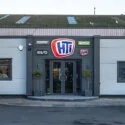



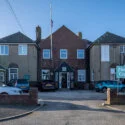


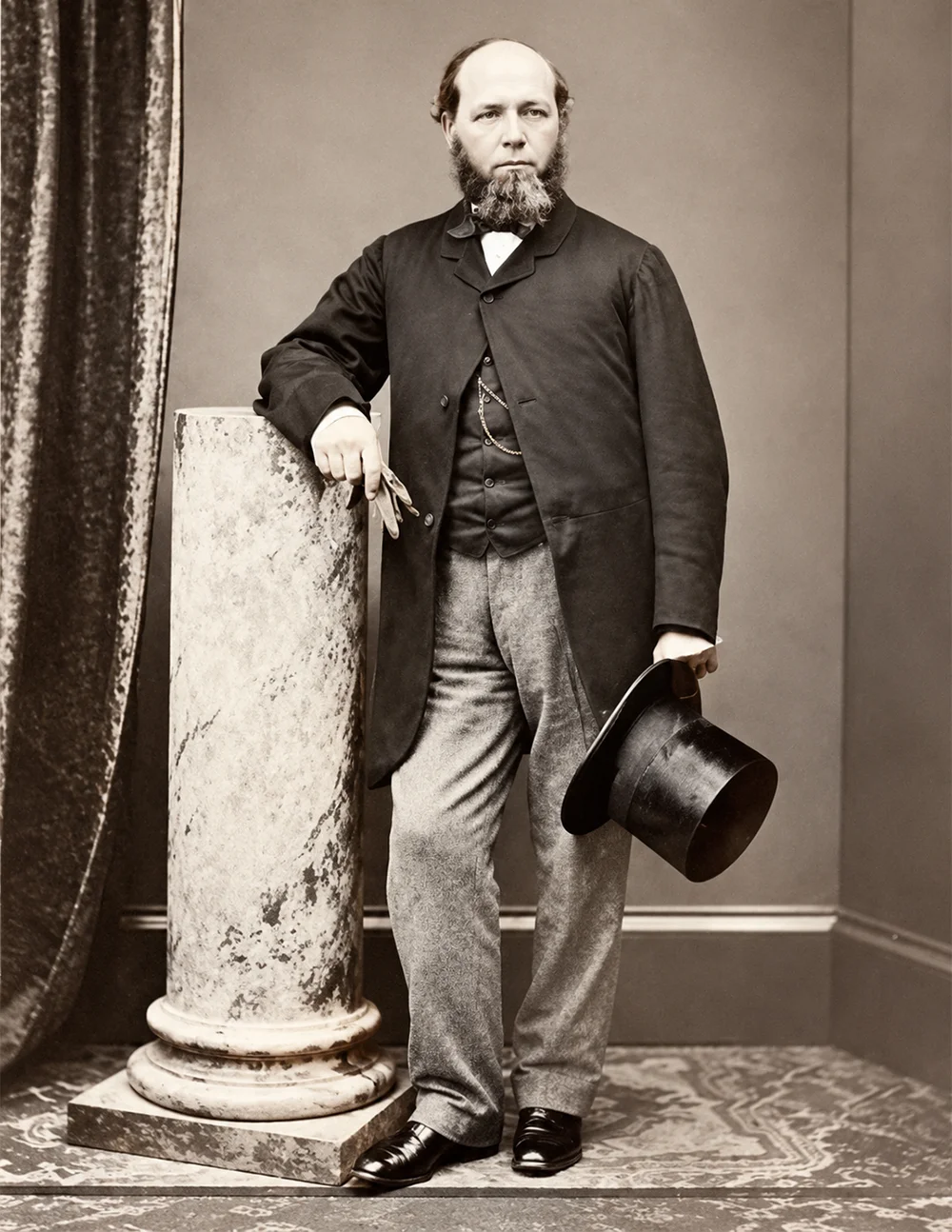
Thomas Langton Birley (1811–1874) of Carr Hill, Kirkham. Birley paid for the new Girls’ Charity School on Poulton Street in 1860, the building now occupied by 1860 Sports Bar, Coffee Lounge and Bistro.
When a new bar and restaurant called 1860 opened on Poulton Street in Kirkham in September 2026, its name provided a clue to the remarkable history of the building it occupies. Although generations of local people may remember the property principally as a bank, its story stretches back much further. The handsome Gothic building was originally constructed as a school for girls, but even that represents only part of the story. Its origins can be traced back another century to a charitable effort to provide an education for poorer girls in Kirkham at a time when their opportunities were extremely limited.
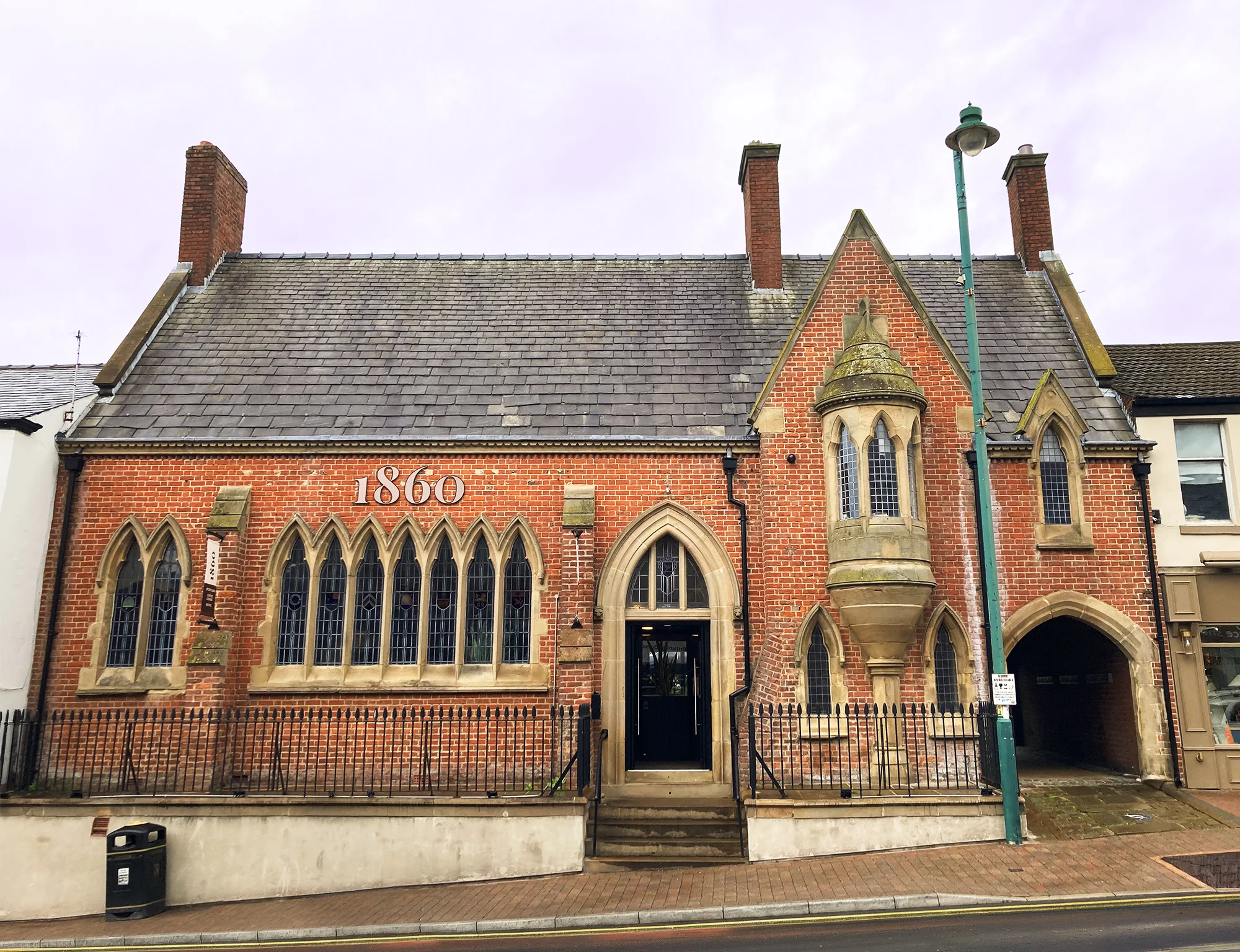 Girls had once received an education alongside boys at Kirkham’s old grammar school, but in 1701 the Drapers’ Company, which controlled the school, formally excluded them. It would be almost another 60 years before separate provision was established for girls from poorer families in the town. On 16 May 1760, John Langton and Ann Hankinson established the Girls’ Charity School, creating a charitable endowment intended to provide an education for selected girls from the township of Kirkham. Property and land were used to generate an income to support the school, rather than the scheme simply relying upon continuing donations. The education offered was practical in character, with the girls taught reading, knitting, sewing and other useful skills under the supervision of a schoolmistress. Historical accounts suggest that around 40 girls were normally educated by the charity and that clothing was also provided for them.
An agreement made in 1761 records Kirkham’s bailiffs and burgesses making land available for a charity school at the west end of Poulton Street, in a garden known as Allenson’s Garden. There is, however, some uncertainty about the precise location of the earliest school. Kirkham Grammar School’s history places it at the corner of Moor Street and Orders Lane, while Historic England describes the charity founded in 1760 as occupying another site before the present building was constructed. What is much clearer is that the charity prospered. By the early 19th century its assets included houses, agricultural land producing rental income, a schoolhouse, outbuildings and a garden. Several members of the prominent Langton and Birley families became involved in its management: John Birley became a trustee in 1795, William Langton followed in 1806, and from 1839 the school was managed by Ann Birley, herself a member of the Langton family.
It was Ann’s son, Thomas Langton Birley (1811–1874) of Carr Hill, who was responsible for the building which survives on Poulton Street today. Birley was an important figure in Victorian Kirkham whose contribution to the town extended well beyond the school. He was involved with the Fylde Waterworks, presented one of the new bells installed at St Michael’s Church in 1846 and, in 1872, paid for the ornamental lamp erected amongst Kirkham’s historic Fish Stones. He also acquired the lordship of the manor of Kirkham shortly before his death. His involvement in the Girls’ Charity School continued a family connection with the institution stretching back several generations.
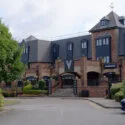
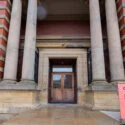
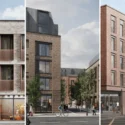
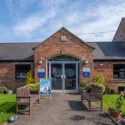
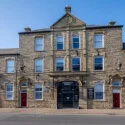
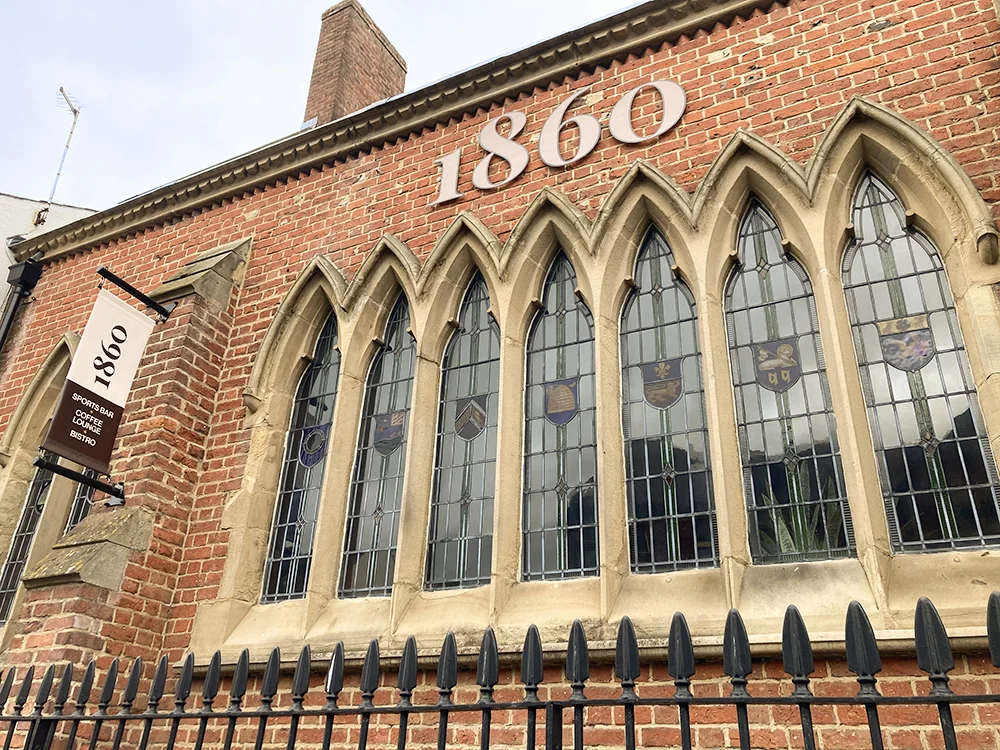
In 1860, Birley paid for a new purpose-built home for the Girls’ Charity School. Constructed in brick with sandstone detailing and designed in the Gothic Revival style, the building was considerably more imposing than might be expected for a small charitable school. Much of its original purpose can still be read in the frontage today. The long single-storey portion contained the main schoolroom, while the adjoining two-storey section appears to have provided accommodation for the schoolmistress. Pointed windows, decorative stonework, gables and a distinctive projecting first-floor window gave the building its Victorian Gothic character, while a large archway provided access to the grounds behind. More than 160 years later, these features remain recognisable despite the very different uses to which the building has subsequently been put.
The Girls’ Charity School continued operating throughout the second half of the 19th century, with the Imperial Gazetteer of England and Wales recording it among Kirkham’s institutions during the early 1870s. Its educational role appears to have ended around 1900, after approximately four decades in the Poulton Street building. It was subsequently used for a period as additional accommodation for Kirkham Grammar School, which did not move to its new Ribby Road premises until 1911. The former charity school later found another community use as a hall, beginning a succession of adaptations that would eventually transform the building from a place of education into commercial premises.
At some point the former school entered one of the chapters for which it is best remembered locally when it became a bank. A Trustee Savings Bank branch was operating in Kirkham by at least the late 1960s, although the precise date when banking began inside the former school has proved difficult to establish. There is no doubt about its use by 11 June 1986, when the building was designated Grade II listed. The statutory record actually named it as the Trustee Savings Bank and described it as the former Girls’ Charity School, by then being used as a banking hall. The building subsequently experienced the changing face of British high-street banking, including the creation of Lloyds TSB following the national merger of Lloyds Bank and TSB in 1995. Eventually its long association with banking came to an end and the historic building stood empty for several years.
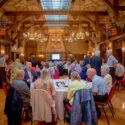
A new chapter began in 2022, when Fylde Council acquired the vacant property as part of the wider Kirkham Futuresregeneration programme. Early proposals considered creating a restaurant alongside provision for a community cinema, but the plans eventually developed around a substantial hospitality venue capable of giving the listed building a commercially sustainable future. The project involved considerably more than simply fitting a restaurant inside the former bank. Historic elements were repaired, external railings and paving restored and an unsympathetic 1970s extension at the rear removed. A new extension provided modern kitchen and service facilities, while a landscaped garden and terrace created outdoor space behind the building. The restored premises were eventually marketed with capacity for around 100 people inside and a further 70 outside, demonstrating the scale of the transformation.
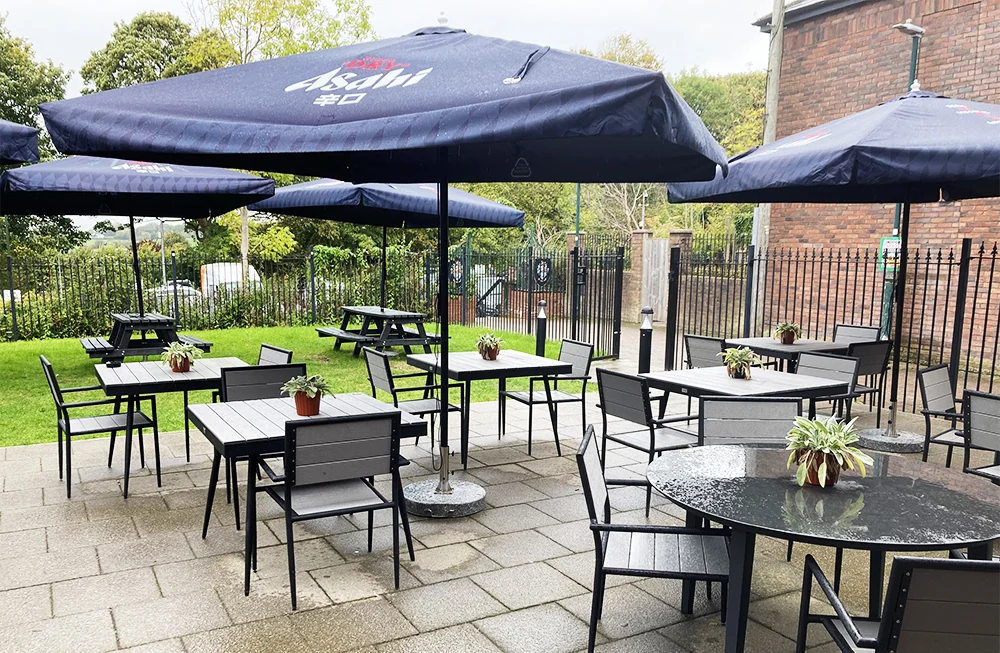
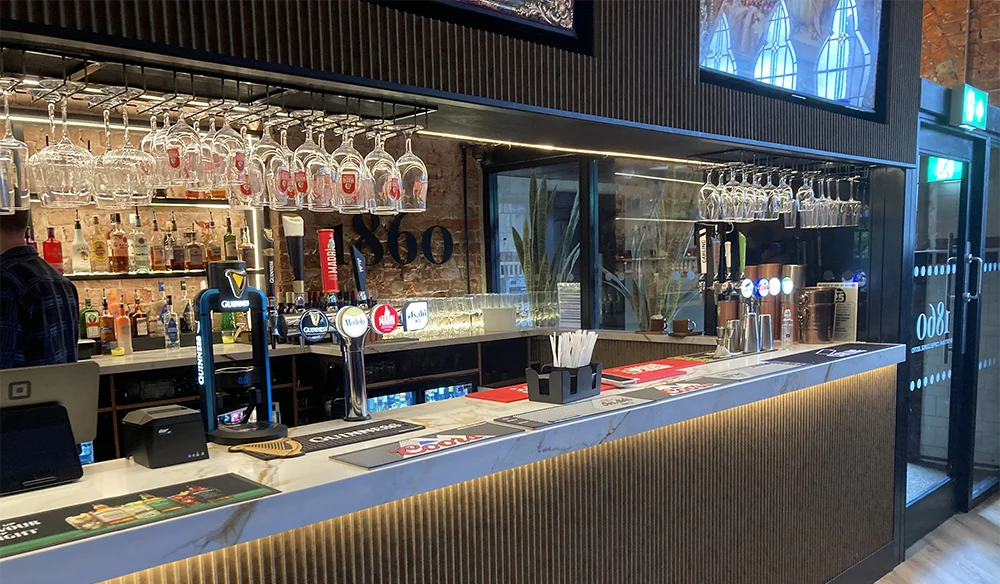
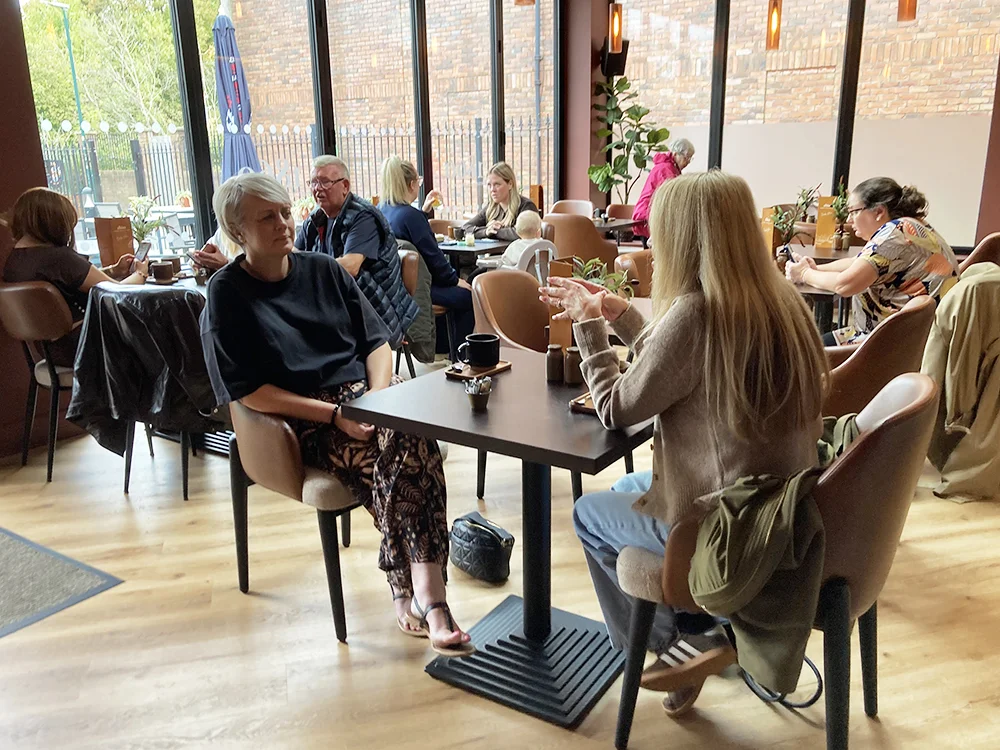
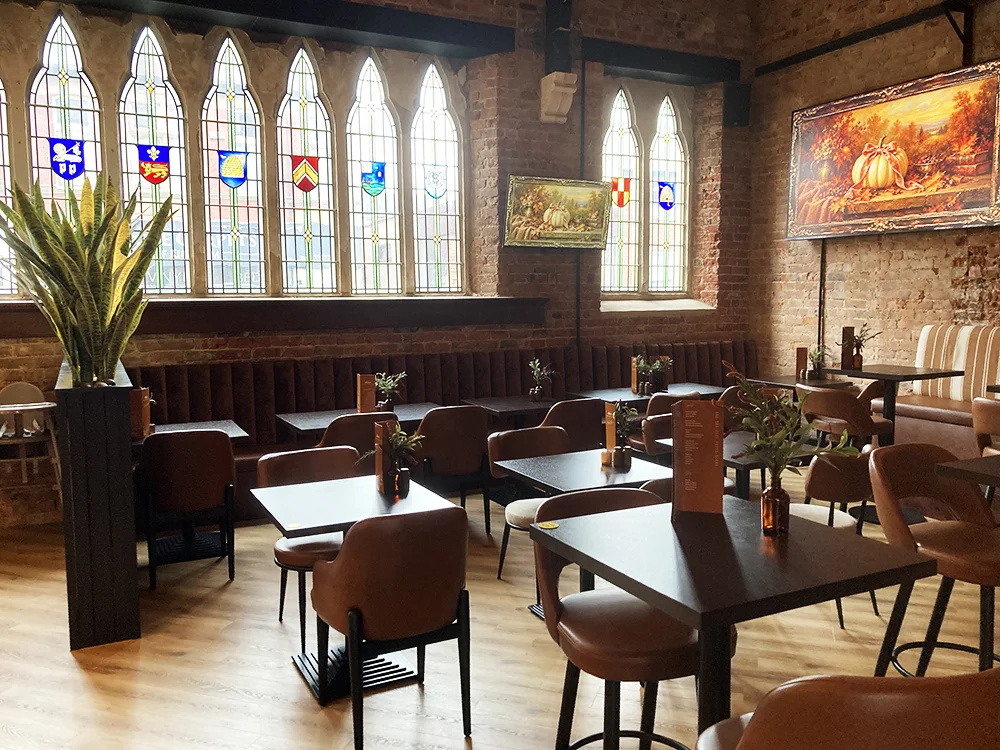 Final listed-building alterations connected with the hospitality operation were approved in July 2026, and following a soft opening the new venue officially opened in September 2026 as 1860 Sports Bar, Coffee Lounge and Bistro. The choice of name deliberately brought the story back to the year in which Thomas Langton Birley provided the Girls’ Charity School with the building that survives today. What might initially appear to be simply a fashionable historical name therefore has a very direct connection with the property itself.
The transformation also means that a building originally intended to serve the people of Kirkham has once again become a place where the community can gather. Its purpose has changed repeatedly – from girls’ school to additional educational accommodation, community hall, bank and eventually bar, coffee lounge and restaurant – but its distinctive frontage has remained a familiar feature of Poulton Street. What many residents remember simply as the old TSB is therefore something considerably more significant: a surviving monument to Kirkham’s early efforts to provide an education for girls and to the generations of local benefactors who supported them.
Timeline
1701 – The Drapers’ Company formally excludes girls from Kirkham’s Grammar School.
1760 – John Langton and Ann Hankinson establish the Girls’ Charity School to provide an education for poorer girls in Kirkham.
1761 – Kirkham’s bailiffs and burgesses agree to provide land for a charity school.
1795 – John Birley becomes one of the charity’s trustees.
1806 – William Langton becomes a trustee.
1820s – The charity owns property and land which generates income to help support the school.
1839 – Ann Birley takes responsibility for managing the Girls’ Charity School.
1860 – Thomas Langton Birley funds the purpose-built Gothic Revival Girls’ Charity School on Poulton Street, the building now occupied by 1860.
1870s – The Girls’ Charity School is recorded among Kirkham’s institutions in the Imperial Gazetteer of England and Wales.
1872 – Thomas Langton Birley pays for the ornamental lamp erected amongst Kirkham’s Fish Stones.
1874 – Thomas Langton Birley dies on 6 October.
c.1900 – The Girls’ Charity School appears to close.
Early 20th century – The building is used for a period as additional accommodation for Kirkham Grammar School and later becomes a community hall.
By the late 1960s – Trustee Savings Bank has a branch in Kirkham, although the exact date at which banking began in the former school remains uncertain.
11 June 1986 – The former Girls’ Charity School, by then being used as the Trustee Savings Bank, is designated a Grade II listed building.
1995 – Lloyds Bank and TSB merge nationally to create Lloyds TSB.
2010s – Banking use eventually comes to an end and the building subsequently stands vacant.
2022 – Fylde Council acquires the former school and bank as part of the Kirkham Futures regeneration programme.
2023–2026 – The Grade II listed building undergoes extensive restoration and conversion for hospitality use.
28 July 2026 – Further listed-building consent associated with the new hospitality venue is approved.
September 2026 – 1860 Sports Bar, Coffee Lounge and Bistro officially opens, taking its name from the year in which the surviving building was constructed.
From a charitable school established to educate Kirkham’s poorer girls to one of the town’s newest hospitality venues, the story behind 1860 spans more than two and a half centuries of Kirkham history.
Images by © Deeper Blue Marketing & Design Ltd


