


































Cocker Street Baths formed part of a long tradition of sea bathing that helped establish Blackpool as a health resort before it developed into the entertainment capital of the Lancashire coast. The baths were built in 1870 and stood close to the Promenade at the western end of Cocker Street, their development taking place when bathing in seawater was still widely promoted for its supposed therapeutic qualities. They were refitted and opened by Jonathan Read in July 1873, becoming one of the resort’s important early bathing establishments. Their history has also been associated with Dr William Henry Cocker, Blackpool’s first mayor and one of the leading entrepreneurs of the developing resort, although surviving accounts are not entirely consistent about the precise nature of his involvement. What is certain is that Cocker Street Baths became a substantial institution in their own right and eventually passed into municipal ownership, allowing them to develop from their Victorian origins into a public swimming facility used by generations of Blackpool residents.
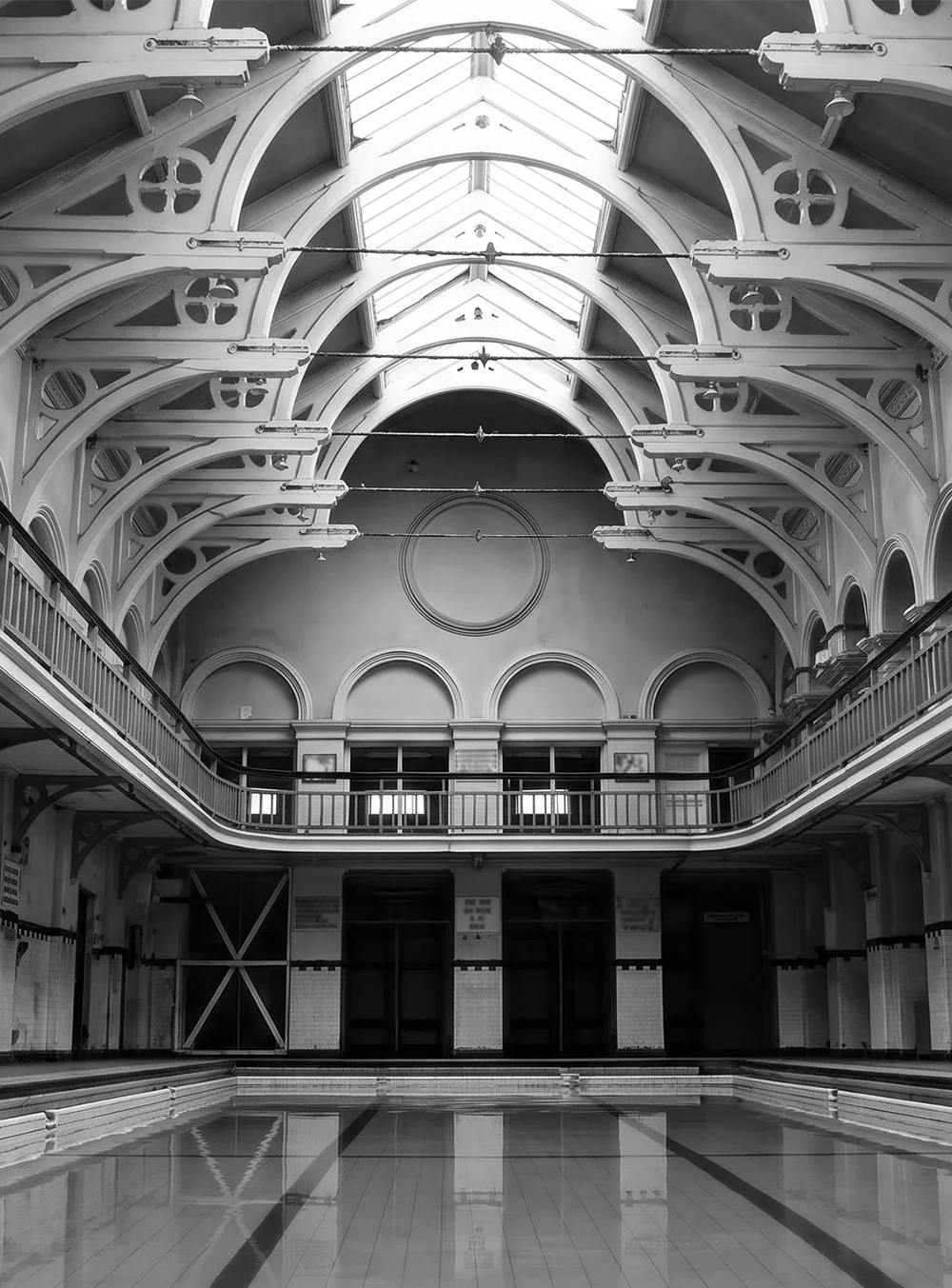
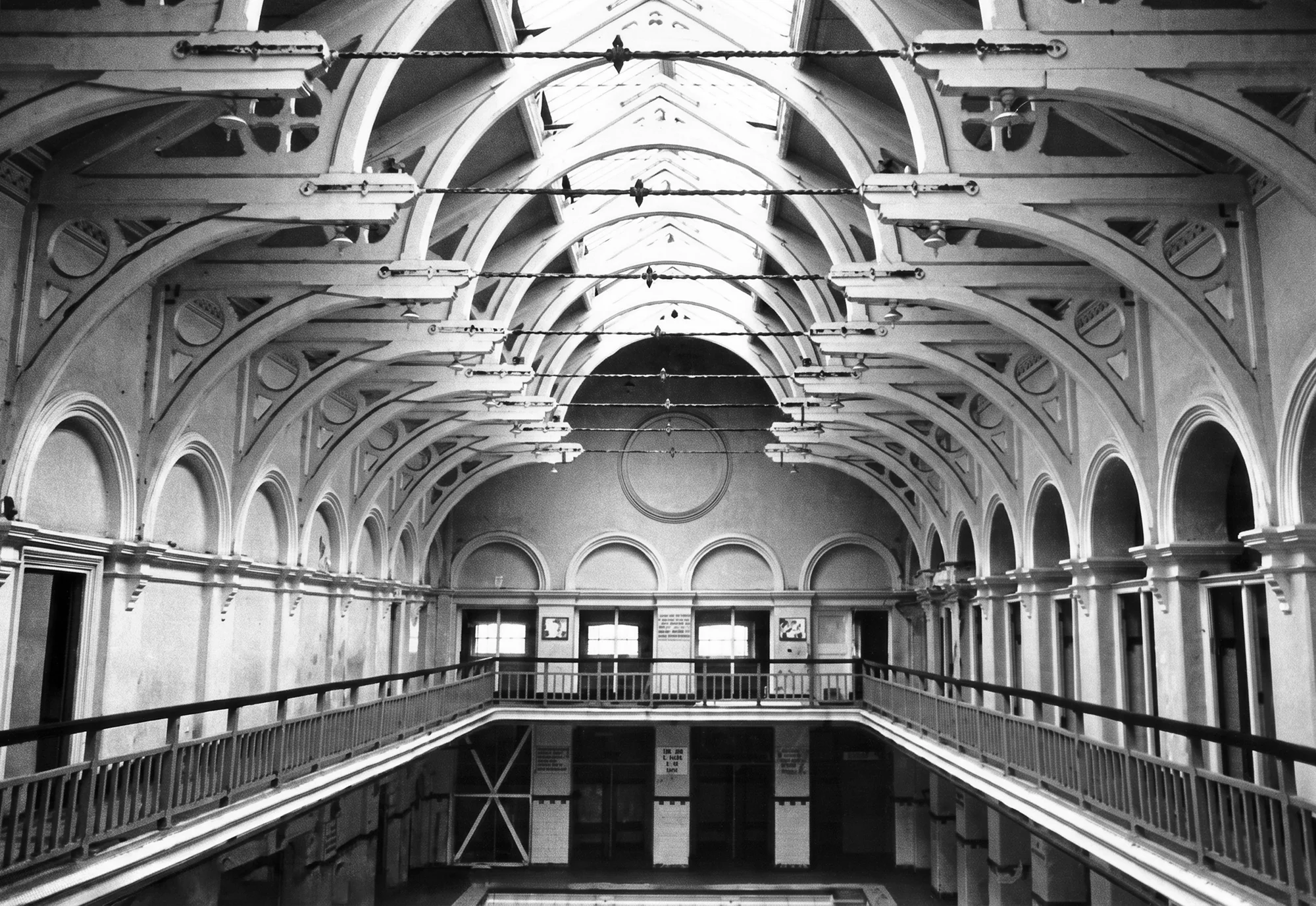
By the early twentieth century the baths had become particularly important for swimming instruction and organised sport. Schoolchildren learned to swim there and local swimming clubs used the pool, while school swimming galas were held at Cocker Street before the much larger Derby Baths opened farther north in 1939. The main swimming pool measured approximately 27 yards by eight yards and the building also contained a smaller plunge or learners’ pool used for private tuition. A contemporary description from 1934 recorded private baths as well as hot seawater, sea-foam, pine and vapour baths, demonstrating that Cocker Street retained elements of the Victorian therapeutic bathing tradition even as recreational and competitive swimming became increasingly important. Six swimming clubs were then based at the baths and swimming galas were staged during the latter part of the season. The interior was remembered for its glazed tiling, marble flooring, gallery surrounding the pool and the large glazed roof which admitted daylight from above.
 Cocker Street Baths also played a small but significant part in British sporting history through Blackpool swimmer Lucy Morton. Already an outstanding swimmer and world record holder, Morton was invited to trial for the British team for the 1924 Olympic Games in Paris. The baths were normally closed during the winter, but Blackpool Council recognised her potential and allowed Cocker Street to be specially opened so that she could train before and after her work at St Annes Post Office. Baths superintendent R. L. Swarbrick supervised her training. Morton subsequently travelled to Paris and won the women’s 200 metres breaststroke, becoming the first British woman to win an individual Olympic swimming gold medal. The achievement gave the comparatively modest Cocker Street pool an unexpected place in Olympic history.
The baths also witnessed one of the most tragic episodes in Blackpool’s sporting history. In December 1911, superintendent John Arnold Parkinson, a former Blackpool Football Club player and veteran Blackpool lifeboatman, attempted to rescue engineer Isaac Howcroft after a wooden platform collapsed and Howcroft fell into a tank of dangerously hot salt water. Parkinson entered the tank during the rescue and both men suffered severe scalding injuries from which they later died. An inquest subsequently drew attention to the deteriorated condition of the timber supporting the platform. Parkinson’s courage was recognised posthumously by the Carnegie Hero Fund, while his funeral reflected the extraordinary breadth of his contribution to the town as a sportsman, lifeboatman and superintendent of the baths.
Cocker Street continued serving Blackpool through the middle decades of the twentieth century, although newer facilities gradually changed its position within the town. The enormous South Shore Open-Air Baths had opened in 1923, while Derby Baths provided a major modern indoor swimming complex from 1939. Cocker Street nevertheless survived as a familiar neighbourhood facility. The Cocker Street Foam Baths were officially opened on 6 June 1932 by Blackpool footballer Jimmy Hampson, and the combination of swimming, private bathing and specialist treatments allowed the building to continue a tradition that stretched back into the Victorian period. The baths closed on 3 October 1964 but subsequently reopened as Reed’s Cocker Street Baths, extending their life for almost another decade.
By the early 1970s, however, the ageing Victorian building was approaching the end of its useful life. Structural concerns had become increasingly serious and accounts of its final years describe inspections of the building as its condition deteriorated. Storm damage compounded the problems and the baths eventually closed permanently in late 1973. For a period the great pool remained empty while the fate of the building was decided. Demolition followed in March 1974, just over a century after the 1873 refitting which had established Cocker Street as one of Blackpool’s principal bathing facilities. Some of its equipment survived: machinery was reused at the South Shore Swimming Coliseum, while items associated with the baths were preserved elsewhere, including an engineering plaque and a date stone from the boiler chimney. The site itself subsequently became a car park, leaving little indication of the substantial public baths that had occupied it.
The disappearance of Cocker Street Baths represented more than the loss of another Victorian building. Its history encompassed the period when Blackpool promoted seawater for health and therapeutic bathing, the growth of municipal swimming and school instruction, the development of organised swimming clubs and the emergence of internationally successful competitors. Most significantly, it was the pool in which Lucy Morton was given the opportunity to prepare for the 1924 Olympic Games before returning to Blackpool with a gold medal. For approximately a century, Cocker Street Baths had quietly served residents alongside the resort’s much more spectacular visitor attractions, and its demolition in 1974 removed one of the last physical reminders of Blackpool’s earliest bathing culture.