




















By the early twenty-first century, more than a hundred years of exposure to harsh coastal climate had taken its toll on Blackpool Tower’s protective paintwork. Salt-laden air, rain and strong winds had gradually weakened the coatings that shielded the steel structure from corrosion, making a comprehensive conservation programme essential rather than simply desirable. Previous generations of painters had maintained the Tower continuously, but decades of successive paint layers and hidden corrosion meant that a far more extensive approach was now required.
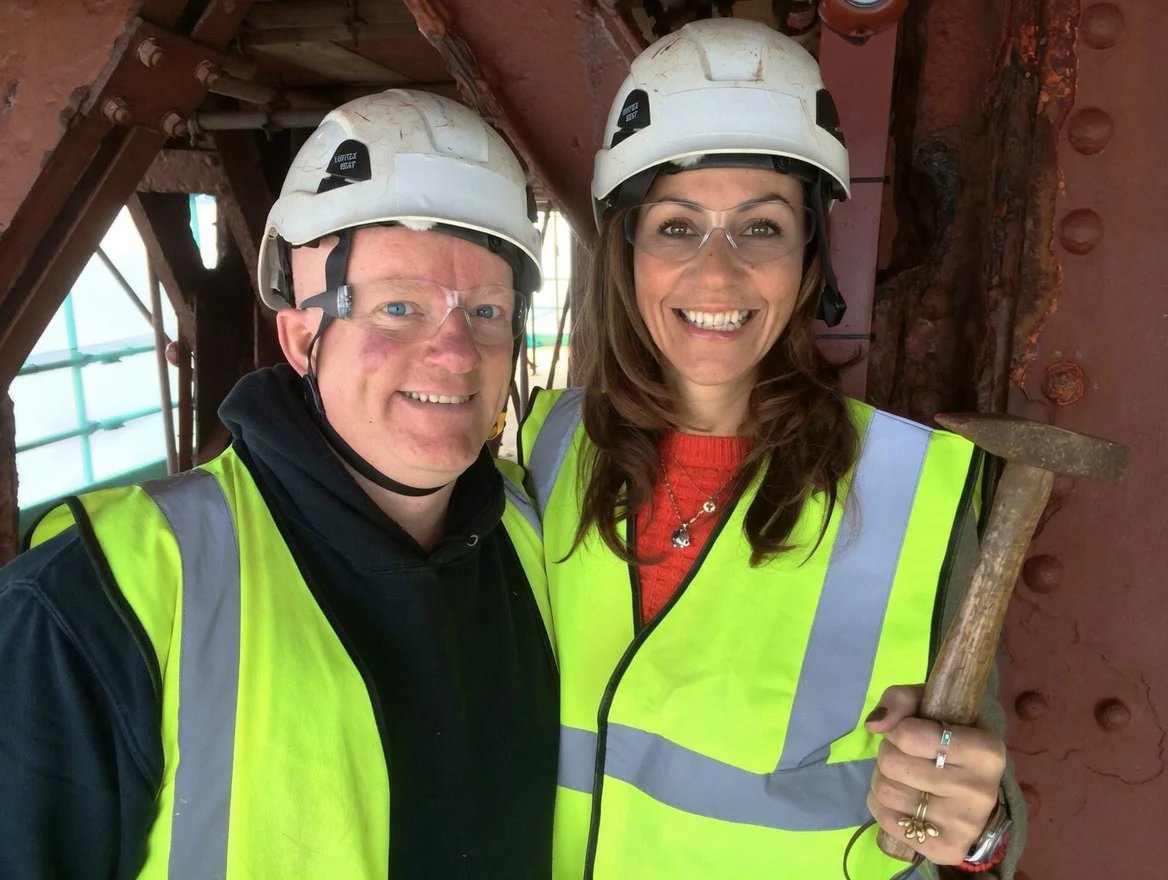
David Hulme with Julia Bradbury for ITV’s The Wonder of Britain
The restoration project began in 2008 after a contract worth approximately £6 million was awarded to completely strip, repair and repaint the structure. Unlike previous maintenance cycles, the aim was not merely to apply fresh paint but to remove every layer of deteriorating coating, inspect the underlying steelwork and carry out repairs wherever corrosion had taken hold. The project ultimately lasted eight years, concluding in 2016, and represented one of the most significant conservation programmes ever undertaken on Blackpool Tower.
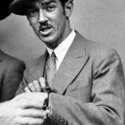
Having already spent more than twenty years maintaining the Tower, David Hulme was offered the position of Project Manager and Site Manager by the successful contractor. Although accepting the role meant leaving the security of his long-established position to work for an external company, he chose to take on the challenge, bringing his unrivalled knowledge of the Tower to one of its largest restoration projects. During the works, David’s expertise attracted national attention when he was interviewed by Julia Bradbury for ITV’s The Wonder of Britain, explaining how the methods and equipment used to maintain the landmark had evolved over the decades.
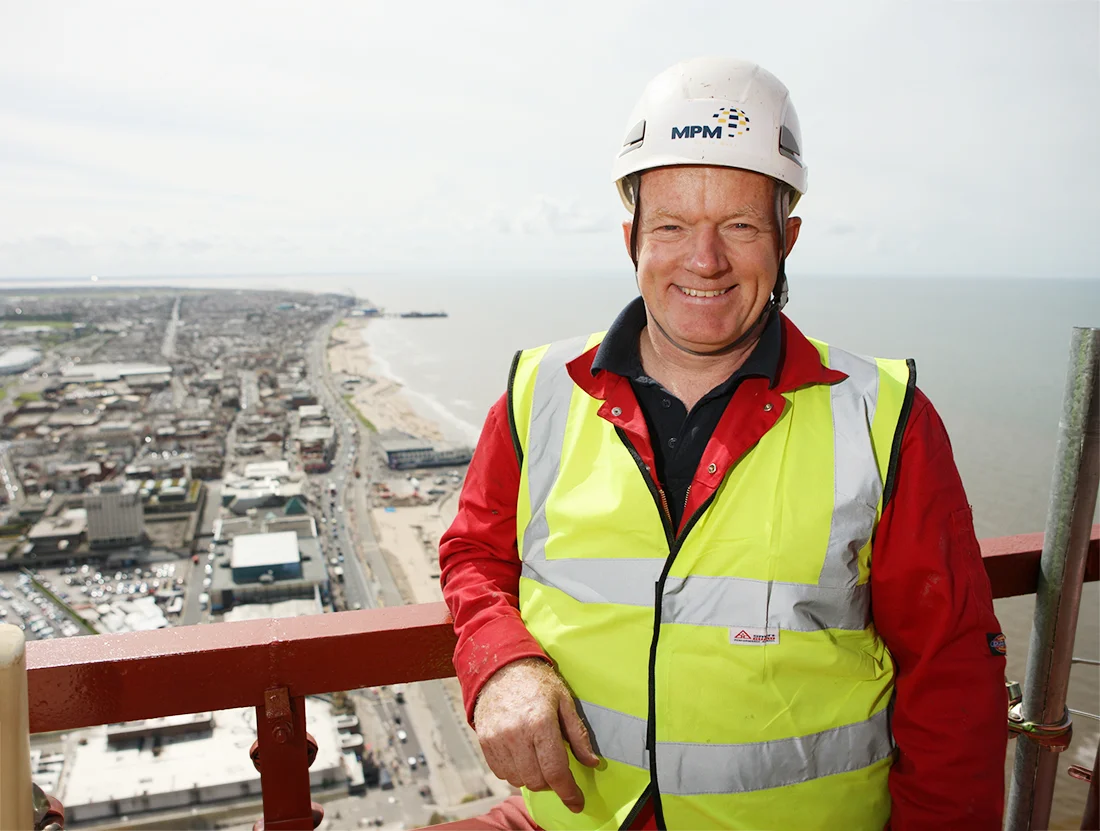
Photo of David Hulme, Project Manager/ Site Manager, by Jason Lock
One of the greatest changes introduced during the restoration was the replacement of traditional preparation methods with ultra-high-pressure water blasting. Earlier generations of painters had relied on scrapers, chipping hammers, scaling pistols and needle guns to remove loose paint before applying new coatings by hand. While effective for routine maintenance, these labour-intensive techniques could not economically remove more than a century of accumulated paint back to bare metal.
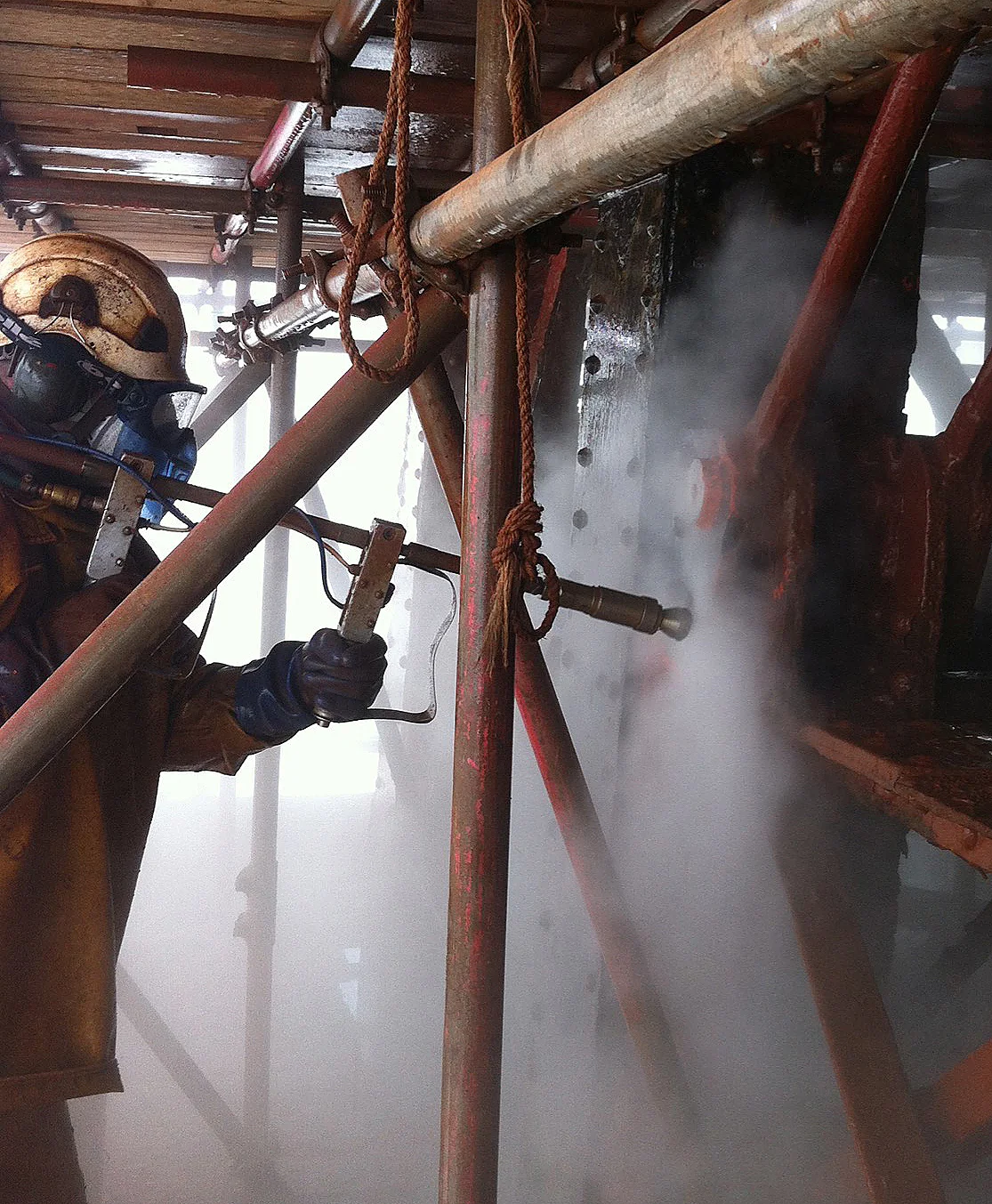
Ultra-high-pressure hydrojet blasting removed more than a century of accumulated paint, exposing bare steel ready for inspection, repair and modern protective coatings.
The new hydrojet blasting system transformed the process. Water delivered at an extraordinary pressure of around 32,000 pounds per square inch stripped away decades of paint, exposing clean steel ready for inspection. Because older coatings contained lead, wet blasting also greatly reduced the amount of hazardous airborne dust produced during the work, making it a safer solution for both workers and the surrounding environment.
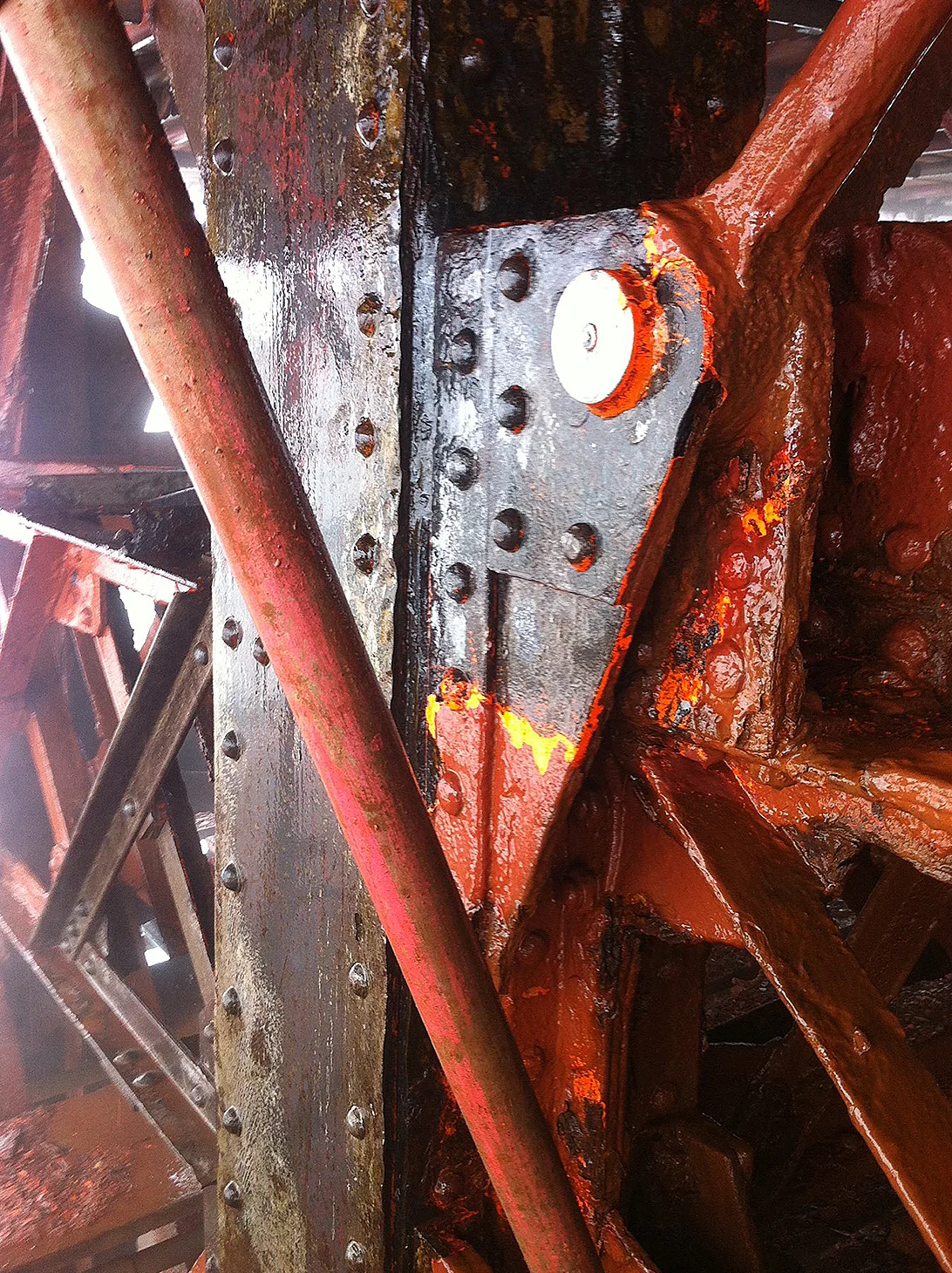
Wet blasting exposed clean steel while helping to suppress lead-containing dust from earlier generations of paint.
Once blasted clean, the steelwork could be examined in detail for corrosion or structural deterioration. Any necessary repairs were completed before the repainting process began, ensuring that the new coating system protected sound steel rather than concealing hidden defects.
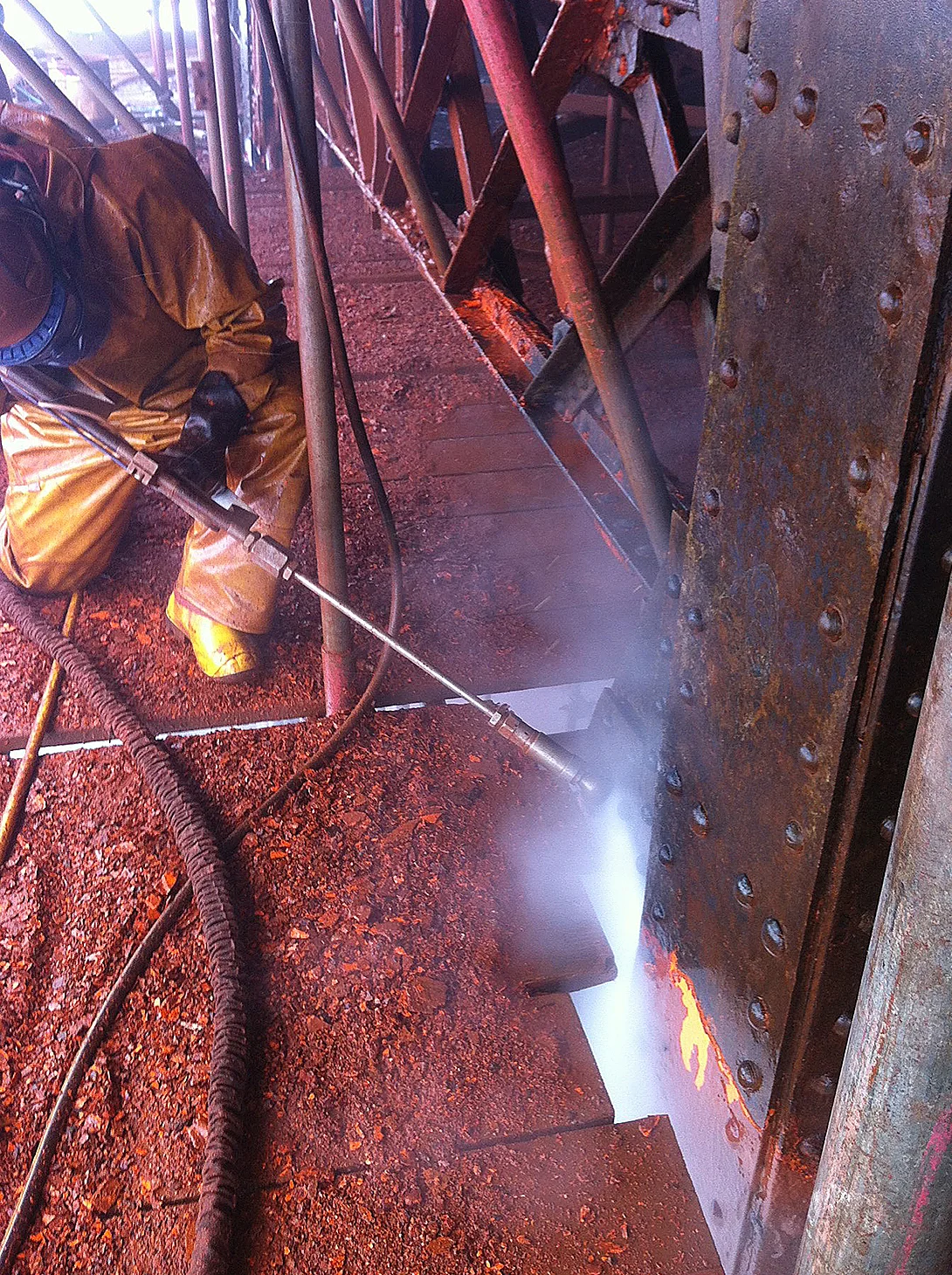
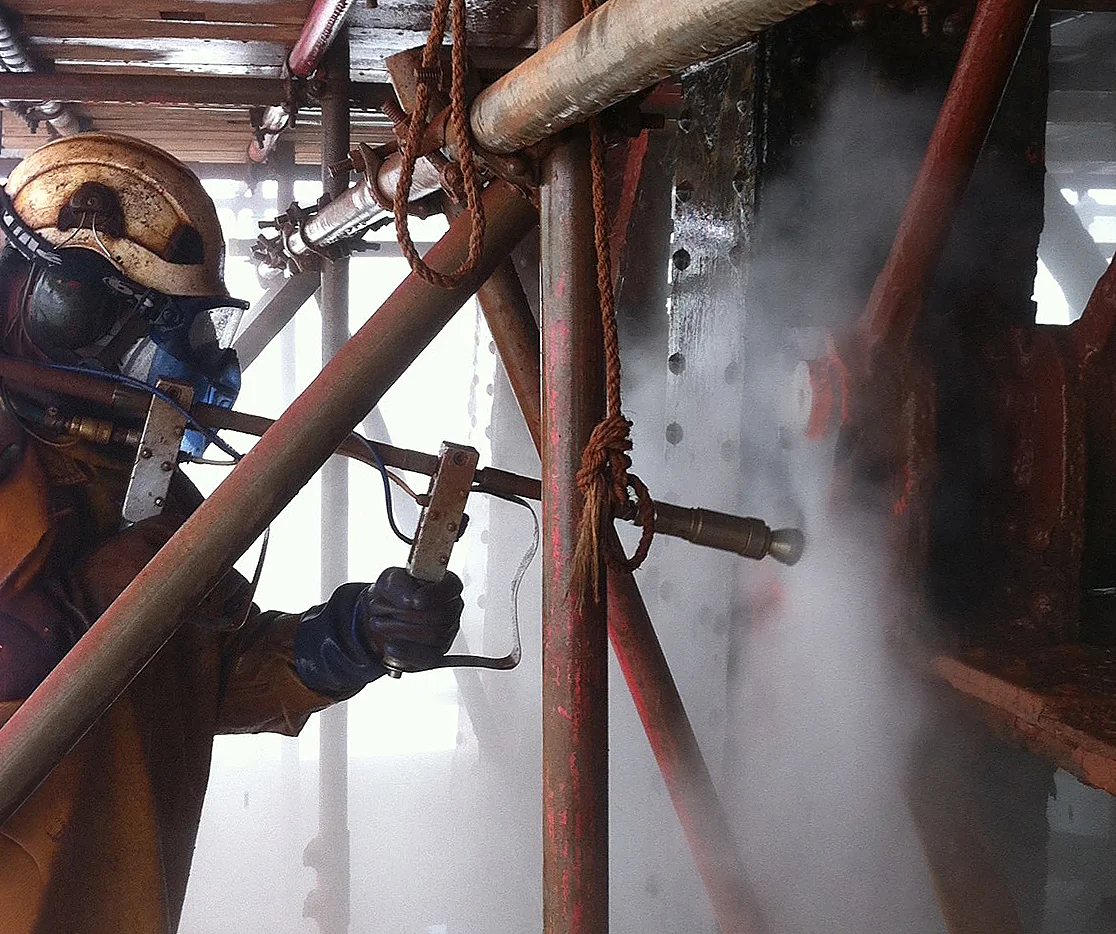
Specialist protective equipment was essential when operating water jets powerful enough to strip steel at pressures of 32,000 psi.
Operating the hydrojet equipment demanded extensive training and rigorous safety procedures. The water emerged from the nozzle at around 1,500 miles per hour—approximately twice the speed of sound—and the hoses themselves were pressure-tested far beyond their normal operating limits. Operators wore specialist Kevlar protective clothing, steel-reinforced safety boots, helmets, hearing protection and full face shields while working hundreds of feet above the Promenade.
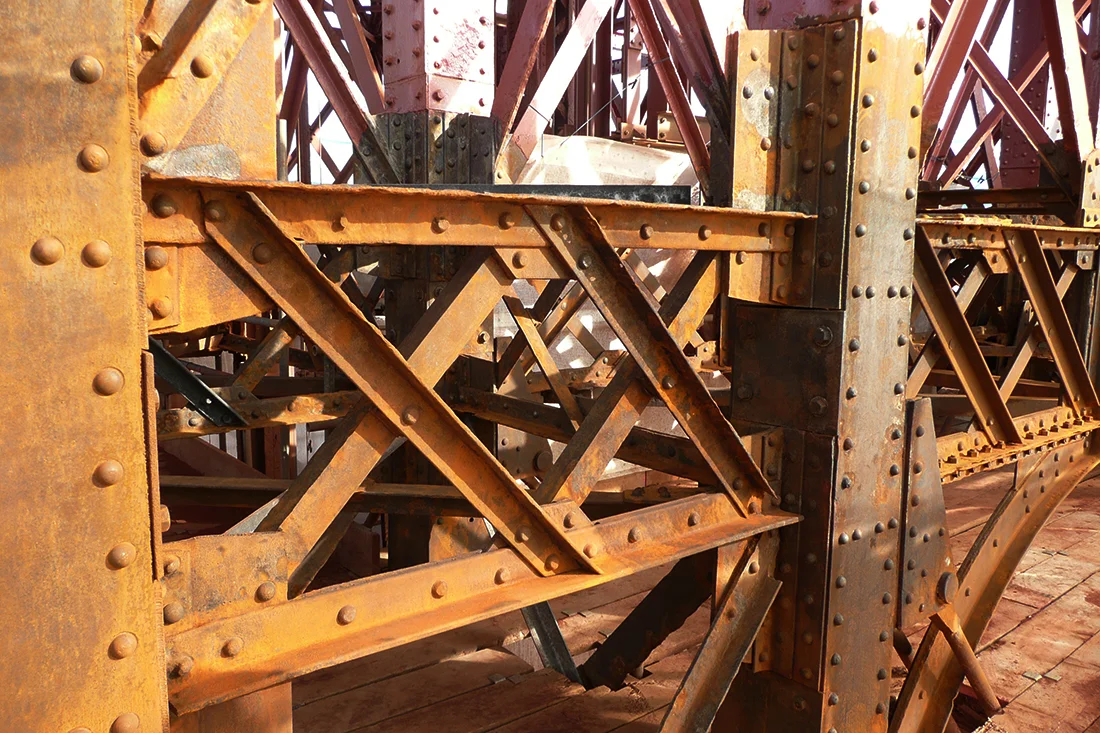
With decades of paint removed, the original Victorian steelwork could be inspected and repaired before repainting.
After blasting, the Tower’s familiar latticework reappeared with remarkable clarity. Years of built-up paint had softened many of the original details, but once removed the elegant engineering of the Victorian structure became visible again before repairs and repainting commenced.
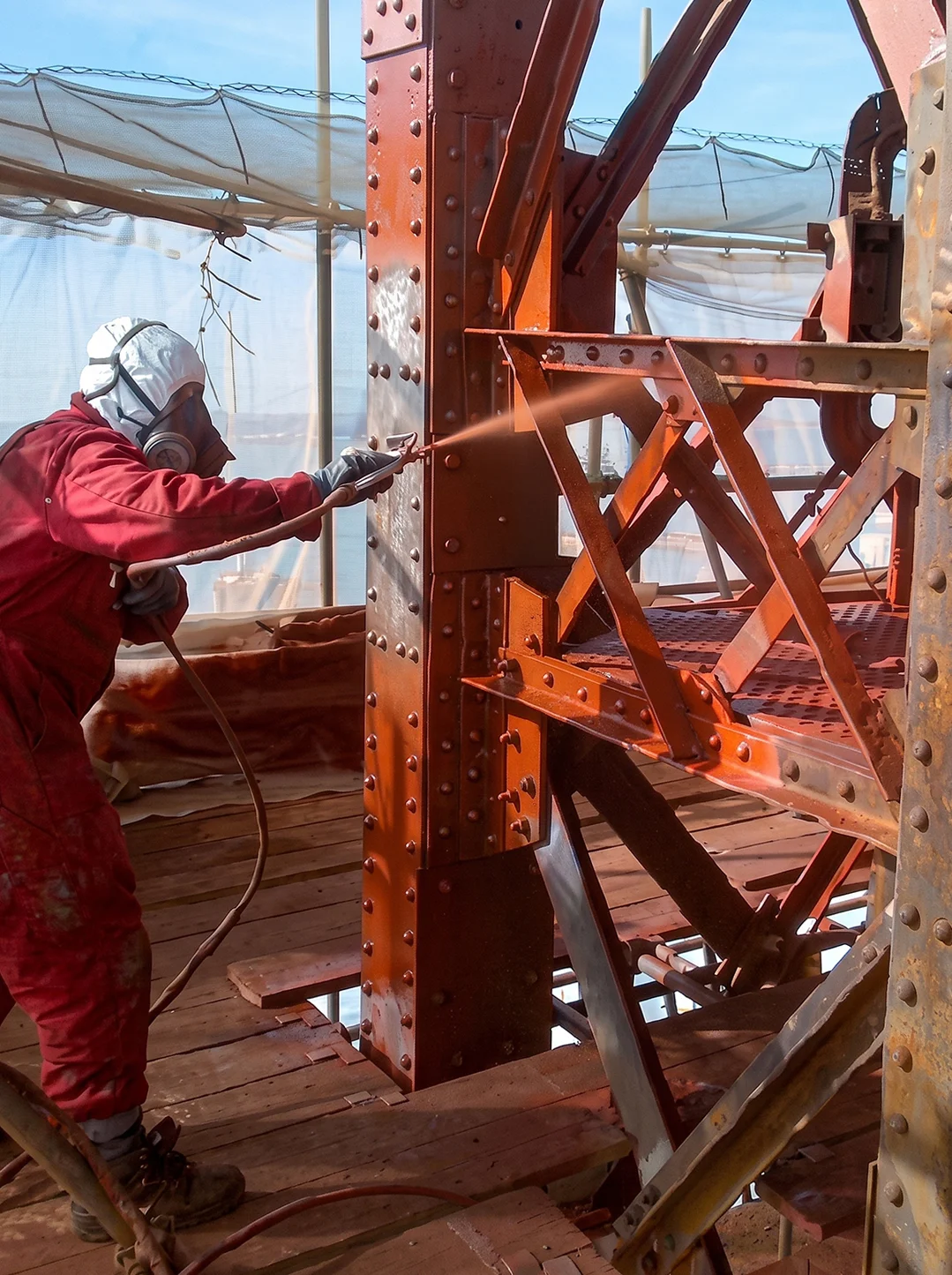
Modern epoxy and polyurethane coatings provided a far more durable protective system than earlier generations of paint.
Modern protective coatings supplied by Hempel replaced the older paint systems. Two coats of epoxy primer were followed by a polyurethane gloss finish, applied using high-pressure airless spray equipment operating at around 7,500 psi. Although significantly lower than the water-blasting pressure, the paint system still required careful handling because of the risk of high-pressure injection injuries.
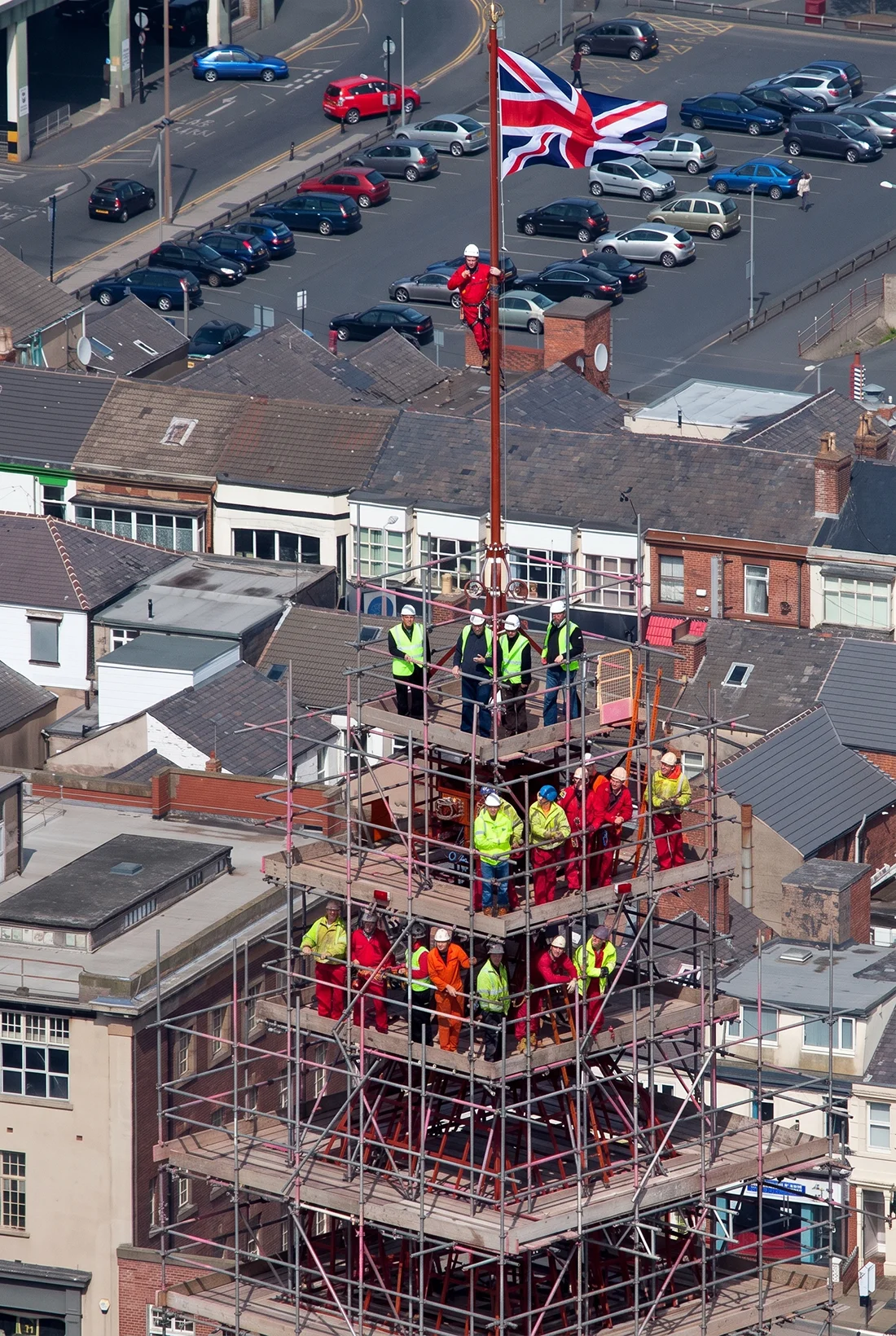
The extensive scaffold was an essential part of the eight-year restoration, allowing engineers to safely reach every section of the Tower.
The sheer scale of the restoration demanded an enormous scaffold structure that surrounded different sections of the Tower throughout the eight-year programme. Public comments frequently questioned why the scaffolding remained in place for so long, but its presence simply reflected the scale of the work being undertaken. As David Hulme often explained, maintaining a steel structure in a marine environment is a continuous process. In reality, Blackpool Tower has rarely been completely free of scaffolding throughout its history, with only brief periods between maintenance cycles.
Earlier Methods
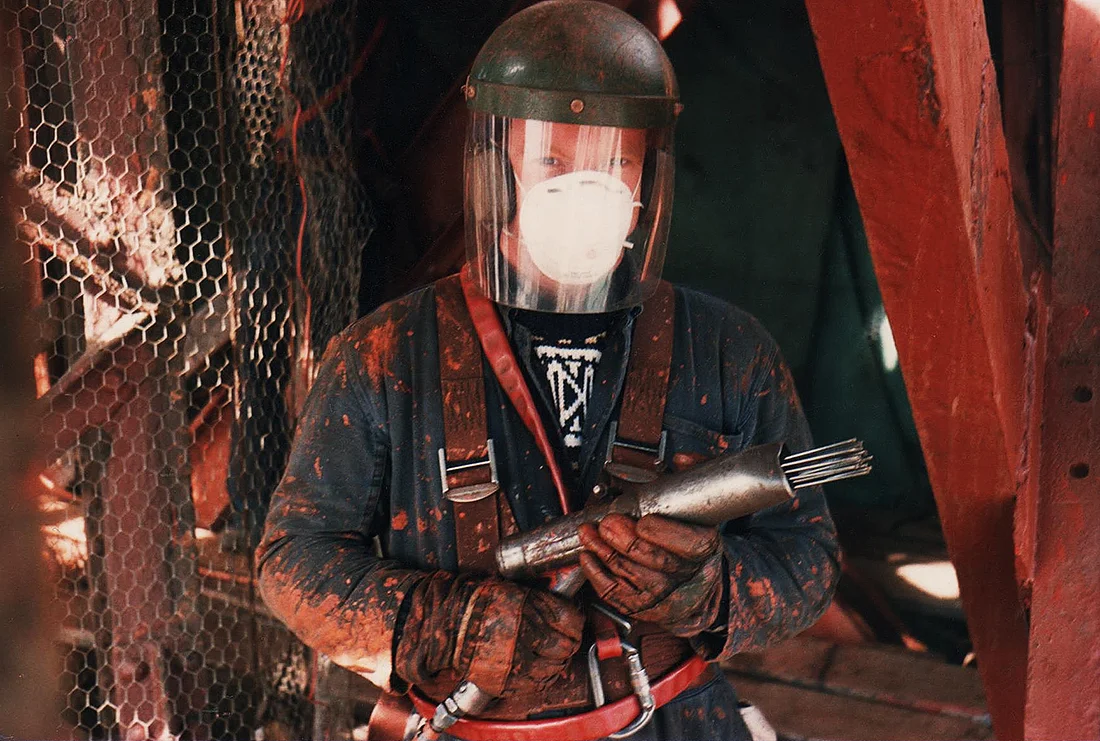
For decades, Tower painters relied on manual preparation using needle guns, scrapers and scaling hammers before brushing on fresh paint.
Before 2008, repainting relied almost entirely on manual preparation using scrapers, scaling hammers and needle guns, followed by brush application of three coats of protective paint. At the time, little attention was paid to the long-term effects of vibration, despite workers spending entire days operating pneumatic tools now known to contribute to Hand-Arm Vibration Syndrome (HAVS).
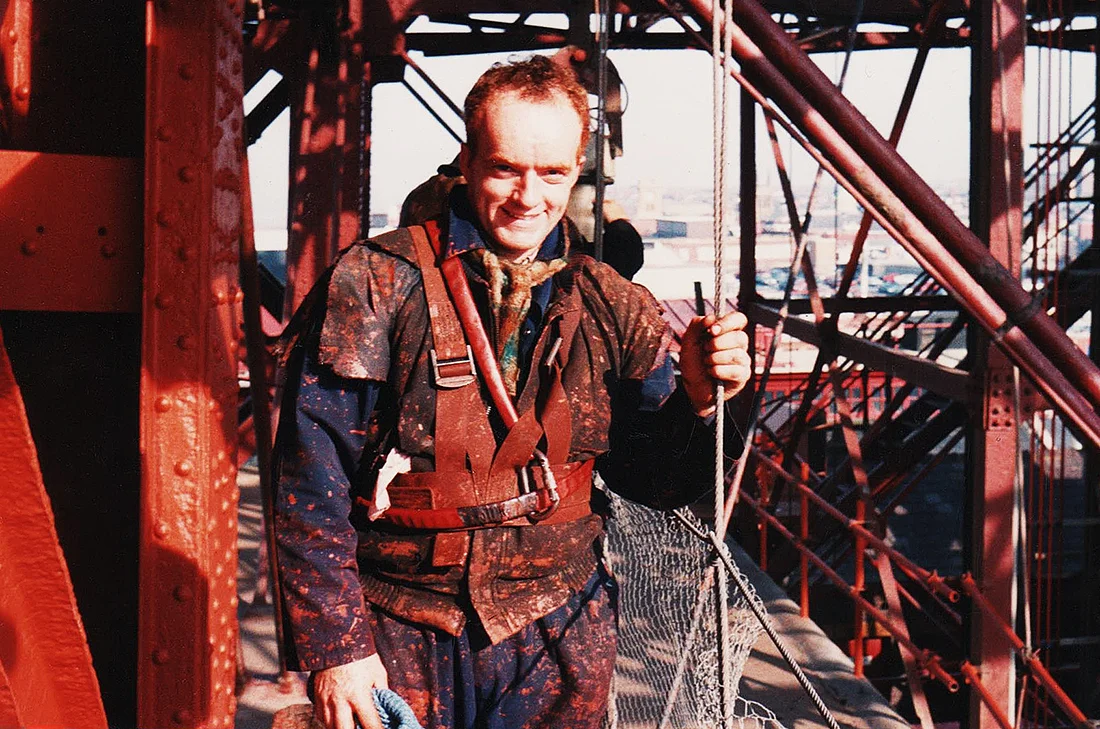
Earlier painting methods offered little protection from overspray, leaving workers covered in the Tower’s distinctive red paint.
Spraying the final top coat was a far messier process than today’s controlled systems. Painters often wore old clothing, protected their hair with makeshift hats and coated their faces with petroleum jelly so windblown paint could be wiped away more easily at the end of the day.
Legacy
Although the project officially concluded in 2016, Blackpool Tower’s maintenance never truly ends. The restoration established a modern protective coating system designed to extend the life of the structure, but continual inspection and repainting remain essential. As David Hulme observed after decades spent working on the landmark, a steel tower standing beside the Irish Sea will always require care. Far from being a sign of neglect, the presence of scaffolding is often the clearest indication that one of Britain’s most recognisable landmarks is continuing to be preserved for future generations.
Text source: David Hulme & ChatGPT
Images by © David Hulme


