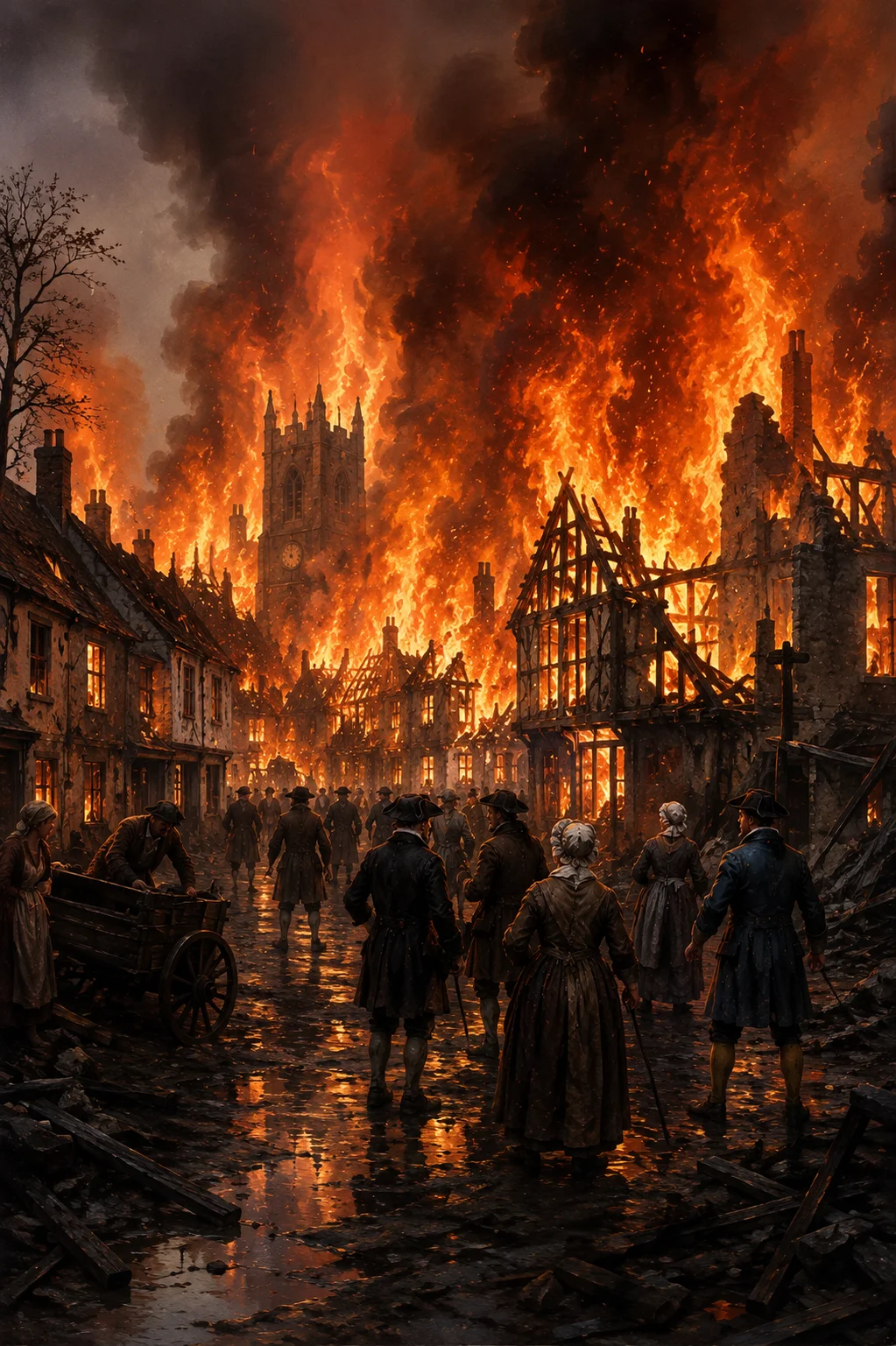






































On 5 March 1732, one of the most destructive fires in Poulton-le-Fylde’s history swept through the west side of the Market Place, transforming the appearance of the town forever. At a time when most homes were built of cobbles with timber frames and thatched roofs, only a single spark was needed to unleash a devastating blaze. The fire broke out during the funeral procession of Geoffrey Hornby, one of Poulton’s leading landowners. It was customary for wealthy families to conduct evening funeral processions illuminated by burning tapers carried by mourners. As the procession passed through the Market Place towards St Chad’s Church, strong winds blew sparks from the tapers onto the nearby thatched cottages. Within moments, the dry roofs caught alight, and the flames spread rapidly from building to building.
Eighteenth-century Poulton was particularly vulnerable to fire. Most of the population lived in closely packed cottages clustered around the Market Place and its six connecting streets. With no organised fire brigade and only limited means of tackling large fires, there was little that could be done once the blaze took hold. Before long, the entire west side of the Market Place had been destroyed. The disaster prompted a remarkable rebuilding effort. A national charitable appeal, known as a “brief”, was authorised to raise funds for those affected, with the cost of reconstruction estimated at £1,034—a substantial amount in the eighteenth century. Rather than replacing the destroyed cottages with similar thatched buildings, many of the new properties were constructed in brick with tiled roofs, making them far less vulnerable to future fires.
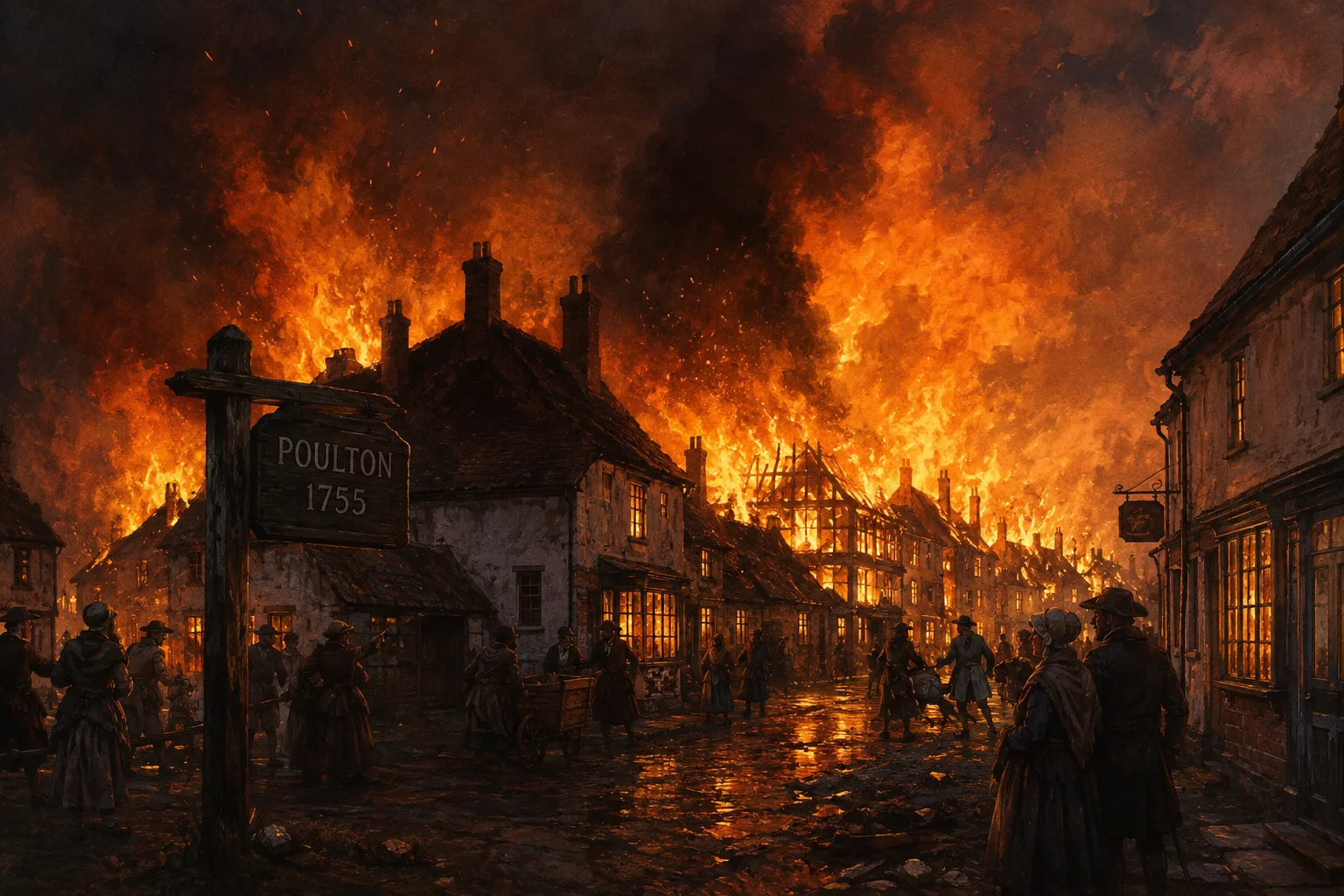 The rebuilding permanently altered the character of Poulton’s Market Place. Unlike the east side, which developed gradually over many years and displays a mixture of architectural styles, the west side was rebuilt as a more uniform terrace. This distinctive appearance remains one of the defining features of the town centre today and serves as a lasting reminder of the events of 1732. Evidence of the disaster has survived into modern times. During roofing work on one of the rebuilt buildings, timbers that had been reused following the fire were uncovered and preserved, providing a tangible connection with one of Poulton’s darkest days. More than 290 years later, the Great Fire remains one of the defining events in the town’s history, shaping not only its architecture but also its resilience and determination to rebuild after tragedy.