




























For almost a century, the lifts inside Blackpool Tower had carried millions of visitors from the base of the Victorian landmark towards its famous viewing platform. Hidden behind the public areas, however, was a complex network of lift shafts, machinery rooms, winding drums and service corridors that required continual maintenance to keep the Tower operating safely. By the early 1990s, the time had come for one of the most significant engineering projects in the Tower’s modern history.
The original lift installation dated from the opening of Blackpool Tower in 1894. Initially powered by hydraulic machinery, the lifts represented some of the most advanced engineering of the Victorian age. During the 1950s the hydraulic equipment was replaced with electrically driven winding machinery, extending the working life of the system for several more decades as visitor numbers continued to grow.
Nearly forty years later, another complete replacement became necessary. Rather than simply refurbishing the existing equipment, engineers embarked on a major modernisation programme that involved removing the ageing machinery and installing an entirely new lift system. The work formed part of the wider redevelopment that transformed the attraction ahead of its reopening as Tower World in 1992.
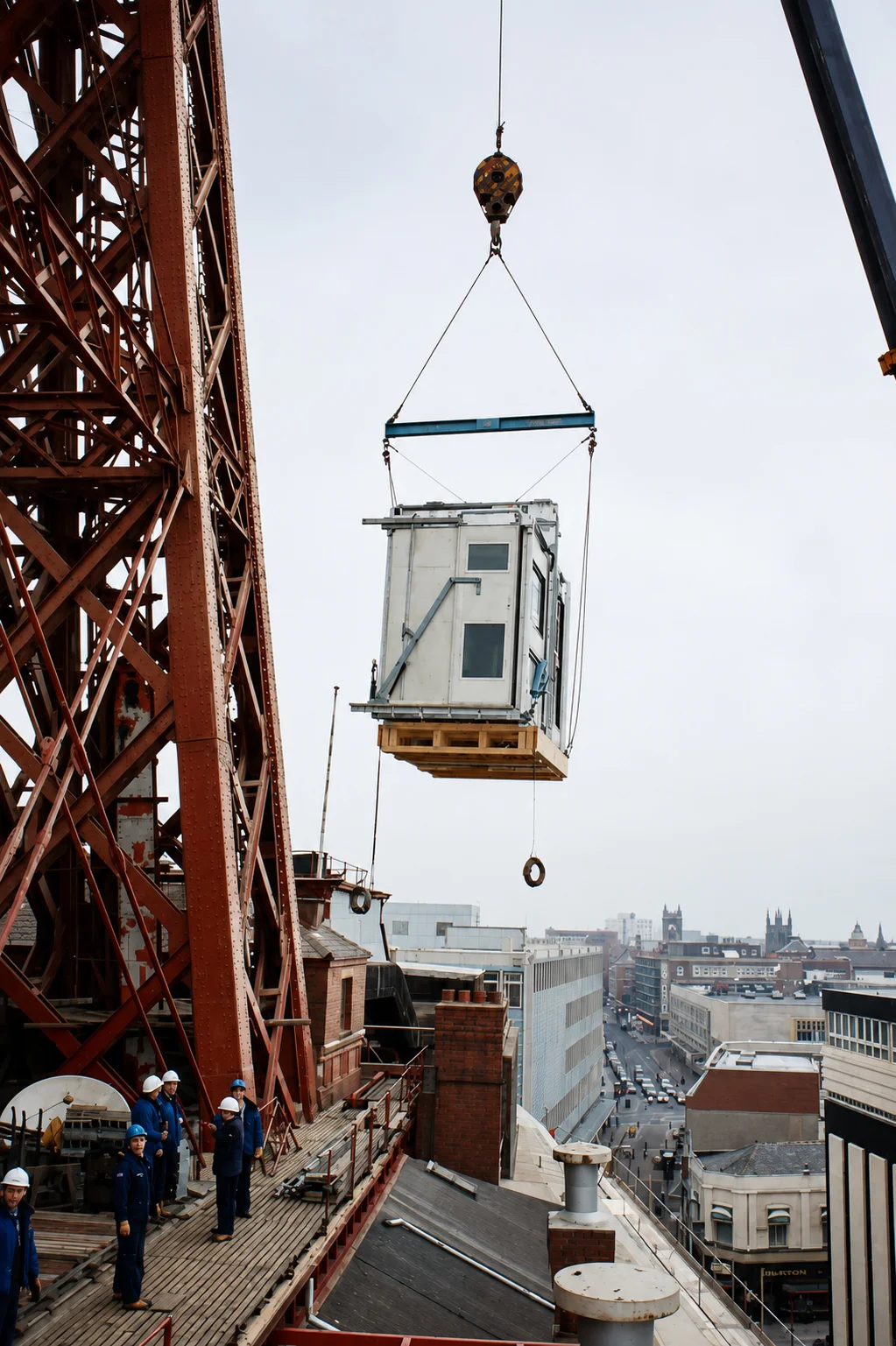
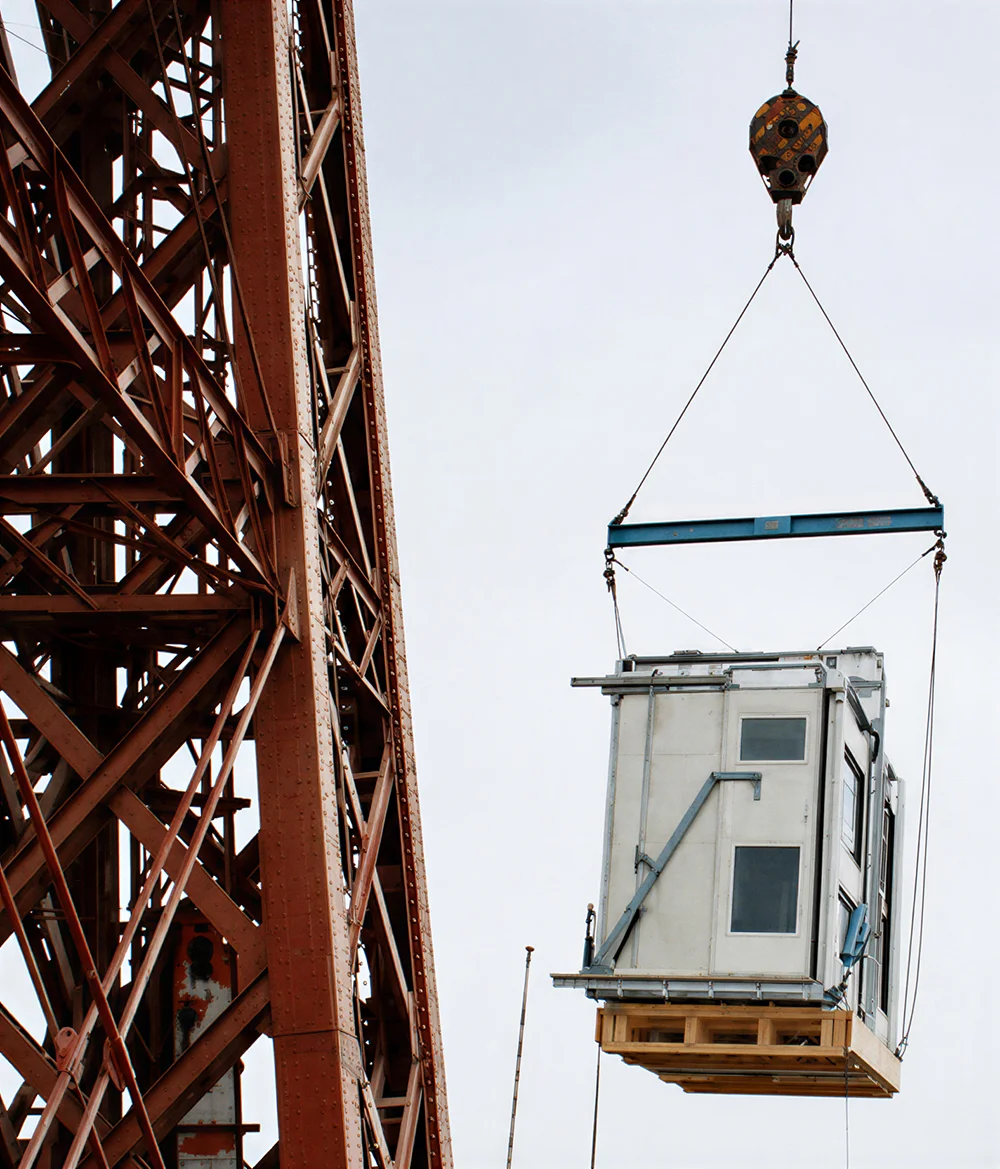
One of the two new lift cabs being lifted onto the roof by crane during the installation 1991-92. Image by © David Hulme
The engineering operation was carried out almost entirely behind the scenes. Deep within the Tower, enormous winding drums carrying the steel hoist ropes were dismantled and replaced with modern equipment designed to meet contemporary safety standards while providing improved reliability and smoother operation. The scale of the machinery is evident in surviving photographs, where the giant cable drums dominate the winding room, illustrating the immense forces required to raise and lower lift cars through the Tower.
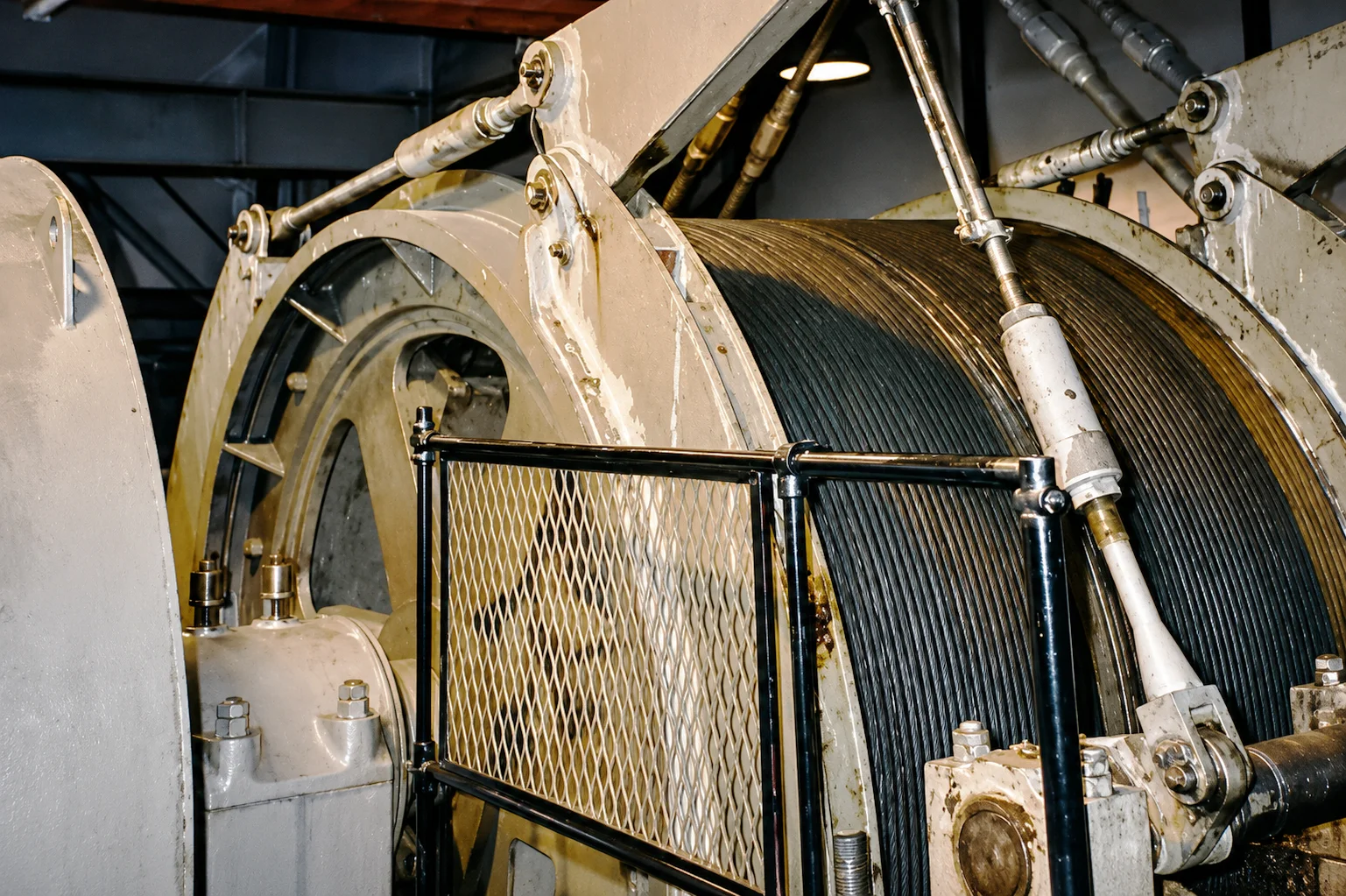
Image by © David Hulme
Outside, one of the most dramatic moments came when the new lift car was delivered. Too large to pass through the building conventionally, it was carefully suspended beneath a heavy crane and lifted high above Blackpool’s rooftops before being manoeuvred through the Tower’s steelwork. Engineers watched from elevated platforms as the cabin slowly swung into position, demonstrating the precision required to complete the installation hundreds of feet above street level.
Once inside the structure, the new lift car was lowered into the shaft before engineers connected it to the newly installed winding gear and control systems. The photographs also reveal the immaculate new machinery spaces and lift interiors that contrasted sharply with the older equipment they replaced. Stainless steel panels, modern control cabinets, improved lighting and redesigned service areas reflected the engineering standards of the early 1990s while remaining sympathetic to the historic building.
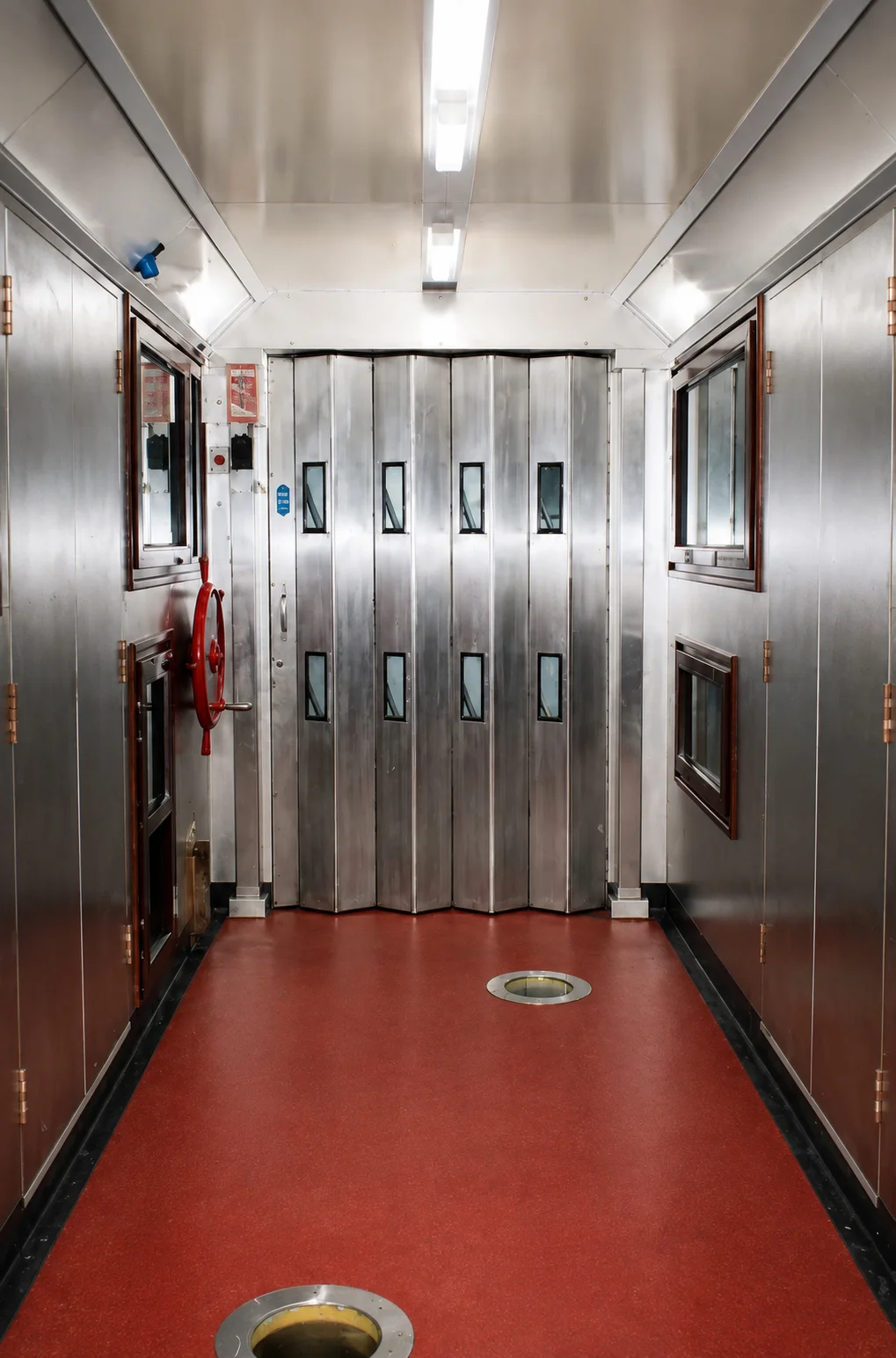
Interior of the old lift that had been in service since the 1950s this was after a remodel and makeover to bring them up to a more modern appearance but still with the old-style goods lift concertina doors and wheel to control the speed and direction, also showing the clear portholes in the floor so guests could view some 300 feet down the lift shaft. Image by © David Hulme
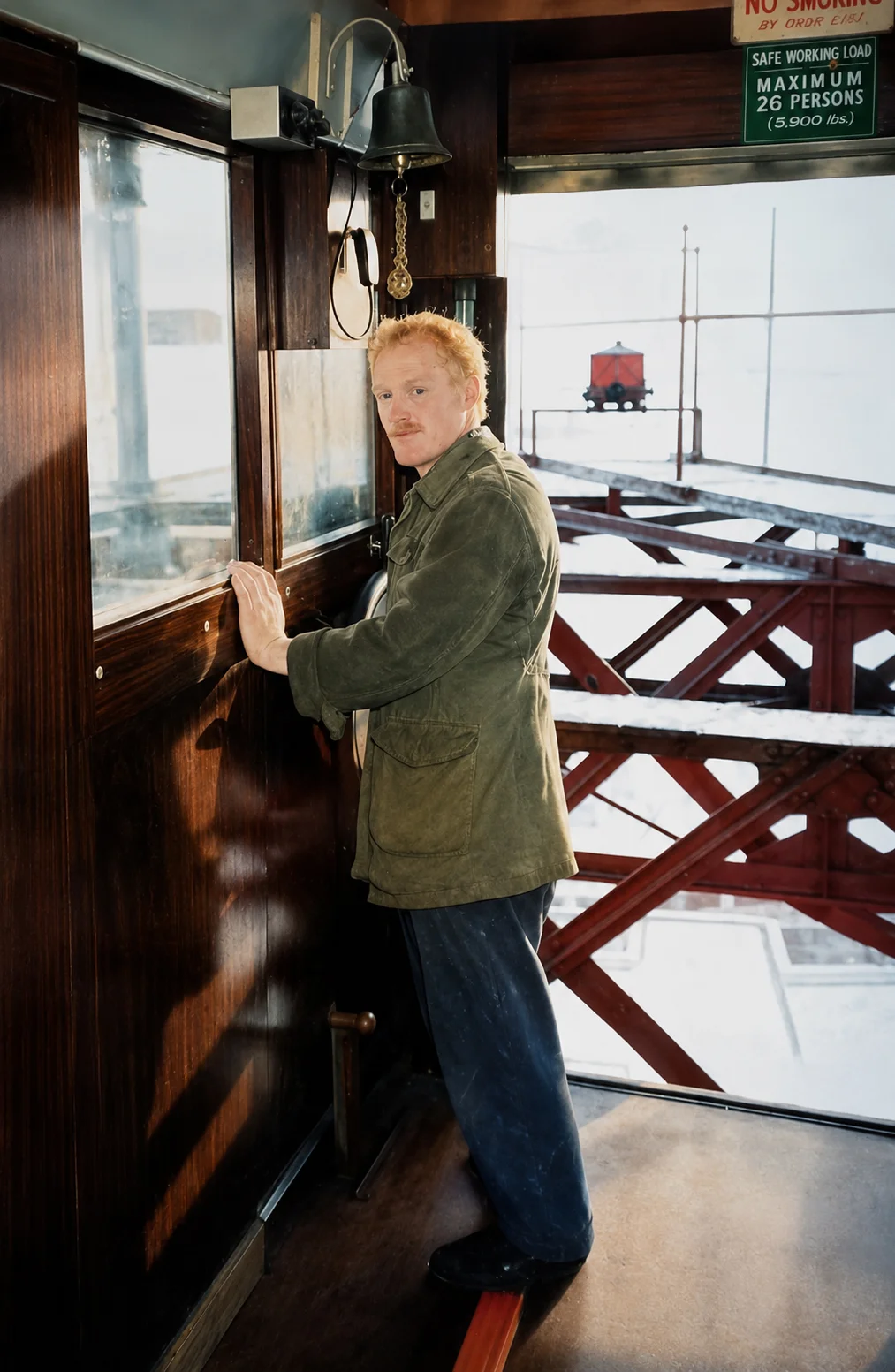
Interior of the old lift, showing how we used to travel up and down with the doors open so we could just step out wherever needed and transfer men and or materials. It can also be seen the driving position and the bell hanging up, this would be rung when travelling up and down to alert men working of the approaching lift. David Hulme is shown here operating the old lift. Image by © David Hulme
The project also provided a rare glimpse into areas of Blackpool Tower that few members of the public ever see. Hidden corridors lined with inspection windows, access doors, emergency controls and machinery rooms formed an unseen world behind the famous attraction. Every journey made by visitors depended upon this carefully engineered infrastructure working flawlessly beneath their feet and above their heads.
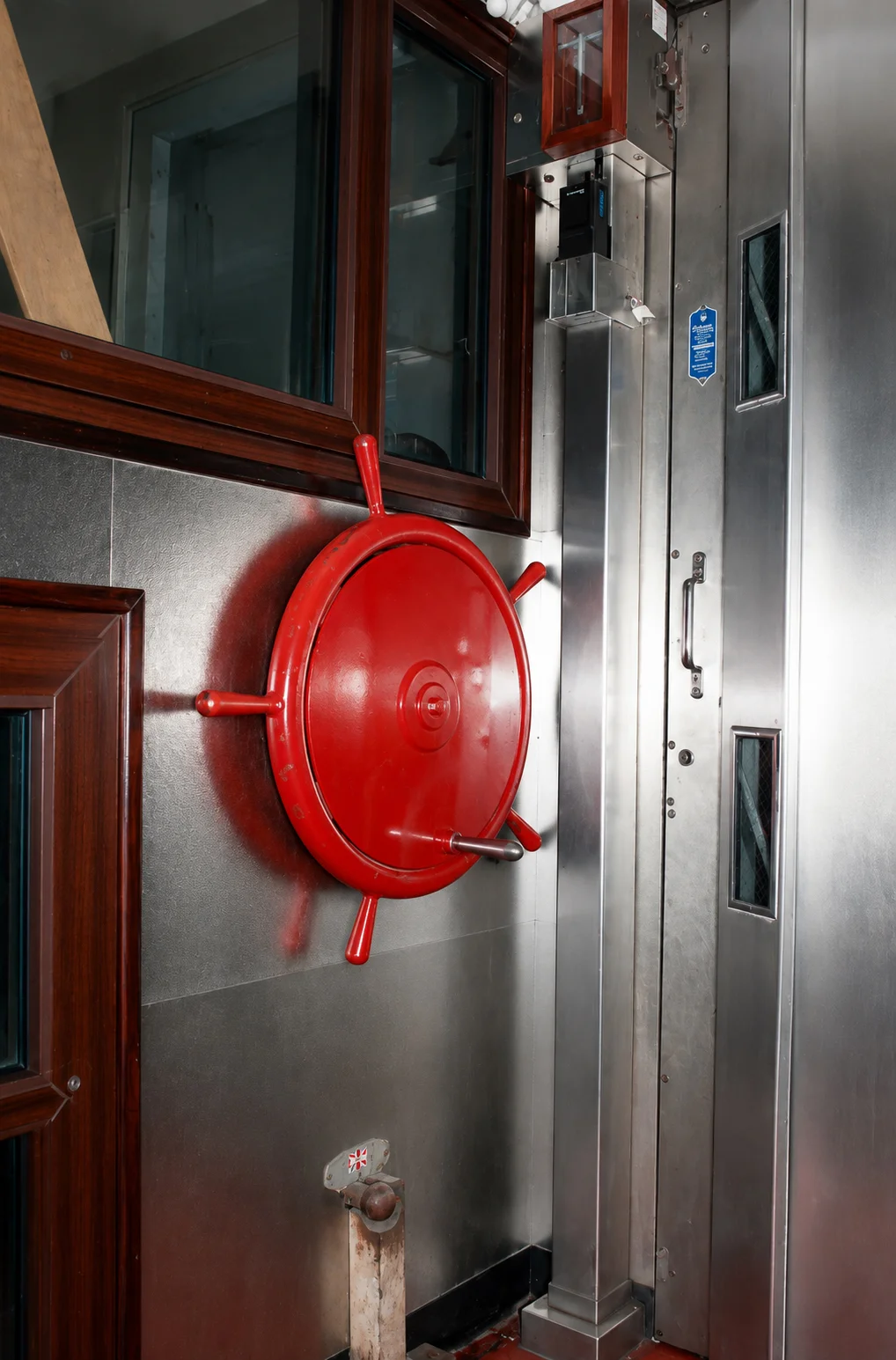
Old lift a closer view of the control wheel which the lift operator had to “drive” to move the lift, and the emergency brake directly underneath with a wooden support had to be kicked out and the lever jumped on to engage the brake! Image by © David Hulme
These photographs, taken by David Hulme during the works, preserve an extraordinary record of that transformation. Rather than simply documenting a construction project, they capture a moment when Victorian engineering gave way to a new generation of technology, ensuring that one of Britain’s most recognisable landmarks could continue welcoming visitors well into the twenty-first century.
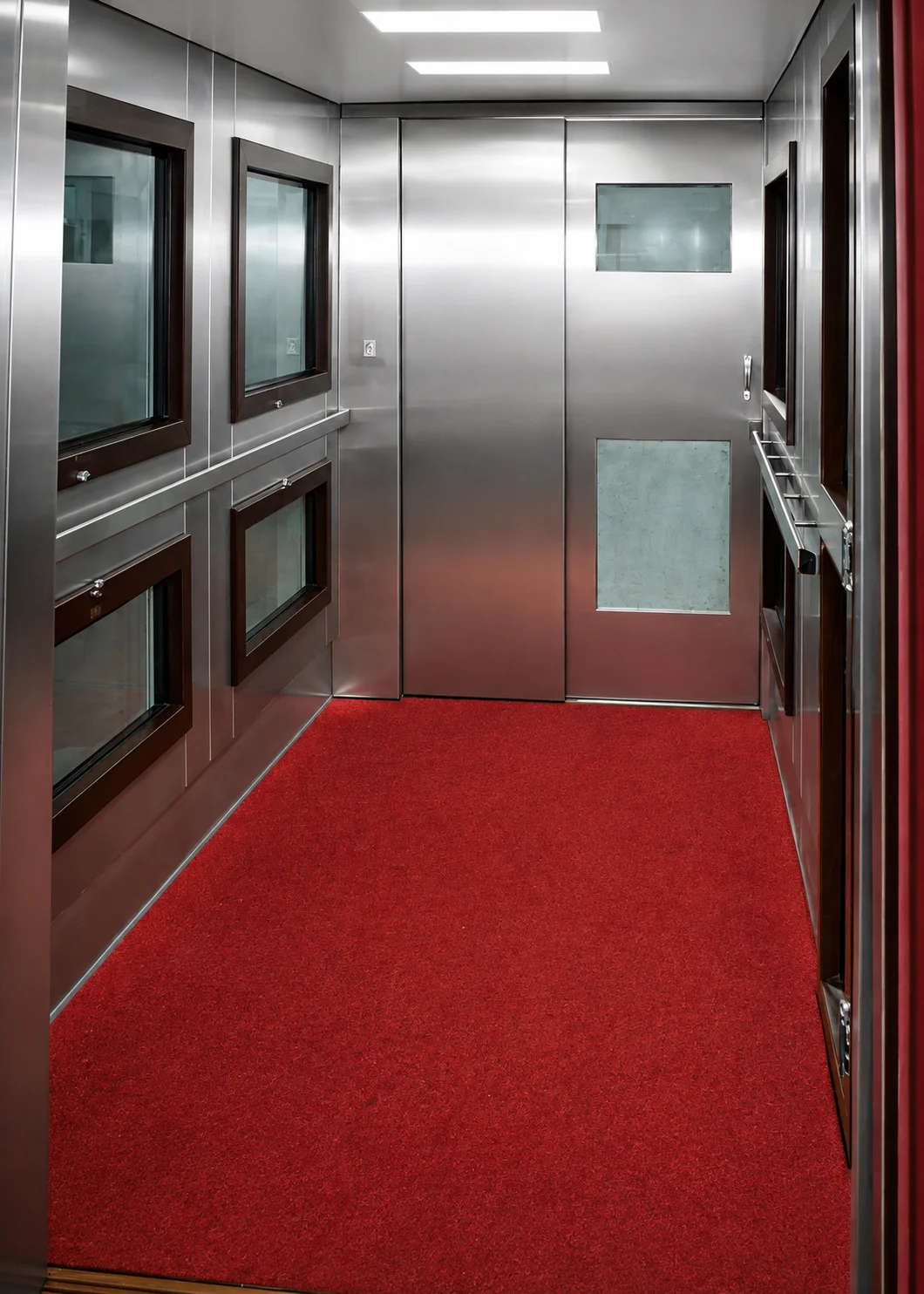
New lift showing the clean lines and modern interior, operated by push button as in a normal building lift. Image by © David Hulme
Today, passengers travelling effortlessly to the Tower Eye experience only the final stage of that engineering achievement. Behind the scenes, the winding machinery, lift shafts and control systems installed during the 1992 modernisation continue the tradition begun when Blackpool Tower first opened in 1894, quietly carrying millions of visitors to one of the finest views on the Fylde Coast.
Featured Image © David Hulme
Additional Images © David Hulme
Background Image © Deeper Blue Marketing & Design Ltd


