


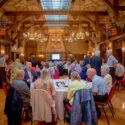










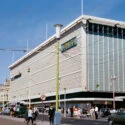








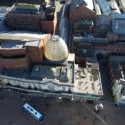









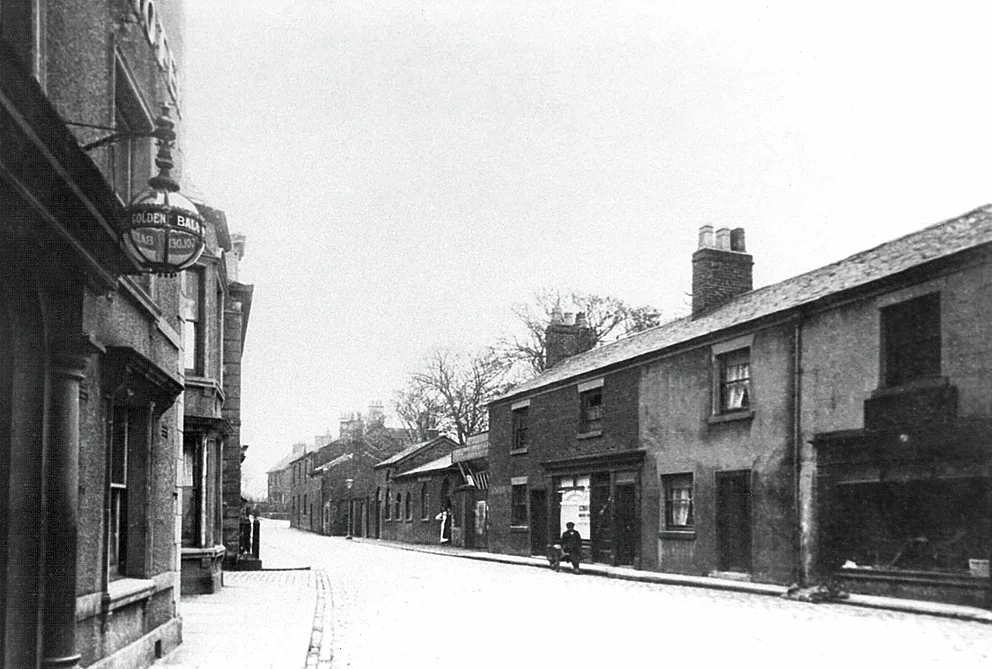
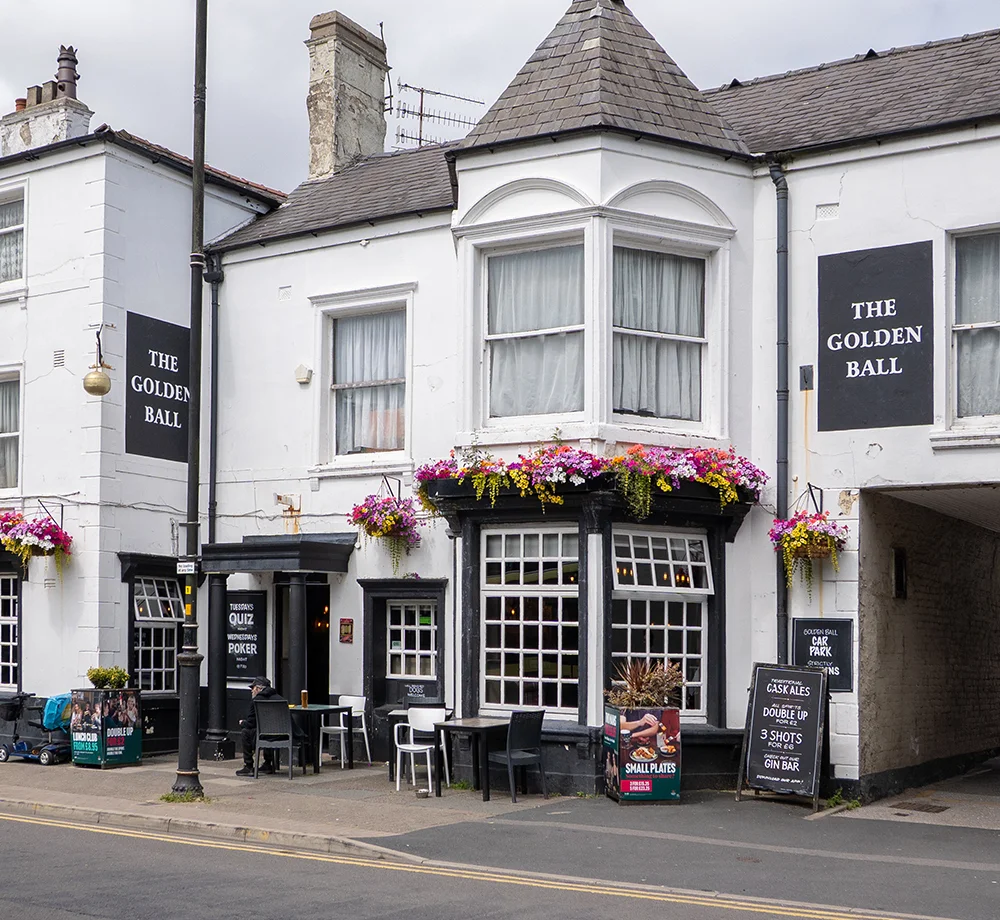
The Golden Ball is on the left. Photo provided by Red Rose Collections
Standing on Ball Street in the heart of Poulton-le-Fylde, The Golden Ball has been one of the town’s best-known inns for more than two centuries. Throughout its history it has served travellers, merchants, magistrates, farmers and local residents, reflecting Poulton’s long-standing role as the principal market town of the Fylde. Although the present building largely dates from the late eighteenth century, with parts rebuilt and altered during the nineteenth century, the Golden Ball is believed to have originated as a coaching inn. Its location close to the Market Place made it an important stopping point for stagecoaches and travellers moving between Lancaster, Preston, Blackpool, Fleetwood and the surrounding villages.
The inn quickly became much more than a place to eat and sleep. During the early nineteenth century it served as Poulton’s reading room, providing newspapers and information for local residents at a time when public libraries were uncommon. It also became an important civic building, hosting meetings of the local court and other official business, highlighting its central role in the life of the town. One of the most significant events in the building’s history took place in 1847, when the first County Court session held in Poulton was conducted in the Golden Ball’s billiard room. Before a permanent courthouse existed, public houses often provided suitable accommodation for legal proceedings, making the Golden Ball an important part of the town’s judicial history.
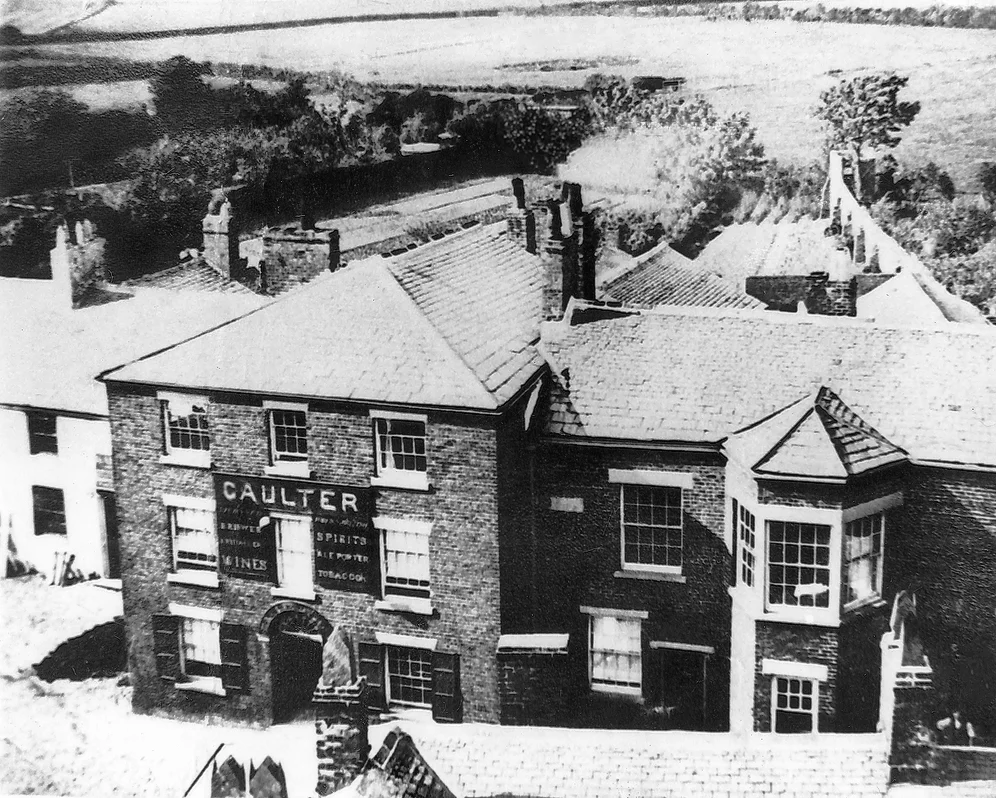
One of the earliest known elevated views of Ball Street, photographed from the tower of St Chad’s Church during the late nineteenth century. Lancashire County Council’s Red Rose Collections identifies William Gaulter as landlord of the Golden Ball at the time the photograph was taken. The image predates the construction of the railway and the cattle market behind the inn, preserving a rare glimpse of this part of Poulton-le-Fylde before the town’s Victorian expansion. Damage to the original print makes the painted nameboard difficult to interpret today, although the archive identifies the landlord as William Gaulter. Photo provided by Red Rose Collections
By the late nineteenth century, the Golden Ball remained at the centre of life in Poulton. Lancashire County Council’s Red Rose Collections identifies William Gaulter as the landlord when one of the earliest elevated photographs of Ball Street was taken from the tower of St Chad’s Church, capturing the inn before the railway and cattle market transformed the land behind it. The large painted nameboard on the front of the building appears today to read either Gaulter or Caulter, although damage and creasing to the original photograph make the lettering difficult to interpret with certainty. The archive’s identification of William Gaulter is supported by a companion photograph from the same collection, making it the most reliable evidence of the landlord’s identity during this period. The image provides a rare glimpse of the Golden Ball at a time when it stood at the heart of one of the Fylde’s busiest market towns.
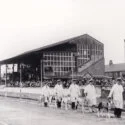
The inn also played a key role in Poulton’s agricultural economy. In 1897, the town’s auction mart was established on land behind the Golden Ball, occupying what had previously been the pub’s gardens. The market included dedicated bull and calf rings, where livestock were tethered before auction. For decades it became one of the busiest livestock markets on the Fylde, drawing farmers and traders from across Lancashire. Although the auction market closed in 1964, several of the original tethering rings remain visible in the present-day car park, providing a rare surviving reminder of Poulton’s farming heritage. The Golden Ball also has an important place in Lancashire’s brewing history. During the nineteenth century, landlord Tom Lockwood joined forces with William Catterall and John Swarbrick to establish Catterall & Swarbrick Brewery Ltd. in 1880, a business that would become well known throughout the Fylde.
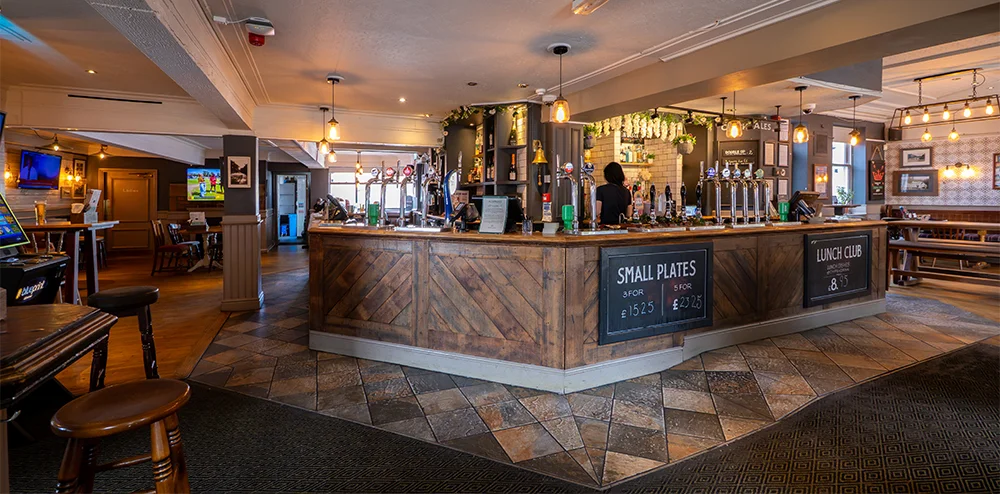
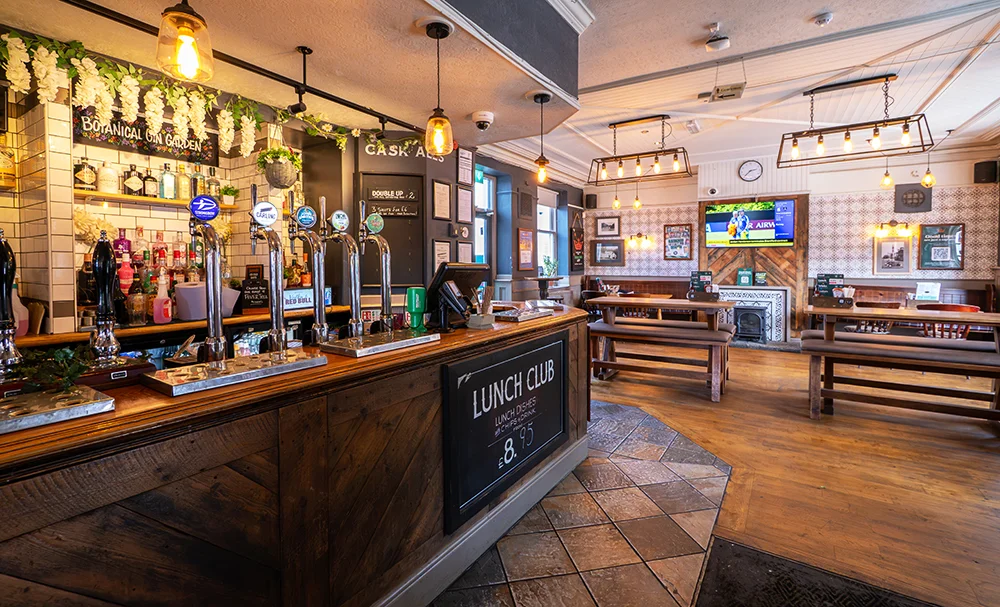
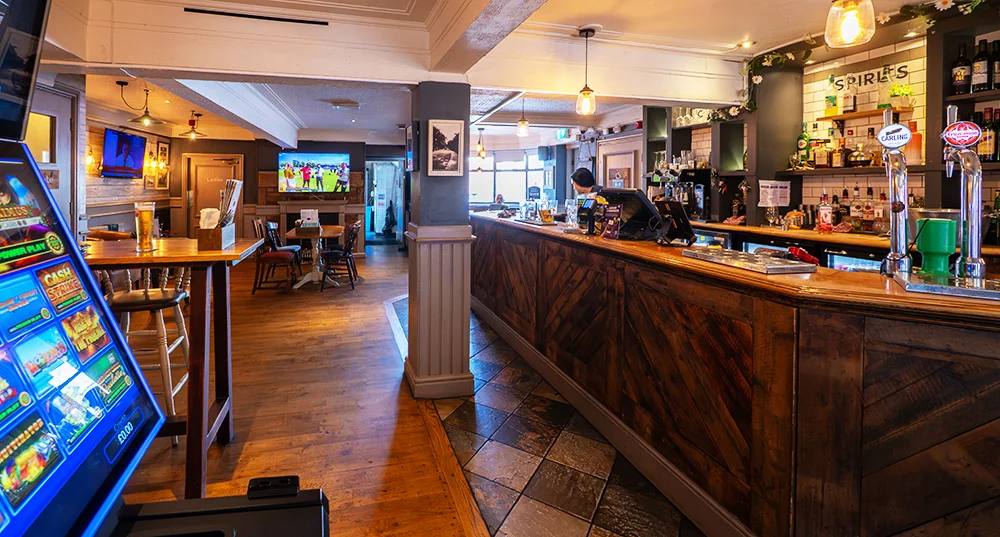
Over the years, the building has adapted to changing times while retaining its historic character. It has operated not only as an inn and hotel, but also as a courtroom, reading room and community meeting place. Today it remains one of the key historic buildings within Poulton’s Conservation Area, while Ball Street itself takes its name from the famous inn, reflecting the influence it has had on the town for generations. More than simply a public house, the Golden Ball has witnessed the evolution of Poulton-le-Fylde from a bustling Georgian market town into the thriving community it is today. From stagecoaches and livestock auctions to court hearings and community gatherings, few buildings have played such a varied role in the town’s history.
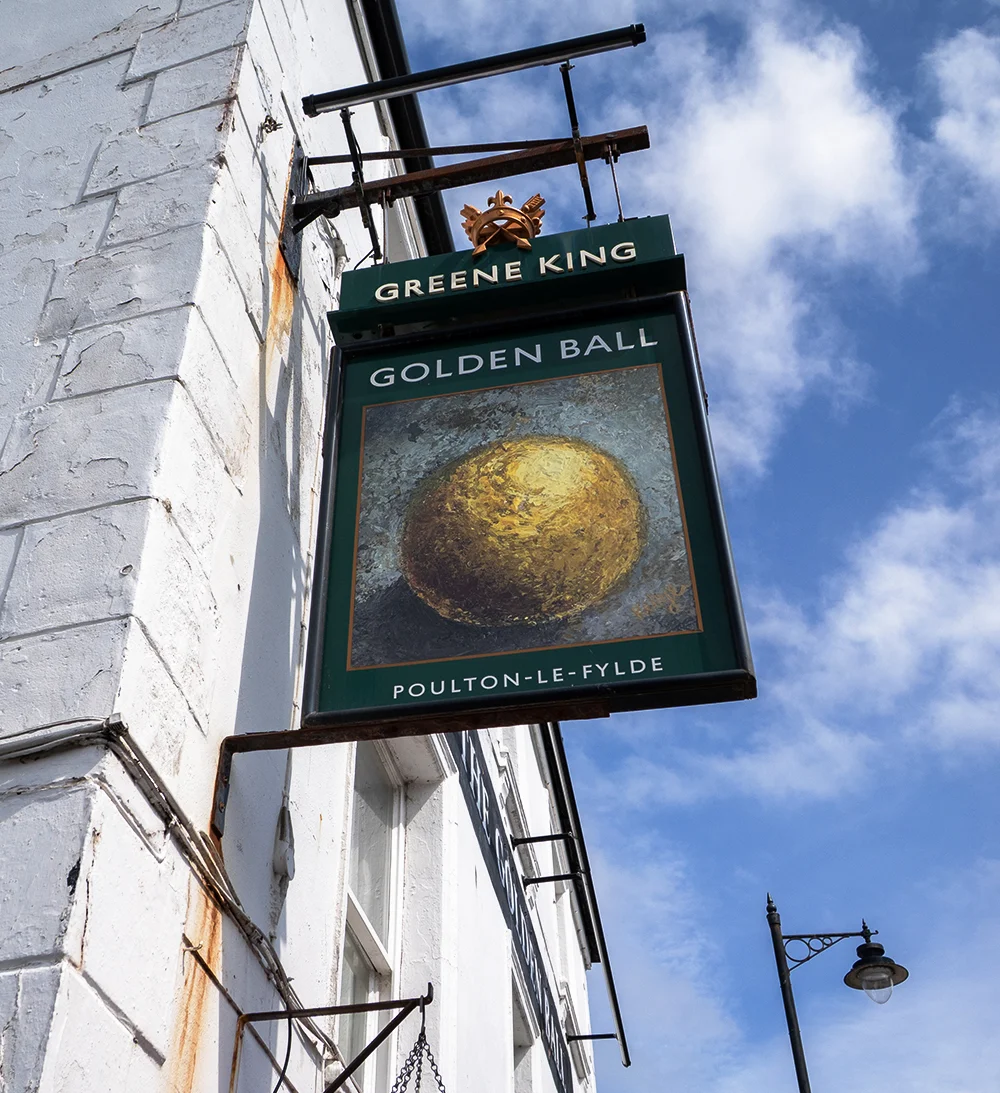
Images by © Deeper Blue Marketing & Design Ltd


