


































Katharine Hepburn and Humphrey Bogart in the African Queen – Promotional movie still. 1951.
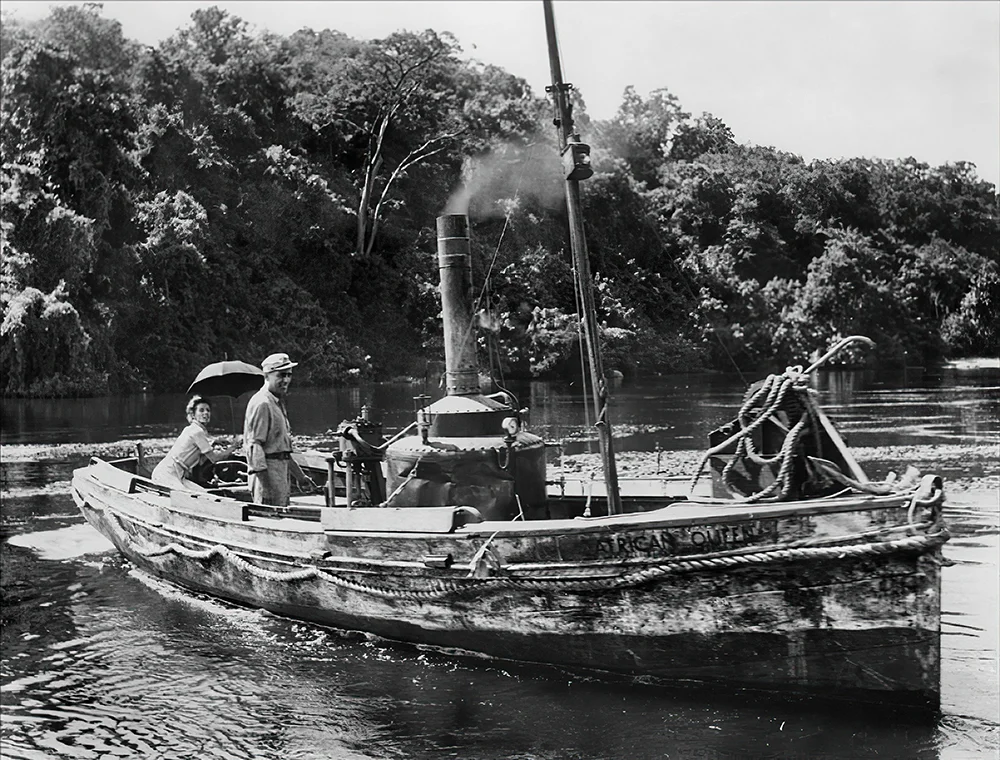
A small steam launch attributed to Lytham Shipbuilding and Engineering Company achieved international recognition through The African Queen, John Huston’s 1951 film starring Humphrey Bogart and Katharine Hepburn. Originally named Livingstone, the vessel preserved in Key Largo, Florida, is generally described as having been built at Lytham in 1912. Its American National Register of Historic Places nomination used the more cautious description of probably having been built there around that date. The connection offers an intriguing link between the Fylde’s industrial past and one of cinema’s best-known boats, although the precise circumstances of its construction remain a subject for further research.
The attribution fits the work undertaken by Lytham’s shipyard. Situated beside Liggard Brook, parallel with Dock Road, Lytham Shipbuilding and Engineering Company produced shallow-draught vessels suited to rivers and inland waterways overseas. Its advertised capabilities included river steamers, launches, tugboats and marine engines, and the yard manufactured hulls, boilers, engines and other machinery on site. Customers in Africa and South America provided important business, with some craft dispatched in sections for reassembly at their destinations. These vessels connected the work of Lancashire shipbuilders with communities and commercial operations thousands of miles from the Ribble estuary.
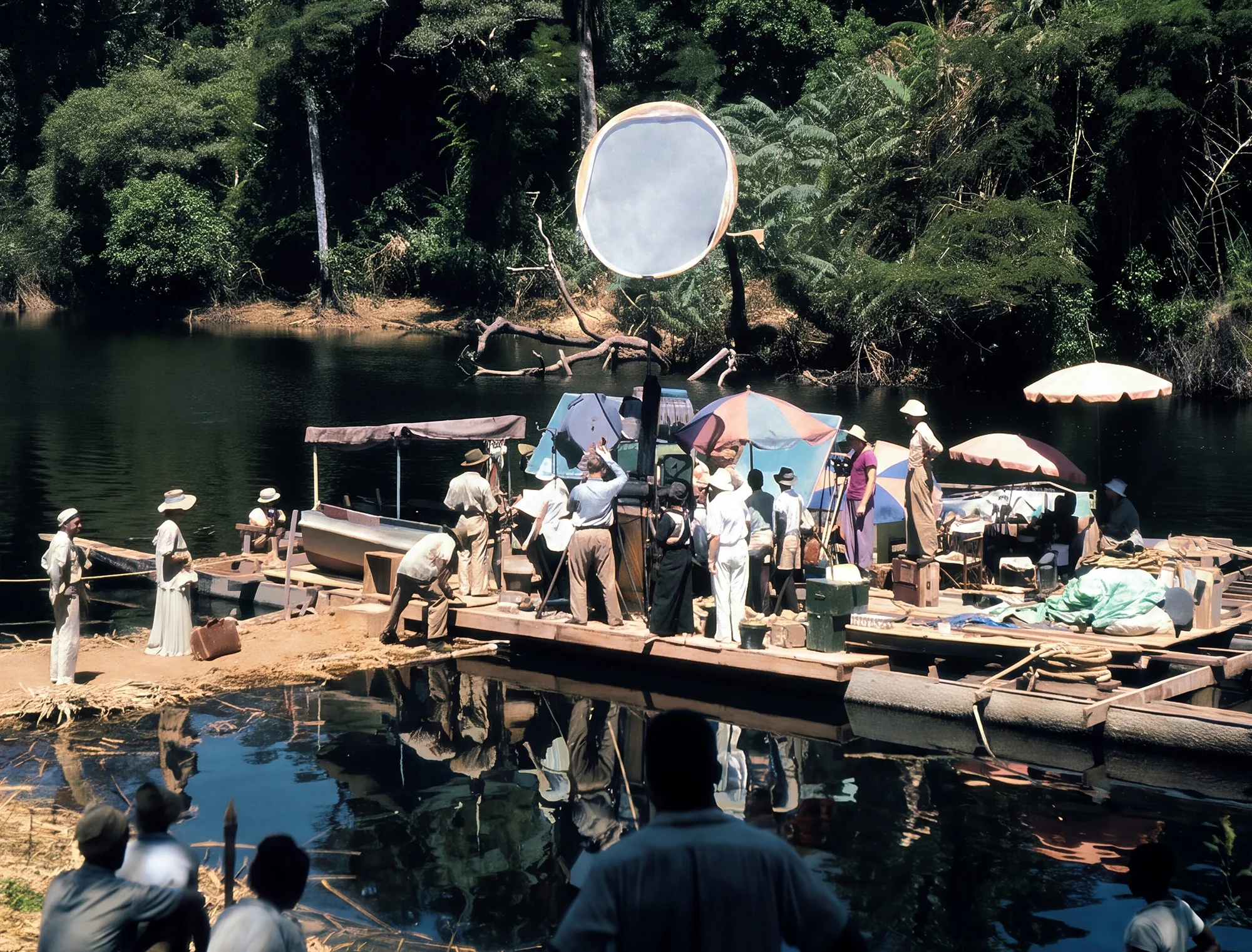
HUMPHREY BOGART and KATHARINE HEPBURN on set location candid with Movie Crew during filming in Africa of THE AFRICAN QUEEN 1951 director JOHN HUSTON novel C.S. Forester screenplay James Agee and John Huston UK-USA co-production Romulus Films / Horizon Pictures / Independent Film Distributors (IFD) / United Artists. 1951.
Livingstone was a modest working launch rather than a passenger liner or ocean-going cargo ship. The American nomination described a vessel approximately 30 feet long, with a riveted metal hull and African mahogany woodwork. Its later fame came from its screen identity as the African Queen, the battered riverboat commanded by Bogart’s character, Charlie Allnut. In the film, set during the First World War, Allnut and Hepburn’s missionary character, Rose Sayer, undertook a hazardous journey through German East Africa. Their voyage combined adventure, conflict and an unlikely romance, with the little launch central to the story.
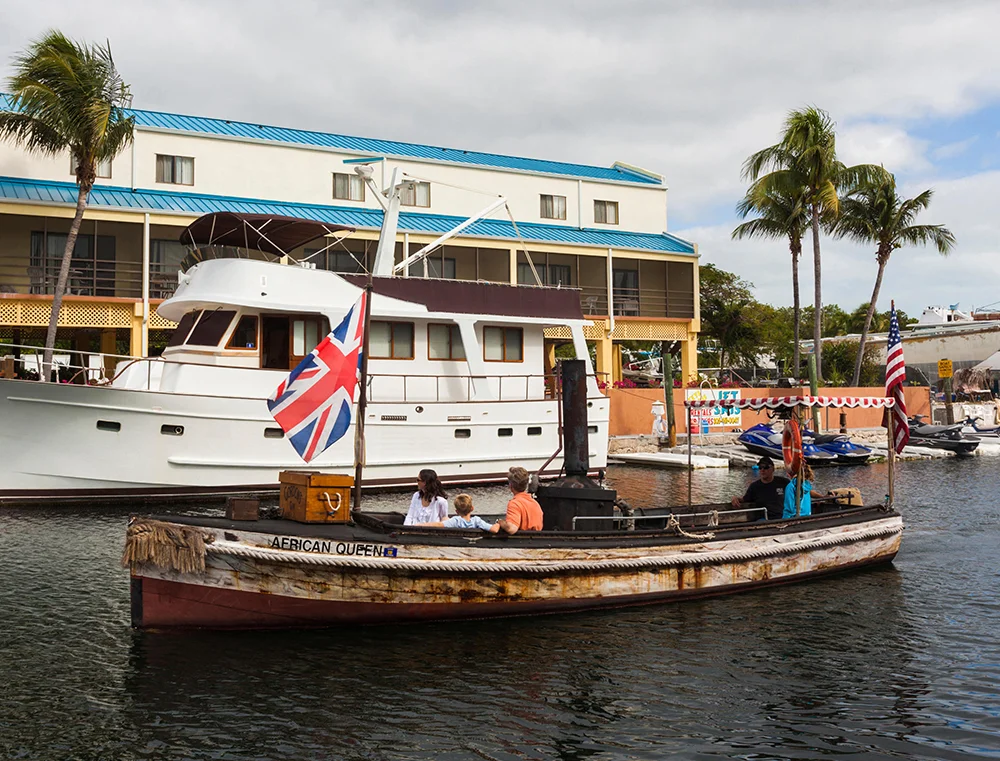
Florida Keys, Key Largo, The African Queen, original boat used in film starring Humphrey Bogart and Katherine Hepburn. 1951.
The production took its cast and crew to Uganda and the Belgian Congo, alongside work undertaken in British studios. Filming aboard such a small vessel presented practical difficulties, particularly with the bulky equipment required for Technicolor photography. Sections of the boat were reproduced on a larger raft so that close views of the actors could be filmed. More than one vessel has subsequently been associated with the production, including a separate boat preserved in Uganda. The launch in Florida should therefore be identified specifically, rather than treating every surviving African Queen as the same craft.
The Florida vessel passed through several owners after its African working life and eventually became a visitor attraction at Key Largo. It was added to the United States National Register of Historic Places in 1992, recognising its association with the film. Keeping it operational required substantial restoration, including replacement machinery and later repairs to the hull. A further restoration in 2012 returned the launch to service during the year celebrated as its centenary, allowing passengers to experience a surviving vessel associated with Bogart and Hepburn’s screen journey.
The Lytham connection was also remembered locally. Lytham Heritage Group’s archive includes newspaper cuttings concerning the film and its supposed links to the town, together with an article about a shipyard exhibition featuring a model of the African Queen. The cautious wording of the archive catalogue reflects the distinction between a widely repeated attribution and a fully established construction history. Nevertheless, the American nomination provides a substantial documentary foundation for the association. The story places Lytham’s riverboat-building tradition within an international narrative, linking a small Lancashire shipyard with African waterways, Hollywood filmmaking and the preservation of a famous launch in Florida.
A further possible Lytham connection comes through Ronald Garside, known as Ronnie, who married Louise Mary Margaret Harland and later lived in Kenya. Family member James Garside recalls that Ronnie was instrumental in arranging a boat for the production of The African Queen, although Ronnie’s precise role has yet to be established through contemporary records.
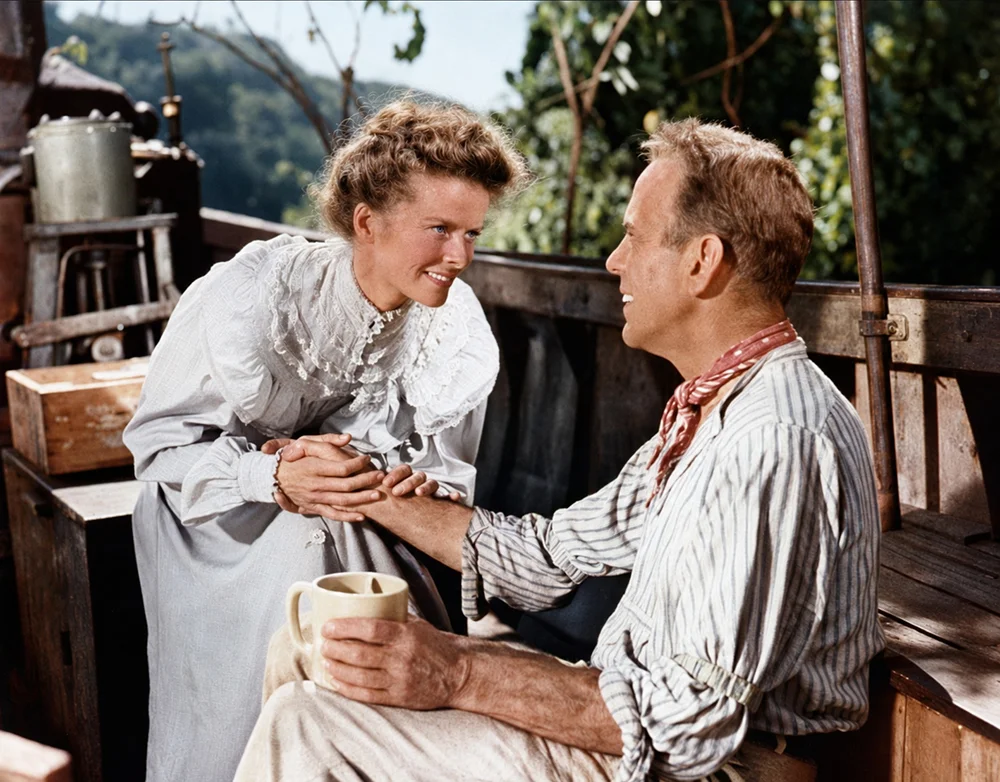
KATHARINE HEPBURN, HUMPHREY BOGART, THE AFRICAN QUEEN, 1951.


