
















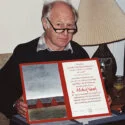




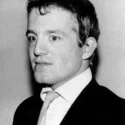
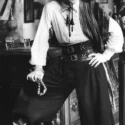









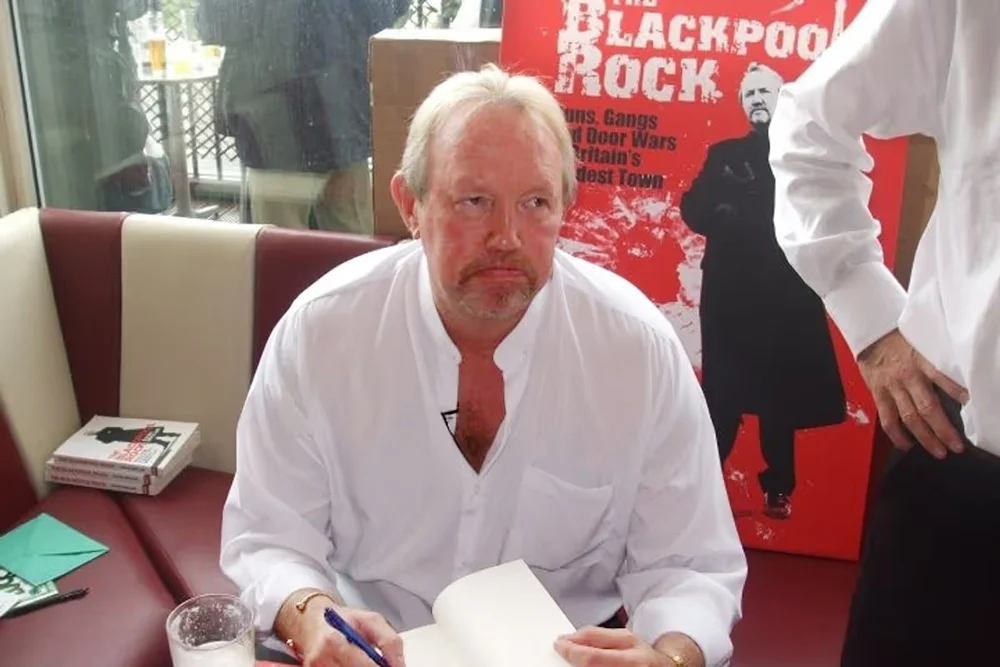
Steve Sinclair in the Parks Art Deco Cafe at Stanley Park, 8 October 2026. © Deeper Blue Marketing & Design Ltd
Long before Steve Sinclair became known as “The Blackpool Rock”, his life was centred hundreds of miles from the Fylde Coast. His early years were associated with the Portsmouth and Havant area, where fighting and boxing became an important part of his youth.
Sinclair developed into an amateur light-heavyweight boxer, building a record reported in 1982 as 9 wins from 25 contests. That year, while working as a stores keeper aboard the QE2, he found himself sharing a makeshift boxing ring with one of the most famous fighters in the world. During a voyage from New York to Britain, world welterweight champion Sugar Ray Leonard was filming aboard the liner when producers asked for a member of the crew willing to spar with him. The 6ft 1in Sinclair volunteered. What was intended as an exhibition became rather more competitive after Sinclair caught Leonard near the eye. Leonard responded in the following round with a body shot that put the considerably larger Sinclair down. It was only one episode in a life increasingly shaped by fighting. Sinclair subsequently became established in Blackpool, where the skills and reputation he had developed found a very different arena – the doors of the resort’s nightclubs.
By the 1980s, Blackpool’s enormous night-time economy was attracting millions of visitors, but the clubs also faced drunken violence, football hooliganism, drugs and criminals seeking a foothold in the lucrative entertainment trade. It was in this environment that Sinclair would build the reputation which eventually earned him the nickname “The Blackpool Rock.” Sinclair’s route into that world began long before he became associated with Blackpool’s club doors. He had boxed as a young man and developed a reputation as a fighter.
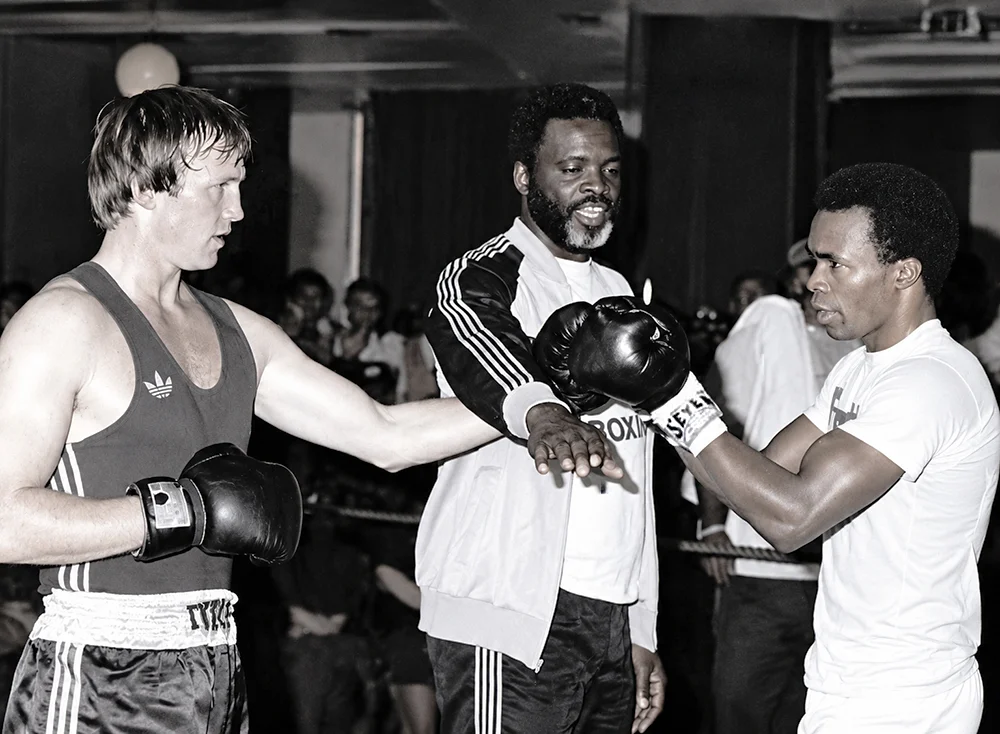 In September 1982, while working as a stores keeper aboard the QE2, he volunteered to spar with world boxing champion Sugar Ray Leonard during the filming of a television programme. Contemporary news reports described Sinclair as a 6ft 1in amateur heavyweight with a 20–5 record. What was supposed to be controlled sparring became rather more serious after Sinclair caught Leonard near the eye. Leonard responded with a body shot that put the much larger Sinclair down.
By the 1980s, Sinclair had become part of Blackpool’s increasingly difficult nightclub scene. The resort was changing. Cheap alcohol and large groups of visiting revellers were combining with football violence, drugs and criminals attempting to establish themselves within the lucrative club trade. Sinclair worked some of the town’s busiest and toughest doors and became known for being prepared to meet violence with violence. His later memoir describes repeated confrontations with drunken gangs, football hooligans, drug dealers and rival doormen. Fights could result in serious injuries, hospital visits and police involvement, while weapons were an ever-present danger. Sinclair himself was stabbed and was involved in incidents involving knives, baseball bats and firearms.
It was a world in which the boundaries between legitimate security work and Blackpool’s criminal underworld could become blurred. Sinclair did not subsequently present his life simply as that of a doorman keeping troublesome customers out of nightclubs. His own account included debt collecting and encounters with figures from organised crime, while he and some of those around him attracted considerable police attention. Milo Books later described Sinclair and his associates as having been branded organised gangsters and blamed by police for serious unsolved crimes. Those allegations should be distinguished from criminal convictions; the book recounts a world in which reputation, police suspicion and criminal activity frequently overlapped.
Blackpool also brought Sinclair into contact with criminals from well beyond the Fylde Coast. His memoir recalls connections with figures associated with the Scottish underworld and the circle surrounding Glasgow crime boss Arthur Thompson. Paul Ferris, who became one of Scotland’s most notorious underworld figures, was among those whose connections reached into Blackpool. Sinclair’s reputation consequently became about much more than controlling nightclub queues. To some he was the man capable of dealing with the violence that erupted when hundreds of intoxicated people descended on Blackpool’s clubs. To the police, his activities and associations attracted a very different kind of attention. His eventual book was promoted with the description that police had regarded him as “Public Enemy Number One”, while Sinclair himself made little attempt to disguise the brutality of the life he had led.
Yet his story took an unexpected turn. As the regulation of Britain’s door-security industry changed, Sinclair moved into training the next generation of door supervisors. He attended Blackpool College, gaining a professional teaching qualification, and subsequently became involved in training people for the Security Industry Authority qualification. By the time his memoir was reviewed in 2008, Sinclair and a fellow trainer had reportedly put more than 1,000 people through SIA training. The transformation was striking. A man who had spent years settling confrontations physically was now teaching subjects that included conflict management. Sinclair acknowledged the reputation for violence associated with some old-style doormen, but also argued that working the doors in a resort such as Blackpool could be a dangerous and largely thankless occupation.
 His experiences eventually became The Blackpool Rock, subtitled Guns, Gangs and Door Wars in Britain’s Wildest Town. Published by Milo Books in 2008, the original illustrated edition ran to 272 pages and placed Sinclair’s own life against the darker side of Blackpool’s nightlife. Later paperback and digital editions followed.
Rather than presenting the resort familiar from postcards and family holidays, the book documented a very different Blackpool – nightclub doors late at night, violent confrontations, police stations, hospital visits, criminal connections and the constant importance of reputation. It also provided an unusually candid first-hand account of an era when the people controlling the doors of clubs could themselves become powerful figures within the night-time economy.
Sinclair’s notoriety subsequently reached television. In 2009, he appeared in the second series of Danny Dyer’s Deadliest Men, where he was introduced as former football hooligan, boxer and bouncer Steve “The Blackpool Rock” Sinclair. The programme revisited his years of violence, including the encounter with Sugar Ray Leonard and his experiences of being attacked with a knife.
The Blackpool Rock remains an uncomfortable but revealing record of one aspect of the resort’s relatively recent history. Sinclair’s story does not represent everyone who worked Blackpool’s doors, nor every part of its nightlife, but it documents a period when the town’s huge entertainment industry attracted not only millions of holidaymakers but hooligans, drug dealers, organised criminals and men whose reputations were built on their ability to use violence. By putting those experiences into print, Steve Sinclair preserved a first-hand account of a Blackpool far removed from the Tower, illuminations and traditional seaside image – the darker world that existed after the clubs opened and the doors came under the control of some of the toughest men in town.
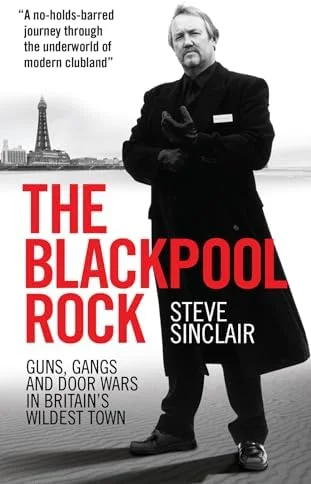
Click on the image above to buy the book on Amazon
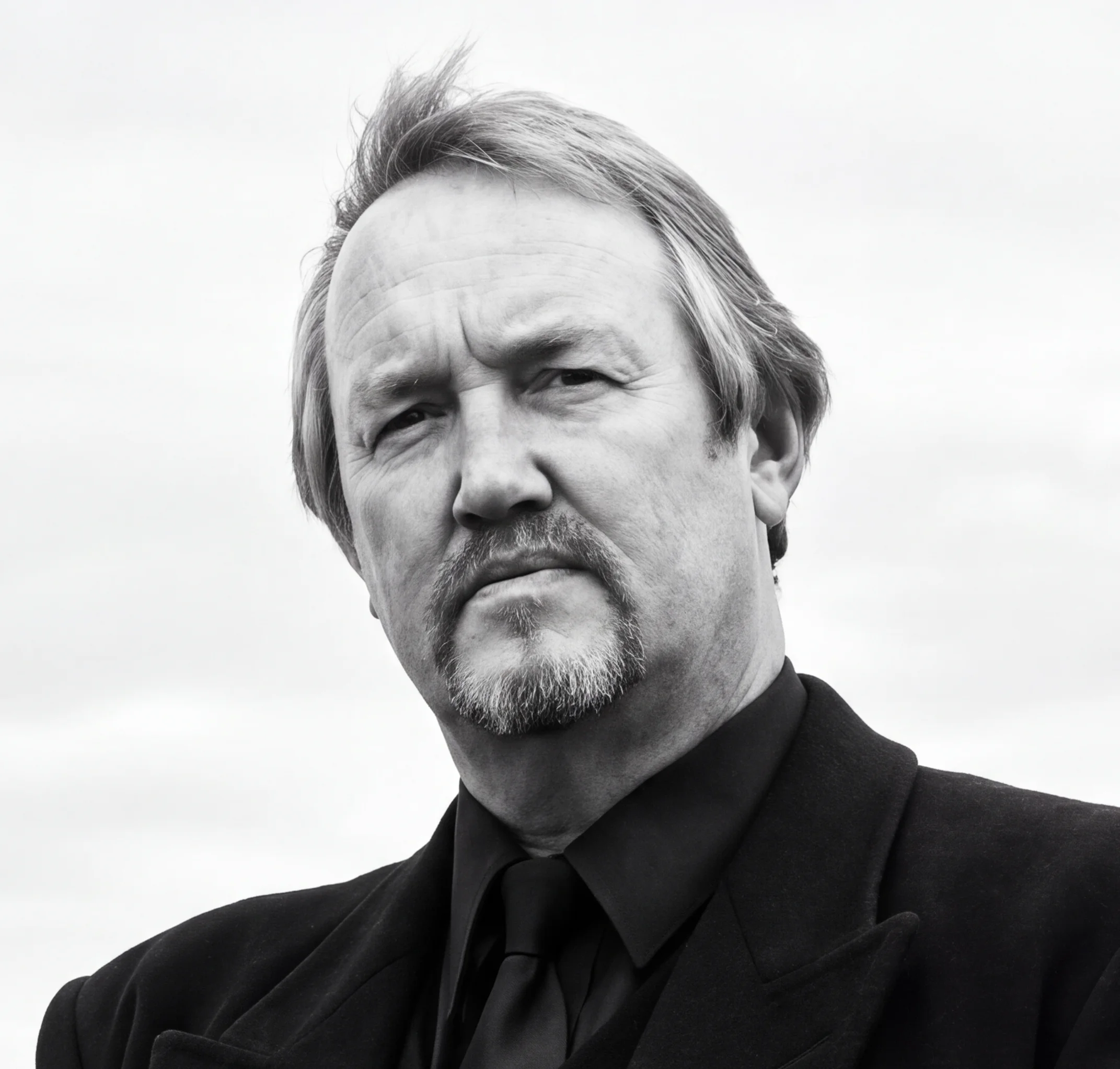
Additional Images © Provided by Steve Sinclair
Background Image © Deeper Blue Marketing & Design Ltd


