











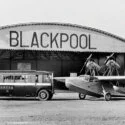
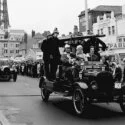
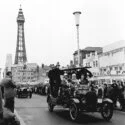














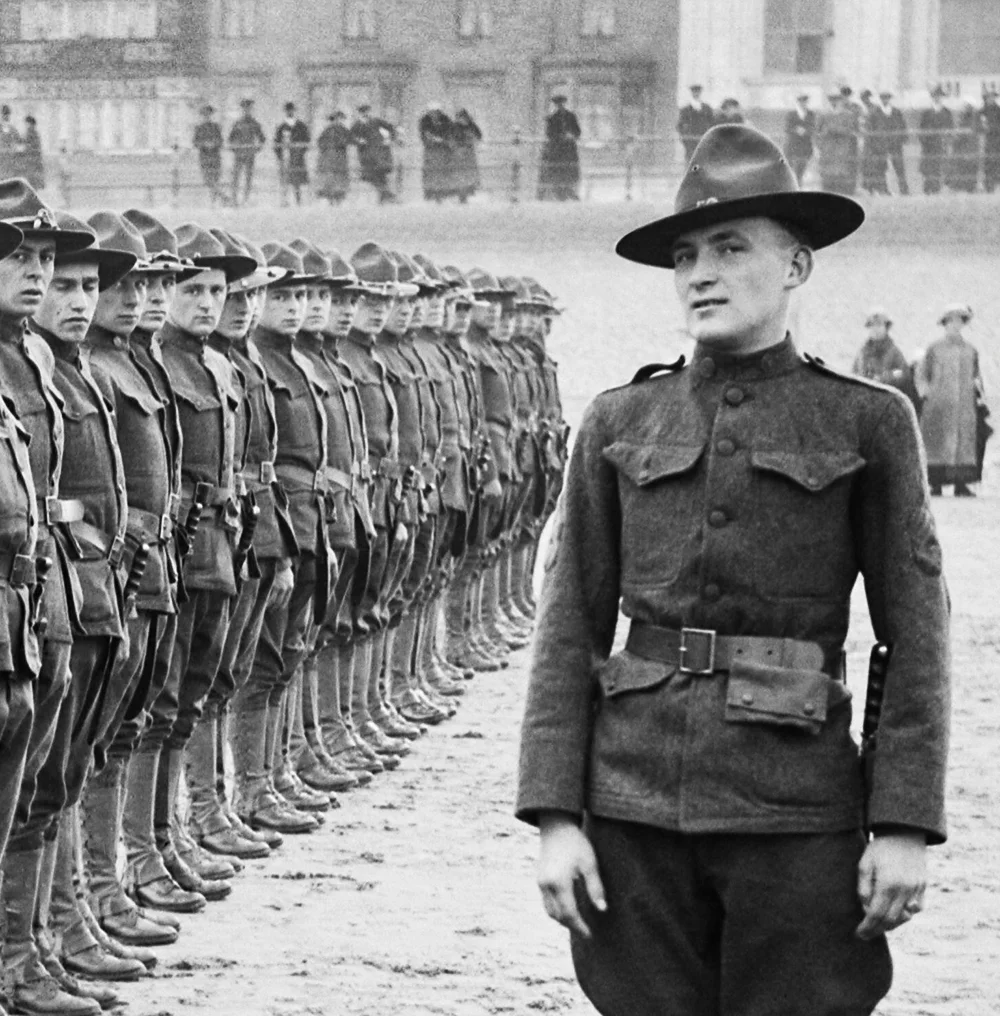
First American troops in England train at Blackpool. 1 June 1917. © Historic photograph from Alamy. Digital restoration and enhancement © Deeper Blue Marketing & Design Ltd 2026
The arrival of the first United States military personnel in Blackpool during the First World War marked a significant moment in both the town’s history and the wider story of the American Expeditionary Forces. Following the United States’ declaration of war against Germany on 6 April 1917, Britain became the first destination for thousands of American servicemen crossing the Atlantic before continuing to the battlefields of France. Among the earliest to arrive were members of U.S. Army Base Hospital No. 4, who landed at Liverpool on 18 May 1917 before being billeted in Blackpool. They were the first detachment of the American Army to arrive in Britain after the United States entered the war.
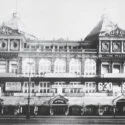
Blackpool had already become one of Britain’s principal military training centres during the war. Hotels, boarding houses and public buildings had been requisitioned to accommodate troops, while the town’s extensive seafront, open spaces and excellent railway connections made it an ideal location for training and organisation before deployment overseas. American medical personnel joined the many British soldiers already based in the resort, receiving a warm welcome from local residents and civic leaders.
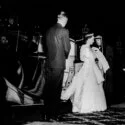
The men of Base Hospital No. 4, recruited largely from Lakeside Hospital in Cleveland, Ohio, were responsible for establishing one of the first American military hospitals in France. While their officers and nurses travelled to London, where they were received by King George V and Queen Mary at Buckingham Palace, many of the enlisted men were accommodated in Blackpool. The Mayor of Blackpool hosted a civic dinner in their honour, recognising the historic importance of their arrival and the growing alliance between Britain and the United States.
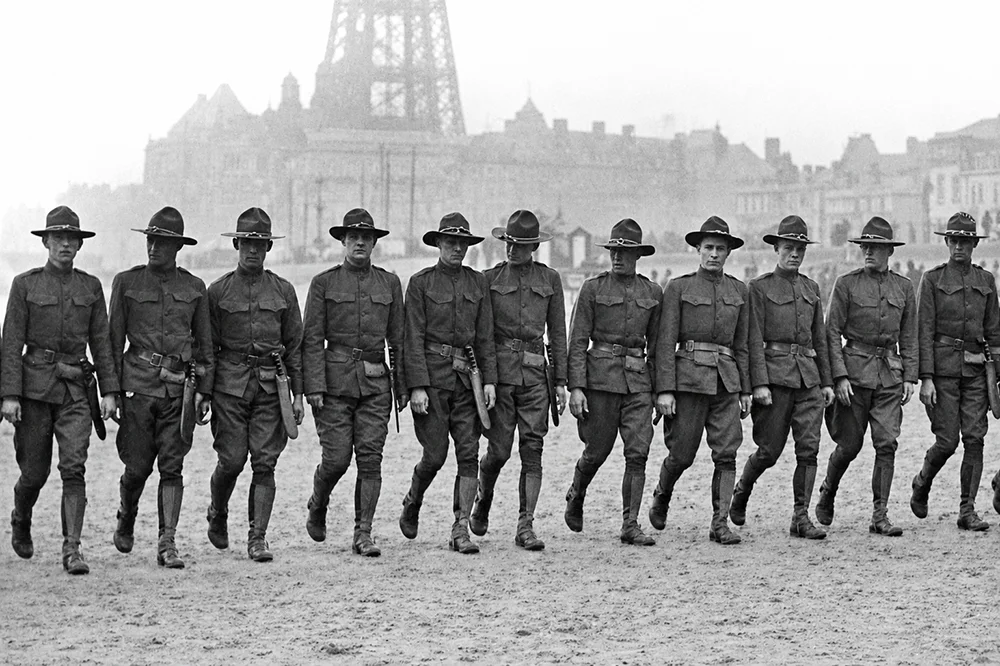
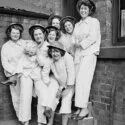
First American troops in England train at Blackpool. 1 June 1917. © Historic photograph from Alamy. Digital restoration and enhancement © Deeper Blue Marketing & Design Ltd 2026
As increasing numbers of American troops crossed the Atlantic during 1917 and 1918, Blackpool continued to play an important role in their journey. The resort provided accommodation, organisation and training for various American units before they crossed the English Channel to France. The wide sands of Blackpool’s beaches and nearby training areas offered valuable space for physical exercise, military drill and preparation, while the town’s existing military infrastructure allowed troops to be processed efficiently before moving to the Western Front.
Although the earliest arrivals in Blackpool were predominantly medical personnel rather than combat infantry, they formed part of the American Expeditionary Forces (AEF) that would eventually number more than two million soldiers in Europe. Later units, including engineers, railway troops and infantry divisions, followed through Britain as the American military presence expanded rapidly during the final years of the war.
The presence of American servicemen brought a new atmosphere to wartime Blackpool. Residents welcomed the newcomers into cafés, theatres and places of entertainment during periods of leave, creating friendships that were remembered long after the war had ended. For many Americans, Blackpool provided their first experience of Britain before the harsh realities of the Western Front, while for local people it marked the beginning of a close relationship with the United States that would continue throughout the twentieth century.
Today, the arrival of the first American military contingent in Blackpool is remembered as an important chapter in the town’s wartime history. As one of the first places in Britain to welcome the newly formed American Expeditionary Forces, Blackpool played a small but significant role in preparing United States personnel for service in Europe, strengthening the alliance that helped secure victory in the First World War.
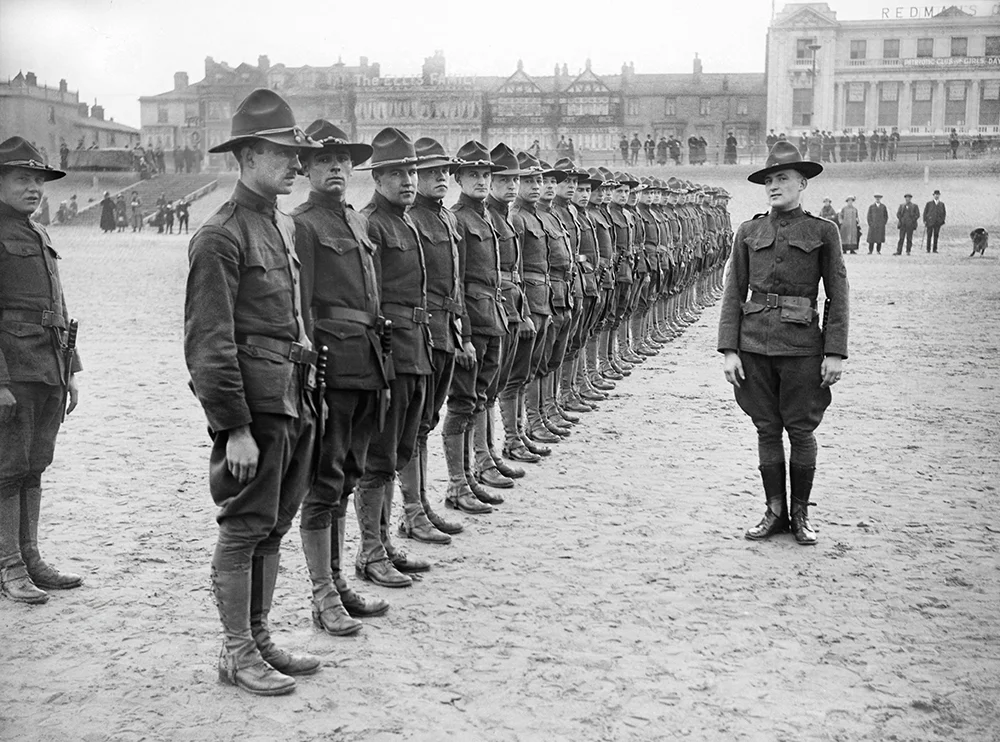
First American troops in England train at Blackpool . 1 June 1917. © Historic photograph from Alamy. Digital restoration and enhancement © Deeper Blue Marketing & Design Ltd 2026


