




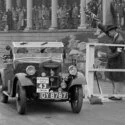


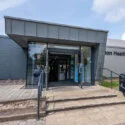





















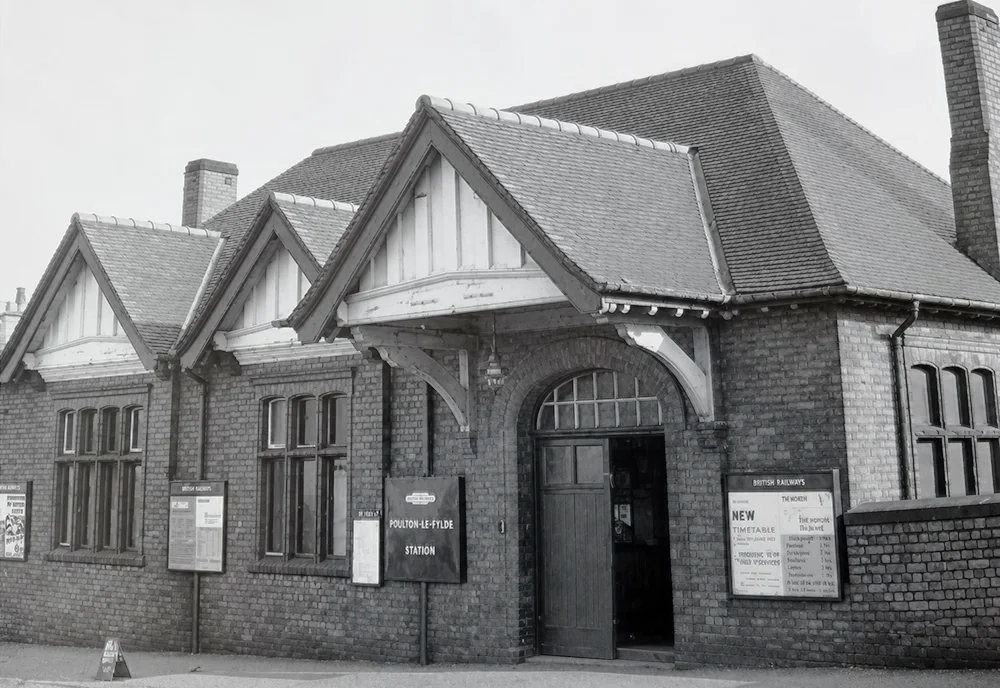
This image of Poulton Railway Station (date unknown) was provided by Poulton-le-Fylde Historical & Civic Society.
The arrival of the railway in 1840 marked one of the most significant turning points in the history of Poulton-le-Fylde. For centuries the town had been the principal commercial centre of the Fylde, serving as its market town and an important inland trading hub. The opening of the Preston and Wyre Railway connected Poulton directly with Preston and the newly created port of Fleetwood, bringing faster transport for both passengers and goods while briefly reinforcing the town’s commercial importance. The railway formed part of the ambitious vision of Sir Peter Hesketh-Fleetwood, who planned to transform Fleetwood into a major port. Constructed by engineers including George Stephenson, Robert Stephenson and Joseph Locke, the line officially opened on 15 July 1840. At the time it was even considered a potential section of the principal route between London and Scotland, with passengers travelling by train to Fleetwood before continuing by steamship to Scotland. This remained the preferred route until railway engineers succeeded in carrying the railway directly over Shap Fell in 1848, reducing Fleetwood’s national importance.
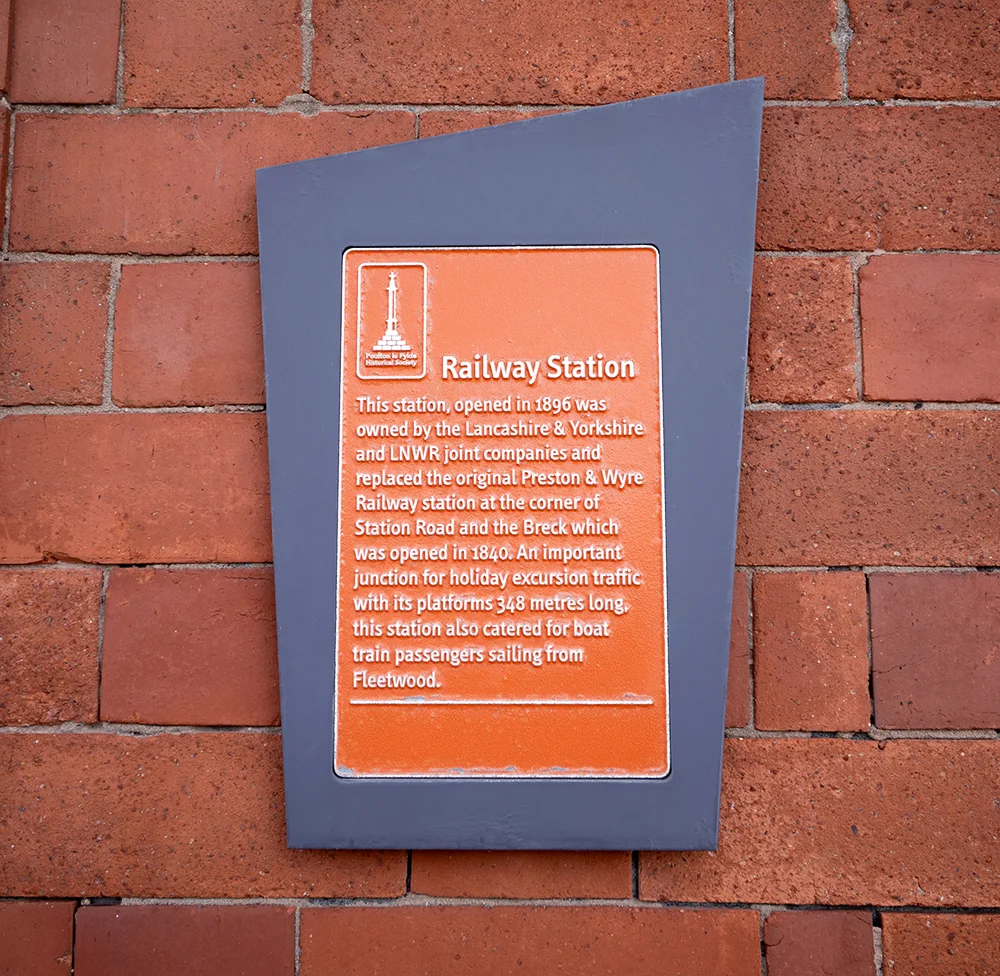
 Poulton’s first railway station stood at the junction of Station Road and Breck Road, on the site now occupied by Crocus Court. The station featured a level crossing across Breck Road and quickly became a busy interchange for both freight and passenger services. Two inns, the Railway and Station Hotel and the Royal Oak, were built nearby to accommodate travellers arriving in the town. The railway immediately changed the way people travelled across the Fylde. Before 1846, visitors heading for the growing seaside resort of Blackpool left the train at Poulton before completing the final stage of their journey by horse-drawn omnibus or carriage. For six years, the town became the principal gateway to Blackpool, bringing increased trade to local inns, shops and businesses. That role ended when the branch line from Poulton to Blackpool opened in 1846, allowing visitors to travel directly to the resort by train.
 The railway also benefited Poulton’s livestock trade. Irish and Scottish cattle arriving through the expanding port of Fleetwood could now be transported efficiently to Poulton, where a successful fortnightly cattle market developed. Local farmers and merchants found new opportunities as agricultural produce and imported goods could be moved more quickly than ever before. Ironically, the railway that initially strengthened Poulton’s economy also contributed to its gradual decline in regional importance. As Fleetwood grew into a major port and Blackpool expanded into one of Britain’s leading seaside resorts, both towns increasingly overshadowed their older neighbour. The Customs House was transferred from Poulton to Fleetwood, while Blackpool’s direct railway connection diverted visitors away from the market town. Nevertheless, Poulton remained an important railway junction, particularly after the Blackpool branch opened, with trains serving both the coast and the port for many decades.
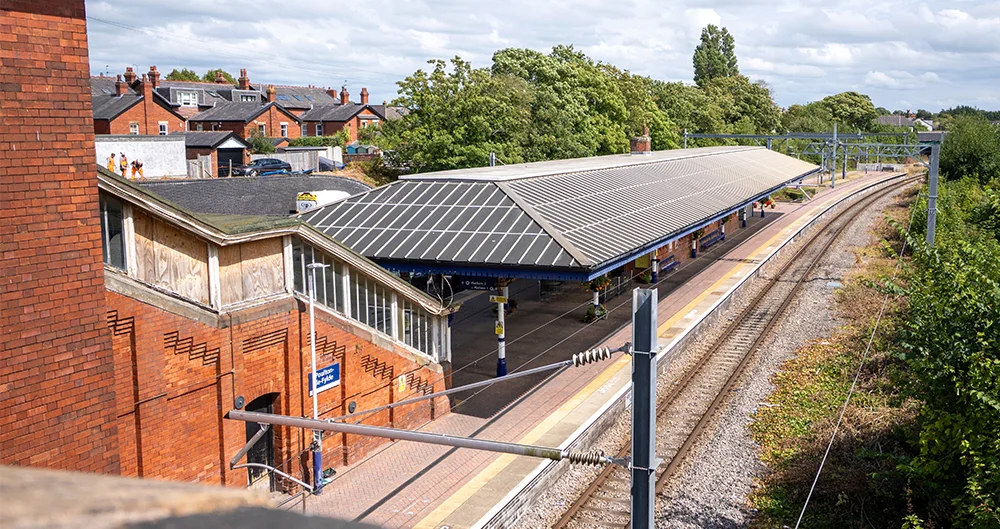
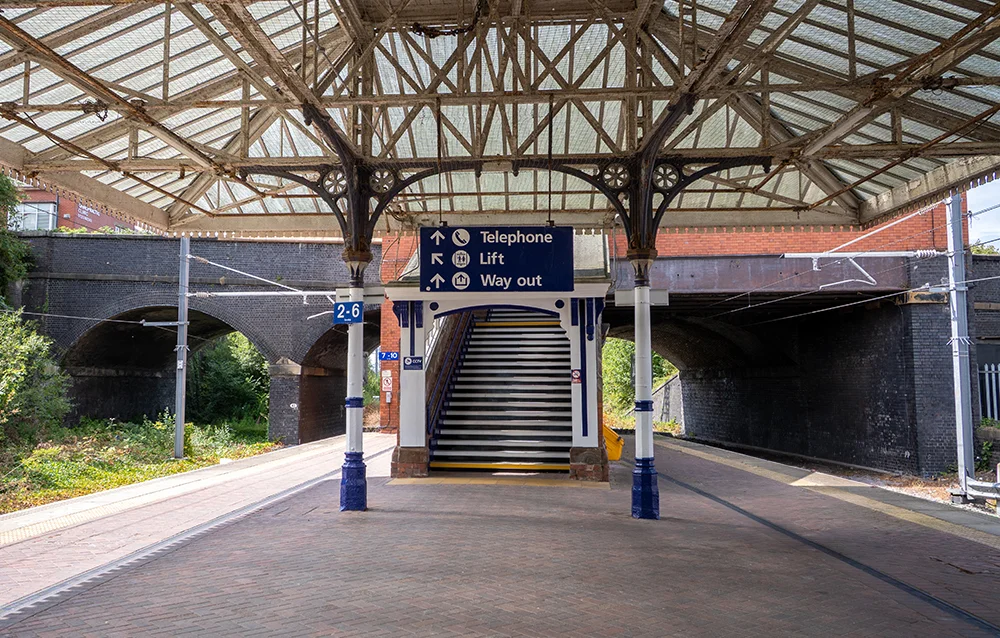
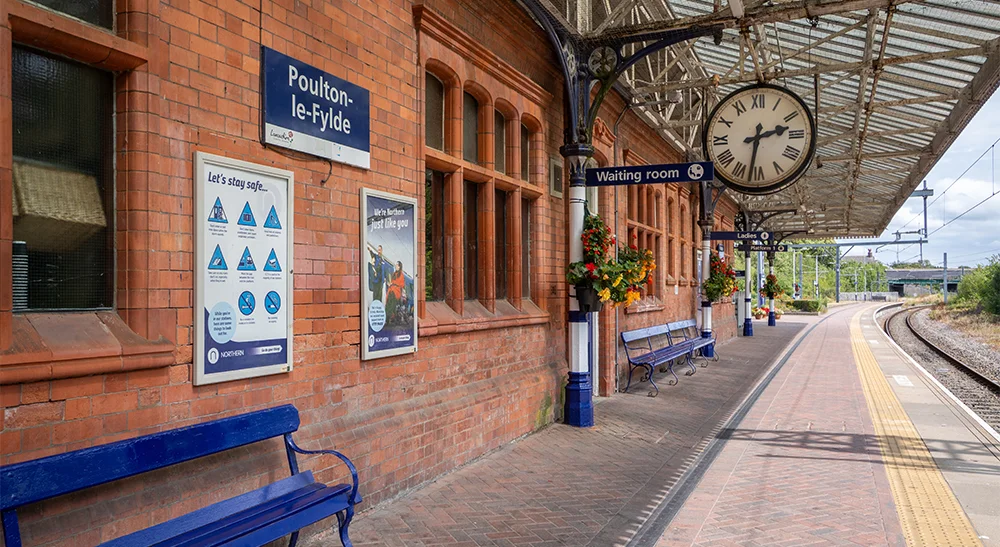
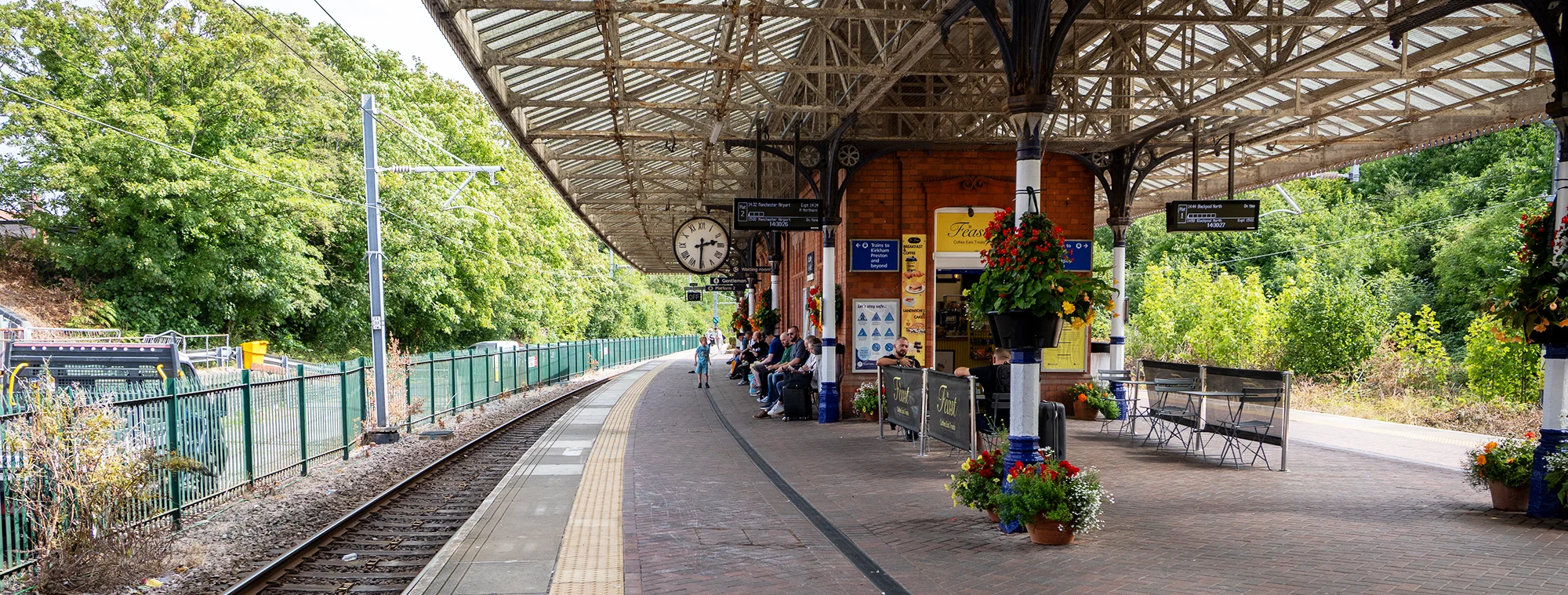
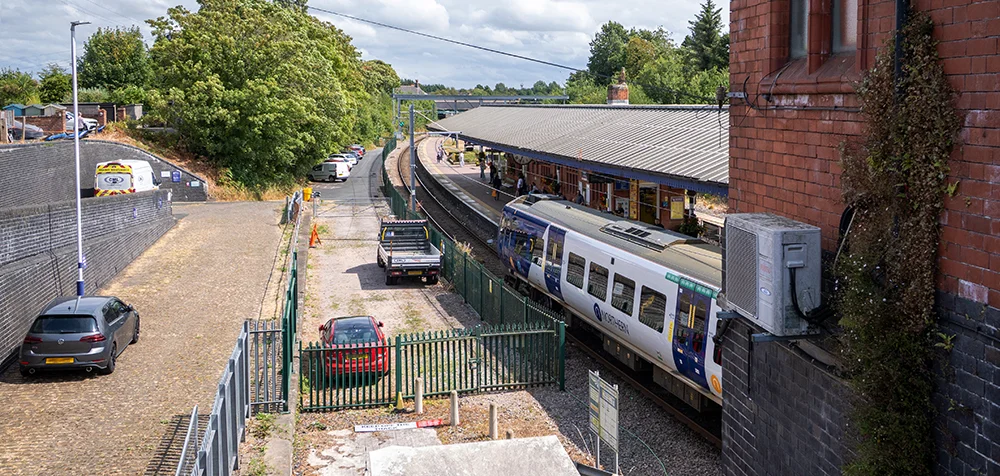
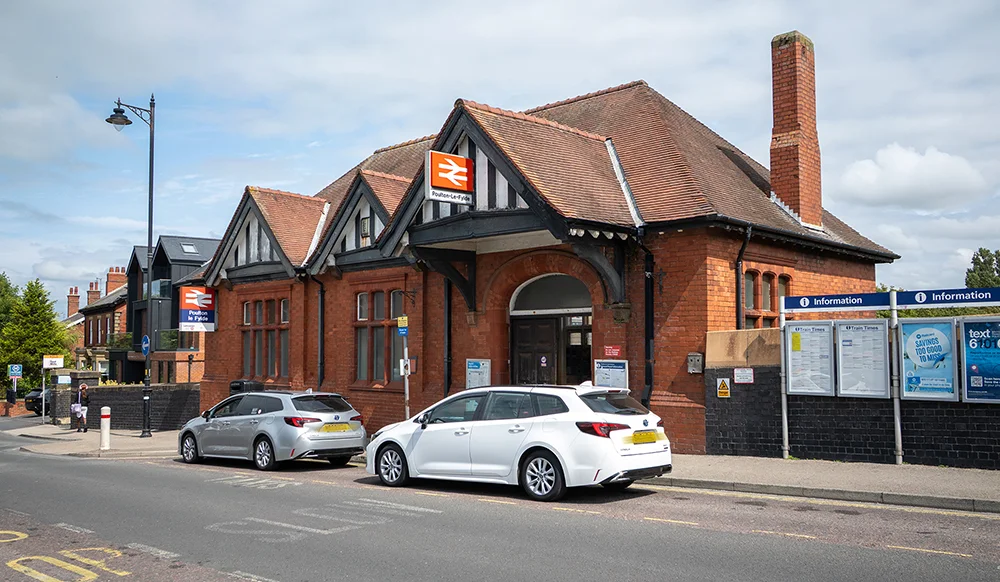
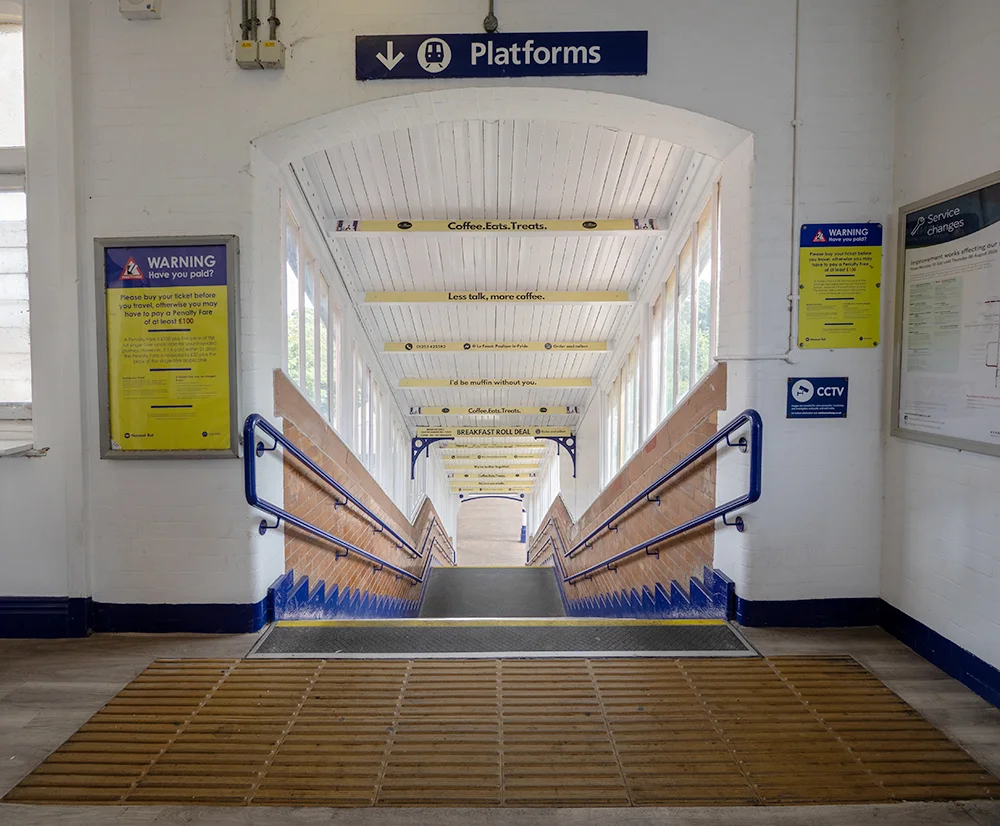 In 1896, the original station was replaced by the present station a short distance away at the top of Breck Road, while the former station site continued to serve as a goods yard for many years. Although little survives of the original 1840 station today, the arrival of the railway transformed Poulton’s relationship with the rest of Lancashire and played a pivotal role in shaping the development of the Fylde Coast during the Victorian era.
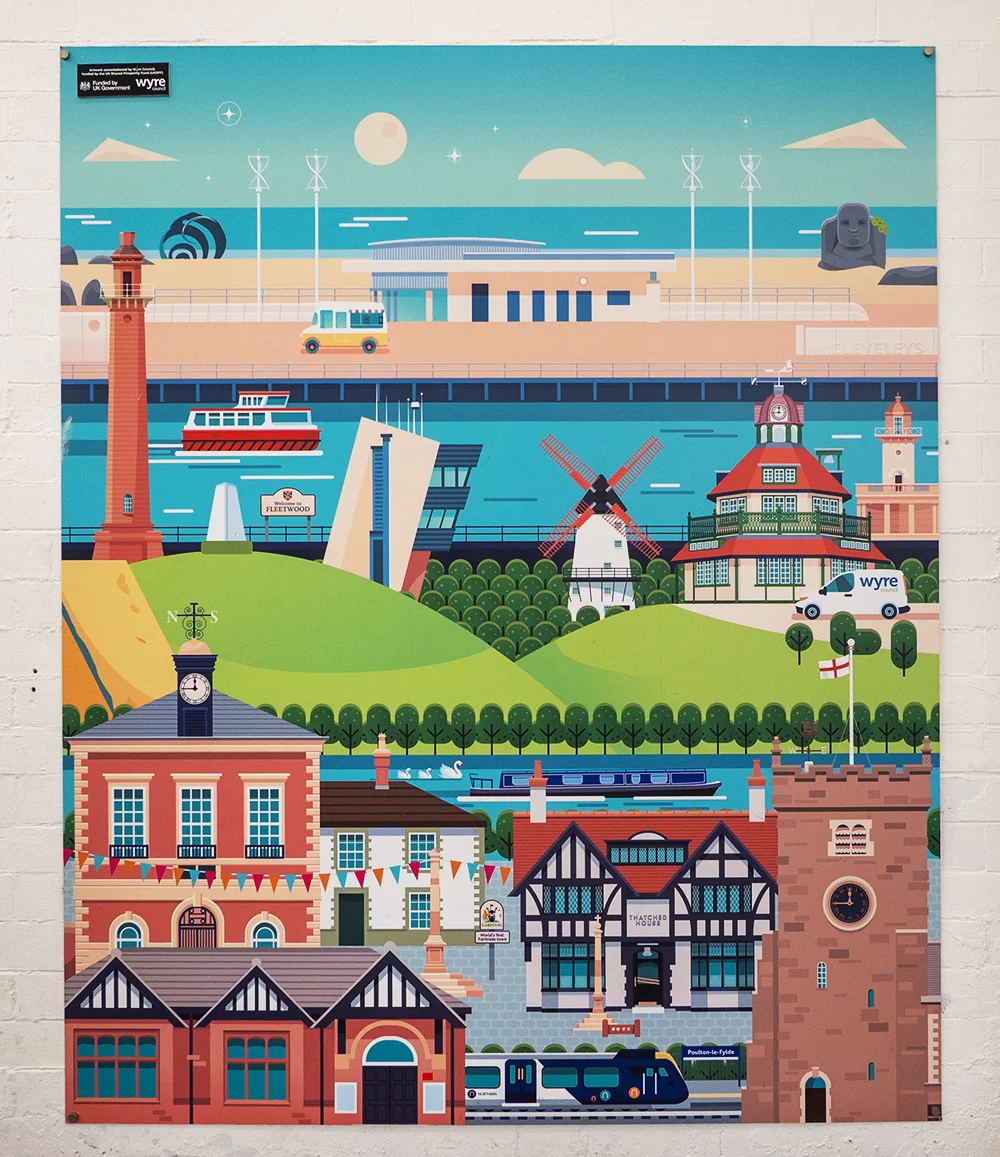
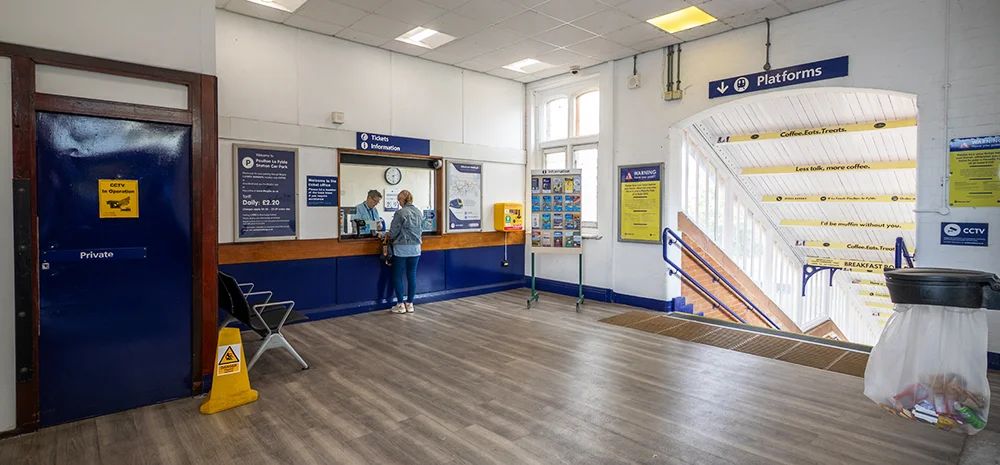
This artwork was commissioned by Wyre Council and was funded by the UK Shared Prosperity Fund (UKSPF). It is currently on display near the station’s main ticket counter.
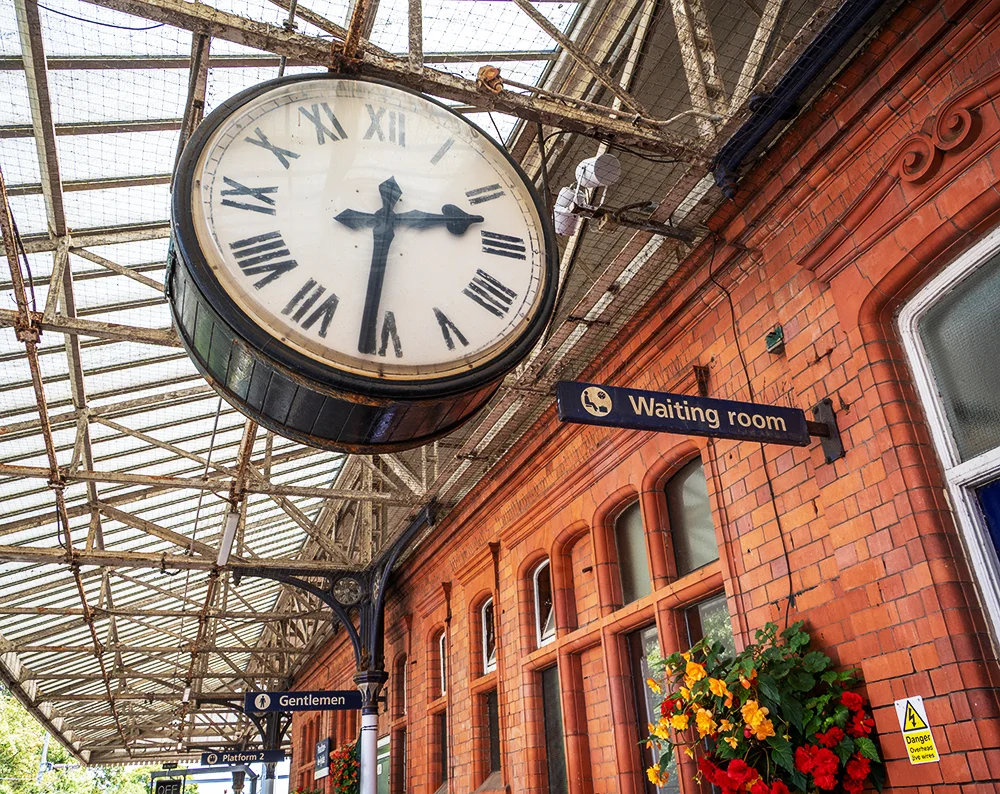
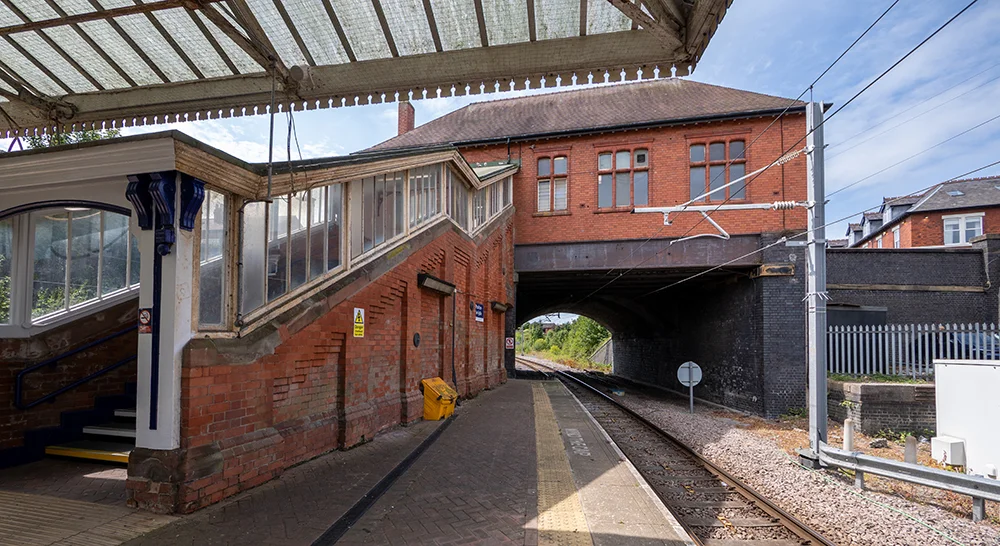
Images by © Deeper Blue Marketing & Design Ltd


