






























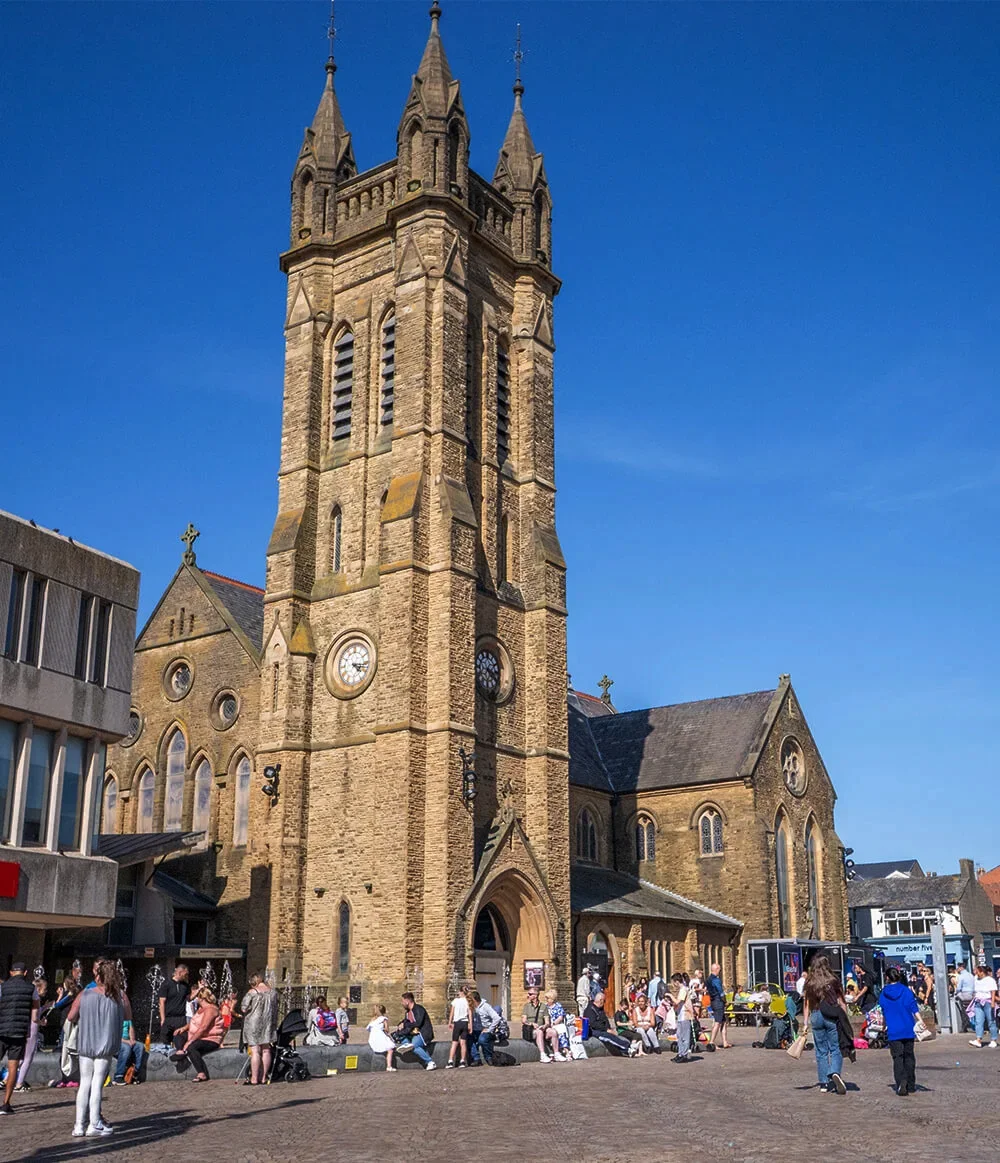
For generations, the open space surrounding St John’s Church in the centre of Blackpool looked very different from the paved St John’s Square of today. The church originally stood within its own burial ground, containing the graves of some of the people who had lived and died during Blackpool’s transformation from a small coastal settlement into a rapidly growing Victorian resort. Before Blackpool had its own church, local baptisms, marriages and burials generally took place at All Hallows in Bispham. The first St John’s Church was built on the present site in 1821 and consecrated on 6 July that year. As the population increased, the church was enlarged in 1832 and again in 1847, with a chancel added in 1851. The surrounding churchyard became Blackpool’s principal burial ground, but the rapid expansion of the town eventually made such a cemetery in its increasingly busy centre impractical. The churchyard closed to new burials in the early 1870s, around the time the new municipal cemetery at Layton came into use.

The arrow on the image shows where Dr William Henry Cocker and Rev William Thornber’s gravestones are located at St John’s Church. Photo taken and provided by Karl Bartoni.
The original church itself disappeared only a few years later. It was demolished in 1877 to make way for the much larger St John’s Church which stands on the site today. Blackpool’s first mayor, Dr William Henry Cocker, contributed £1,000 towards the new building and laid its foundation stone. Designed by Garlick, Park and Sykes, the replacement church was completed in 1878 and consecrated on 25 June by the Bishop of Manchester. The old burial ground, however, remained around it, leaving the graves of earlier Blackpool residents occupying valuable open land immediately beside a church which was now at the heart of a rapidly developing town centre.
A major change came in 1927, when graves in the former St John’s burial ground were removed and the remains reinterred at Layton Cemetery. Contemporary sensitivities surrounding the disturbance of graves appear to have been recognised, with later accounts recording that the work was carried out at night so that the exhumations caused as little public distress as possible. The removal fundamentally changed the character of the land surrounding St John’s. What had begun as a conventional church and churchyard in the small Blackpool of the 1820s was gradually becoming the civic open space familiar to later generations.
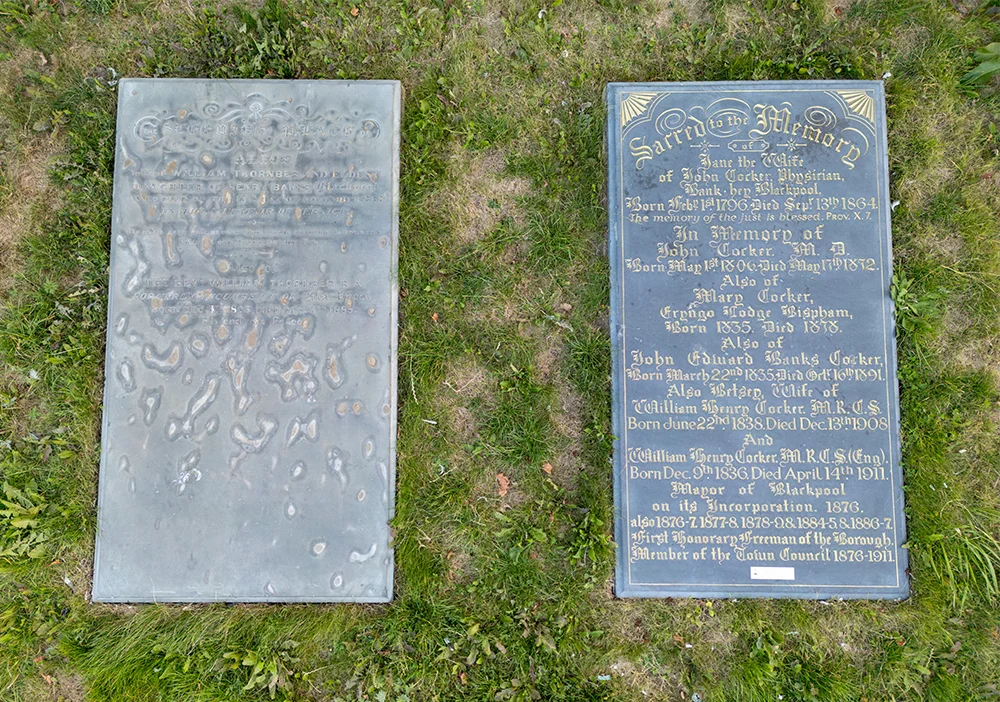
Rev. William Thornber’s stone, in need of a clean, is on the left and William Henry Cocker’s on the right.
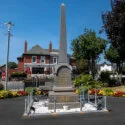
The people buried there were not simply forgotten. Beside St John’s Church today stands a small stone memorial carrying plaques on three sides recording names associated with the former burial ground. Lying alongside the memorial are two surviving gravestones of particular significance to Blackpool’s early history. One commemorates Dr William Henry Cocker, Blackpool’s first mayor, whose contribution to the town included donating £1,000 towards the construction of the present St John’s Church and laying its foundation stone in 1877. The other commemorates the Rev William Thornber, the nineteenth-century clergyman, naturalist and local historian whose writings provide an important record of Blackpool before its transformation into a major resort. Thornber also had a direct association with St John’s, serving as its incumbent during the nineteenth century; a large glacial boulder which remains beside the church was presented to him during his time there. The presence of the Cocker and Thornber stones beside the memorial provides a particularly tangible connection with two men who witnessed and helped shape Blackpool during a period of extraordinary change.
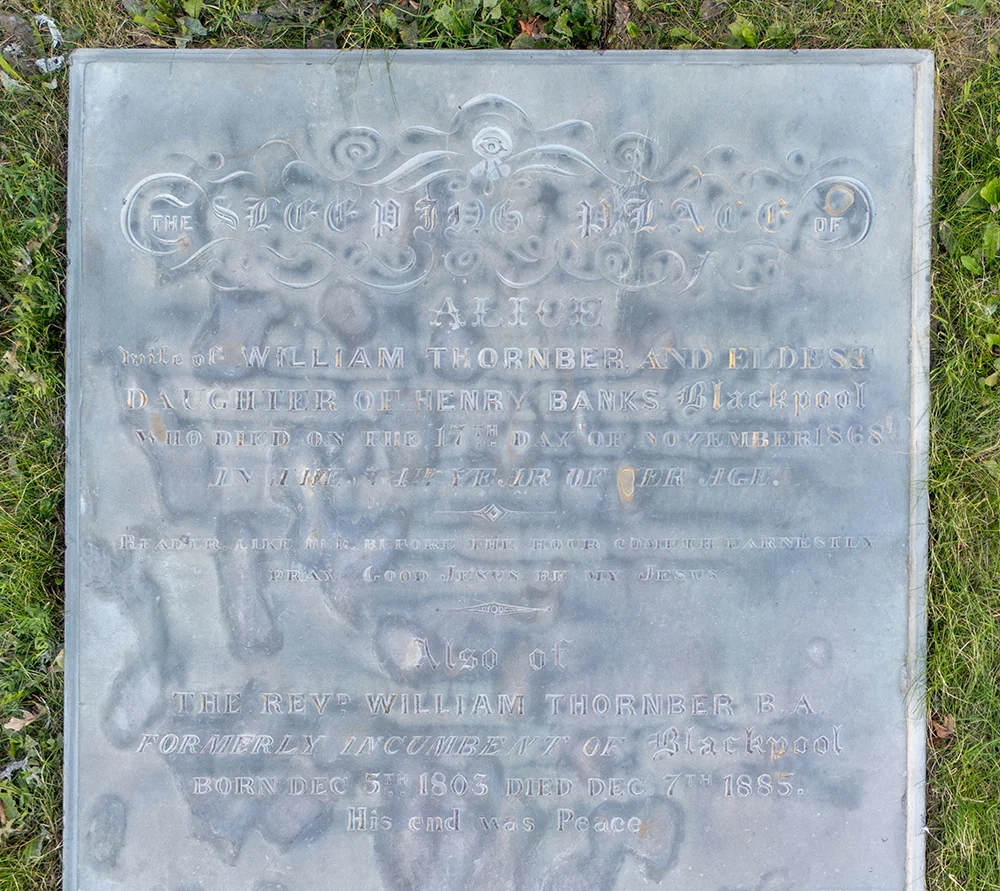 The memorial itself is an easily overlooked reminder that the paved square surrounding St John’s was once consecrated ground occupied by graves. In 1927, the graves from the former churchyard were removed and the remains reinterred at Layton Cemetery, with surviving accounts recording that the work was undertaken at night to minimise public distress. Gravestones associated with the old burial ground were also moved to Layton, creating a link between the original place of burial in the town centre, the surviving memorial at St John’s and the cemetery where those disturbed by the clearance were subsequently laid to rest.
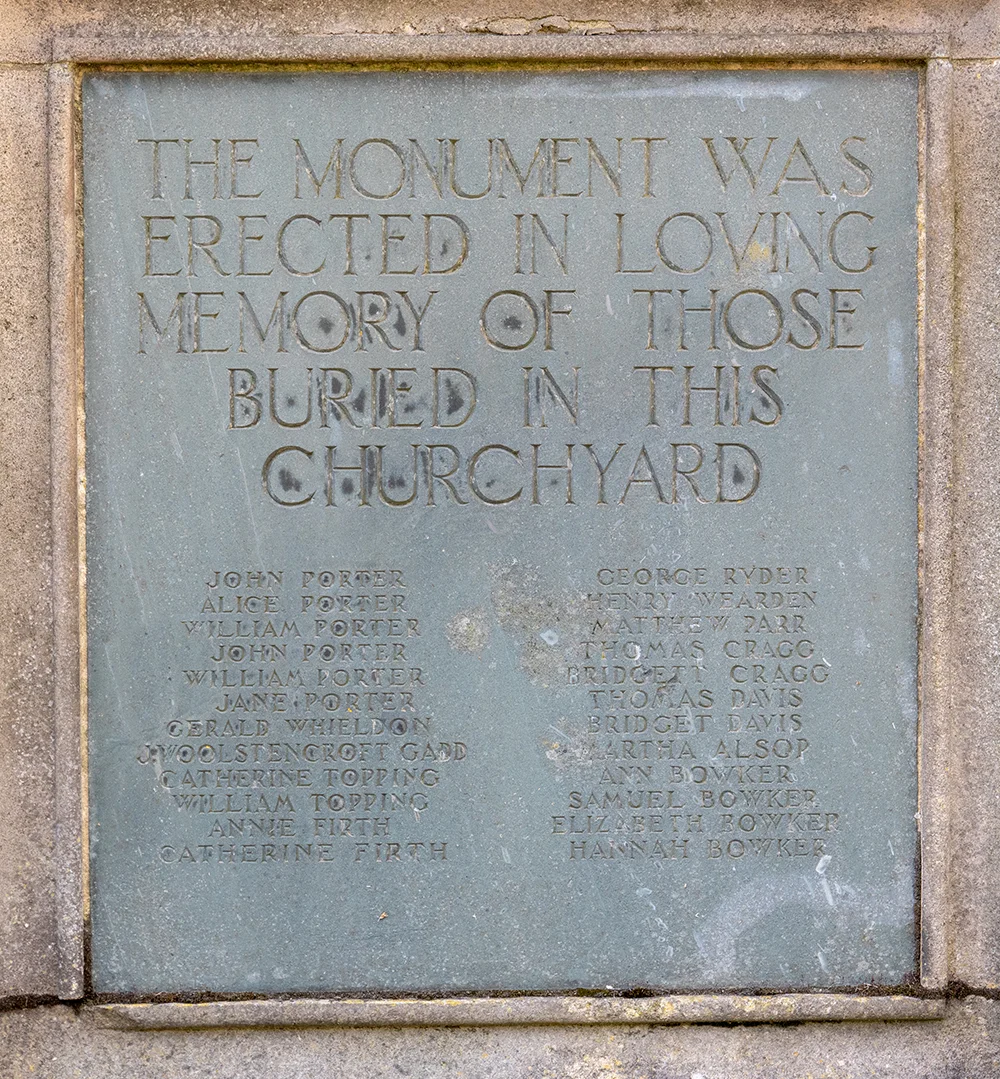
First of the three sides of the monument featuring the names of those who had been moved.
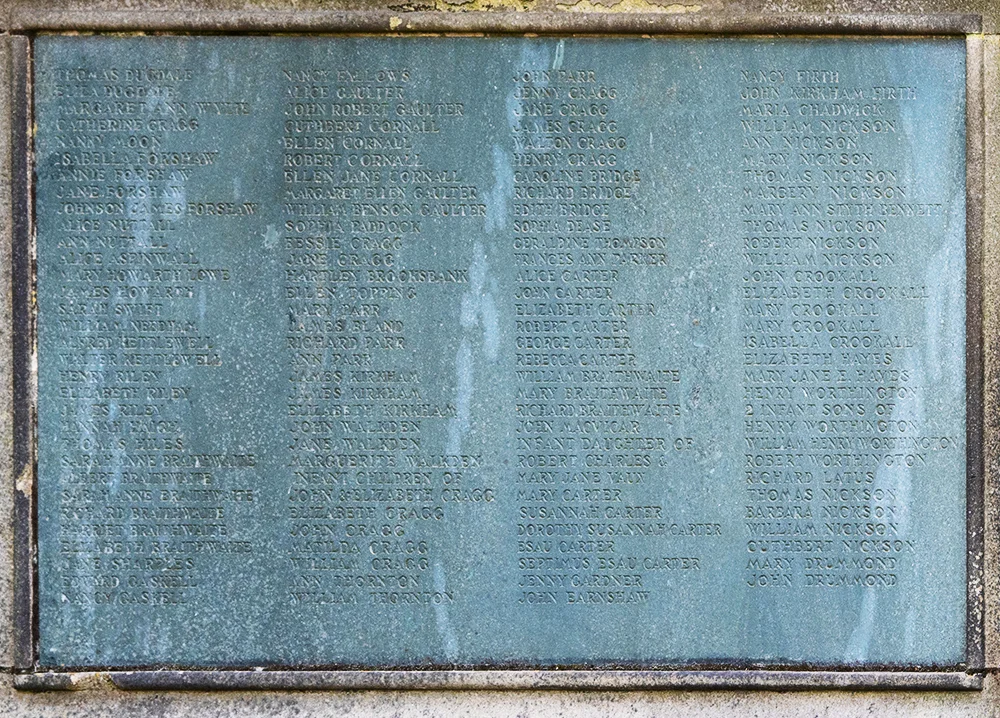
The second side.
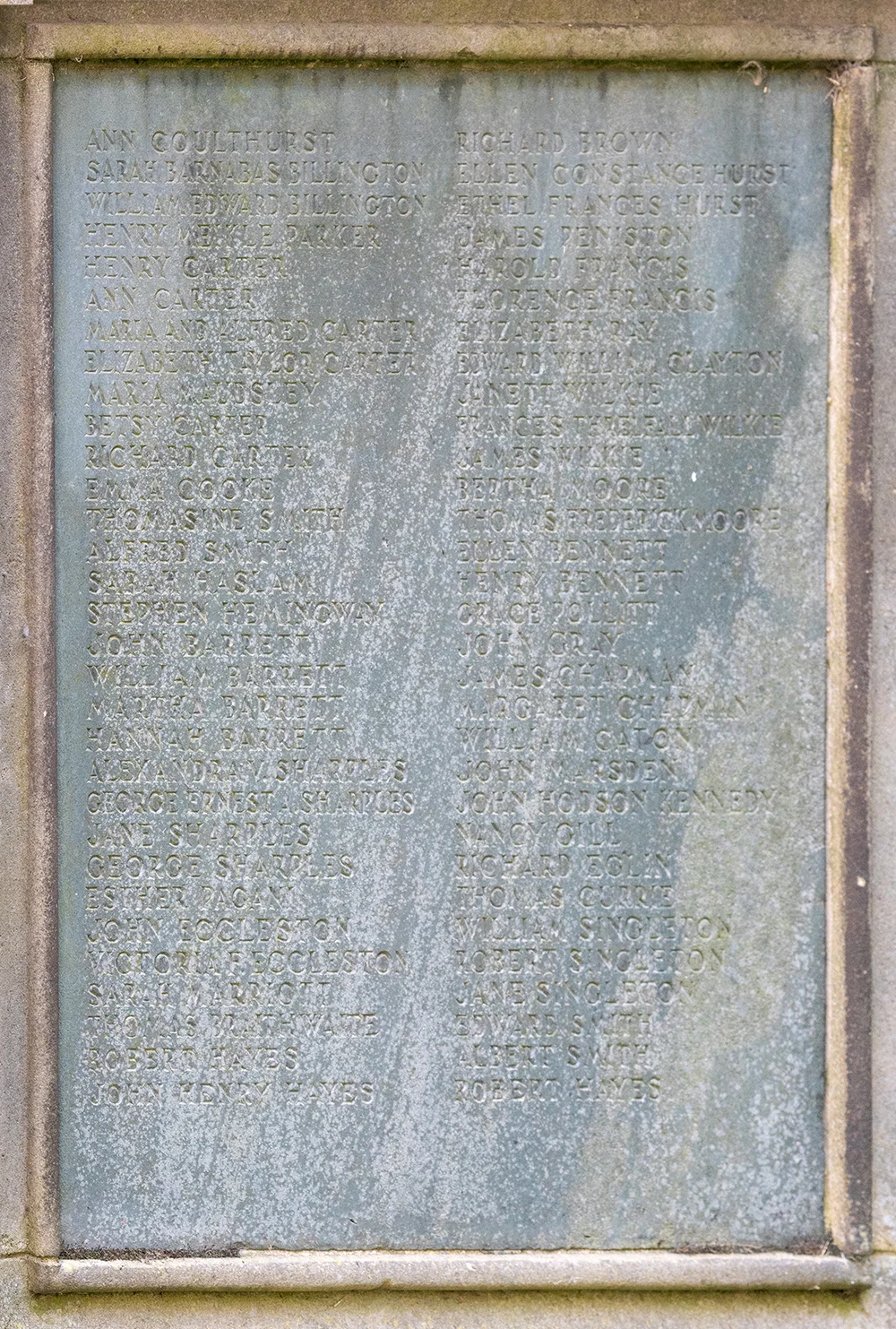
The third side.
The transformation of St John’s Square continued during the twentieth and early twenty-first centuries until very little remained to suggest the extent of the former churchyard. Historic England describes the graveyard as having largely disappeared, with St John’s now forming one side of a substantial public square. Yet the story of the burial ground had one unexpected final chapter. During improvement works in 2009, when remaining grassed areas in front of the church were removed as part of the repaving of the square, workmen discovered the remains of a woman on the Cedar Square side of the church. She had apparently escaped the earlier clearance of the burial ground. Her remains were respectfully removed and reburied at Layton Cemetery, more than eighty years after the principal removal of the graves.
The small memorial beside St John’s consequently has a significance that is easily missed among the shops, restaurants and public spaces of the modern town centre. It marks the memory of a period when this busy part of Blackpool was not a pedestrian square but a churchyard where generations of local people were laid to rest. The removal of the graves in 1927 reflected how dramatically Blackpool had changed since the first St John’s Church opened in 1821. Within little more than a century, a burial ground on the edge of a growing coastal community had found itself occupying some of the most valuable and heavily used land in the centre of one of Britain’s largest resorts. The monument and surviving stones at Layton Cemetery provide a tangible link with those early residents and with a Blackpool townscape that has almost completely disappeared.
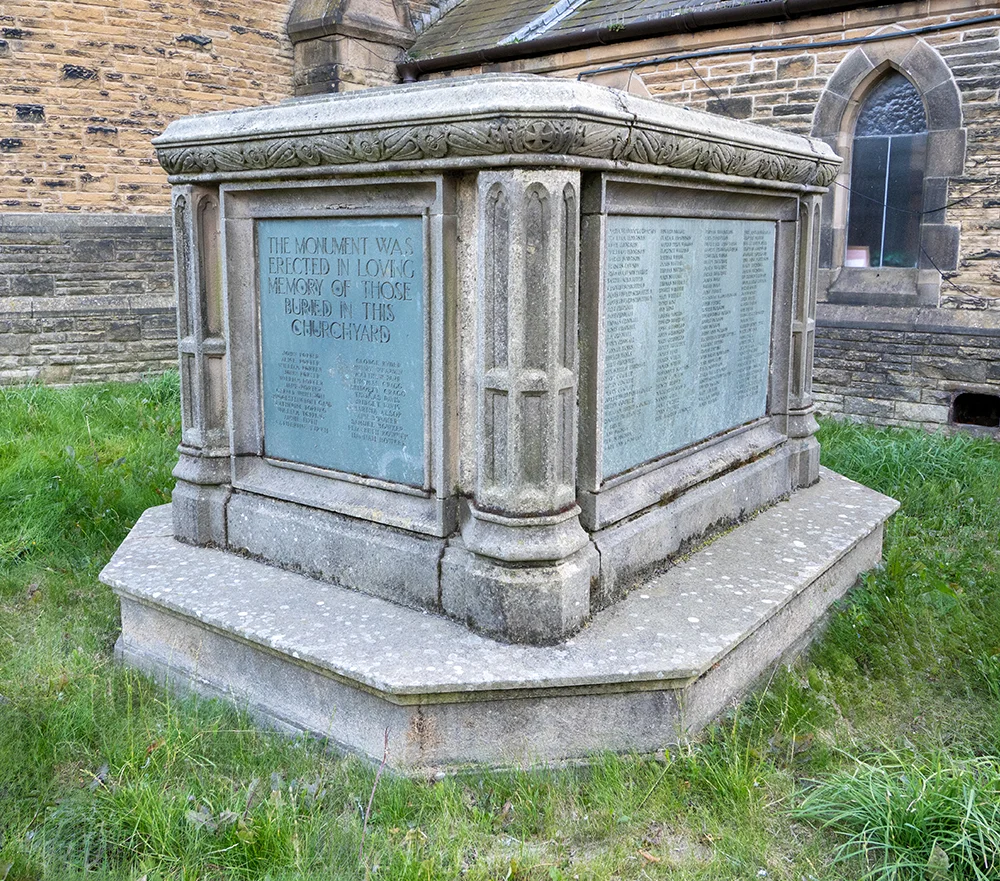
Images by © Deeper Blue Marketing & Design Ltd


