









































For generations, Hillhouse at Thornton-Cleveleys was one of the Fylde Coast’s great centres of industry, providing employment for thousands and producing chemicals that were used around the world. Today, however, part of that industrial legacy is the subject of a major environmental investigation. At its centre is PFOA, a member of the PFAS family of synthetic substances often called “forever chemicals” because of their extreme persistence in the environment. PFOA was used as a processing aid in fluoropolymer manufacture at Hillhouse from the 1950s until 2012, first during the ICI era and later by AGC Chemicals Europe, which acquired the operation in 1999. Its use was permitted under the legislation and environmental controls in force at the time.
The modern investigation began in 2024, after the Environment Agency obtained historical information from AGC concerning past PFAS use and emissions. The records indicated that PFOA had been released to the environment over a period stretching back to the 1950s, prompting concern that airborne emissions may have deposited the chemical on surrounding land. Wyre Council subsequently asked the Environment Agency to investigate Hillhouse and the surrounding area under the contaminated-land provisions of the Environmental Protection Act 1990. Initial sampling confirmed PFOA beyond the industrial site, leading to a much wider programme examining public land, residential gardens, allotments, locally grown produce and other possible routes of exposure.
 One of the most significant findings came at Occupation Road Allotments, immediately alongside Hillhouse. PFOA was found in all the soil samples taken during one phase of testing and in most of the vegetables sampled. The Environment Agency concluded that the site met the statutory criteria for classification as Contaminated Land, because regular consumption of produce grown there presented a significant possibility of significant harm. The allotments were closed. Testing at Sandringham Avenue Allotments subsequently found PFOA above the interim low-risk screening level, and in July 2026 the Environment Agency concluded that this site also met the criteria to be determined as contaminated land.
The findings do not mean that the whole of Thornton-Cleveleys has been declared contaminated. Extensive residential testing during 2025 found that the majority of properties sampled contained PFOA at concentrations considered to require no further action, although a small number required additional assessment. This distinction is important: detecting PFOA does not by itself mean that land legally constitutes contaminated land or that it presents a significant health risk. The investigation is intended to establish where contamination exists, how people might be exposed to it and whether intervention is required.
Health concerns have inevitably accompanied the environmental investigation. An examination of local cancer data initially identified higher-than-expected numbers of kidney cancer cases in two small areas, but a more detailed multi-agency assessment subsequently found no evidence of a kidney cancer cluster or a link between the cases and contamination from Hillhouse. More recently, privately commissioned blood tests involving 49 residents attracted national attention in September 2026 after elevated PFOA concentrations were reported among many of those tested. The results are noteworthy but need careful interpretation: the participants were not a random sample of the wider population, and health authorities advise that an individual’s PFAS blood level cannot establish where exposure occurred, whether PFAS caused an existing illness or whether that person will develop disease in the future.
The investigation is also revealing how complicated the industrial legacy of Hillhouse may be. Chemical manufacture on the wider site dates back to the 1890s, long before either AGC or modern environmental regulation. AGC’s own investigation is therefore testing not only for PFOA and other PFAS but also substances associated with earlier industrial processes, including chlorinated solvents and heavy metals such as mercury. ICI operated chlorine production at Hillhouse until 1992, while other forms of chemical manufacture took place across the site over more than a century.
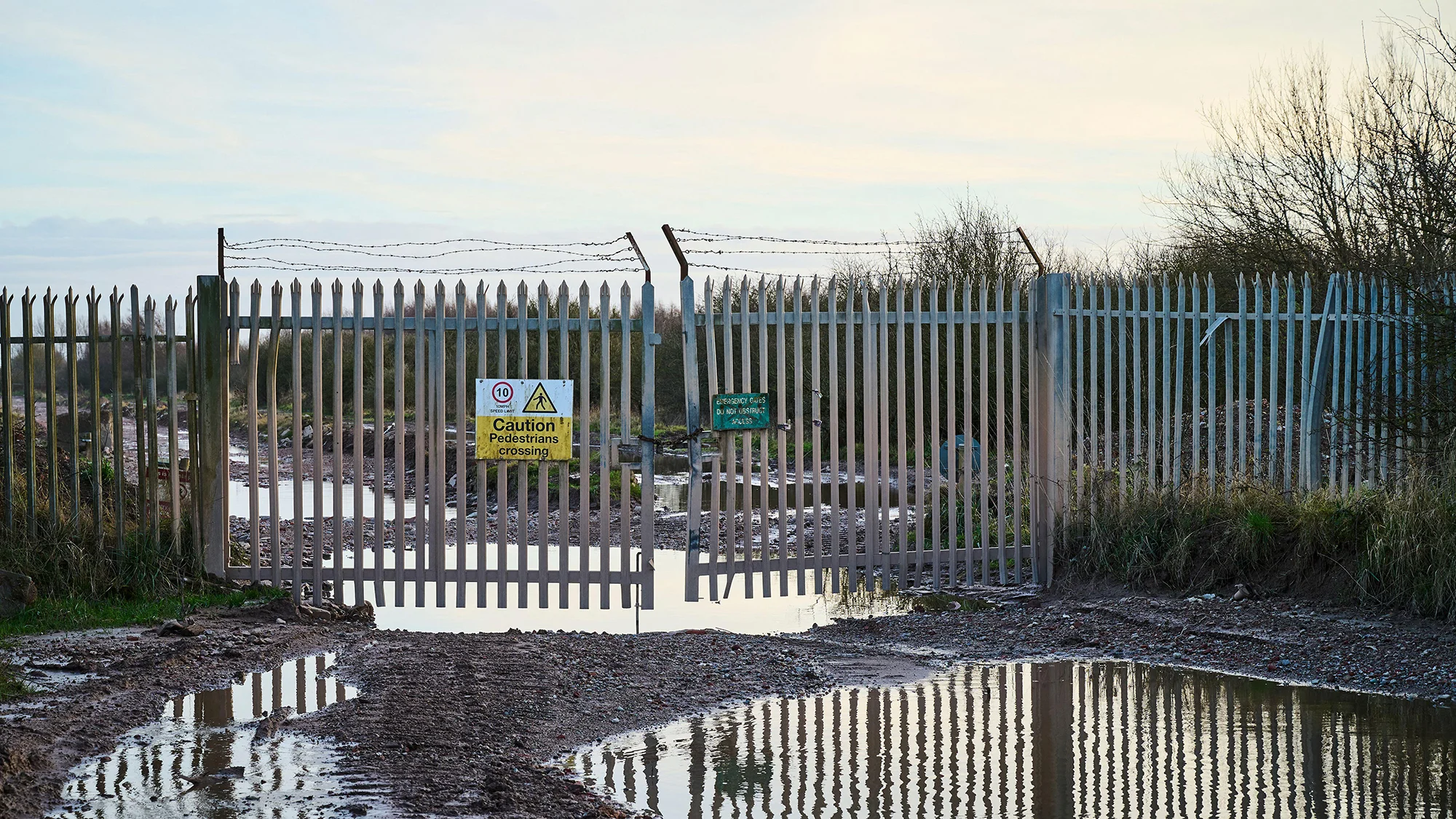
Metal security gates and puddles on the old ICI chemical plant site, Fleetwood. 3 February 2024
The story reached another turning point on 14 September 2026, when AGC announced that manufacturing at Hillhouse would cease by 31 December 2026, followed by further redundancies during 2027 as the site is wound down. AGC attributed the decision to difficult and competitive market conditions rather than the contamination investigation. The company has said it will retain the personnel necessary for decommissioning, environmental-permit compliance and continuing environmental monitoring, while working with Wyre Council and the Environment Agency.
The closure could mark the end of more than a century of major chemical manufacture at Hillhouse, but it does not end the environmental story. Investigations remain underway to establish the full extent and significance of historic contamination, and some questions may take years to resolve. At the same time, Hillhouse is being promoted as a possible location for a new generation of energy infrastructure, including an alternative connection for offshore wind developments rather than constructing new substations and a long cable route across the Fylde countryside. It creates a striking transition in the history of the site. Hillhouse helped define the Fylde Coast’s twentieth-century industrial landscape; authorities are now dealing with the environmental consequences of that history while simultaneously considering whether the same land could play a major part in the region’s renewable-energy future.
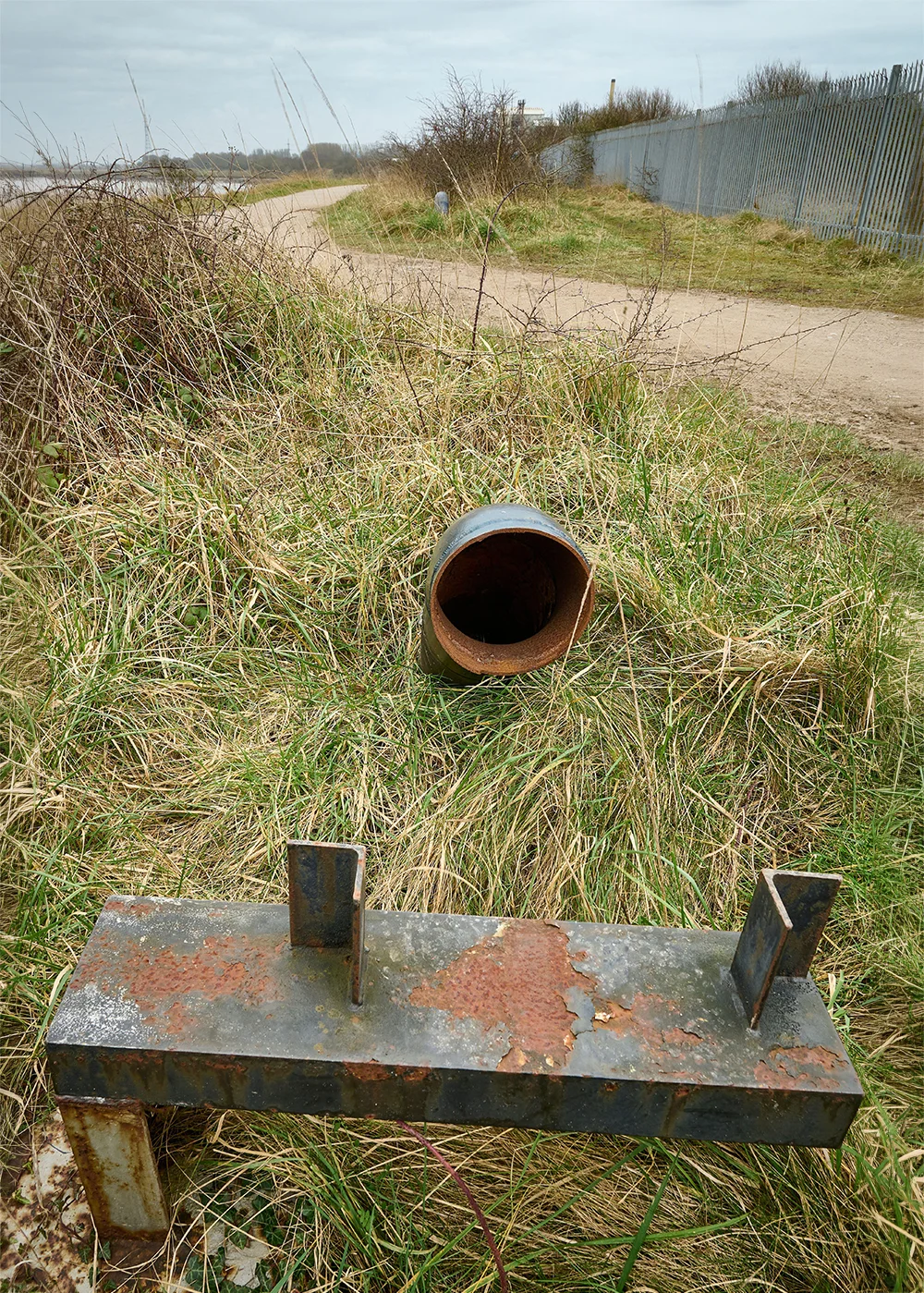
Abandoned and dismantled chemical pipeline on the banks of the River Wyre at Fleetwood. 5 February 2024.


