

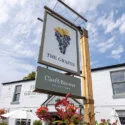





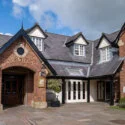


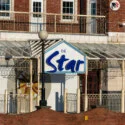


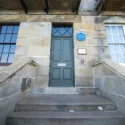

The Taps pub in Lytham has a history dating back to 1839, originally serving as ostler’s cottages where horses were changed for nearby hotels. It’s now one of Lytham’s oldest and most well-known pubs, known for its selection of real ales and traditional atmosphere. The building was originally used as cottages for ostlers, who were responsible for changing horses for travellers using nearby inns. Over time, it evolved into a pub and became known for its well-kept real ales. The Taps has become a central part of the Lytham community, with sports teams, fundraising events, and a strong connection to…
Author: Ed
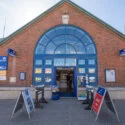
Lytham Railway Station
Lytham railway station has a history marked by multiple expansions and changes, reflecting the growth of both the town and the railway network. Originally, a terminus for the Preston & Wyre Railway branch line from Kirkham, it opened in 1846 on Station Road. This original station was later replaced by a new terminus on Ballam Road in 1863 for the Blackpool & Lytham Railway. Finally, a connecting line was built in 1874, transforming the station into a through station and leading to the closure of the original Station Road location for passenger service, though it continued as a goods yard…
The Railway Hotel & the Hansom Cab
The Railway Hotel in Lytham is a well-known historic pub that has stood for over 175 years, witnessing the transformation of the town from a quiet coastal settlement into a bustling seaside resort. Purpose-built in 1847, it was constructed adjacent to Lytham’s first railway station—known as Lytham Station (Station Road)—which had opened the previous year, on 16 February 1846. The original station was designed in a grand classical style, built from Longridge stone, featuring a striking façade and an octagonal booking office topped with a domed roof. The Railway Hotel was intended to serve travellers arriving by train, offering refreshments…
Lytham Market Hall
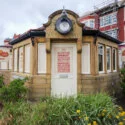
In 1848, the Lytham Improvement Commissioners, the local government of the day, commissioned the building of Lytham Market Hall at a cost of over £1,000, designed by Charles Reed of Liverpool, to replace the open-air market. It was originally designed as a single-story structure with an Italianate style. A clock tower, donated by Lady Eleanor Cecily Clifton, was added to the building in 1868. A further tower was added on the west side in 1877. In 1883 a drinking fountain was placed in the Market Square in memory of her husband, John Talbot Clifton, who died in 1882. In the…
The Lytham Assembly Rooms
The Lytham Assembly Rooms, originally built in 1862, served as a social hub for the growing seaside town of Lytham, offering both salt water bathing and indoor entertainment. Initially, the building housed baths, a theatre, and assembly rooms, but the business struggled and the Clifton Estate eventually acquired it. The Assembly Rooms have since been adapted and refurbished to meet changing needs, including use as Lytham UDC offices and a soup kitchen during severe weather. 1840 – Baths existed on Central Beach in the 1840s but closed about 1853. 1860 – Contract granted to Charles Holt of Bolton for construction…
Richard Ansdell Builds House in Lytham St Annes
Richard Ansdell RA (11 May 1815 – 20 April 1885) was a distinguished British painter renowned for his depictions of animals, rural life, and dramatic genre scenes. Born in Liverpool, then part of Lancashire, he was the son of Thomas Griffiths Ansdell, a freeman who worked at the port, and Anne Jackson. After his father’s death, he attended the Liverpool Blue Coat School for orphans, where his artistic promise became clear. Following his studies, Ansdell apprenticed with a portrait painter in Chatham Street, Liverpool, before working as a sign painter in the Netherlands—an experience that honed his observational skills and…
The Lytham St Annes War Memorial Hospital
The Lytham St Annes War Memorial Hospital was not merely a place of healing — it was a lasting tribute to the fallen, conceived in the aftermath of the Great War as a gift to the community and a memorial to its dead. Established through the generosity of Lord Ashton, a noted industrialist and philanthropist, the hospital was built to honour those from Lytham St Annes who had lost their lives during the First World War. It stood as a unique and practical monument — one that would serve the living while remembering the sacrifice of the lost. The hospital…
St Mary’s Roman Catholic Church in Fleetwood
Rising modestly amid the sea air and salt-stained rooftops of Fleetwood, St Mary’s Roman Catholic Church stands as a testament to both spiritual devotion and architectural vision. Designed by the celebrated Gothic Revival architect E. W. Pugin, this striking church has served the Catholic community of the town since the late 19th century, offering both sanctuary and continuity across generations. Fleetwood itself is a town with planned origins, envisioned in the 1830s by Peter Hesketh-Fleetwood, a local landowner who sought to transform a quiet corner of the Lancashire coast into a thriving port and resort. As the population grew, so…
Karl Crompton Wins £10.8m From Lottery
Karl Crompton, born in Blackpool in 2002, was once dubbed Britain’s most eligible bachelor after bagging £11 million in the National Lottery when he was just 23. But after 27 years that included a divorce from his childhood sweetheart, the man once known as ‘Rollover Romeo’ has been spotted looking grizzled and grey at the age of fifty. He was one of the earliest jackpot winners when he scooped up his millions back in 1996. The then-trainee at high street electrical goods store Comet had been earning around £100 a week shortly before he was thrust into the spotlight to…
Billy Ronson Joins Blackpool Football Club
William “Billy” Ronson was born 22nd January, 1957 in Fleetwood, Lancashire. Billy, the son of Fleetwood Football Club stalwart Percy Ronson, began his career at Blackpool Football Club, making his debut in March 1975 against Nottingham Forest. He originally struggled to break into the side but eventually managed to establish himself in the first team. He was unable to prevent the club’s relegation during the 1977-78 season and spent one more year at the club before joining Cardiff City for a fee of £130,000, a club record at the time. He went on loan to the Ft. Lauderdale Strikers in…