











Author: Ed

Borough Theatre, Bannister’s Bazaar, Feldman’s Theatre & Queen’s Theatre

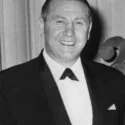
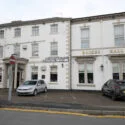
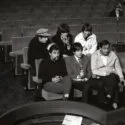
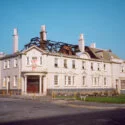
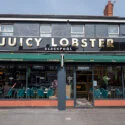
The Borough Theatre, situated on Bank Hey Street in central Blackpool, opened its doors in September 1877, marking one of the town’s earliest ventures into purpose-built entertainment venues. Its establishment reflected the rapid transformation of Blackpool during the late nineteenth century, when the resort’s growing popularity demanded new spaces for leisure and performance. Only two years after its opening, in 1879, the building was sold and repurposed under the name Bannister’s Bazaar, a commercial adaptation that mirrored the changing demands of the resort’s bustling visitor economy. Its theatrical life resumed decades later when, in 1927, the entrepreneur Bert Feldman acquired…

Town Centre Building Becomes Temple of Arts Studio

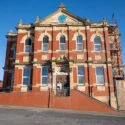
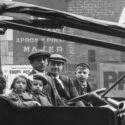
The building known as the Temple of Arts stands among the oldest surviving structures in Blackpool’s town centre, representing one of the earliest phases of the town’s architectural development before the major resort expansions of the later Victorian period. Constructed in 1847, it predated much of the surrounding urban growth and reflected the modest yet evolving townscape of mid-nineteenth-century Lancashire. In 1853 the premises were adapted by John Eastman, also recorded in some sources as John Eastham, who established there what was reputed to be Blackpool’s first photographic studio. The venture, described as the Temple of Arts, signified an important…

Original Start for Courtfield House

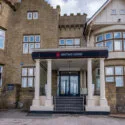
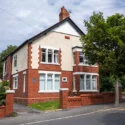
Constructed in 1897 by Town Freeman and former Mayor Robert Mather JP, Courtfield was widely regarded as one of the finest residences in the borough. The Mather family remained in occupation until the property was sold by auction in 1945. Its name had been suggested by a family acquaintance, Reverend Father Bernard Vaughan, whose ancestral home in Gloucestershire, held by his family since 1570, bore the same title. The estate, comprising both buildings and land, was purchased for £14,750 with an additional £396 in associated costs. The acquisition provoked considerable public debate, largely due to concerns about expenditure and perceived…

Land First Purchased for Blackpool Masonic Hall

The Blackpool Masonic Hall, standing proudly at the top of Adelaide Street where it meets Lower King Street, has been a cornerstone of local history and Freemasonry since the late nineteenth century. The land on which it stands was purchased on 1 February 1888 for £1,700 by the newly incorporated Blackpool Masonic Hall Ltd, established just two months earlier, on 2 December 1887. The company issued 6,000 £1 shares to fund the project. At that time, the land belonged to Whitaker Bond, landlord of the Stanley Arms, and Thomas Sankey, headmaster of St John’s School — with Sankey also serving…

15-Year-Old Audrey Mosson, British Railway Queen, Visits Moscow

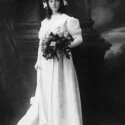
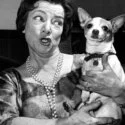
Elsie Audrey Mosson (born 3 September 1920 in Preston, died 1 September 2009 in Hastings) was an English teen celebrity and professional dancer who became one of Lancashire’s most admired young figures of the 1930s. Born in Preston, she rose to fame at just fifteen when she was crowned the 10th Railway Queen of Great Britain during the Railway Carnival and Pageant at Belle Vue, Manchester, in August 1935. That same year, she travelled to the Soviet Union on a goodwill peace visit, where she famously met Joseph Stalin — an extraordinary moment in her early life. Later in 1935,…

The Old Coach House, the Oldest House in South Shore

The Old Coach House, located on Dean Street near South Pier in Blackpool’s South Shore, is a distinguished four-star boutique guesthouse with a history stretching back to 1851. Widely regarded as the oldest surviving house in South Shore, it was originally built as a vicarage and stands today as a remarkable example of early Tudor-style architecture. Its handsome façade and carefully preserved period details — including ornate friezes, decorative fireplaces, and exposed beams — evoke the elegance of a bygone era. Set within its own award-winning gardens, the Old Coach House offers a rare sense of tranquillity amid the bustle…

Susan Brownrigg Starts Writing Her First Children’s Novel

Susan Brownrigg is a Lancashire lass who grew up in Wigan and now lives in Skelmersdale, but loves to visit Blackpool as often as possible! She is the author of Gracie Fairshaw and the Mysterious Guest, Gracie Fairshaw and the Trouble at the Tower, Gracie Fairshaw and the Missing Reel, Kintana and the Captain’s Curse and Wrong Tracks. Brownrigg has worked as a library information assistant for three years and her previous career was in heritage and wildlife education. She worked at Norton Priory Museum for 12 years, most recently as learning manager. She has also worked at Tatton Park,…

Robert’s Oyster Bar, Trading on the Prom for Nearly 150 Years

Robert’s Oyster Bar, 90 Promenade, Blackpool, FY1 1HB, located in the famous Robert’s Oyster Rooms, a staple on the Blackpool Promenade for nearly 150 years. Robert’s Oyster Rooms has been in Blackpool since 1876 and sells all manner of seaside and beach goods alongside a wide selection of fresh shellfish on the Oyster Bar. It…

The Impact of John Charles Robinson’s Architecture

John Charles Robinson was a prominent architect in Blackpool, serving as the Borough Architect from 1920 to 1944. He designed numerous iconic civic buildings, including schools, libraries, and recreational facilities. Blackpool Council has a new project on Church Street that bears his name. Here is a list of some of the buildings that have benefitted from John Charles Robinson: The shelter, Devonshire Square Citadel 1924 Memorial Hall Colonade, Blackpool promenade Blackpool Zoo Harrowside Pool and Bridge North Shore Lift Layton Square Toilet block Stanley Buildings Carleton Crematorium Gatehouse and Chapel Little Bispham Tram Shelter Blackpool Cricket Club Stanley Park Golf…

Alistair Cooke Gets a Firm Footing From Blackpool

Alistair Cooke, KBE (born Alfred Cooke on 20 November 1908, died 30 March 2004), was a British-American journalist, author, and broadcaster whose career flourished mainly in the United States. He became best known for Letter from America and America: A Personal History of the United States, and for presenting PBS’s Masterpiece Theatre from 1971 to 1992. His calm, intelligent delivery and distinctive voice made him one of the most recognisable broadcasters of his time. Even after retiring from television following more than four decades in broadcasting, he continued recording Letter from America until shortly before his death. Cooke was born…